
.png?width=48&height=48&name=Group%201%20(3).png)























23 September, 2026

Screen Time Recommendations Australia: Balancing Fun and Health
Key Highlights
- Australian screen time recommendations vary by age and come from Australian Government guidance.
- Infants under 2 should have no screen time, while toddlers aged 2-5 should have no more than one hour daily.
- For young people aged 5-17, sedentary recreational screen time should stay under two hours a day.
- Educational use is treated separately from recreational use.
- A healthy balance includes physical activity, sleep, hobbies, and family time.
- Social media use needs clear limits, supervision, and regular conversations at home.
Introduction
Screen time is part of daily life for many young people, from school tasks to games, videos, and chats with friends. That is why families often look for a healthy approach instead of chasing perfect rules. The goal is not to fear every screen. It is to understand what good screen time looks like, how much is appropriate by age, and how to keep sleep, movement, learning, and relationships in balance while screen time stays in its place.
Health and Development Impacts of Screen Time
Too much sedentary recreational screen time can affect children in several ways. A high amount of time on digital devices may reduce physical activity, affect sleep routines, encourage unhealthy snacking, and contribute to poor posture or eyesight concerns.
It can also influence mental health, attention, motivation, and social skills. For babies and toddlers, long periods in front of screens may be linked with language development delays. These effects are why age-based limits matter. Social and emotional factors also deserve a closer look.
Social and Emotional Considerations
Screens do more than occupy time—they influence how children connect, react, and feel. Excessive use of smartphones, online games, or passive viewing can limit opportunities to develop social skills and everyday confidence.
Mental health is another concern. Extended time on social media may impact self-esteem, mood, and motivation, especially without guidance. Parents may also notice increased frustration when it's time to turn off screens, signaling a need for stronger routines.
Recent Australian guidelines highlight worries about rising screen use. While exact weekly averages aren't provided, families are urged to prioritise quality, supervision, and balance over unchecked screen time.
Practical Strategies for Healthy Screen Time Habits at Home
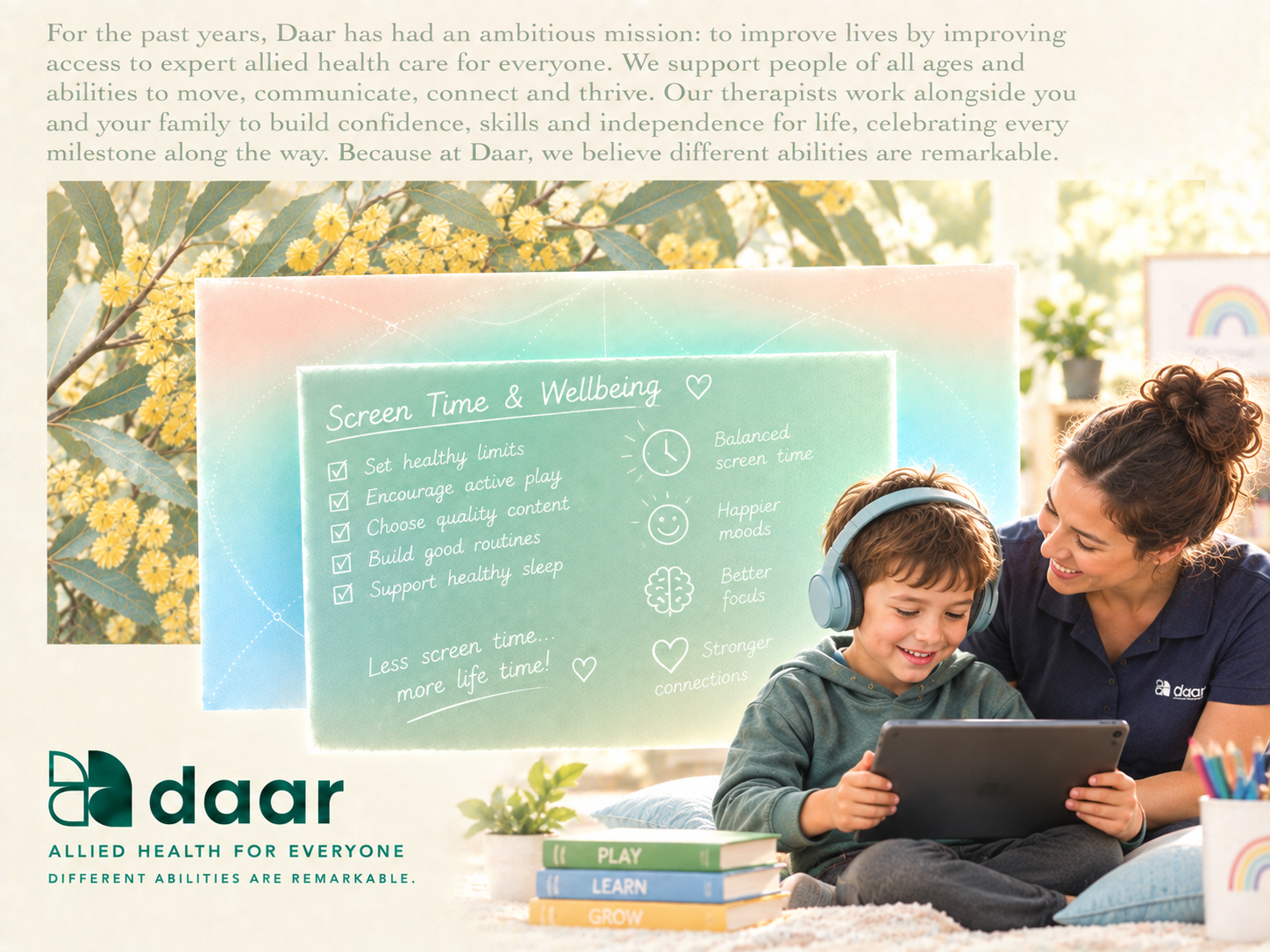
A healthy balance starts with simple routines at home. Parents can set boundaries by agreeing on daily limits, giving switch-off warnings, and creating a family plan for technology use. Clear expectations help children know what happens, when, and why.
It also helps when adults model the same habits. Plan device-free periods, protect family time, and keep screens from taking over meals, hobbies, and movement. Open conversations make these rules easier to follow. The next sections show practical ideas and trusted Australian support.
Tips for Parents to Balance Fun and Wellbeing
Managing screens doesn’t have to be a daily battle. Kids handle limits better when they understand why they’re set. Talk with them about when devices are helpful, fun, or need to be turned off.
Practical tips:
- Use built-in tools like Screen Time or Digital Wellbeing.
- Keep devices in shared spaces for easier supervision.
- Give warnings before turning devices off.
- Schedule device-free family time each day.
Build routines with homework, outdoor play, sleep, and hobbies away from screens. When kids have other enjoyable activities, screen limits feel natural and are easier to enforce.
Official Australian Resources and Tools for Families
If you want trusted help, start with Australian Government guidance on physical activity, sedentary behaviour, sleep, and screen time. These recommendations explain age-based limits and make clear that educational screen use is not counted the same way as recreational use.
Families can also use eSafety advice for practical support. It suggests regular conversations, protected internet access, supervision in open areas, and family technology agreements. NSW resources also offer planning tools, including a daily schedule idea that can help families balance online and offline time across tablets, consoles, and other devices.
|
Resource |
What it helps with |
|---|---|
|
Australian Department of Health |
Age-based screen time, sleep, and physical activity guidelines |
|
eSafety Commissioner |
Family expectations, safer internet access, supervision tips |
|
NSW Department of Education |
Daily schedule planning for balanced routines |
|
Queensland Health |
Social media guidance and monitoring advice |
Conclusion
In summary, finding a balance between screen time and health is crucial for the overall well-being of children. By understanding the impacts of excessive screen use and implementing practical strategies, parents can foster a healthier relationship with technology for their kids. Remember to utilise official Australian resources to stay informed and create a supportive environment. It's essential to encourage activities that promote social interaction and physical activity while allowing for some fun screen time. Embrace these recommendations as a framework to guide your family towards a more balanced lifestyle.
If you need personalised advice, don’t hesitate to reach out for a consultation or call daar at 02 9133 2500 for guidance!
Frequently Asked Questions
What are the current screen time recommendations for children in Australia?
Current screen time recommendations from the Australian Government say infants under 2 should have no screen time. Toddlers and young children aged 2-5 should have no more than one hour a day. Australians aged 5-17 should limit sedentary recreational screen time to less than two hours daily.
How can parents effectively monitor and manage their children's screen time?
Parents can set boundaries with clear limits, switch-off warnings, and device-free times. A healthy approach includes keeping smart phones and consoles in shared spaces, using parental controls, and limiting internet access at night. Regular check-ins and family agreements make expectations easier for children to follow.
What are some healthy alternatives to screen-based activities for kids?
Good alternatives to tv and tablets include physical activity, outdoor games, reading, drawing, puzzles, chores, and sport. Family time also matters, whether that means talking, singing, or shared play. These options help reduce much screen time while supporting learning, movement, and stronger social connection.
.svg)




.svg)