
.png?width=48&height=48&name=Group%201%20(3).png)























18 August, 2026

How Socialised Behaviour Therapy Boosts Kids’ Skills
Key Highlights
- Socialised behaviour therapy helps kids build stronger social skills for better social interactions in daily life.
- It uses structured therapy sessions, practice, and positive reinforcement in a supportive environment.
- Children can improve communication, play, routines, and emotional regulation through clear, manageable steps.
- This approach supports mental health by reducing frustration and helping kids handle change more calmly.
- It can help children with autism spectrum disorder, social anxiety, and other specific challenges.
- Family involvement and consistent practice are central to lasting progress.
Introduction
Helping a child grow is about more than academics. Social skills matter just as much. They shape friendships, learning, confidence, and everyday life participation. When a child struggles with turn-taking, communication, or managing big feelings, behaviour therapy can offer practical support. Socialised behaviour therapy focuses on real-life skill building in places where children live, learn, and play. For many families, it becomes a useful way to support child development while making daily routines and relationships feel easier.
What is Socialised Behaviour Therapy for Kids?
Socialised behaviour therapy is a practical method that helps children interact more positively and effectively. It uses evidence-based behaviour therapy and social skills training to teach communication, play, routines, and cooperation. The goal is not only to reduce behavioural challenges but also to build life skills that support daily living, development, and mental health in the context of clinical psychology.
During sessions, children practice manageable steps with clear guidance, repetition, and positive reinforcement. Therapists tailor activities to each child’s learning style and everyday goals. Support can be provided at home, daycare, preschool, or in a clinic—making it easier for children to apply new skills in real-life situations. Before reviewing outcomes, it’s helpful to know which children benefit most from this approach.
Which Children Benefit Most from Socialised Behaviour Therapy
Many children benefit from support, especially those with challenges in communication, routines, or peer interactions. This includes younger kids with developmental delays, behavioural issues, early learning difficulties, or trouble adapting socially. Children with autism may also need help with play, turn-taking, and daily skills.
Some show frustration through challenging behaviours; others avoid groups, struggle with transitions, or have trouble expressing needs. Behaviour analysis helps therapists identify factors affecting the child and practical strategies to support them.
Progress is best with consistency and family involvement. Providers typically start with consultation, goal setting, and assessment before therapy. A formal diagnosis isn’t always required—what matters most is finding the right support early and building from there.
Key Benefits of Socialised Behaviour Therapy in Childhood
One major benefit is that children learn new skills that make daily life smoother. They may become better at expressing needs, coping with transitions, joining play, or following daily routines. Small gains can make a big difference for both the child and the family.
Another strength is the focus on positive behaviour and steady skill development. Therapy targets functional goals that support child development, independence, and participation. When children feel more capable, their confidence often grows too. That can improve relationships, reduce frustration, and lift overall quality of life. The next sections look at those benefits more closely.
Nurturing Social Communication Skills and Friendships
For many kids, making friends is not just about wanting connection. It is about knowing how to start, respond, and keep an interaction going. Social skills training helps children practice those steps in a clear way. They learn how to join shared play, take turns, and respond to social cues in ways that feel more natural over time.
In therapy, communication skills are broken into simple actions children can repeat and build on. This may include learning how to ask for help, wait, greet others, or stay engaged during group activities. These are the building blocks of positive relationships.
Common areas of practice include:
- noticing facial expressions, tone, and other social cues
- using words, signs, visuals, or devices to communicate clearly
- building turn-taking and shared attention during play
As children become more confident, friendships and peer interactions can feel less stressful and more rewarding.
Building Emotional Regulation and Resilience
Big feelings can quickly impact a child’s day. Frustration, change, waiting, or sensory stress may trigger tears, shutdowns, or anger. Social behaviour therapy helps children regulate emotions by teaching step-by-step coping skills, keeping them calmer at home, school, and in the community.
Therapy occurs in a supportive environment where children can practice without fear of failure. Therapists establish routines first, then introduce activities that build flexibility, focus, and calm responses. This structure supports both emotional and overall mental health.
Over time, children often become more resilient—they recover from disappointment faster, handle transitions better, and rely less on challenging behaviours. These improvements benefit family life, learning, and future social success.
How Socialised Behaviour Therapy Supports Kids with Autism and Other Disorders
Children on the autism spectrum and other neurodiverse children often need direct teaching for skills that others may pick up more naturally. Socialised behavioural therapy offers that support through structured practice, repetition, and positive reinforcement. It can target communication, play, routines, and daily living in ways that fit the child’s pace.
Early intervention support is especially valuable because the early years are a strong time for learning. With the right behavioural therapy, children can build foundations that help them participate more confidently at home, in preschool, and in the community.
Addressing Social Anxiety and Related Challenges
Yes, this approach can help children who find social settings overwhelming. A child with social anxiety may avoid eye contact, stay silent in groups, or become distressed when expected to join in. Therapy sessions give them a safe space to practice interaction in small, manageable steps rather than being pushed too fast.
Support often begins with relationship building and predictable routines. That matters because children with anxiety disorders usually do better when they know what to expect. As confidence grows, therapists can introduce more social practice while keeping the experience calm and structured.
Therapy may help children:
- participate in simple social situations with less distress
- build comfort with greetings, turn-taking, or shared play
- handle new people and group activities more steadily
For some children, these gradual wins reduce the impact of social anxiety disorder on daily life.
Enhancing Inclusion for Neurodiverse Children
Inclusion works best when children have the tools to join shared experiences. Social behaviour therapy helps neurodiverse children build these tools through practical teaching in real settings. Instead of focusing on challenges, this approach develops strengths that support social skills and independence.
Skills taught may include joining games, following routines, responding to peers, and clearly communicating needs. Practicing in home, daycare, preschool, or clinics gives children more chances to use these skills meaningfully, making peer interactions less confusing and more successful.
A supportive environment also benefits caregivers, siblings, and educators. When adults understand the child’s goals and use consistent strategies, inclusion becomes more achievable. This leads to lasting participation and stronger habits for school and community life.
Techniques Used in Socialised Behaviour Therapy Sessions
Therapy sessions are usually active, structured, and tailored to the child’s goals. Therapists use behaviour analysis to understand what supports learning and what may be linked to behavioural challenges. That helps them choose practical strategies that match the child’s strengths, needs, and daily routines.
From there, skill development happens through repetition, clear teaching, and positive reinforcement. Sessions may begin with relationship building and simple routines before moving into communication, play, self-care, or group work. Several methods can be used together, and the next sections explain two of the most common approaches.
Play-Based Approaches and Group Interaction
Play-based approaches make learning feel more natural for children. Instead of only giving instructions, therapists use toys, games, routines, and shared activities to teach interaction. This helps children practice positive behaviour while staying engaged. Group activities can also support turn-taking, waiting, cooperation, and flexible thinking.
These moments are useful for teaching body language and active listening too. A child might learn to look toward a speaker, notice gestures, or respond when a peer invites them into play. Because the setting is structured, the child gets support right when it is needed.
|
Technique |
How it supports learning |
|---|---|
|
Play-based approaches |
Teach social skills, communication, and emotional regulation through enjoyable practice |
|
Group activities |
Build turn-taking, peer interactions, and shared attention in social settings |
|
Guided feedback |
Helps children notice body language, listening, and positive behaviour in the moment |
This combination turns everyday play into a powerful tool for social growth.
Role-Playing, Modeling, and Positive Reinforcement
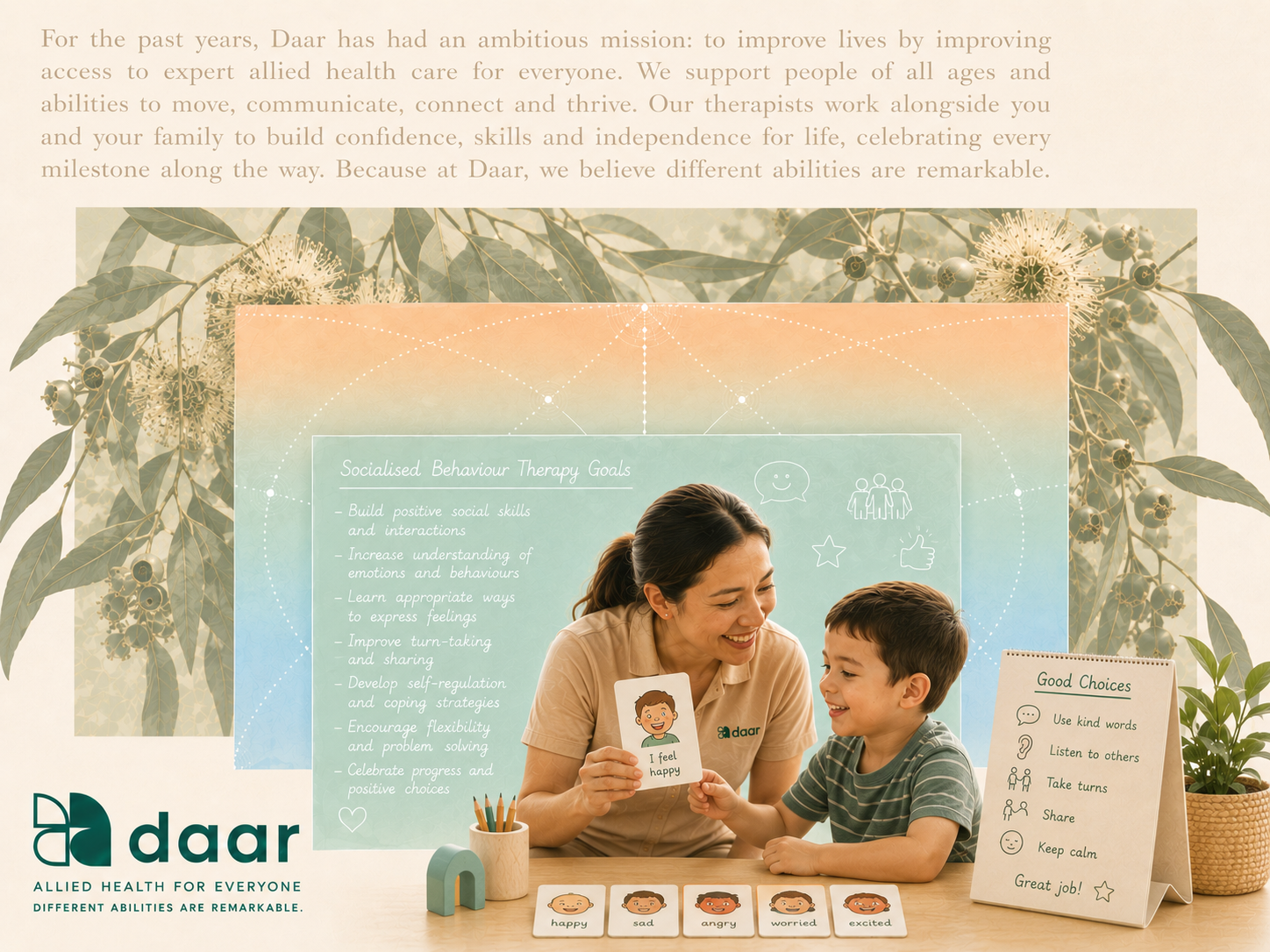
Role-playing and modeling help children see and practice successful interactions. A therapist might demonstrate how to ask for a turn, greet someone, or handle problems calmly. The child then practices these skills with guidance and repetition.
Positive reinforcement makes these efforts stick. When the child uses a target skill, the therapist offers encouragement or another reward, increasing the chances the child will use the skill again in future social situations.
Unlike some other behavioural therapies, this approach emphasises real-life social use. It also:
- teaches children to notice and respond to social cues
- builds skills within real routines and peer interactions
- trains caregivers so learning continues outside sessions
Conclusion
In conclusion, Socialised Behaviour Therapy is a powerful tool that fosters essential skills in children, especially those facing social challenges. By nurturing social communication and emotional resilience, this approach equips kids with the tools they need to thrive in various social settings. Techniques like play-based interactions and positive reinforcement not only make learning enjoyable but also enhance inclusion for neurodiverse children. If you’re considering socialised behaviour therapy for your child, remember that the right support can lead to remarkable transformations.
To learn more about how this therapy can benefit your child, reach out today for a consultation or call daar at 02 9133 2500!
Frequently Asked Questions
Is socialised behaviour therapy available through NDIS Early Intervention?
Yes, it may be available through the National Disability Insurance Scheme under early intervention and related funding categories. Depending on your child’s plan, therapy services can include assessments, sessions, behaviour support, and caregiver coaching. This can help support child development in a structured, supportive environment.
Can socialised behaviour therapy help a child with social anxiety?
Yes, it can help by giving children a safe space to practice social situations in small, manageable steps. With structure, repetition, and support, many children with social anxiety or other anxiety disorders build confidence, reduce distress, and improve their comfort in everyday interactions, which can support mental health.
What are some real-life examples of success stories in socialised behaviour therapy?
Real success stories often include children communicating needs more clearly, handling transitions with less frustration, and joining play with peers more often. Others show positive change in daily living, self-care, and routines. These practical skills can improve family life, independence, and overall quality of life.

.svg)




.svg)