
.png?width=48&height=48&name=Group%201%20(3).png)























16 February, 2026

Behaviour Therapy for Children in Liverpool: A Parent’s Guide to NDIS Support
Raising a family in the bustling Liverpool area comes with its own set of joys and challenges. But when your child is struggling with emotional regulation, social skills, or challenging behaviours, the local parks and play centres can feel less like places of fun and more like sources of anxiety.
You might be dealing with meltdowns at the shops, calls from the school about aggression, or a child who simply shuts down and refuses to communicate. If you are searching for behaviour therapy for children liverpool, you are not alone.
Many parents find themselves navigating the complex world of the National Disability Insurance Scheme (NDIS), trying to distinguish between different types of therapy and finding the right provider.
In this guide, we will demystify child behaviour therapy, explain how NDIS behaviour therapy funding works, and show you how local behaviour therapy services can help your family find calm and connection.
What is Behaviour Therapy for Kids?
Behaviour therapy for kids is not about "fixing" a "naughty" child. It is a supportive, evidence-based approach designed to help children understand their emotions and change the way they interact with the world.
At its core, behaviour therapy operates on the principle that behaviour is communication.
When a child hits, screams, runs away, or withdraws, they are often trying to communicate a need they cannot yet express with words. They might be saying:
- "I am overwhelmed by the noise."
- "I don't understand the rules of this game."
- "I am anxious about what happens next."
- "I want connection."
Child behaviour therapy focuses on identifying these triggers and teaching the child new, healthier ways to get their needs met. It shifts the focus from punishment to skill-building.
Why Choose Local: Behaviour Therapy for Children Liverpool
When looking for support, location matters. Therapy is not a one-off event; it is a journey that requires consistency. Choosing a provider who offers behaviour therapy for children liverpool means you are accessing support within your own community.
The Benefits of Local Services
- Community Integration: A local therapist knows the Liverpool area. They can help you practice social skills in real-world settings you actually use, like the local library, Westfield Liverpool, or local parks.
- School Collaboration: Local therapists often have established relationships with schools in the Liverpool and South West Sydney region, making it easier to coordinate support between home and the classroom.
- Reduced Travel Stress: Minimizing travel time means your child arrives at therapy less tired and more ready to learn.
Navigating NDIS Behaviour Therapy
For many families, funding is the biggest hurdle. Fortunately, the NDIS provides robust support for behaviour therapy services.
NDIS behaviour therapy is typically funded under the Capacity Building budget. Depending on your child's needs, it generally falls into two categories:
1. Improved Daily Living (CB Daily Activity)
This is the most common funding for behaviour therapy for kids. It covers:
- Assessment of skills and challenges.
- Therapy sessions (with a Psychologist, Occupational Therapist, or Behaviour Support Practitioner) to build emotional regulation and social skills.
- Parent training to help you implement strategies at home.
2. Improved Relationships (CB Relationships)
This funding is for Specialised Behaviour Support. It is required if your child displays behaviours of concern that pose a risk of harm to themselves or others, or if "restrictive practices" (like safety gates or medication) are used. This involves writing a formal Behaviour Support Plan (BSP) to report to the NDIS Commission.
What Do Behaviour Therapy Services Look Like?
If you have never accessed behaviour therapy services before, the process can seem daunting. Here is a typical roadmap of what to expect:
Step 1: The Assessment
The therapist will meet with you and your child to understand your goals. They won't just look at the "bad" behaviour; they will look at your child's strengths, interests, and family dynamic.
Step 2: The Plan
Together, you will create a plan. This might involve goals like:
- "Identifying when I am getting angry and using a breathing strategy."
- "Transitioning from the iPad to the dinner table without a meltdown."
- "Playing a turn-taking game with a sibling."
Step 3: The Intervention
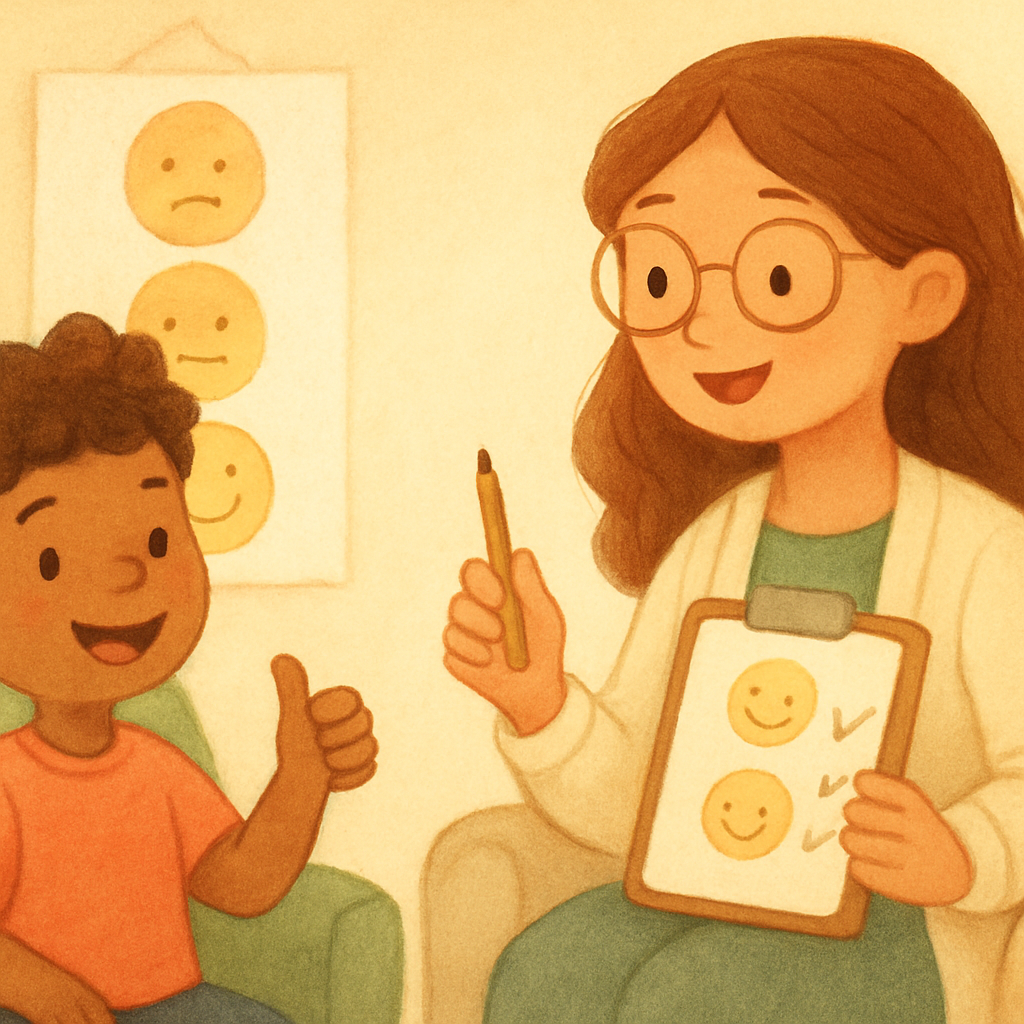
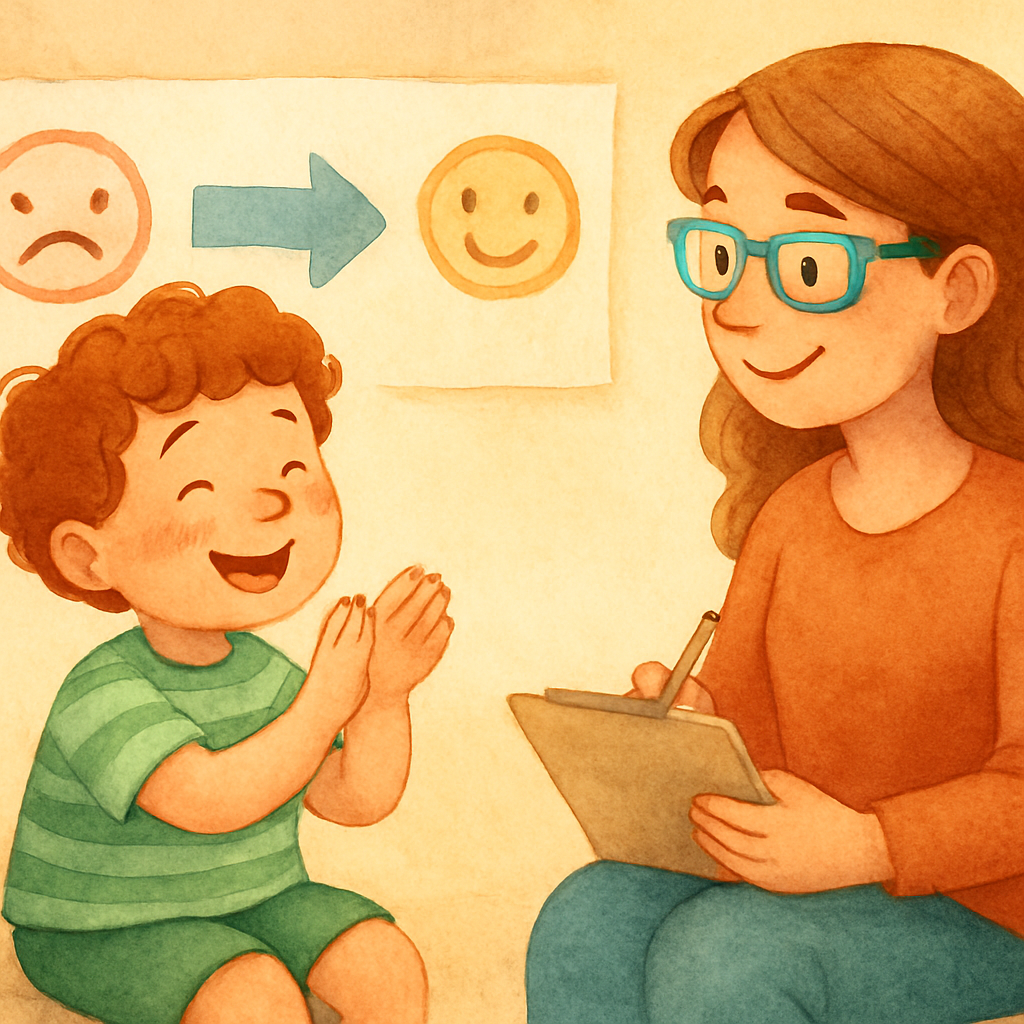
This is where the work happens. For younger children, therapy often looks like play! The therapist uses games and activities to teach skills. For older children, it might involve talking, role-playing, or community outings.
Step 4: Parent Coaching
You are the expert on your child. A huge part of child behaviour therapy is coaching you. The therapist gives you the tools to handle the difficult moments at home, ensuring that progress continues even when the session ends.
Strategies That Work
Effective behaviour therapy for kids uses a variety of evidence-based strategies. Some common techniques include:
- Emotional Regulation Zones: Teaching children to categorize their feelings (e.g., Blue for sad, Red for angry, Green for happy) and matching them with coping tools.
- Visual Supports: Using schedules and picture cards to make daily routines predictable and less anxious.
- Positive Reinforcement: Catching the child being "good" and rewarding specific positive behaviours to encourage them to happen again.
- Social Stories: Creating short stories to explain social situations (like going to the hairdresser or sharing toys) so the child knows what to expect.
Conclusion
When your child is struggling, it affects the whole family. But you do not have to navigate this journey alone.
Behaviour therapy for children liverpool offers a pathway to understanding and connection. By utilizing your NDIS behaviour therapy funding and engaging with local experts, you can give your child the skills they need to navigate their emotions and the world around them.
Whether you need help with school transitions, social skills, or managing meltdowns at home, the right behaviour therapy services can transform your family life from chaotic to calm.
We specialize in providing compassionate, evidence-based behaviour therapy for kids in the Liverpool area. Our NDIS-registered team is ready to partner with you to help your child reach their full potential.
Contact us today for a consultation or call daar at 02 9133 2500 to discuss your needs and book an initial assessment.
FAQ: Common Questions for Parents
Do I need a referral?
If you are using NDIS funding, you do not need a doctor's referral. You can contact a provider directly. If you are using a Medicare Mental Health Care Plan, you will need a referral from your GP.
Can therapy happen at school?
Yes! Many providers of behaviour therapy for children liverpool offer mobile services. They can visit your child’s school to observe them in the classroom and work with teachers to implement support strategies.
My child is non-verbal. Can behaviour therapy help?
Absolutely. In fact, it is essential. Often, challenging behaviour stems from the frustration of not being able to speak. Therapy will focus on giving your child a way to communicate (using signs, pictures, or a device), which often naturally reduces the behaviour.
.svg)




.svg)