
.png?width=48&height=48&name=Group%201%20(3).png)
























16 February, 2026

Transforming Challenges into Growth: A Guide to Behaviour Therapy Services
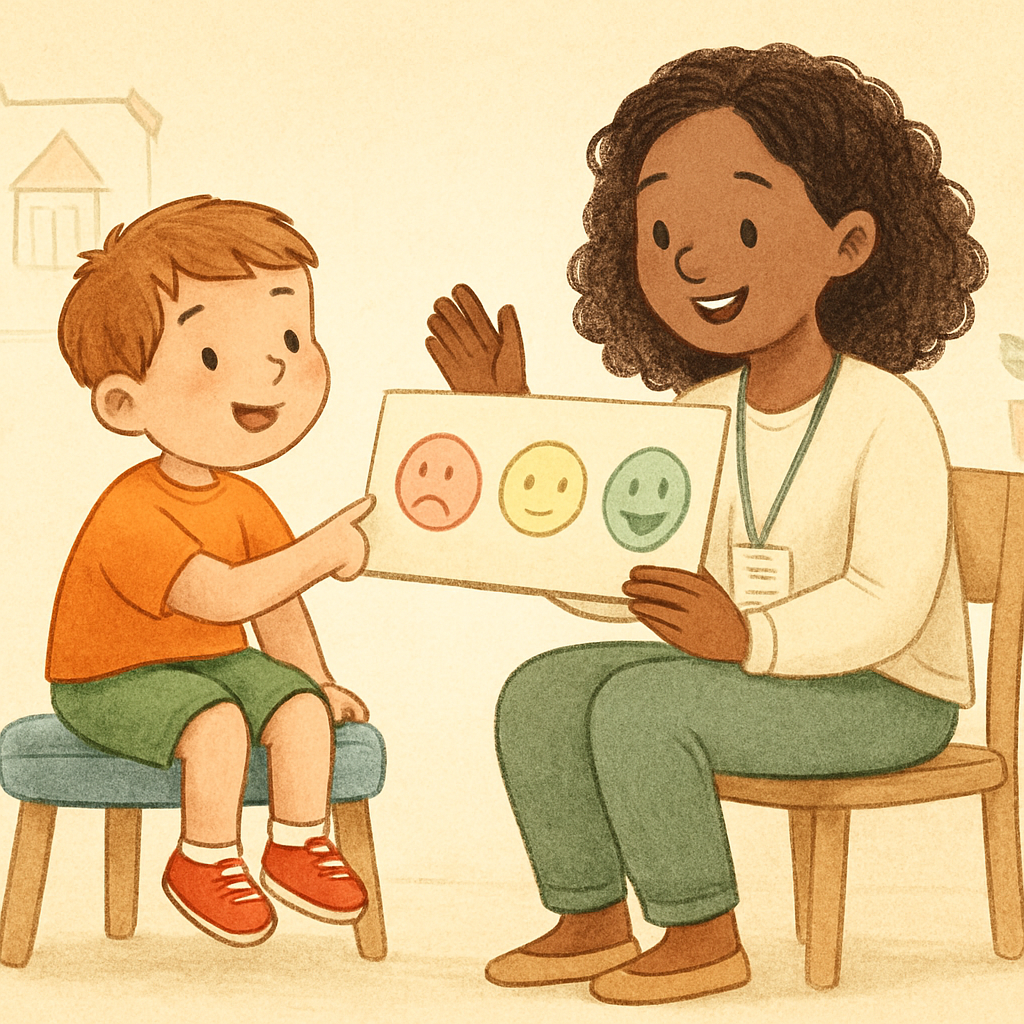
Parenting is a journey of highs and lows. But when the lows involve frequent meltdowns, aggression, withdrawal, or self-injury, the journey can feel isolating and overwhelming. You know your child is trying to communicate, but the message is getting lost in the behaviour.
If you are searching for answers, you have likely come across terms like Behavioural therapy, Positive behaviour support, and Specialised behaviour support. But what do these actually mean for your family? And more importantly, how can they help your child thrive?
The good news is that modern behaviour support is not about punishment or control. It is about understanding, connection, and skill-building.
In this guide, we will explore what a high-quality behaviour therapy service looks like, explain the gold standard of support, and help you determine the right level of care for your child’s unique needs.
What is Behavioural Therapy?
Behavioural therapy is a broad term for interventions that help children (and adults) change their actions and reactions.
At its core, it is based on a simple truth: Behaviour is communication.
When a child throws a toy, refuses to eat, or hits a sibling, they are rarely doing it just to be "naughty." They are often expressing a need—perhaps they are overwhelmed by noise, frustrated by a task, or seeking connection—but they lack the skills to say it with words.
Effective therapy focuses on:
- Identifying the "Why": Understanding the trigger (antecedent) and the result (consequence) of the behaviour.
- Teaching Skills: Giving the child new tools to communicate their needs (e.g., using a sign for "stop" instead of screaming).
- Changing the Environment: Adjusting the surroundings to reduce stress and set the child up for success.
What to Expect from a Behaviour Therapy Service
Engaging a behaviour therapy service is a partnership. It is not about a therapist waving a magic wand; it is about building a team around your child.
A high-quality service will typically follow a four-step process:
- Assessment: The therapist observes your child in their natural environments (home, school, or community) to see the behaviours in real-time.
- Planning: They develop a tailored plan that outlines specific goals (e.g., "Increase independent play" or "Reduce hitting").
- Implementation: This is where the work happens. The therapist works with the child to teach skills and, crucially, coaches you (the parent) on how to respond effectively.
- Review: Data is collected to see what is working. If the behaviour isn't changing, the plan is adjusted.
The Gold Standard: Positive Behaviour Support (PBS)
In the disability and early intervention sectors, Positive behaviour support (PBS) is widely considered the most ethical and effective approach.
Unlike traditional discipline, which focuses on what happens after a behaviour (punishment), PBS focuses on what happens before. It is proactive, not reactive.
The Core Principles of PBS
- Quality of Life: The primary goal is not just to stop the behaviour, but to improve the child’s happiness and engagement. A happy, engaged child has less need for challenging behaviour.
- Person-Centred: The strategies must fit the child’s unique personality, strengths, and interests.
- Skill Building: It replaces the challenging behaviour with a "replacement behaviour." For example, if a child bites when they want a break, PBS teaches them to hand over a "Break Card" instead.
Positive behaviour support respects the human rights of the child. It moves away from coercion and towards cooperation.
When You Need More: Specialised Behaviour Support
For some families, standard therapy isn't enough. If a child’s behaviour poses a significant risk to themselves or others, or if it severely limits their ability to participate in the community, they may require Specialised behaviour support.
This is a specific, higher-tier of support, often funded under the NDIS (National Disability Insurance Scheme) in Australia.
What Makes it "Specialised"?
Specialised behaviour support involves highly trained practitioners (often NDIS-registered) who deal with complex and high-risk behaviours.
This level of support often involves:
- Comprehensive Behaviour Support Plans (BSP): A legal document that outlines exactly how to prevent and respond to behaviours of concern.
- Restrictive Practices: In some cases, to keep a child safe, restrictive measures (like a locked gate or specific medication) are needed. Specialised behaviour support is the only framework that can authorize and monitor these practices, with the ultimate goal of reducing and eliminating them over time.
- Crisis Management: Developing safety protocols for when behaviours escalate to a dangerous level.
While Positive behaviour support is for everyone, Specialised behaviour support is for those with the most complex needs, ensuring safety while striving for independence.
How to Choose the Right Provider
Finding the right behaviour therapy service can feel daunting. Here are three things to look for:
- Qualifications: Ensure the provider is a qualified practitioner (Psychologist, OT, Social Worker, or Board Certified Behaviour Analyst).
- Approach: Ask them, "Do you use a Positive Behaviour Support framework?" You want a provider who focuses on proactive strategies, not just consequences.
- Family Focus: The best results come when the family is involved. Look for a provider who offers parent coaching and training, empowering you to be the expert on your child.
Conclusion
Navigating the world of therapy can be complex, but you don't have to do it alone. Whether your child needs a little help with emotional regulation or comprehensive Specialised behaviour support for complex needs, the right support can change everything.
By choosing a behaviour therapy service that prioritizes Positive behaviour support, you are choosing a path of empathy, respect, and growth. You are giving your child the voice they need to navigate the world with confidence.
If you are looking for compassionate, evidence-based support, we are here to help. Our team specializes in both Positive behaviour support and Specialised behaviour support tailored to your family’s unique needs.
Contact Us Today to schedule a consultation or call daar at 02 9133 2500 and start your journey toward a calmer, happier home.
FAQ: Common Questions for Parents
What is the difference between standard and specialised support?
Standard behavioural therapy focuses on skill-building and general regulation for common challenges (tantrums, anxiety). Specialised behaviour support is for high-risk behaviours (violence, self-harm) and involves strict reporting, safety planning, and often the management of restrictive practices.
Is Positive Behaviour Support just for Autism?
No. While PBS is highly effective for autistic children, it is a universal framework. It works for children with ADHD, intellectual disabilities, trauma backgrounds, and even neurotypical children. It is simply a respectful way to support human behaviour.
Will therapy change my child’s personality?
Never. The goal of Positive behaviour support is to remove the barriers that prevent your child’s personality from shining. It gives them the tools to handle frustration so they can be the happy, playful, and curious child they are meant to be.
.svg)




.svg)