
.png?width=48&height=48&name=Group%201%20(3).png)























8 October, 2026

Is Screen Time and Children’s Behaviour Linked to Anxiety?
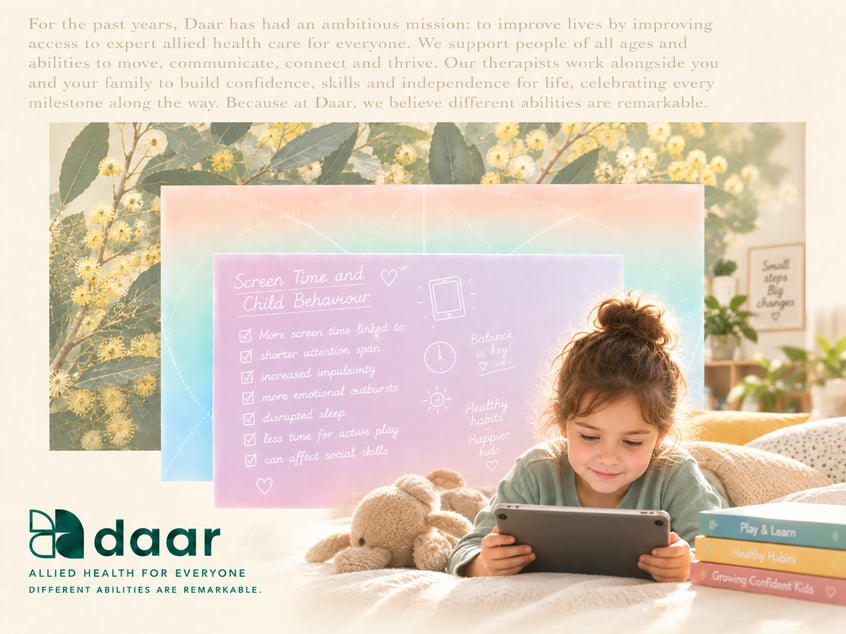
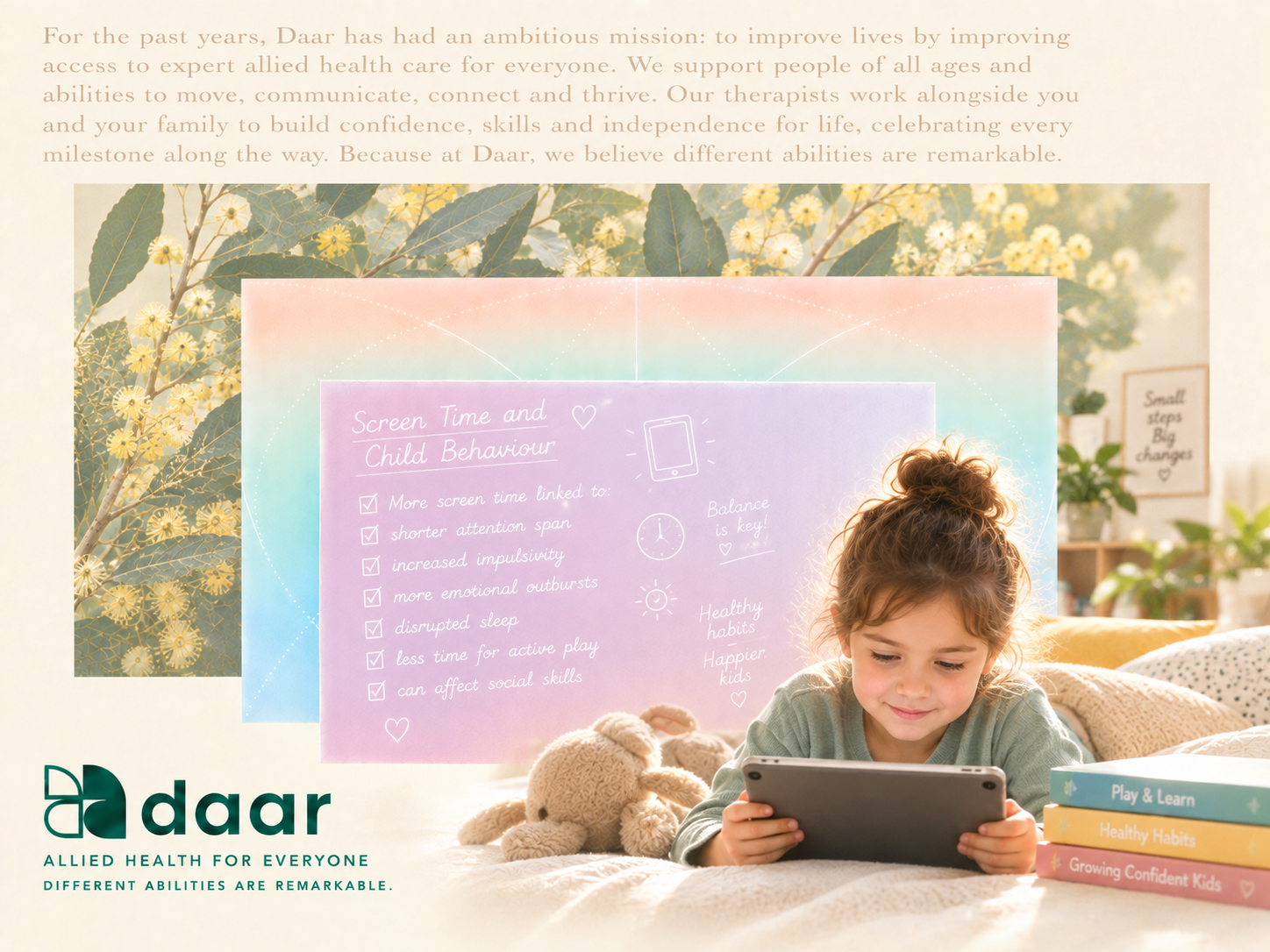
In the modern Australian household, screens are virtually inescapable. From educational tablets in primary schools to the smartphones in our pockets, digital devices are woven into daily life. While technology offers incredible learning and connection opportunities, parents and educators are increasingly raising the alarm about a concerning trend.
Is the rise in screen time directly linked to the growing rates of childhood anxiety and behavioural challenges?
Australian paediatricians, psychologists, and researchers are exploring this exact question. Here is a look at what the latest evidence says about the digital dilemma, and how screens impact our children's developing brains.
The Science of Screens and Hyperarousal
To understand the link between screens and anxiety, we have to look at the brain. Fast-paced, highly stimulating content—like video games, rapid-fire YouTube videos, or endless scrolling on TikTok—triggers the release of dopamine. This is the brain's "reward" chemical, and it is highly addictive.
When a child is engrossed in this type of content, their nervous system often enters a state of hyperarousal (the "fight or flight" mode). Their heart rate increases, and their brain stays on high alert.
When the screen is suddenly turned off, the dopamine drops sharply. For a young child who has not yet developed strong emotional regulation skills, this sudden drop frequently results in the dreaded "tech tantrum." Over time, chronic hyperarousal from excessive screen time can leave a child's baseline stress levels elevated, mimicking or exacerbating the symptoms of clinical anxiety.
Sleep Disruption: The Missing Link
One of the most profound ways screen time impacts behaviour and anxiety is by disrupting sleep.
The blue light emitted by screens suppresses the production of melatonin, the hormone responsible for making us sleepy. When children use screens in the hour before bed, they struggle to fall asleep and experience poorer sleep quality.
A sleep-deprived child is much more likely to exhibit irritability, poor impulse control, and difficulty concentrating the next day. Chronic sleep deprivation is also a known major contributor to heightened anxiety levels in both children and adults.
What Do the Australian Guidelines Say?
The Australian Government’s Department of Health and Aged Care has established clear national guidelines regarding screen time to protect children's physical and mental wellbeing:
- Under 2 years: Zero screen time is recommended (with the exception of video chatting with family).
- 2 to 5 years: No more than 1 hour of sedentary screen time per day.
- 5 to 17 years: No more than 2 hours of recreational (non-educational) screen time per day.
However, statistics show that the vast majority of Australian children easily exceed these limits, leaving parents feeling guilty and overwhelmed.
Finding Balance: It’s About Quality, Not Just Quantity
Not all screen time is created equal. An interactive video call with a grandparent or co-playing an educational game is vastly different from three hours of solitary, rapid-fire video consumption.
Australian child psychologists recommend shifting the focus from simply policing minutes to managing the quality of the content and the context of its use. Here are some evidence-based strategies to protect your child's mental health:
- Establish Tech-Free Zones: Keep bedrooms completely screen-free to protect sleep hygiene. Make meal times tech-free to encourage family connection.
- Co-View and Discuss: Whenever possible, watch content with your child. Discussing what is happening on screen helps them process the information and brings them out of a passive, hyper-aroused state.
- The 60-Minute Wind Down: Turn off all devices at least one hour before bedtime to allow melatonin production to begin.
- Encourage "Green Time": Ensure screen time is balanced with outdoor, unstructured play. Physical activity is one of the most effective natural combatants against childhood anxiety.
If you are concerned that screen time is severely impacting your child's behaviour or anxiety levels, reaching out to your GP or a paediatric psychologist can provide you with tailored, family-centred support.
Official References
Australian Government Department of Health, Disability and Ageing
.svg)




.svg)