NDIS pricing 2026–27, decoded: what actually changed
The 2026–27 NDIS Pricing Schedule took effect on 1 July 2026. To understand what it means in
practice, we analysed every one of the 670 price-limited support items in the new
schedule and compared each one against last year’s limit.
The short version: this was not an across-the-board rise or an across-the-board cut. It was a
split decision, and which side of it you land on depends almost entirely on the type of support you
use.
The numbers at a glance
- 210 items increased
- 65 items decreased
- 106 new items were added
- 41 items were removed
A split decision
Everyday supports — personal care, community access and support coordination — rose by
about 5% on average. These are labour-based supports, so the Fair Work Commission’s
annual wage decision flowed straight through to their price limits.
Therapy went the other way. The Annual Pricing Review reset a swathe of allied-health limits, with
reductions averaging 7.7% where they applied. The two exceptions bucked the trend hard:
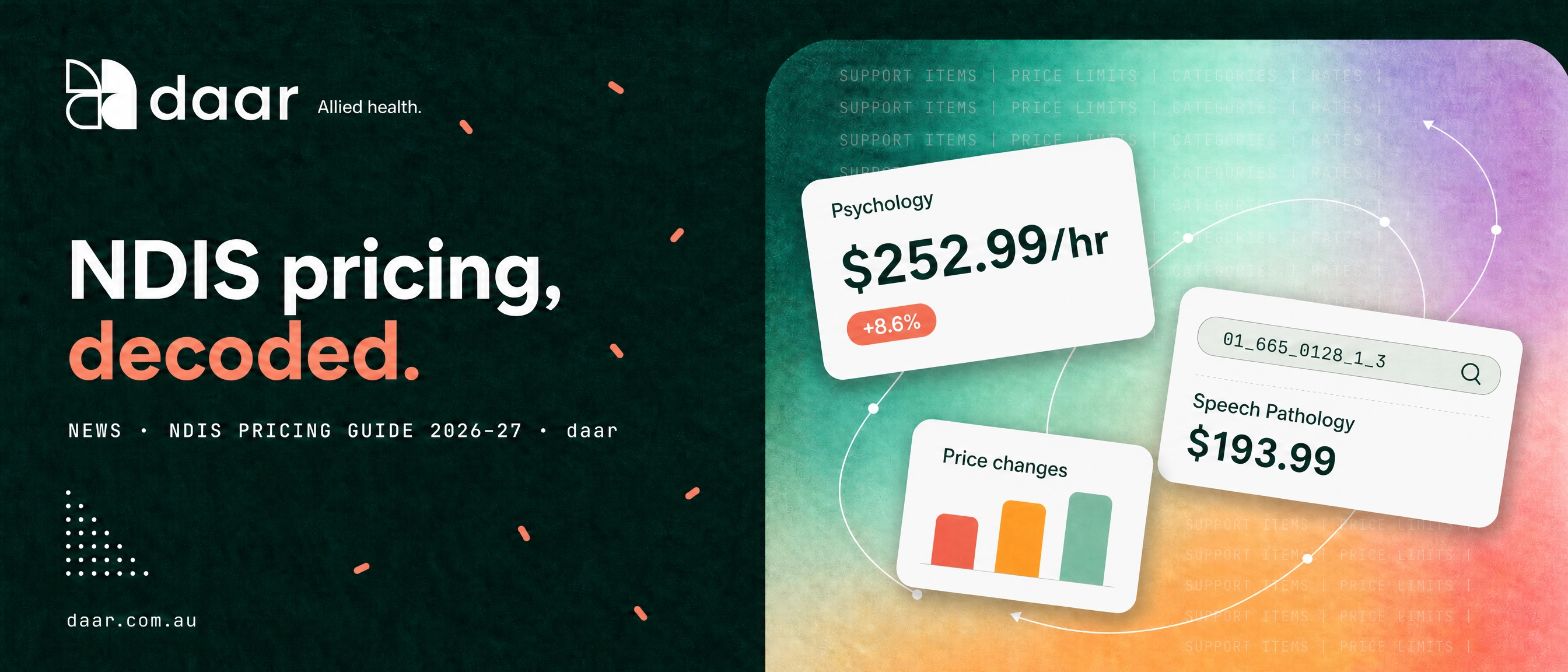
psychology and specialist behaviour support both rose 8.6%, to $252.99 per hour,
reflecting their higher qualification and complexity requirements.
What a $15,000 plan now buys
The clearest way to see the impact is in sessions rather than percentages. Based on one-hour
sessions at the national price limit, here is what a $15,000 therapy budget funds this year compared
with last:
| Support | 2025–26 | 2026–27 |
|---|
| Psychology | 64 sessions | 59 sessions |
| Behaviour support | 64 sessions | 59 sessions |
| Occupational therapy | 77 sessions | 77 sessions |
| Speech pathology | 77 sessions | 77 sessions |
| Dietetics | 79 sessions | 83 sessions |
| Exercise physiology | 89 sessions | 92 sessions |
The squeeze lands hardest on mental-health and behaviour supports: where a plan bought 64
psychology sessions last year, it now buys 59. Occupational therapy and speech pathology held steady
at $193.99 per hour. Dietetics and exercise physiology actually became cheaper, so the same budget
stretches further.
The biggest movers
| Support | 2025–26 | 2026–27 | Change |
|---|
| Other Professional | $193.99 | $156.16 | −19.5% |
| Psychologist (incl. ECI) | $232.99 | $252.99 | +8.6% |
| Specialist Behavioural Intervention Support | $232.99 | $252.99 | +8.6% |
| Dietitian (ECI) | $188.99 | $178.99 | −5.3% |
| Assistance with self-care — weekday night | $78.81 | $82.57 | +4.8% |
The largest single cut — −19.5% — hit the “Other Professional”
therapy line, which was realigned to a new $156.16 per hour tier alongside counselling and art therapy.
Why prices moved
Wages pushed everyday supports up. Support work, supported independent living,
community participation and support coordination are labour-based, so the wage decision produced a
consistent lift of roughly 4–5% across those categories.
The Annual Pricing Review reset therapy. Allied-health limits were reviewed against
benchmarks: dietetics and exercise physiology were trimmed, a new lower “Other Professional”
tier was introduced, and psychology and specialist behaviour support were lifted.
Look up any support item
We have published the full analysis, along with the underlying dataset, so participants, plan
managers, support coordinators and providers can check the detail for themselves:
Journalists and researchers: the figures and dataset are open for reuse with attribution. For
comment, or a breakdown by state or category, contact info@daar.com.au.
Source: NDIS Pricing Arrangements & Price Limits, effective 1 July 2026. Purchasing-power
figures assume one-hour sessions at the national price limit and a $15,000 budget.

.png?width=48&height=48&name=Group%201%20(3).png)
























.svg)




.svg)