
.png?width=48&height=48&name=Group%201%20(3).png)























11 September, 2026

Embrace Telehealth: Transforming Care for All
Key Highlights
- Remote behaviour support allows regional families to address challenging behaviours proactively, rather than waiting for a crisis to secure a specialist appointment. Virtual care offers the ultimate discretion in tight-knit rural towns, eliminating the worry of a clinician’s car parked in your driveway. In Australia, telehealth services—which include virtual care—are covered by Medicare for eligible patients and providers, making access to behavioral support and health consultations more accessible for people in rural areas.
- Virtual care offers the ultimate discretion in tight-knit rural towns, eliminating the worry of a clinician’s car parked in your driveway.
- A telehealth behavior consultation can be used to directly upskill your local, on-the-ground NDIS support workers in evidence-based strategies. Distance shouldn't mean delay. Online services make onboarding quick so your family can start seeing positive changes sooner. In Australia, health practitioners offering telehealth consultations follow guidelines issued by the Australian Health Practitioner Regulation Agency (AHPRA) and relevant national boards to ensure quality and safety. These guidelines outline the requirements for privacy, informed consent, secure technology use, and maintaining the same professional standards as face-to-face consultations.
- Distance shouldn't mean delay; online services allow for rapid onboarding so your family can start seeing positive changes sooner.
- daar provides culturally and environmentally sensitive strategies that actually make sense for outback and regional farming lifestyles.
Introduction
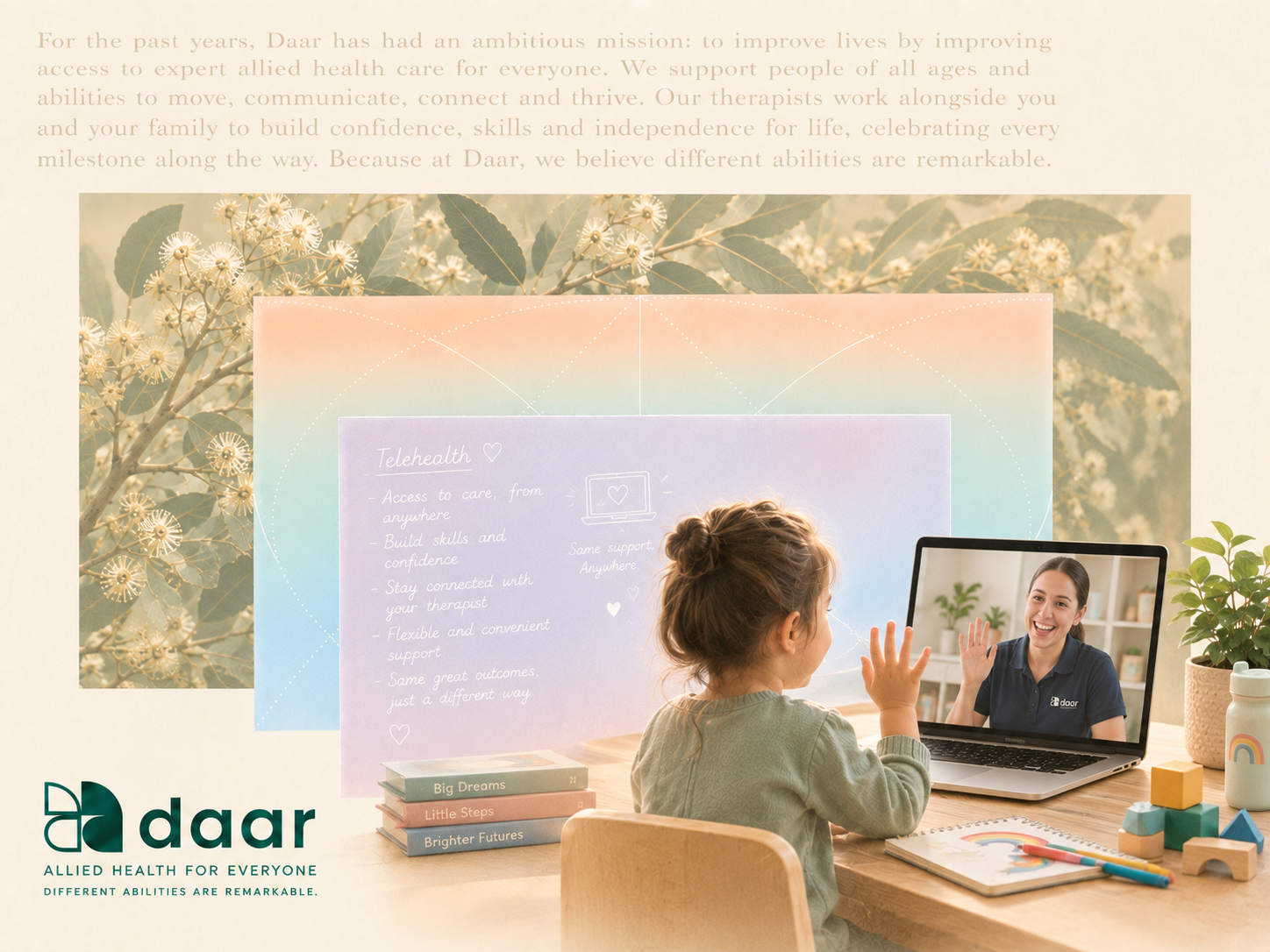
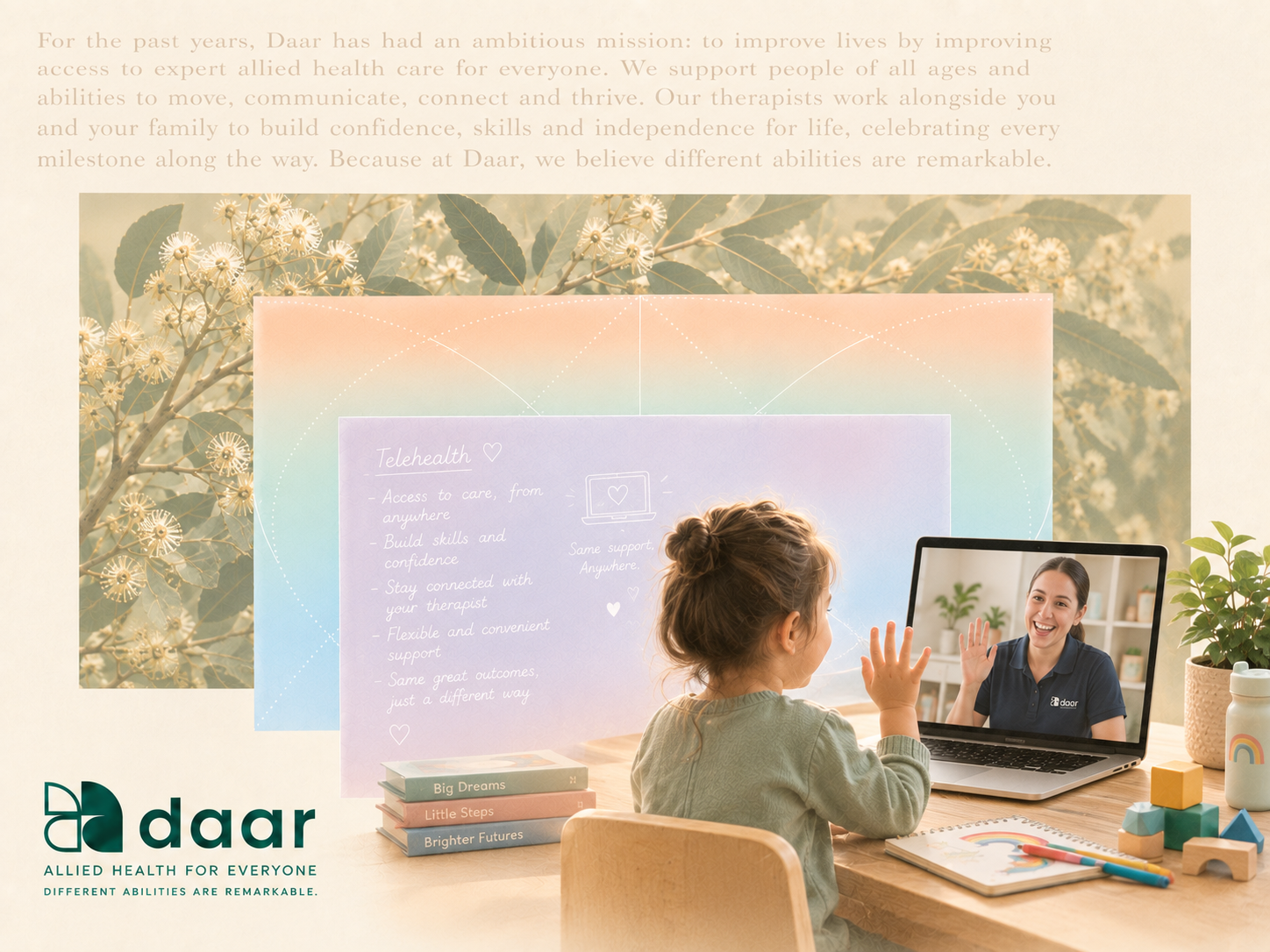
In many regional and outback Australian communities, a lack of local specialists often forces families into a "wait-and-see" approach. When challenging behaviours begin to emerge, the sheer difficulty of securing an out-of-town clinician means families often manage on their own until a breaking point is reached. At daar, we believe that rural Australians shouldn't have to wait for a crisis to access high-quality care. Telehealth offers a solution by using digital communication tools—such as video calls, phone calls, or secure messaging—to connect patients in remote locations with healthcare professionals. This approach allows families to receive expert advice, support, and treatment from the comfort of their home, making healthcare more accessible and timely.
By leveraging technology, we are changing the narrative from reactive crisis management to proactive capacity building. Our tailored remote behaviour support services mean that the moment you notice a need for intervention, expert help is just a click away. To make the most of your telehealth appointment, prepare any relevant medical records, jot down the issues you want to discuss, and ensure you have a reliable internet connection and a quiet environment for the meeting. Having these items ready will help your session run smoothly and make it easier for our specialists to provide support.
The Power of Proactive Intervention
Challenging behaviours—whether they involve emotional dysregulation, self-harm, or difficulty with transitions—rarely resolve themselves without structured intervention. When rural families are forced to wait months for a visiting specialist, these behaviours can become deeply entrenched.
Remote behaviour support changes this completely. Because our clinicians at daar connect with you via a secure video link, we can begin intervening early. By addressing minor behavioral concerns before they escalate, we can introduce positive replacement behaviours and emotional regulation skills quickly. Proactive, early intervention significantly reduces stress on the whole family and fosters a much happier, calmer home environment.
Ultimate Discretion for Tight-Knit Towns
Country towns are famous for their close-knit, supportive nature. However, that same closeness can sometimes make seeking mental health or behavioural support feel exposing. If you live on a quiet domestic street where everyone knows everyone, a visiting specialist arriving at your door can accidentally invite unwanted questions from neighbours.
A telehealth behaviour consultation offers absolute privacy and zero stigma. You receive the same level of intensive, specialised support from allied health professionals, including health care services, but it happens securely behind closed doors. No one in your community needs to know you are receiving therapy unless you choose to tell them.
Mentoring Your Local Support Network
Many NDIS participants in remote areas rely on fantastic, deeply caring local support workers. However, these workers are often generalists and may not have formal training in Positive Behaviour Support (PBS), often aided by tools such as a laptop.
We don't want to replace your trusted local team; we want to empower them. A major advantage of a telehealth behaviour consultation is our ability to dial your local support workers into the session. Our behavioural experts can mentor and guide your on-the-ground team, teaching them how to read behavioural triggers, safely manage meltdowns, and consistently apply PBS strategies during community access outings. We turn your local generalists into a highly capable, behaviourally-informed support team.
Strategies Tailored to the Rural Lifestyle
A behaviour support plan designed for a child navigating crowds in the Sydney CBD is rarely useful for a child living on a cattle station in remote Queensland. Our online practitioners take the time to understand your specific rural environment. We adapt our remote behaviour support strategies to fit the realities of farm routines, long school bus rides, and regional community spaces, ensuring the plan is highly practical and easy to implement in your actual daily life.
Conclusion
Your location should never put you at a disadvantage when it comes to early, effective behavioural intervention. By embracing telehealth, you can act quickly, protect your family’s privacy, and upskill your local support network with top-tier professional guidance.
If you are ready for practical, NDIS-aligned strategies used in general practices, reach out to explore a telehealth behaviour consultation or call daar directly at 02 9133 2500 to find your perfect match.
Frequently Asked Questions
Do I need a doctor's referral to start remote behaviour support?
No, you do not need a GP referral to access our behaviour support services, especially if you are utilising your NDIS funding. You can contact HealthDirect or daar directly, and our intake team will help you gather the necessary information to get started.
How do you help during a sudden behavioural escalation if you aren't there physically?
Our goal through a telehealth behaviour consultation is heavily focused on prevention and training. We equip parents and local support workers with a structured "response plan" long before an escalation occurs. If a crisis happens, caregivers are already trained on the exact de-escalation techniques to use safely on the ground.
What if we can only schedule sessions outside of typical business hours due to farm work?
We understand that agricultural and rural working hours do not always fit the standard 9-to-5. daar offers highly flexible telehealth scheduling, including early morning or evening appointments, to accommodate the unique routines of our rural clients, especially for those who may need to provide an email for confirmation.
.svg)




.svg)