
.png?width=48&height=48&name=Group%201%20(3).png)























17 September, 2026

Transforming Care: Telehealth for Regional Australia
Key Highlights
- Eliminating the "postcode lottery": Telehealth for regional Australia ensures that families outside major metropolitan centres have absolute equal access to elite allied health professionals.
- The emotional and physical toll of long-distance travel severely impacts a disabled child's capacity to learn; telehealth for rural Australia allows therapy to happen in a calm, familiar home environment.
- Accessing telehealth behaviour support Australia means you no longer have to wait 18 months for the only local practitioner to have a cancellation; you are matched nationwide immediately.
- Navigating isolation is tough, but our "mediator model" empowers parents on rural properties to become confident, capable emotional anchors for their children.
- daar provides a fully NDIS-aligned digital clinic that seamlessly connects your remote care team, including local country schools and community support workers.
Introduction
There is an undeniable beauty and freedom to raising a family in country Australia. However, for parents of neurodivergent children or those with complex disabilities, living outside a major capital city often comes with a massive, hidden cost: the healthcare divide. Digital health connectivity plays a crucial role in bridging this gap by enhancing telehealth use and delivery in regional Australia. Reliable internet access and digital infrastructure enable families to access specialist medical care remotely, reducing travel times and improving healthcare outcomes for those in rural communities.
When your child needs specialised allied health care, the reality often involves devastatingly long local waitlists, or strapping a dysregulated child into a car for a four-hour round trip just to sit in a clinic for 45 minutes. At daar, we believe that geographical isolation should never mean compromising on clinical excellence. Let’s explore how the digital landscape is actively closing the healthcare gap, the unique benefits of telehealth for regional Australia, and how our nationwide network plays a critical role in bringing top-tier support directly to your front door, no matter where you live. However, while telehealth services offer a lifeline for regional Australia, there are notable challenges. Limited access to reliable internet, digital literacy issues, and difficulties in building trust and rapport in virtual sessions can all impact the effectiveness of telehealth care. Addressing these barriers is crucial to ensure all families can benefit from remote allied health solutions.
Ending the Postcode Lottery: Telehealth for Regional Australia
In major cities, families have the luxury of interviewing multiple clinics to find the perfect fit for their child. In regional towns, families often have to settle for the one generalist who happens to service their area, regardless of whether that practitioner has specific experience with Autism, ADHD, or complex behavioural needs.
The expansion of telehealth for regional Australia fundamentally ends this postcode lottery. By digitising the clinic, daar removes physical borders. We consult with you to understand your child's highly specific neurotype and challenging behaviours, and then we match you with a medical specialist from our nationwide team who has the exact clinical expertise to help. You get the right fit, not just the closest fit. To support healthcare providers in regional Australia, various government grants, training programs, and technology initiatives have been established. These include federal funding for telehealth infrastructure, access to professional development resources, and partnerships with organizations like daar to expand specialist services and offer telehealth solutions tailored for rural communities.
Eliminating the Travel Toll: Telehealth for Rural Australia
For families living on properties or in remote communities, the travel required to access in-person therapy is an intervention barrier in itself.
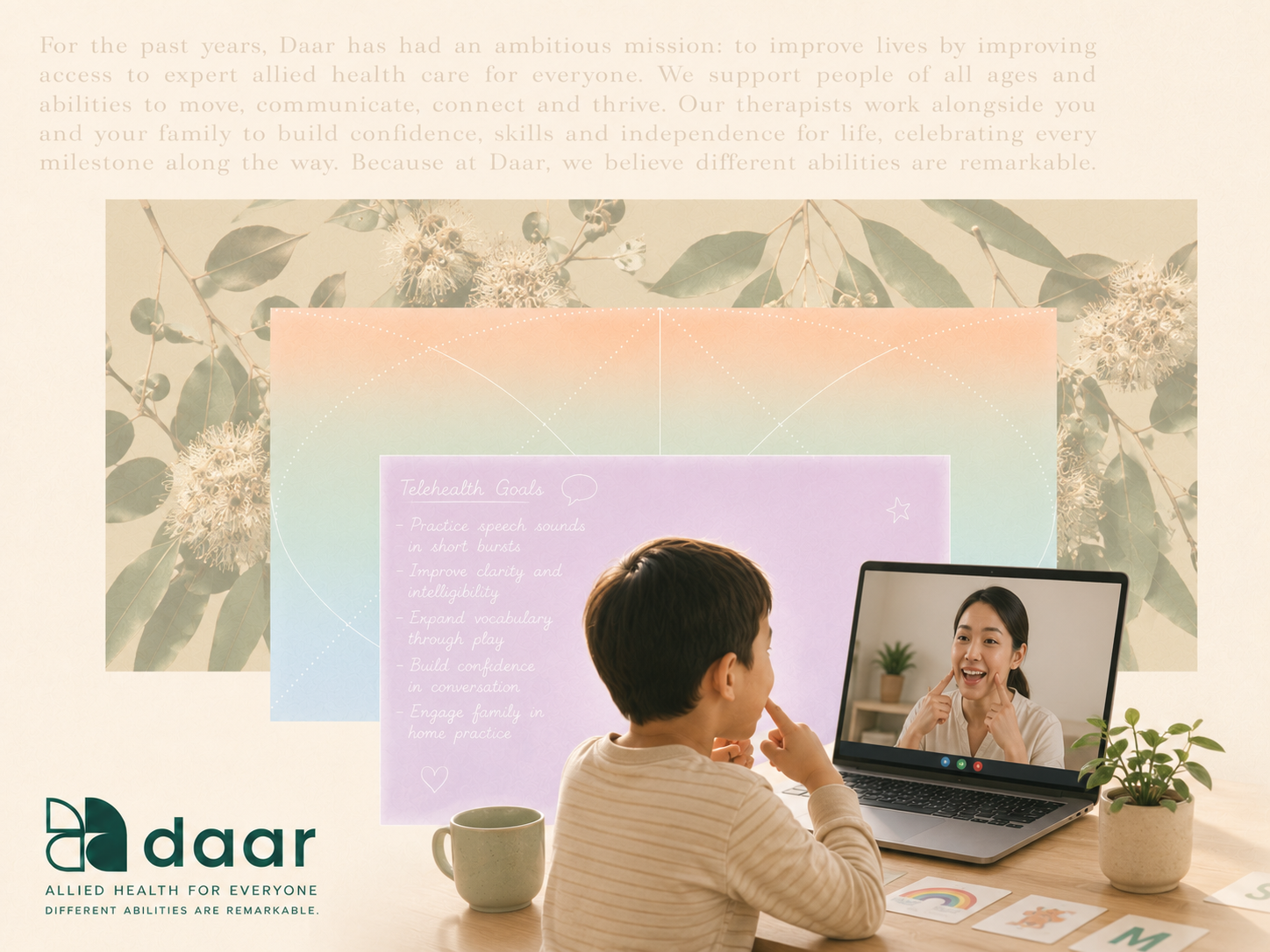
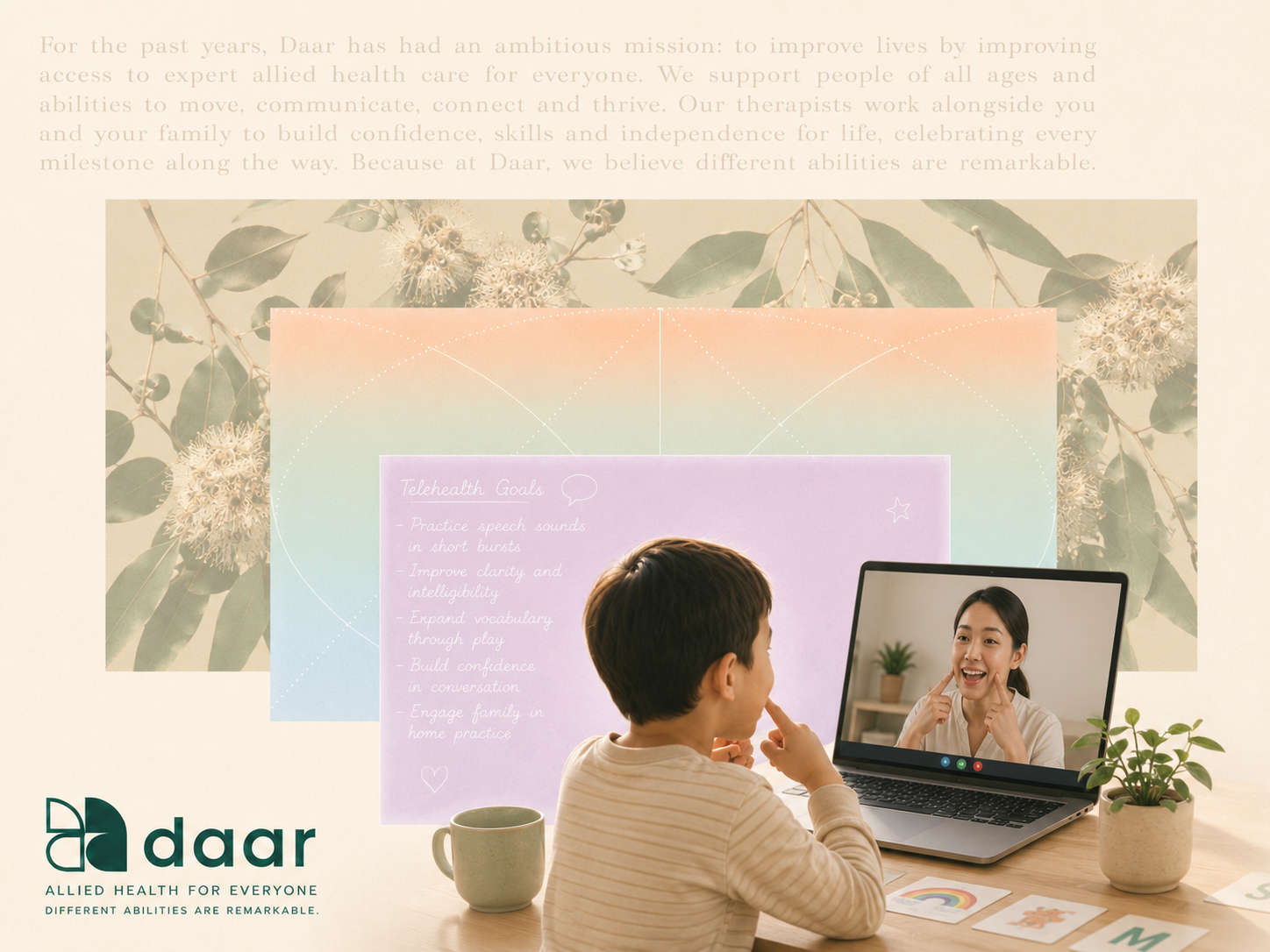
A child with sensory processing differences or high anxiety is often thoroughly exhausted and dysregulated by the time they finish a long car journey and step into an unfamiliar waiting room. They are entirely out of their "window of tolerance" to learn new skills. Telehealth for rural Australia changes this dynamic entirely. The therapy sessions happen in your living room or backyard. Your child's nervous system remains anchored and calm, meaning the clinical strategies land faster and more effectively because the child feels physically and emotionally safe.
Empowering Isolated Parents: Telehealth Behaviour Support Australia
When you are geographically isolated, raising a child with severe behavioural distress can feel incredibly lonely. You might not have the robust network of local support workers that city families rely on. In response to these unique needs, there are special telehealth programs for specific health needs in regional Australia, such as Telehealth Behaviour Support Australia, which provides accessible behavioural support for parents in remote areas and addresses important public health concerns.
This is precisely why daar’s model for telehealth behaviour support Australia is a game-changer in improving telehealth access. We utilise the highly evidence-based "mediator model." Instead of a therapist trying to connect with your child through a screen, our practitioners spend the video sessions consulting directly with you. We equip isolated parents with the precise scripts, de-escalation techniques, and positive reinforcement strategies outlined in the NDIS Positive Behaviour Support Plan. We empower you to be the expert, transforming your rural home into a consistent, supportive therapeutic environment.
Uniting the Remote Care Team
A crucial element of successful behavioural intervention is consistency across all environments, which includes the local regional school or community centre.
Coordinating meetings between a city-based specialist and a rural school teacher used to be a logistical nightmare. Through our secure telehealth platform, our practitioners can easily facilitate virtual case conferences with your child's rural educators and local GP. We act as the central clinical hub, ensuring that your entire remote ecosystem is executing the same proactive strategies to support your child.
Conclusion
Living in a regional town or a rural property shouldn't mean sacrificing the quality of your family's mental health care, nor should it mean enduring exhausting weekly road trips. By embracing telehealth, you can seamlessly connect with Australia's leading allied health experts from the comfort of your own home.
Reclaim your time, fuel, and energy. Highly specialised, NDIS-aligned support is ready for your family right now.
Reach out to explore a consultation or call daar directly at 02 9133 2500 to find your perfect match today.
Frequently Asked Questions
Is our country internet connection reliable enough for telehealth behaviour support Australia?
We understand that internet reliability can be an issue in rural areas. While video calls are optimal for observation, our telehealth services provide crucial health information and are highly adaptable. If your connection drops out, our practitioners can easily switch to a standard phone consultation. We also heavily utilise asynchronous support, such as having you securely upload short videos of environmental setups or tricky behavioural moments for your clinician to review before your phone session.
How does telehealth affect our NDIS funding compared to visiting a local clinic?
Utilising telehealth is incredibly efficient for your NDIS budget. When you see practitioners face-to-face in regional areas, you are often required to pay for their travel time and mileage out of your capacity-building budget, which rapidly drains your funds. With telehealth, there are zero provider travel costs, meaning 100% of your allocated funding goes directly toward actual therapy and parent coaching, and it plays an important role in optimizing your resources effectively.
Can a practitioner conduct a proper functional behaviour assessment without visiting our rural home?
Yes. A comprehensive assessment relies heavily on thorough parent interviews, data tracking (antecedent and consequence mapping), and observing the child's ecosystem. Our experts train you on how to accurately track this data during the week. Combined with live virtual observation of the home layout and family dynamics, telehealth yields highly accurate, real-world data without the artificial "visitor effect" of a clinician stepping into your house. Rural Australians have reported positive feedback about their experience with telehealth, noting that it offers convenience, reduces the need for travel, and allows their family to feel more comfortable during assessment. Many have expressed appreciation for being able to access expert services remotely, saying telehealth makes healthcare access support more accessible in isolated areas.
.svg)




.svg)