
.png?width=48&height=48&name=Group%201%20(3).png)























10 September, 2026

Telehealth: The Future of Healthcare Delivery
Key Highlights
- Telehealth breaks down geographical barriers, giving regional and rural Australians instant access to specialised allied health and psychological support in a medical office setting.
- Online therapy limits the need for exhausting commutes, allowing clients to receive high-quality care straight from their homes.
- Virtual sessions can offer a higher level of privacy for individuals living in close-knit communities where everyone knows each other.
- Evidence shows that telehealth is just as effective as traditional face-to-face therapy for a wide range of behavioural, developmental, and mental health conditions.
- daar connects you to a tailored network of professionals across Australia, ensuring you get the right support regardless of your postcode.
Introduction
Living in regional or rural Australia offers a wonderful sense of community, open spaces, and a relaxed lifestyle. However, it often comes with a significant challenge: accessing consistent and specialised healthcare from health professionals. For families seeking allied health services, long waitlists and hours spent driving to the nearest major clinic can make getting the right support feel overwhelming. Thankfully, telehealth services are available to a wide range of Australians, including those living in regional or rural areas, individuals with mobility challenges, and anyone who may have difficulty attending in-person appointments, making healthcare more accessible for diverse groups.
Fortunately, the landscape of healthcare is shifting. Telehealth therapy has emerged as a powerful solution, making it easier than ever for remote communities to connect with their healthcare providers and experienced professionals. At daar, we believe that distance should never be a barrier to thriving, and our telehealth services are specifically designed to bring expert, compassionate care directly to your living room. In Australia, health practitioners providing telehealth consultations must follow specific guidelines set out by the Medical Board of Australia and the Australian Health Practitioner Regulation Agency (AHPRA). These guidelines ensure telehealth services maintain high standards of privacy, informed consent, clinical safety, and continuity of care.
Overcoming the Distance: How Telehealth Works for Rural Areas
In many parts of rural Australia, local clinics are overbooked, and finding a local specialist in fields like psychology, speech therapy, or behaviour support can be incredibly difficult. Telehealth removes this hurdle completely.
Instead of planning your entire week around a multi-hour drive to a regional centre, telehealth allows you to schedule sessions that fit seamlessly into your existing routine. Using just a smartphone, tablet, or computer with a reliable internet connection, you can connect directly with a qualified practitioner. This not only saves money on fuel and takes the stress out of travel, but it also ensures continuity of care—meaning appointments aren't easily derailed by bad weather, road closures, or car troubles.
Privacy and Comfort in Small Communities
One of the less talked about, yet highly valuable, benefits of telehealth for rural Australians is privacy. In tight-knit towns where everyone knows their neighbours, sitting in a quiet place like a local clinic's waiting room can sometimes feel uncomfortable or exposing.
Telehealth therapy provides absolute confidentiality while ensuring access to health information. You have the same private, one-on-one time with a professional, but from the safety and comfort of your own home, parked car, or private office. This secure environment often helps individuals and families open up more freely, which can lead to better therapeutic outcomes.
Is Telehealth Actually Effective?
It is completely normal to wonder if a video call can provide the same level of care as sitting in a room with a therapist. Decades of research and real-world outcomes confidently point to yes, and in many cases, having a family member or friend present during the appointment enhances the experience, as well as the convenience of providing your phone number allows for seamless communication with your therapist.
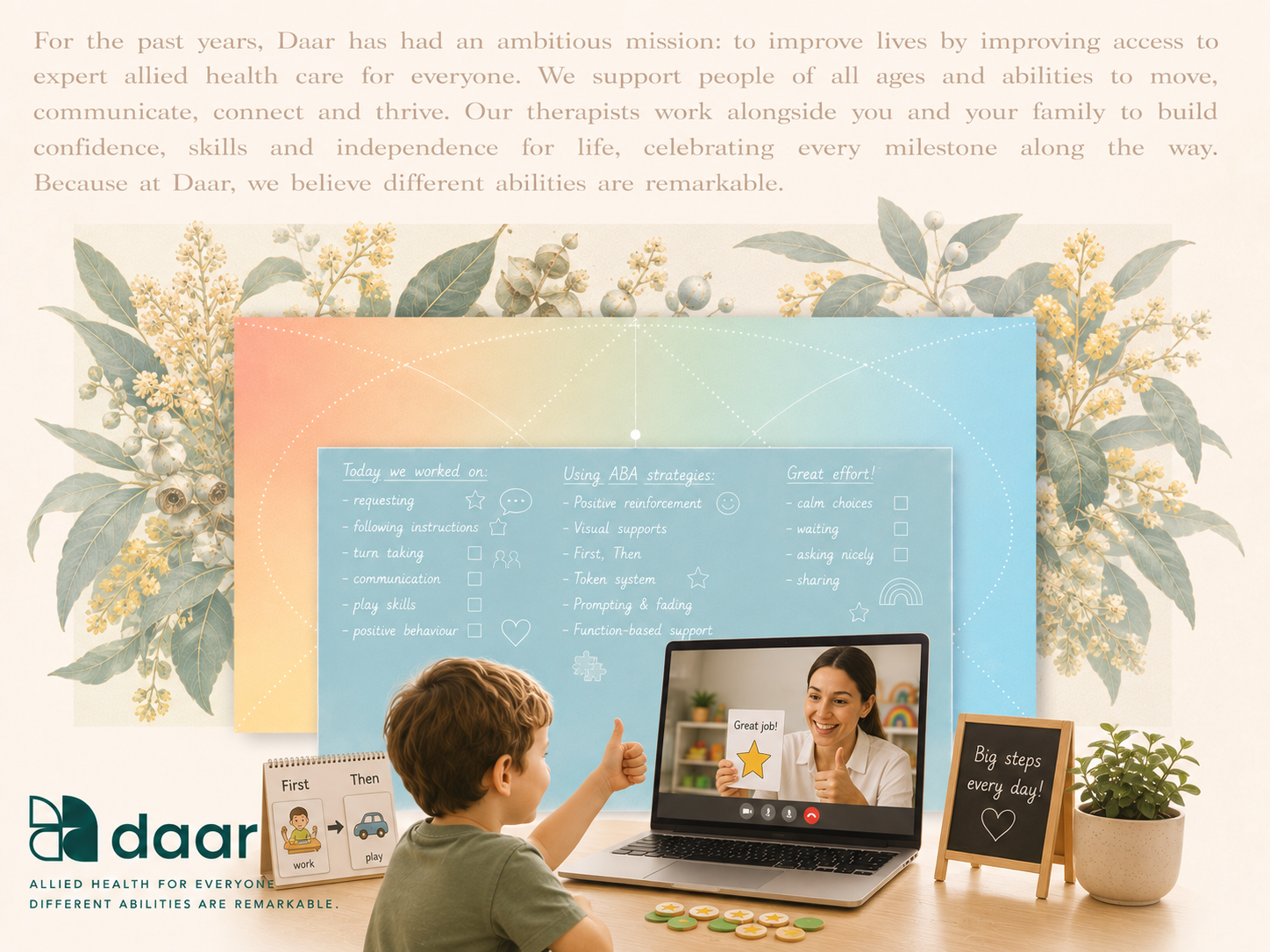
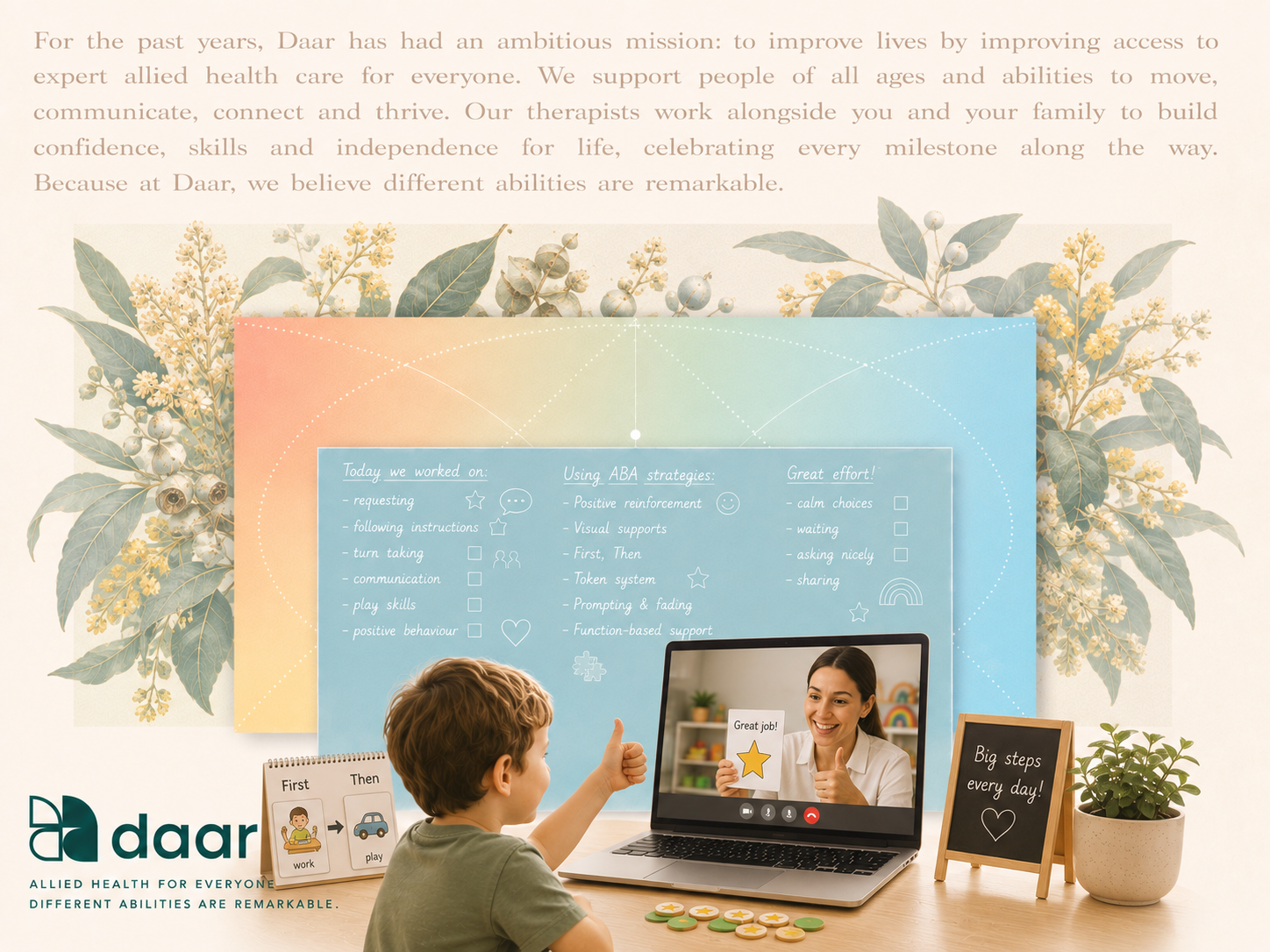
For many services, including psychology, counselling, and behaviour therapy, telehealth has proven to be just as effective as face-to-face sessions. In fact, many children and teens respond remarkably well to online video therapy, as they often feel much more relaxed and confident interacting through technology in their own familiar environment. Therapists at daar use engaging, evidence-based methods tailored for digital platforms, allowing you to access important information such as your test results, to ensure every session is productive, interactive, and focused on your specific goals.
Conclusion
Your postcode should not dictate the quality of care you and your family receive. Telehealth therapy and virtual care are actively bridging the gap across Australia, bringing top-tier allied health and mental health support to regional and rural general practices and communities. With convenience, exceptional privacy, and proven effectiveness, taking the first step toward positive change has never been more accessible.
If you are ready to overcome the distance and find the right support tailored to your unique needs, reach out to our team today. Explore a consultation or call daar directly at 02 9133 2500 to find your perfect match.
Frequently Asked Questions
What equipment do I need to access a telehealth appointment for therapy from a regional area?
All you need is a reliable internet connection and a device with a camera and microphone, such as a smartphone, tablet, or laptop. You do not need to download complex software; most sessions are accessed via a simple, secure link sent directly to your email.
Is telehealth therapy covered by the NDIS or Medicare?
Yes. If you are an NDIS participant, many capacity-building health care services like psychology, behaviour support, and speech therapy can be delivered and funded via telehealth. Additionally, if you have a Mental Health Treatment Plan from your GP, you may be eligible for Medicare rebates for telehealth psychology sessions, just as you would for in-person appointments.
What happens if my internet connection drops out during a session?
Living regionally, especially in remote areas, means internet connections can sometimes be unpredictable. If a video call drops out or the connection becomes unstable, our clinicians are highly adaptable. They will simply call your phone so the session can continue smoothly via audio without losing valuable therapy time.
.svg)




.svg)