
.png?width=48&height=48&name=Group%201%20(3).png)























6 April, 2026

Sugar Intake Children: Impact on Health and Behavior

Key Highlights
- Health guidelines recommend children aged 2-18 have less than 25 grams of added sugar daily. Children under two should have no added sugar at all.
- Excessive sugar intake in childhood is linked to long-term health risks like obesity, type 2 diabetes, and high blood pressure.
- Early-life sugar consumption can impact brain development, potentially impairing learning and memory functions later in life.
- High sugar intake can lead to short-term effects like moodiness and energy crashes, though a direct link to hyperactivity is not strongly supported by science.
- Parents can manage their child's sugar consumption by reading food labels, limiting sugary drinks, and offering healthy snack alternatives.
Introduction
It's common for parents to use sweet treats as rewards or to see a child's face light up. But have you ever stopped to wonder about the real impact of sugar intake on children’s health? While a little sweetness on special occasions is fine, regular sugar consumption can have significant effects on everything from their mood to their long-term well-being. Understanding how much sugar is too much and its effects is the first step toward building healthier habits for your family. Many parents worry that sugar intake might cause hyperactivity in children, but scientific evidence does not support a direct link between sugar and hyperactivity. Studies show that the belief in a sugar-hyperactivity connection is largely a myth, although sugar can still impact other aspects of children’s health.
Recommended Sugar Intake for Children
When it comes to your child's diet, knowing the limits on sugar consumption is crucial. Health guidelines provide clear recommendations to help protect your child's health from the negative effects of too much sugar.
The recommended sugar intake varies by age, with stricter limits for younger children. Following these guidelines can help prevent unhealthy weight gain and reduce the risk of various noncommunicable diseases by managing the consumption of free sugars. Let's explore the specific health guidelines and how you can calculate these limits.
Health Guidelines for Sugar Consumption
According to dietary guidelines from organizations like the American Heart Association (AHA) and the World Health Organization (WHO), limiting free sugars is essential. Free sugars are those added by manufacturers, cooks, or consumers, plus those naturally in honey, syrups, and fruit juices.
For children between 2-18 years of age, the recommended amount of sugar is less than 25 grams (about 6 teaspoons) per day. This is a key recommendation to help prevent chronic diseases. The guidelines from the U.S. Departments of Agriculture and of Health and Human Services are even more strict for the youngest, advising that children under two years of age should consume no added sugar at all. This is because taste preferences are established during this critical period.
|
Age Group |
Recommended Daily Added Sugar Limit |
|---|---|
|
Under 2 years of age |
0 grams (0 teaspoons) |
|
2 to 18 years of age |
Less than 25 grams (6 teaspoons) |
Calculating Daily Sugar Limits for Kids
Tracking your child's sugar intake is simpler than it seems. Start by checking the "Added Sugars" on nutrition labels—every 4 grams equals 1 teaspoon.
To reduce sugar, follow these tips:
- Limit Sugary Drinks: Replace soda, sports drinks, and juice with water or plain milk.
- Make Homemade Snacks: You control the ingredients and sugar.
- Offer Healthy Alternatives: Swap cookies or ice cream for mandarin oranges, dried fruit, or trail mix.
Remember, added sugars hide in about 80% of packaged foods under names like high-fructose corn syrup, dextrose, or rice malt syrup. Read labels carefully to cut back.
Effects of Excess Sugar on Children’s Health
A high sugar intake can have both immediate and lasting consequences for a child's well-being. The consumption of sugar, especially from processed foods and drinks, can cause rapid spikes and crashes in blood sugar levels, affecting mood and energy.
Over time, this pattern of excess sugar consumption contributes to more serious health issues. It is important to understand both the short-term behavioral changes and the long-term risks associated with a diet high in sugar. Let's look at these impacts more closely.
Short-Term Health Impacts of Added Sugar
Many parents notice their kids seem “hyper” after eating sugary snacks. While the idea of a “sugar rush” is common, strong scientific evidence does not link sugar to ADHD. However, blood sugar fluctuations can affect a child’s mood and energy, leading to signs like moodiness or sluggishness.
Researchers continue to study how refined sugar impacts behavior. Some studies connect high sugar intake with depression, but evidence for anxiety is mixed. Sugar’s direct role in hyperactivity remains unproven, though diet clearly influences cognitive development. Recent research shows that consuming lots of sugar during adolescence may impair learning and memory.
Short-term effects you might see include:
- Sudden energy bursts followed by crashes
- Moodiness and irritability
- Trouble concentrating
Long-Term Risks, Including Chronic Disease Development
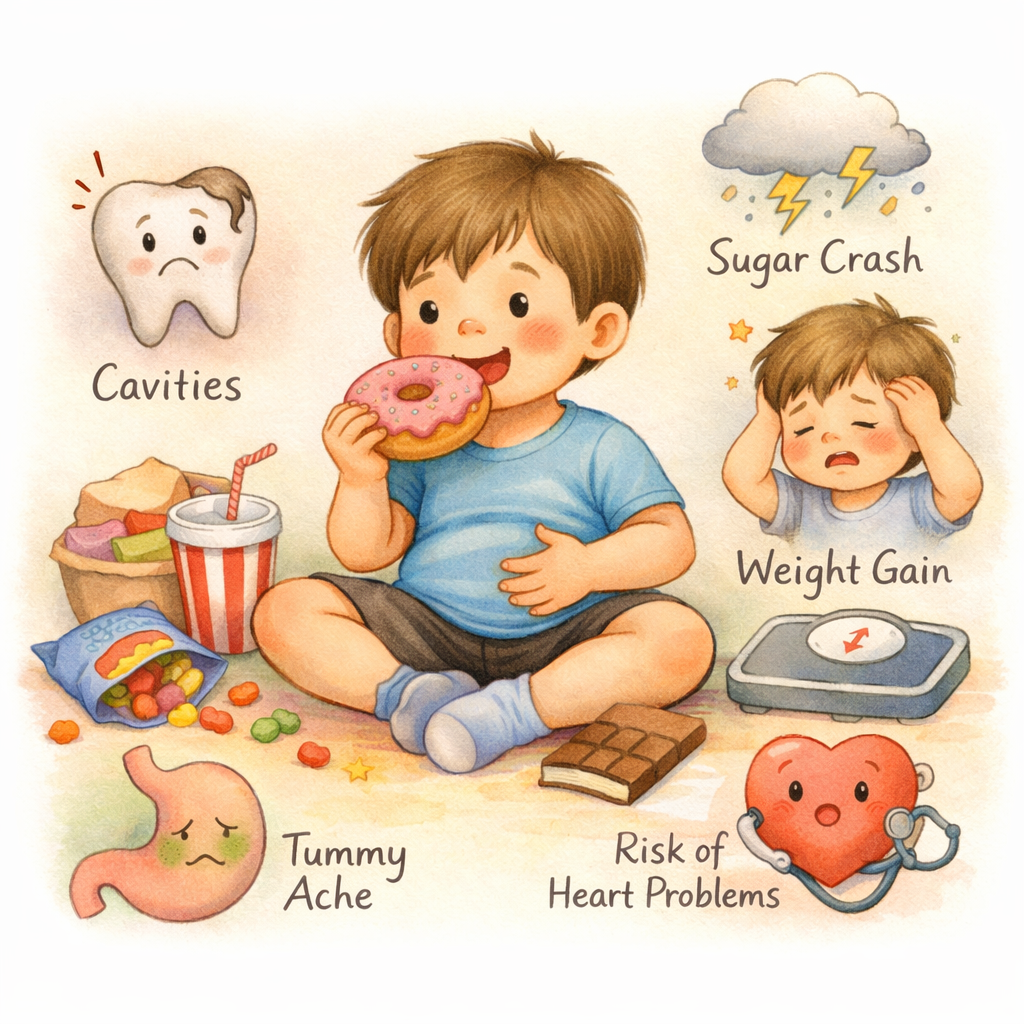 Excess sugar in early childhood can lead to serious health issues later. High sugar diets contribute to unhealthy weight gain and childhood obesity, which significantly raise the risk of type 2 diabetes, high blood pressure, and heart disease in adulthood. Sugar also increases the risk of cavities, causing pain and dental problems.
Recent studies support these risks. One UK study found that less sugar exposure in the first two years of life lowered diabetes risk by 35% and hypertension risk by 20% decades later, showing early sugar intake has lasting effects.
Limiting sugar protects against chronic diseases and may extend life expectancy. Poor eating habits formed in childhood often persist into adulthood, increasing the risk of premature death and disability.
Conclusion
Understanding sugar’s impact on children’s health and behavior is essential for parents and caregivers. Excessive sugar can cause both immediate and long-term health issues, affecting mood and physical well-being. By following recommended sugar limits and making informed dietary choices, you encourage healthier habits and support overall development. Introduce changes gradually and make nutrition a fun experience.
For personalized advice on managing your child’s sugar intake, contact us for a consultation or call daar at 02 9133 2500.
Frequently Asked Questions
Does early-life sugar intake have lasting effects on children’s health?
Yes, early-life sugar consumption has significant lasting effects. It is linked to increased long-term risks for chronic disease, including diabetes and high blood pressure. Additionally, research suggests high sugar intake can negatively affect brain development, potentially impairing memory and learning functions in adulthood.
Can sugar overload cause behavior changes like tantrums?
While there isn't strong scientific proof linking sugar intake directly to hyperactivity disorder, rapid changes in blood sugar levels can cause moodiness, irritability, and energy crashes. These fluctuations can make a child more prone to behavioral issues like tantrums as their energy levels spike and then drop.
What signs indicate kids are consuming too much added sugar?
Signs of excessive added sugar consumption can include moodiness, sluggishness, and unhealthy weight gain. A mouthful of cavities is also a major red flag. The biggest sources of sugar in children's diets are often sugary drinks like sodas, sports drinks, and fruit juices, as well as processed snacks and desserts.
.svg)




.svg)