
.png?width=48&height=48&name=Group%201%20(3).png)























14 August, 2026

Specialised Behaviour Therapy and Its Impact on NDIS Support
Key Highlights
- Specialised behaviour therapy focuses on understanding challenging behaviours, not just stopping them.
- Positive behaviour support is central because it looks at needs, triggers, and safer responses.
- Under the NDIS, support is tailored to the person, their goals, and daily life.
- A qualified behaviour support practitioner creates plans with families and support workers.
- Good plans aim to reduce restrictive practices and build practical skills.
- The long-term goal is better participation, safety, and quality of life.
Introduction
If you are trying to understand specialised behaviour therapy, it helps to start with its purpose. Within the National Disability Insurance Scheme, this support is used when challenging behaviours affect safety, learning, or daily participation. Unlike broader therapy that may focus on general development, positive behaviour support in this setting looks closely at individuals' complex behavioural needs to understand why behaviour happens and what can improve it. The aim is practical and respectful: reduce harm, teach better ways to communicate, and improve quality of life.
Who Provides Specialised Behaviour Therapy?
Specialised behaviour therapy is usually provided by a behaviour support practitioner working through specialist behaviour support and other related support services. This person leads assessment, planning, and review while keeping the focus on the participant’s needs, goals, and daily environments.
In practice, they do not work alone. Support workers, family members, schools, and other professionals may all be involved to develop a positive behaviour support plan so strategies are used consistently. That shared approach helps the plan work across home, school, and community settings.
Qualifications and Training of Behaviour Support Practitioners
A behaviour support practitioner is expected to have the right skills and training to deliver specialist behaviour support safely and effectively, including the implementation of effective interventions. The compiled information explains that practitioners often hold a degree in a related field such as psychology or social work. They also need practical experience, ongoing professional development, and alignment with the Positive Behaviour Support Capability Framework.
Just as important, the practitioner should work through a registered provider when NDIS requirements apply. This supports quality, accountability, and safe practice. Their role is not limited to writing a plan. They assess behaviours of concern, guide implementation, and review whether strategies are helping in real settings.
Some practitioners may also work alongside fields like occupational therapy to build stronger, more useful supports, including enhancing social skills. That matters because specialist behaviour work often connects with daily living, communication, and regulation needs rather than one issue in isolation.
The Importance of Collaborative Multidisciplinary Teams
Effective behaviour support rarely comes from a single professional. Collaborative multidisciplinary teams are more successful because they combine perspectives from home, school, and the community, giving a fuller understanding of patterns, triggers, strengths, and the role of physical activity that one service might overlook.
Support services often include:
- Social work for family guidance and broader life factors
- Occupational therapy for regulation, routines, and daily participation
- Speech therapy provided by qualified speech therapists for communication needs linked to behaviour
- Support workers who apply strategies consistently
When teams share goals and language, plans become clearer and easier to implement. This consistent approach improves effectiveness by ensuring everyone teaches the same skills and supports the person across all settings, giving behaviour strategies a much better chance of success.
How Behaviour Support Plans Are Developed
A behaviour support plan begins with understanding the person, not just the behaviours of concern. That is why providers start with a functional behaviour assessment, incorporating early intervention strategies through interviews, observation, and records to understand what is happening, when it happens, and what may be driving it.
From there, support services shape support strategies that fit the person’s daily life, communication style, and goals, enabling them to achieve their full potential. The result is a practical behaviour support plan that guides family, school staff, and workers. The next sections explain how assessment and planning turn into clear action.
Assessment, Goal Setting, and Functional Behaviour Analysis
The first step is a careful assessment of the risk of harm. A functional behaviour assessment gathers information about challenging behaviours through observation, interviews, and record checks. This process relies on data collection rather than guesswork. It helps the practitioner understand when the behaviour happens, what comes before it, and what the person may be trying to communicate or avoid.
Goal setting comes next. Instead of only trying to stop a behaviour, the behaviour support plan focuses on safer alternatives, better communication, and improved participation. This is the next step that keeps the work practical and tied to quality of life.
|
Assessment Area |
What It Looks At |
|---|---|
|
Triggers |
Events, demands, or environments that happen before the behavioural issues and behaviour |
|
Behaviour Pattern |
What the challenging behaviours look like and how often they occur |
|
Underlying Causes |
The possible reasons or needs linked to the behaviour |
|
Data Collection |
Observations, interviews, reports, and ongoing monitoring |
|
Plan Direction |
Goals, support strategies, and teaching replacement skills |
Steps in Crafting Individualised Behaviour Support Plans under the NDIS
Once the assessment is complete, the practitioner creates a behaviour support plan tailored to the person’s needs and NDIS goals. Positive behaviour support strategies drive this process by focusing on understanding behaviours, building skills, and improving daily life.
A practical plan typically includes:
- Proactive strategies to reduce triggers
- Steps for teaching safer replacement behaviours
- Guidance for family, school staff, and workers to ensure consistent responses while also aiming to upskill caregivers
- Regular reviews to track progress
Under the NDIS, plans should be individualised, strengths-based, and practical—not just paperwork. They help people communicate needs, feel safer, and participate more fully. This person-centered approach is a core principle of specialised behaviour support.
Impact of Specialised Behaviour Therapy on NDIS Participants
For many NDIS participants, specialised behaviour therapy creates change that can be felt in everyday routines. Positive behaviour support can help reduce risk, improve communication, and make home, school, and community settings more manageable, all of which contribute to better mental health. The biggest benefit is often not one single result but a steadier, safer daily experience.
Over time, support services can lead to more positive behaviour, stronger participation, and better quality of life. The outcomes differ by person, but the next sections show how this support can provide practical resources and help across different ages and needs.
Examples of Outcomes for Children, Youth, and Adults
Outcomes from specialised behaviour therapy can look different from person to person. For children, support often links closely to child development, daily routines, and communication, ultimately enhancing a participant’s overall quality of life. For youth and adults, goals may include safer participation, stronger independence, and better support across settings. In each case, the aim is meaningful positive behaviour change, not short-term control.
Examples of outcomes may include:
- learning new skills to express needs instead of using unsafe behaviour
- better participation at home, school, or in community activities
- improved confidence for families and staff using support services
- a stronger quality of life through more predictable routines and responses
These outcomes matter because they build over time. A child may cope better with transitions. A teenager may use more effective communication. An adult may feel more included in daily life. Good support creates practical change that can last beyond the therapy sessions themselves.
Reducing Restrictive Practices and Promoting Inclusion
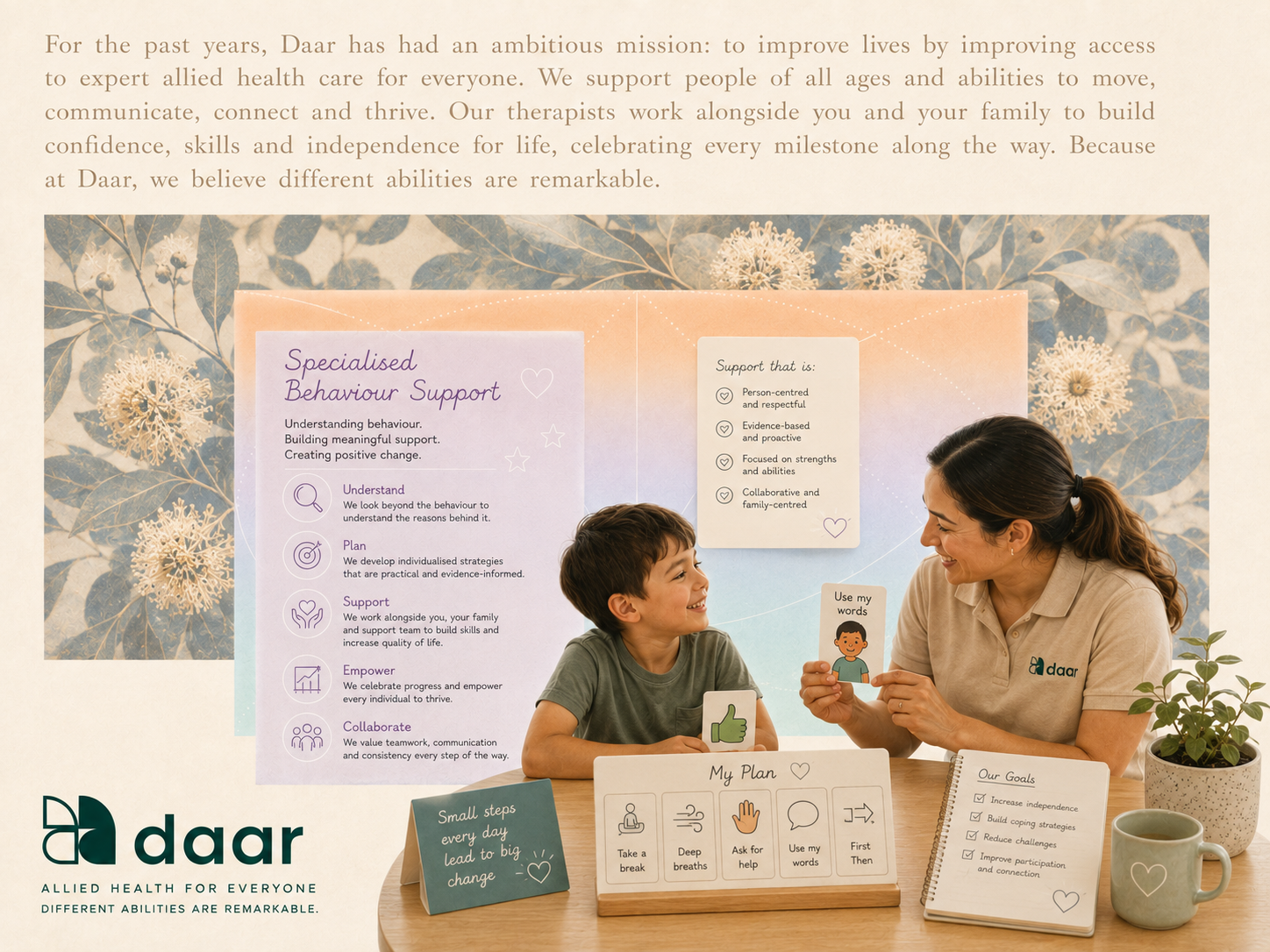
Restrictive practices have a very limited role in specialised behaviour therapy. The compiled information makes clear that these practices are considered only when necessary and must be monitored and reviewed as part of a broader support plan. They are not the main strategy. Positive behaviour support aims to reduce and, where possible, remove them.
That matters because behaviours of concern are better addressed by understanding triggers, unmet needs, and communication barriers. When support workers and families use proactive strategies, people are more likely to feel safe, heard, and respected. This protects dignity while lowering the chance of escalation.
Inclusion grows when a person can take part without being managed through restriction, especially in addressing behavioural challenges. As safer skills are taught and environments become more supportive, the use of restrictive practices can decrease. The end goal is fuller participation in school, home, and community life.
Conclusion
In conclusion, specialised behaviour therapy plays a vital role in supporting NDIS participants by fostering positive outcomes across various demographics. By employing collaborative, multidisciplinary teams and tailored behaviour support plans, practitioners can significantly enhance the quality of life for individuals with diverse needs. This approach not only reduces restrictive practices but also promotes greater inclusion and independence. Understanding the intricacies of how behaviour support is developed and implemented empowers both practitioners and families to navigate the NDIS effectively.
If you're interested in learning more about how specialised behaviour therapy can benefit you or someone you care about, consider reaching out for a consultation or call daar at 02 9133 2500 to discuss your options and get personalised guidance.
Frequently Asked Questions
How does collaborative planning enhance the effectiveness of a behaviour support plan?
Collaborative planning makes a behaviour support plan stronger because family, therapists, schools, and support services can use the same positive behaviour support approach tailored to meet the person's unique needs. That consistency reduces confusion, improves follow-through, and helps strategies work across settings. In turn, the person is more likely to experience stability, participation, and better quality of life.
What support do students receive with behaviour issues in Australian schools?
Students with behaviour issues in school may receive behavioural support services linked to positive behaviour support, especially when school staff work with families and therapists. Support can include shared strategies, guidance for routines and transitions, and help building communication skills so the student can participate more safely and successfully.
How do psychologists with behaviour support expertise assist NDIS clients?
Psychologists with behaviour support expertise can assist NDIS clients by helping assess emotional and behavioural challenges, contributing to therapy services, and supporting positive behaviour support planning under the NDIS Commission. They may also work with families and teams to understand triggers, guide practical responses, and support more effective everyday participation.
.svg)




.svg)