
.png?width=48&height=48&name=Group%201%20(3).png)























4 August, 2026

Understanding Positive Behaviour Support for Children
Key Highlights
- Positive behaviour support helps you understand why challenging behaviour happens and what your child may be trying to communicate.
- A behaviour support plan uses assessment findings to guide daily responses, reduce triggers, and teach new skills.
- Positive reinforcement encourages safe, helpful actions by rewarding progress in clear and meaningful ways.
- PBS focuses on communication, routines, and environment changes that improve quality of life.
- Families, teachers, and practitioners work together so support stays consistent across settings.
Introduction
Positive behaviour support is a practical, person-centered approach that helps you understand what sits behind your child’s behaviour. Instead of only reacting to difficult moments, behaviour support looks at triggers, unmet needs, communication, and daily routines. The goal is to reduce behaviours of concern by teaching safer, more helpful ways to respond and communicate. When used well, positive behaviour support can strengthen children’s wellbeing, build independence, and create a more supportive environment at home, school, and in everyday life.
Developing an Effective Positive Behaviour Support Plan
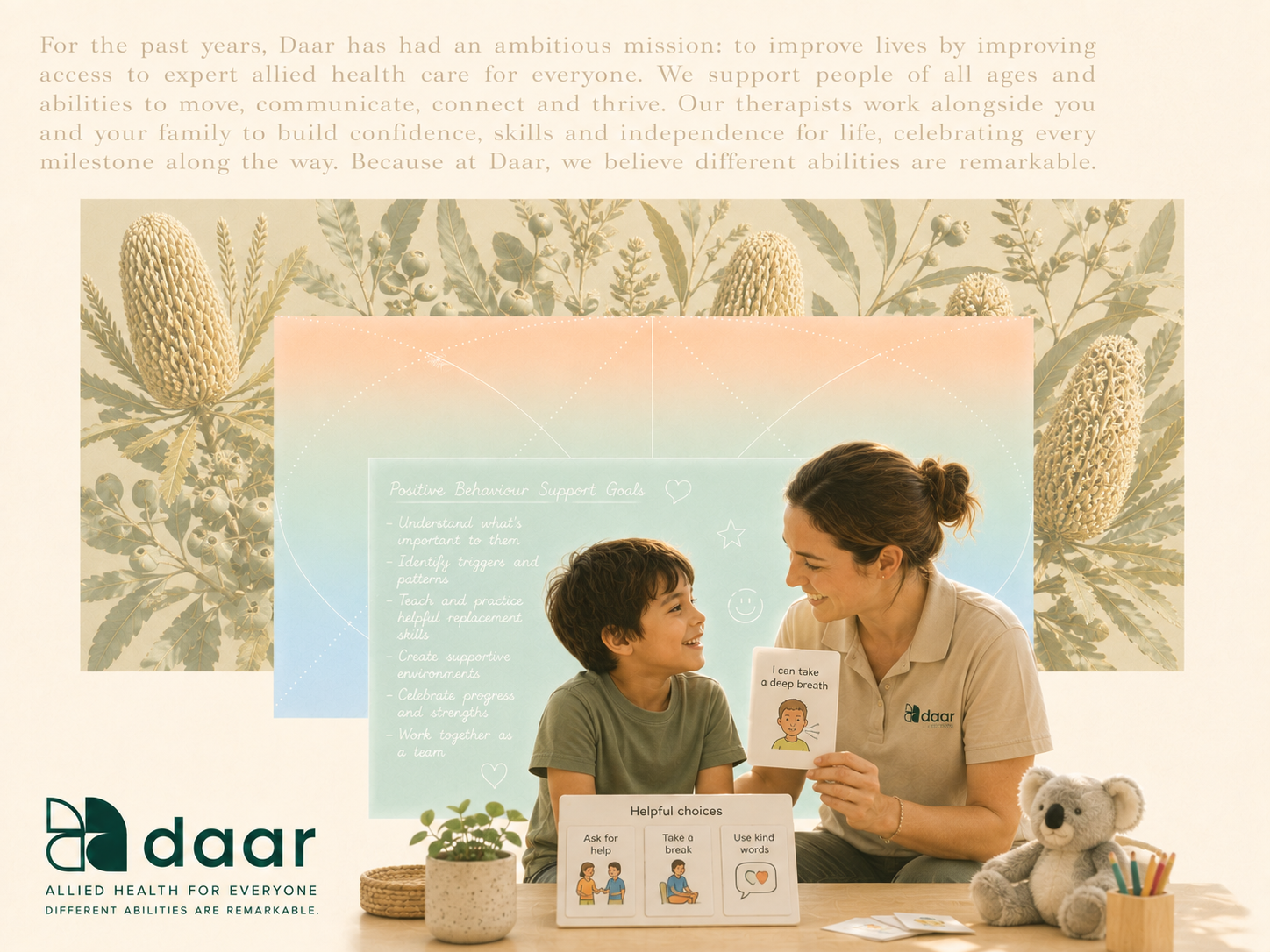
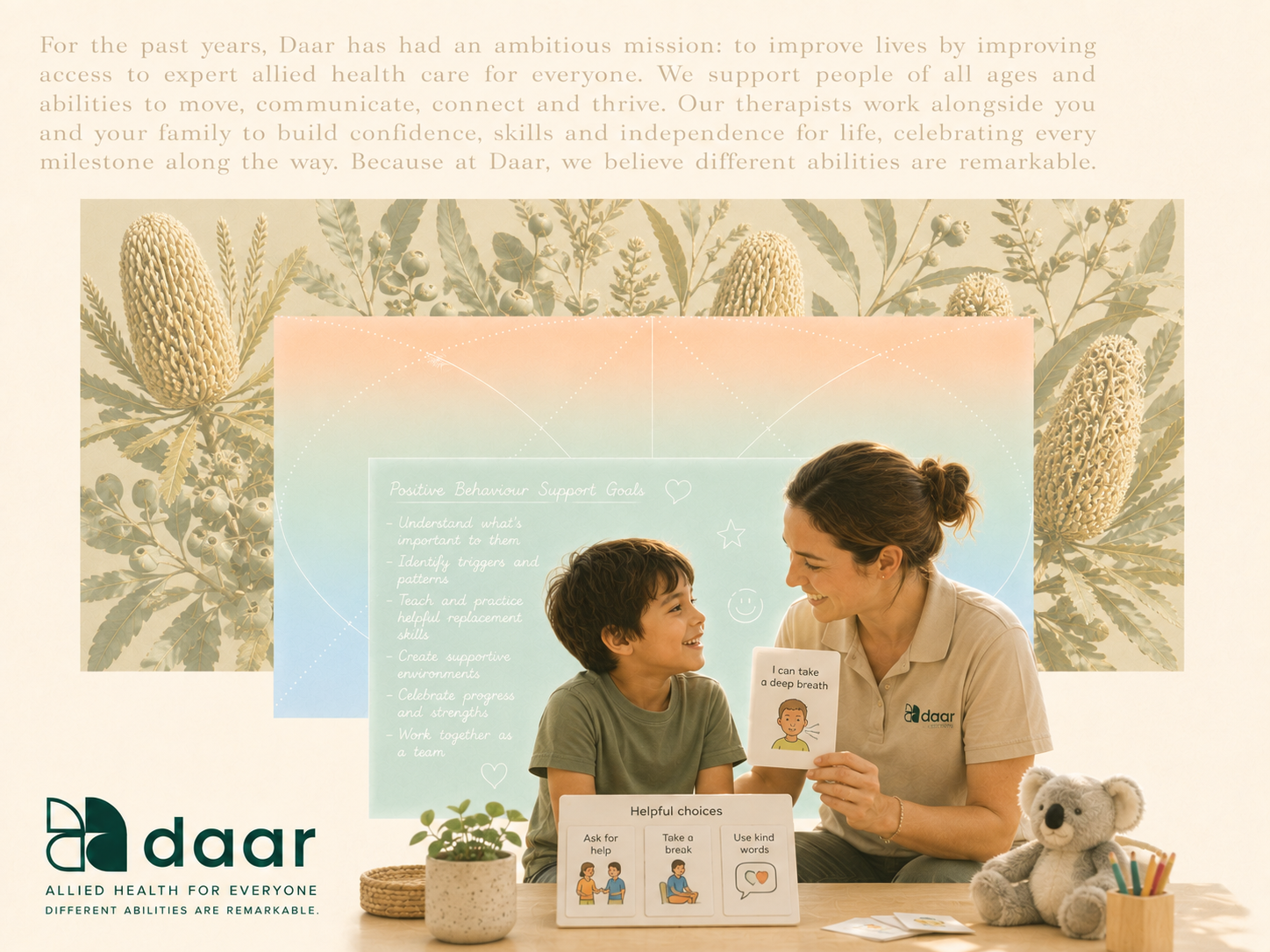
A strong positive behaviour support plan starts with understanding your child’s behaviour in context. That usually means a functional behaviour assessment to look at what happens before, during, and after behaviours of concern, and what purpose those actions may serve.
From there, a detailed plan is built around proactive strategies, skill teaching, and clear responses for adults. With the right support, the plan can reduce triggers, guide daily routines, and help your child learn safer and more effective new ways to communicate. The next sections break down what this looks like.
Essential Components of an Individualised PBS Plan
An individualised PBS plan is tailored to your child’s strengths, needs, and daily routines—not a generic checklist. It uses functional assessment to identify the causes of behaviour and the situations or environments that trigger stress or frustration.
A good plan typically includes:
- clear behaviour support strategies to reduce triggers at home, school, or in the community
- teaching new skills like communication, social, or emotional regulation
- consistent responses for adults during unsafe or challenging moments
The plan should be practical for families, caregivers, and school staff to use every day. When everyone follows the same steps, your child receives consistent support—boosting relationships, participation, and confidence over time.
Steps to Creating and Implementing a PBS Plan for Your Child
Creating a positive behaviour support plan begins with gathering the right information about your child’s needs, routines, and behaviour challenges. A practitioner may observe patterns, speak with your child’s family, and use a functional behaviour assessment to understand what the behaviour achieves for your child.
Then the collaborative team works together to shape support. This often includes:
- identifying triggers, rewards, and environmental factors linked to the behaviour
- choosing replacement skills your child can learn and use instead
- agreeing on simple, consistent responses across home and school
- reviewing progress and adjusting the plan when needed
Implementation matters as much as planning. With the right support, parents, carers, teachers, and therapists can use the same approach in everyday settings. That helps the child practise skills where they are actually needed and gives the plan a better chance of lasting success.
Positive Behaviour Support for Children with Autism
Positive behaviour support can be especially helpful for children with autism spectrum disorder because it focuses on the reason behind behaviour, not just the behaviour itself. A child may be reacting to communication barriers, anxiety, routine changes, or sensory stress.
Good behaviour support helps reduce challenging behaviour by teaching replacement skills and changing parts of the environment that make things harder. For many families, support services also help create more predictable routines, clearer communication, and better daily participation. The following sections show how PBS responds to autism-related needs in real settings.
How PBS Addresses Autism-Related Challenges
Many autism-related challenges involve communication, stress, and coping with change. Positive behaviour support addresses these by understanding what your child’s actions are expressing—whether it’s seeking connection, avoiding distress, or reacting to overwhelming situations.
Practitioners may focus on:
- building communication skills so your child can ask for help, breaks, or favorite items
- adjusting routines or environments to reduce anxiety and triggers
- teaching simple strategies for recognising and managing emotions
This approach supports school participation, family life, and relationships. For example, if a child becomes upset at separation, the plan may strengthen routines at home and school for more stability. When support matches the child’s needs, difficult situations become easier to prevent and manage.
Success Stories and Examples from Early Childhood Settings
In early childhood settings, positive behaviour support is most effective when used during daily routines like play, transitions, group time, and meals. Children learn best in the moment when adults respond calmly and consistently.
Success stories include:
- children using words, signs, or visuals instead of hitting or screaming for help
- fewer meltdowns after changes to routines or transition supports
- stronger skills through positive reinforcement for small achievements
These simple changes can greatly impact daily life. A supportive environment helps children feel safe and understood, leading to better participation, relationships, and confidence at home and in early learning settings.
Finding Positive Behaviour Support Services in Australia
Finding the right support services in Australia starts with knowing who can help. Positive behaviour support may be offered by trained practitioners and psychologists, and some families also connect through the Australian Psychological Society or through professionals already working with their child.
If your child is an NDIS participant, the National Disability Insurance Scheme may fund PBS as part of the child’s plan, depending on need. Some families also ask about related therapy services such as psychology, speech pathology, or occupational therapy. Next, it helps to know what to look for in a provider.
Qualities to Look for in a PBS Provider
A good provider makes positive behaviour support clear, respectful, and practical. Choose practitioners who take time to understand your child, listen to your concerns, and clearly explain next steps. The focus should be on progress, safety, and quality of life.
Look for a provider who:
- Assesses before recommending strategies
- Involves your family and support network in planning
- Offers practical tools for daily use
- Regularly reviews and updates the plan as your child grows
It’s also helpful if the provider can coordinate with other professionals supporting your child. This consistent, team-based approach helps maintain routines and goals across settings, making your child feel secure and supporting steady progress.
Understanding NDIS Funding for Positive Behaviour Support
If your child has permanent and significant disability, NDIS funding may help cover positive behaviour support. The National Disability Insurance Scheme funds support based on individual need, and PBS may sit within the child’s NDIS plan when behaviours of concern affect daily life, safety, relationships, or participation.
The cost of PBS therapy can vary depending on the practitioner and the time needed for assessment, planning, and review. Families can ask the NDIS whether these supports can be included and discuss this with a planner, early childhood partner, or local area coordinator.
|
NDIS funding area |
What families should know |
|---|---|
|
Eligibility |
Children must meet NDIS access requirements based on disability or early intervention needs |
|
Included support |
PBS may be funded when it is considered a reasonable and necessary support |
|
Child’s NDIS plan |
Funding depends on the goals, needs, and evidence included in the plan |
|
Cost of PBS therapy |
Costs vary based on assessment, plan development, and practitioner involvement |
Conclusion
In conclusion, understanding Positive Behaviour Support (PBS) can significantly enhance the lives of children, especially those with autism. By developing individualised plans, parents and caregivers can address challenging behaviours and promote positive outcomes compassionately. PBS not only supports children in their personal development but also fosters a more inclusive environment at home and in educational settings. If you're seeking guidance on how to implement PBS effectively, consider reaching out to a qualified PBS provider who can tailor their approach to your child's unique needs. Embrace this opportunity to make a lasting difference in your child's life!
Reach out for a consultation or call daar at 02 9133 2500 for expert guidance tailored to your child’s needs.
Frequently Asked Questions
How can teachers use positive behaviour support in the classroom?
Child’s teachers can use positive behaviour support by following the behaviour support plan, reducing triggers, teaching replacement skills, and using positive reinforcement for helpful actions. In special education and general classrooms, consistency matters. When teachers respond in clear, predictable ways, children often feel safer and more able to learn.
What should parents expect from a PBS service provider?
Parents should expect behaviour support practitioners to assess children’s behaviour carefully, involve the support network, and explain strategies in simple terms. The right support should come through a collaborative team approach, with practical guidance, regular review, and respect for your child’s needs, strengths, and daily routines.
Are there effective examples of PBS in Australian early childhood education?
Yes. In early childhood settings, positive behaviour support can help children use better communication, manage transitions, and reduce distress during routines. A supportive environment and consistent adult responses often improve child’s progress. Families may also seek guidance through the Australian Psychological Society when looking for trained professionals.
.svg)




.svg)