
.png?width=48&height=48&name=Group%201%20(3).png)























6 February, 2026

Screen Time Behavior Problems: Finding Balance in a Digital World
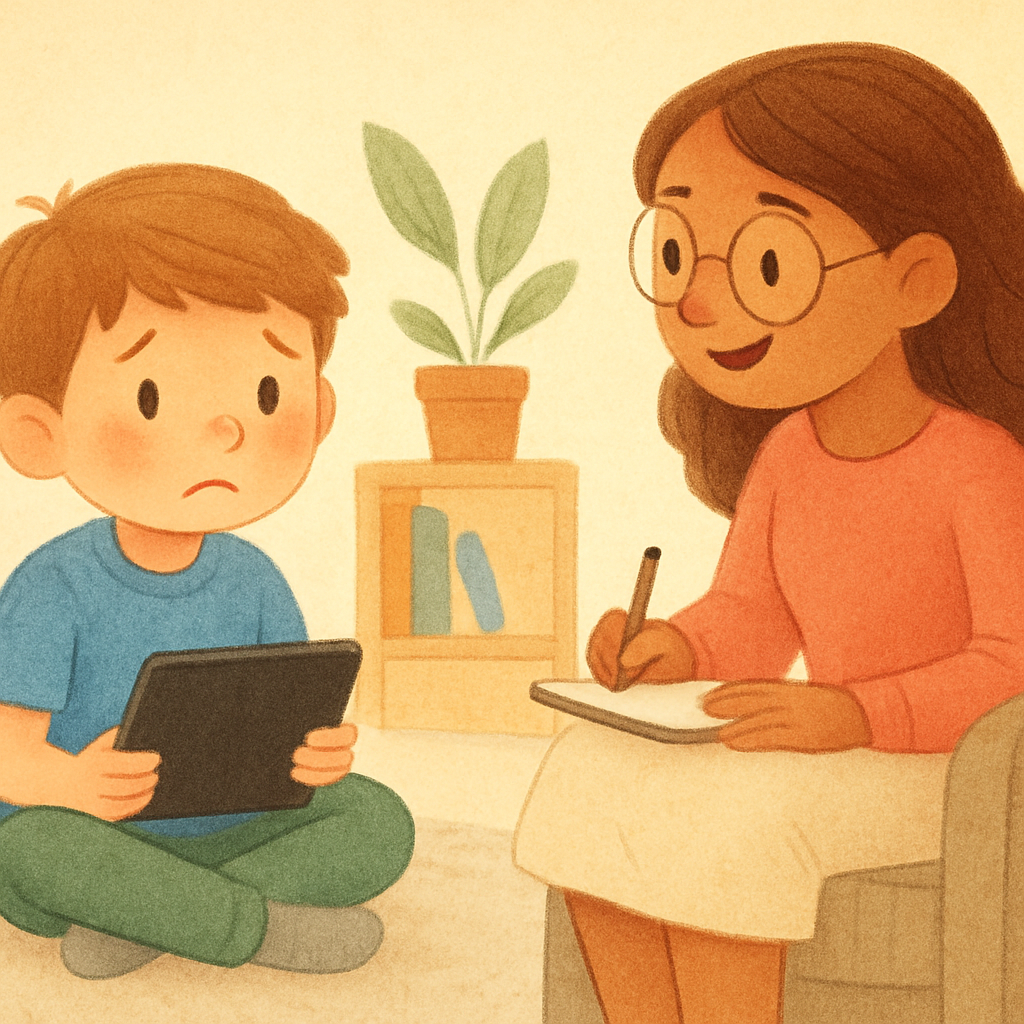
It is a modern parenting paradox: The very devices that offer our children education, entertainment, and connection are often the same ones causing chaos in our homes. If you have ever witnessed a sudden meltdown when the iPad is taken away, or noticed your child becoming increasingly irritable after a gaming session, you are witnessing screen time behavior problems firsthand.
In today’s digital age, screens are unavoidable. They are in our classrooms, our living rooms, and our pockets. But for many families, the relationship with technology has soured. Parents are reporting increased aggression, difficulty focusing, and emotional volatility linked to device use.
The good news? Technology isn't the enemy—unregulated habits are. By understanding the link between screens and behavior, and utilizing behaviour therapy effectively, you can turn the tide. This guide will explore why these problems occur and how you can help your child develop a healthy, sustainable relationship with the digital world.
The Link Between Screens and Behavior
To address screen time behavior problems, we first need to understand what is happening inside a child's brain when they are plugged in.
The Dopamine Loop
Video games, social media, and fast-paced cartoons are designed to be hyper-stimulating. They trigger the release of dopamine—the "feel-good" neurotransmitter—in the brain's reward center. When a child is playing, they are in a state of high arousal and instant gratification.
When the screen is turned off, that dopamine supply drops abruptly. This crash can result in withdrawal-like symptoms: irritability, anger, and anxiety. It is not necessarily that the child is "naughty"; it is that their brain is struggling to regulate after a chemical high.
Disrupted Sleep and Mood
Blue light emitted by screens interferes with the production of melatonin, the sleep hormone. Poor sleep is a leading cause of behavioral issues in children. A tired child is an emotional child, prone to tantrums, lack of focus, and impulsivity.
The Displacement Effect
One of the biggest causes of screen time behavior problems is simply what the screen is replacing. Time spent on a device is time not spent running outside, engaging in imaginative play, or interacting face-to-face. These missing activities are crucial for developing emotional regulation and social skills.
Signs Your Child is Struggling
How do you distinguish between a child who just loves Minecraft and a child who is experiencing genuine screen time behavior problems? Look for these red flags:
- Explosive Reactions: Intense anger or physical aggression when asked to stop using a device.
- Loss of Interest: Refusing to participate in hobbies or sports they used to enjoy.
- Deception: Sneaking devices at night or lying about usage.
- Mood Swings: Going from happy (while playing) to sullen, depressed, or anxious (when offline).
- Social Withdrawal: Preferring virtual friends over real-life interactions.
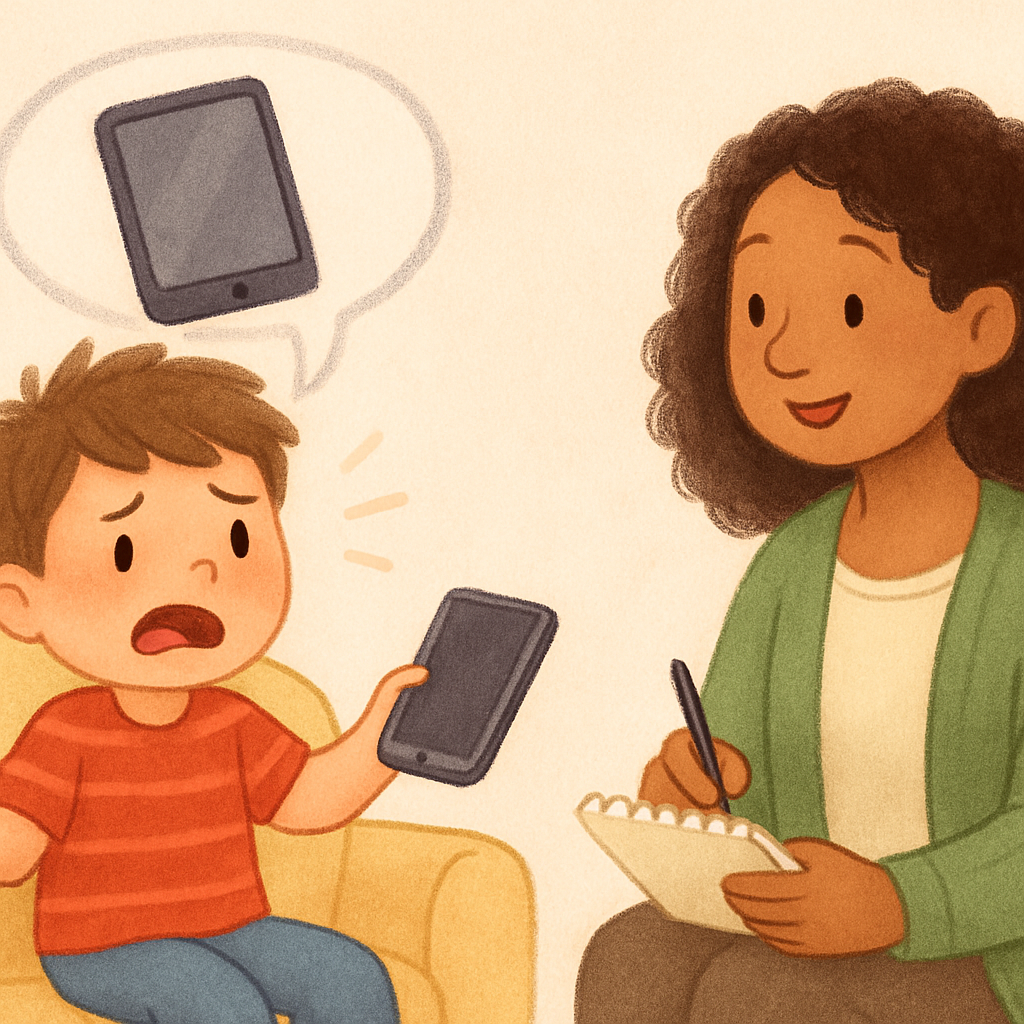
Behaviour Therapy and Devices: A Constructive Approach
When parents face these challenges, the instinct is often to ban devices entirely. However, in a digital world, total prohibition is rarely sustainable. This is where behaviour therapy can work together.
Therapeutic approaches don't just focus on "limiting time"; they focus on "modifying behavior."
1. Behavioural Therapy
CBT is a powerful tool for older children and teens. It helps them recognize the emotional triggers that lead to excessive screen use. Are they scrolling to avoid homework anxiety? Are they gaming to escape loneliness? By addressing the root cause, therapy helps the child build healthier coping mechanisms.
2. The Premack Principle (Grandma’s Rule)
In behavioral psychology, this principle states that high-probability behaviors (screen time) can be used to reinforce low-probability behaviors (chores/homework).
- Instead of: "You can play on the iPad, but do your homework later."
- Try: "Once your homework is done, you earn 30 minutes of iPad time."
This turns the device into a reward for positive behavior, rather than a source of constant conflict.
3. Collaborative Problem Solving
Behaviour therapy management works best when the child feels heard. Sit down with your child and create a "Media Agreement." Ask them: "How do you feel after playing for three hours? What do you think is a fair limit?" When children are part of the rule-making process, they are more likely to respect the boundaries.
Practical Strategies for Home
You can start addressing screen time behavior problems today with these practical steps.
Create Tech-Free Zones
Designate areas of the home where screens are strictly off-limits, such as the dining table and bedrooms. This encourages conversation and ensures that sleep environments remain sanctuaries for rest.
Use Visual Timers
Time is abstract for children, especially when they are in a "flow state" while gaming. Use a physical, visual timer (like a sand timer or a kitchen clock) so they can see the time running out. Give warnings at 10 minutes, 5 minutes, and 1 minute to help their brain prepare for the transition.
The "Bridge" Activity
Transitioning from a high-dopamine activity (gaming) to a low-dopamine activity (chores) is a recipe for a meltdown. Create a "bridge"—a physical or sensory activity—to help them adjust.
- Example: "When the timer goes off, we are going to have a snack" or "We are going to walk the dog."
Model Healthy Habits
Children are excellent mimics. If you are checking emails during dinner or scrolling social media while they are talking to you, they will mirror that behavior. Healthy behaviour therapy management starts with the parents.
Conclusion
Navigating the digital landscape is one of the toughest challenges modern parents face. If screen time behavior problems are turning your home into a battleground, remember that you are not alone, and it is not too late to make a change.
By combining clear boundaries with the principles of behaviour therapy and devices, you can help your child break the cycle of dependency. The goal isn't to banish technology, but to ensure it remains a tool for learning and fun, rather than a source of distress.
If you are feeling overwhelmed or if your child’s behavior is becoming unmanageable, we are here to help. Our team specializes in child behavior and digital wellness.
Contact us today to schedule a consultation or call daar at 02 9133 2500 and find a balanced path forward for your family.
Frequently Asked Questions (FAQ)
Is screen addiction a real diagnosis?
While "Internet Gaming Disorder" is listed in the DSM-5 as a condition for further study, "screen addiction" is not yet a formal clinical diagnosis. However, the behavioral symptoms—withdrawal, tolerance, and negative impact on daily life—are very real and treatable.
How much screen time is too much?
Guidelines vary, but the American Academy of Pediatrics suggests:
- Under 18 months: No screens (except video chatting).
- 2-5 years: 1 hour per day of high-quality programs.
- 6+ years: Consistent limits that prioritize sleep, physical activity, and other healthy behaviors.
If screen time is causing screen time behavior problems, the "right" amount is likely less than what they are currently getting.
Should I use apps to control my child's screen time?
Parental control apps can be helpful tools, but they are not a replacement for parenting. They work best when used transparently. Explain to your child why the limit exists. The goal is to teach them self-regulation, not just to police them.
.svg)




.svg)