
.png?width=48&height=48&name=Group%201%20(3).png)
























29 June, 2026

Understanding School Accommodations for Autism and ADHD
Key Highlights
- Recognizing the unique needs of autistic students and those with ADHD is the first step toward creating an inclusive environment.
- School accommodations are adjustments made to the learning process to support neurodivergent students.
- An individualized education program (IEP) or a 504 plan outlines the specific supports a student will receive.
- Effective accommodations can range from sensory breaks and flexible seating to extra time on assignments.
- Collaboration between parents, teachers, and school staff is essential for student success.
- These supports help level the playing field, allowing students to reach their full academic potential.
Introduction
Navigating the school system can feel overwhelming when your child is on the autism spectrum or has ADHD. Every child deserves an educational experience where they feel supported and can thrive. Understanding the accommodations available can make a world of difference. This guide will walk you through the types of support, from classroom strategies to legal frameworks like IEPs and 504 plans. By learning about these options, you can better advocate for your child and help create a positive educational journey.
Understanding Neurodiversity in Australian Schools
Neurodiversity celebrates the idea that everyone's brain works differently. In Australian schools, this means recognizing that neurodivergent students, including those with autism and ADHD, have unique strengths and challenges. Supporting these students isn't just about academics; it's also about their mental health and well-being.
Creating inclusive educational settings allows every student to feel valued and understood. When schools embrace neurodiversity, they help build a community where differences are accepted and supported. This approach lays the foundation for providing effective, individualized help. Let's look closer at what autism and ADHD mean in a school context.
Defining Autism and ADHD in the Educational Context
Autism Spectrum Disorder (ASD) and Attention-Deficit/Hyperactivity Disorder (ADHD) are developmental conditions that affect how students process information, interact socially, and manage their behavior at school. Students with ASD may struggle with social communication and sensory issues, while those with ADHD often have difficulties with focus, organization, and impulse control.
Neurodiverse learners commonly face challenges like sensory overload, trouble with transitions, and problems with planning or organization. These obstacles can impact both academic performance and social integration. Since each student’s experience differs, it’s important to address individual needs.
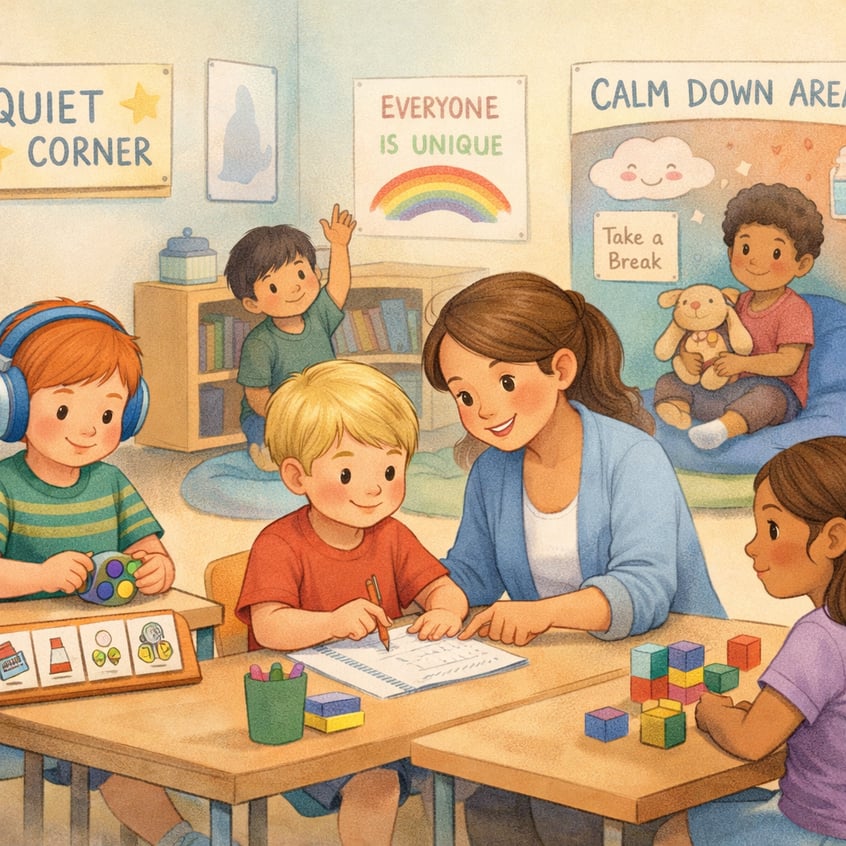
Accommodations help close these gaps. For example, noise-canceling headphones can aid students sensitive to sound, while movement breaks may benefit those who struggle to focus. Such adjustments adapt the environment—without altering the curriculum—to give every student an equal chance to succeed.
Why Recognizing Neurodiverse Needs Matters
Recognizing the unique needs of neurodivergent students is key to creating an inclusive environment where all children can thrive. Understanding and addressing these differences moves education beyond a one-size-fits-all model and helps prevent students from feeling isolated or misunderstood—crucial for their emotional well-being.
Teachers can support neurodiverse students by being proactive and flexible, creating structured yet adaptable classrooms. Visual schedules can reduce anxiety for autistic students, while movement breaks help those with ADHD focus.
Ultimately, acknowledging these needs builds a culture of acceptance and support. It validates diverse learning styles and ensures help is available, empowering students to engage confidently in their education and succeed long-term.
School Accommodations: What They Are and Why They Matter
School accommodations, often called reasonable adjustments, are modifications made to the learning process to help students with disabilities participate fully. These changes don't alter what a student learns but rather how they learn it. The goal is to level the playing field, ensuring every student has an equal chance to demonstrate their knowledge.
These support strategies are typically outlined in an individualized education program (IEP) or a 504 plan. They are crucial because they address specific challenges, enabling students to access the curriculum alongside their peers. Let's explore some common accommodations and how they differ for autism and ADHD.
Common Accommodations for Autism and ADHD
Many effective school accommodations can support students with both autism and ADHD by addressing overlapping challenges in sensory needs, executive functioning, and emotional regulation. These adjustments are designed to create a more manageable and supportive learning environment.
Some of the most effective accommodations help a student manage their day and focus on learning. These can include:
- Visual supports: Using visual schedules and aids to clarify routines and expectations.
- Movement breaks: Allowing scheduled time for physical activity to help with focus and sensory regulation.
- Extra time: Providing additional time for assignments and tests to reduce pressure.
- Fidget toys: Offering quiet tools like stress balls to help with concentration.
- Social stories: Using narratives to explain social situations and appropriate responses.
- Positive reinforcement: Encouraging desired behaviors with praise or other rewards.
- Sensory tools: Providing noise-canceling headphones to manage auditory sensitivities.
Ultimately, the most effective strategies are those tailored to the student’s specific profile. A combination of visual, sensory, and behavioral supports often works best. For example, a student might use a visual timer for a task, take a movement break, and then receive praise for their effort, creating a holistic support system.
Key Differences Between Accommodations for Autism vs. ADHD
While there is some overlap, school accommodations often differ between students with autism and those with ADHD to target their distinct challenges. Accommodations for the autism spectrum frequently focus on social communication, predictable routines, and managing sensory sensitivities. For example, a student with autism might need social stories to navigate peer interactions or a quiet space to decompress from sensory overload.
In contrast, supports for ADHD primarily address challenges with executive functioning, such as attention, organization, and impulse control. A student with ADHD might benefit from checklists to break down large assignments, preferential seating away from distractions, or timers to help with task initiation and time management.
These differences highlight the importance of individualizing support. A student's specific needs, whether they relate more to sensory processing or attention regulation, will determine the most effective strategies.
|
Feature |
Accommodations for Autism |
Accommodations for ADHD |
|---|---|---|
|
Primary Focus |
Social communication, sensory processing, routine and predictability. |
Executive functioning, attention, impulsivity, and organization. |
|
Examples |
Social stories, visual schedules, quiet spaces, peer mentoring. |
Checklists, timers, preferential seating, breaking tasks into smaller steps. |
|
Sensory Support |
Addresses sensory sensitivities with tools like noise-canceling headphones or flexible seating. |
Manages the need for movement with fidget tools or scheduled breaks. |
Practical Classroom Strategies for Teachers
Creating a supportive learning environment is key for teachers helping neurodivergent students. Practical strategies can transform a classroom into a space where children with autism and ADHD feel safe and ready to learn. This involves making adjustments to the physical space and the daily structure.
From sensory accommodations to targeted social skills training, simple changes can have a huge impact. The goal is to promote both academic success and positive social engagement. Here are some specific strategies teachers can implement to support their students.
Classroom Adjustments for Academic Success
To support academic success in mainstream classrooms, teachers can make simple adjustments to benefit students with autism or ADHD. Clear daily routines reduce anxiety about change, while visual aids—such as posted schedules and graphic organizers—improve understanding and keep students focused. Flexible seating allows students to choose spaces that suit their sensory needs.
Effective strategies include:
- Offering flexible seating like wobble chairs or bean bags.
- Using visual schedules to outline routines.
- Allowing extra time for tests and assignments.
- Breaking large tasks into smaller steps.
- Assigning clear roles during group work.
- Using timers to support transitions and task completion.
Promoting Positive Behavior and Engagement
Teachers can create a positive, engaging classroom by supporting emotional regulation and social interaction. For neurodiverse students, feeling safe is essential for learning. A designated “safe space” or calming corner helps students manage overwhelm.
Positive reinforcement encourages desired behaviors, such as praising focus or using a token system to reward effort. Structured peer interactions and pairing students with supportive classmates build social skills.
Ways to promote positive behavior:
- Use clear, consistent positive reinforcement.
- Provide structured social opportunities.
- Establish a classroom safe space.
- Allow sensory breaks to prevent overload.
- Pair students with peer mentors.
- Involve support staff as needed.
How Parents Can Advocate for Their Child’s Needs
As a parent, you are your child's most important advocate. Understanding and communicating your child’s needs to the school staff is crucial for securing the right support. Early interventions and a collaborative approach can pave the way for a successful educational experience.
Building a strong partnership with teachers and administrators ensures that everyone is on the same page. When you work together, you can create a consistent support system for your child. Let's look at the steps to request accommodations and how to collaborate effectively with educators.
Steps to Request School Accommodations
Requesting school accommodations starts with documenting your child’s needs, usually through a formal diagnosis from a healthcare professional. This helps the school understand how your child’s condition impacts learning and daily activities.
Next, formally request a meeting with the school—typically involving teachers, counselors, or support staff. Present your documentation and explain your child’s challenges.
Key steps:
- Gather all documentation, including a formal diagnosis.
- Schedule a meeting with the school’s support team or administration.
- Submit a written letter outlining your child’s needs and recommended accommodations.
- Discuss options like an Individualized Education Program (IEP) or 504 plan.
- Follow up in writing to confirm the meeting and agreed-upon adjustments.
Collaborating with Educators and Support Staff
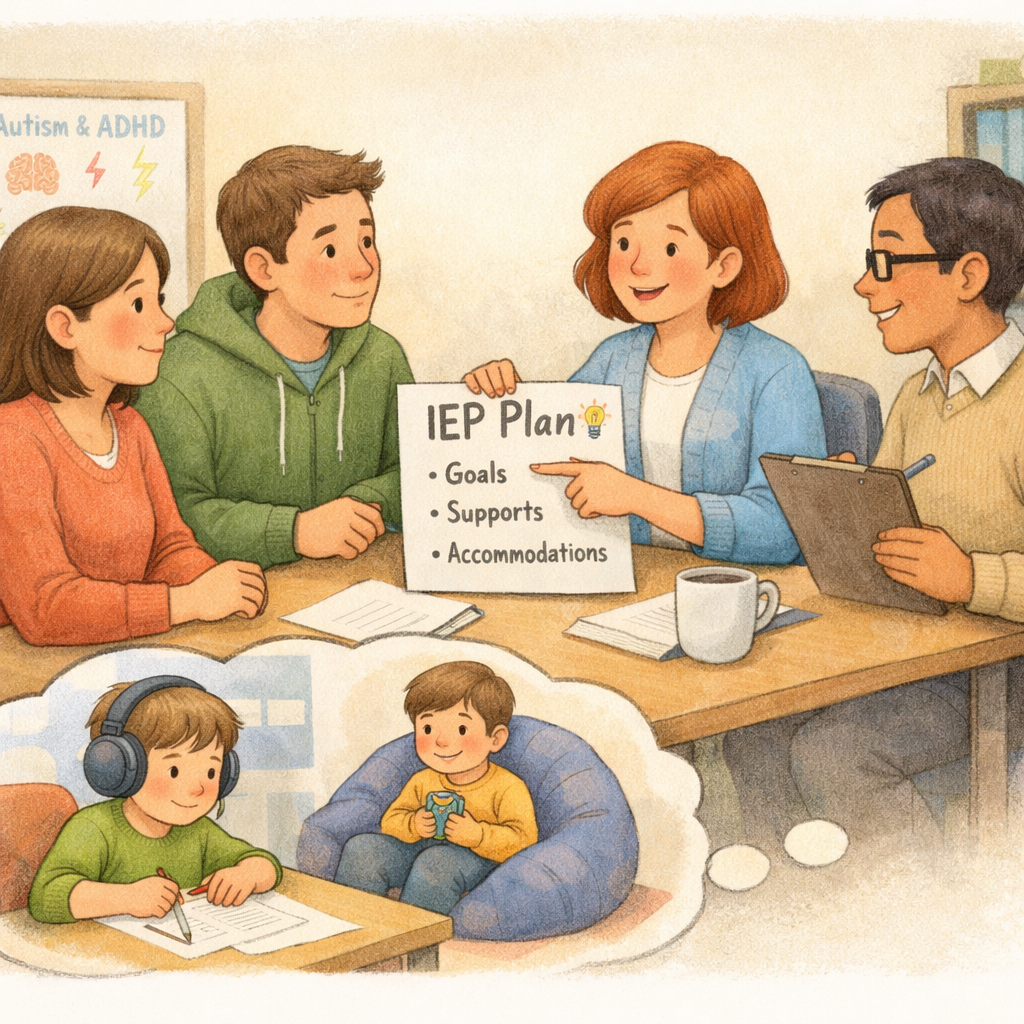
Effective collaboration between parents, teachers, and support staff is essential for a child's success. Open and regular communication forms the bedrock of this partnership. When parents and teachers work together, they can create a seamless support system that extends from home to the classroom.
One of the best ways to collaborate is by sharing information. Parents can provide insights into what works for their child at home, while educators can report on progress and challenges at school. This exchange helps in fine-tuning accommodations. Involving professionals like special education teachers, occupational therapy providers, and other support staff can bring in specialized expertise for additional support.
To foster a strong partnership, consider these actions:
- Maintain regular communication through email or scheduled check-ins.
- Share an "About Me" letter detailing your child's strengths, triggers, and successful strategies.
- Actively participate in IEP or 504 plan meetings.
- Work together to set and review realistic goals for your child.
Conclusion
In conclusion, understanding school accommodations for autism and ADHD is crucial for fostering an inclusive environment where every child can thrive. Recognizing the unique needs of neurodiverse students allows educators and parents to implement effective strategies that promote academic success and positive engagement. By advocating for appropriate accommodations and collaborating closely with teachers and support staff, families can ensure their children receive the support they deserve. Remember, creating a nurturing educational experience not only benefits the individual student but also enriches the entire classroom community.
Reach out for a consultation or call daar at 02 9133 2500, which can make a difference in the lives of neurodiverse learners.
Frequently Asked Questions
What are effective reasonable adjustments for students with both autism and ADHD?
Effective reasonable adjustments often address both sensory processing and executive functioning. Combining visual schedules to create predictability with opportunities for movement breaks can be very helpful. Strategies that support social interaction, like peer mentoring, also create a more inclusive environment for students with both conditions.
How can parents and teachers work together for accommodations?
Parents and teachers can work together through open and consistent communication. Sharing insights about a child's specific needs helps tailor support strategies. Regular meetings with teachers, school counsellors, and other support staff ensure everyone is aligned and working toward the same goals for the student.
Where can families find resources for neurodiverse support in Australia?
Families in Australia can find resources through their school’s student support services, which can connect them with specialists. Organizations like Autism Awareness Australia offer information and training programs. Government websites on education and mental health also provide guidance for creating inclusive educational settings.
NDIS Registered Provider
Ready to Get Started with NDIS Behaviour Therapy?
Our registered behaviour therapists support children and adults with autism, ADHD, and intellectual disability across Australia. NDIS-funded — in-home and telehealth available.
NDIS Registered Provider
Ready to Get Started with NDIS Behaviour Therapy?
Our registered behaviour therapists support children and adults with autism, ADHD, and intellectual disability across Australia. NDIS-funded — in-home and telehealth available.
.svg)




.svg)