
.png?width=48&height=48&name=Group%201%20(3).png)























9 February, 2026

Nurturing Growth: The Role of Positive Behaviour Support in Childcare
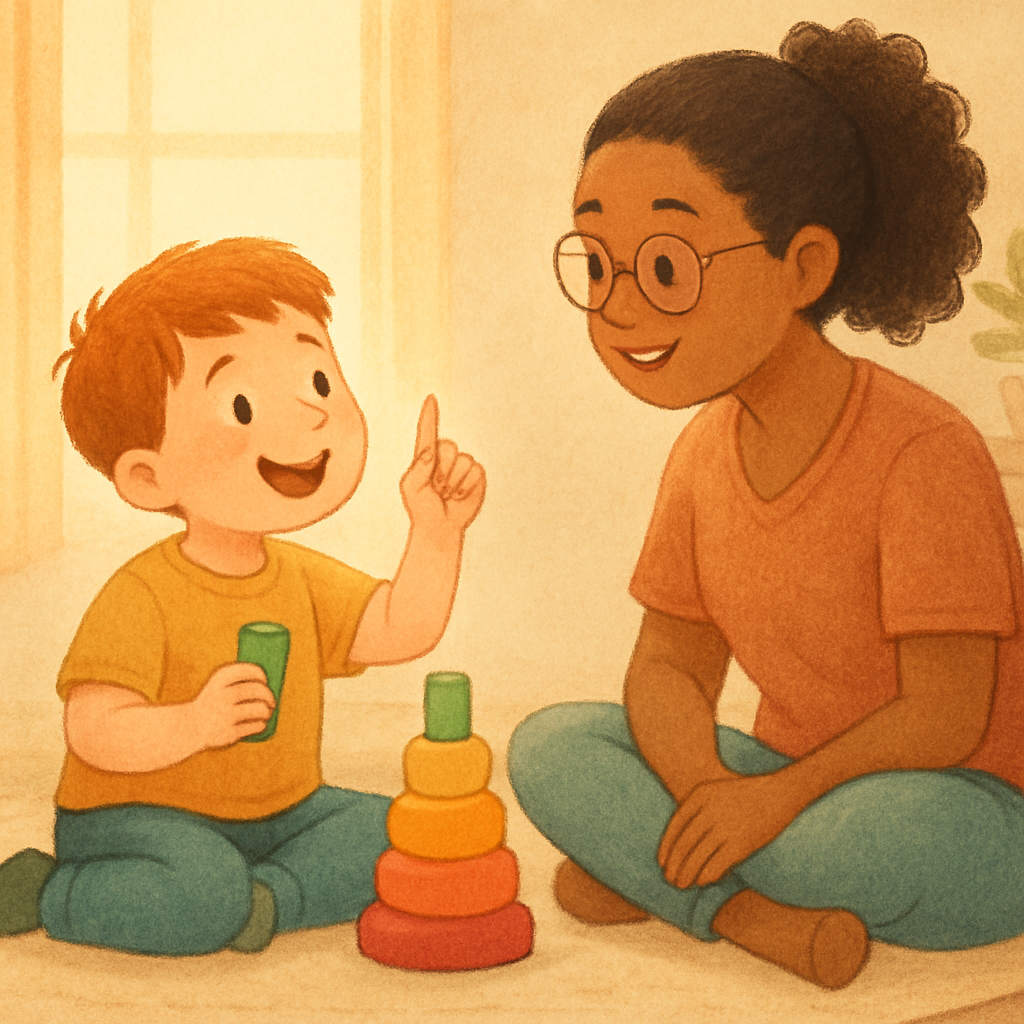
Walking into a childcare centre, you expect to see finger painting, block towers, and story circles. But amidst the laughter and learning, there are also moments of big emotions. Toddlers struggle to share, preschoolers navigate conflicts, and sometimes, frustration bubbles over into tears or tantrums.
In the past, these moments might have been met with "time-outs" or strict discipline. Today, however, leading early learning centres are adopting a more compassionate and effective approach: Positive Behaviour Support in childcare.
This framework shifts the focus from managing behaviour to understanding it. It recognizes that every behaviour is a form of communication. By teaching children the skills, they need to express themselves and regulate their emotions, we set them up for success not just in the classroom, but in life.
In this guide, we will explore what Positive Behaviour Support (PBS) looks like in an early learning setting, why it matters, and how it benefits your child.
What is Positive Behaviour Support (PBS)?
Positive Behaviour Support is an evidence-based framework used to improve the quality of life and reduce challenging behaviours. While it originated in disability support, its principles are universally effective for all children.
In the context of positive behaviour support in childcare, it is about creating an environment where:
- Expectations are clear: Children know what is expected of them.
- Good behaviour is celebrated: Positive actions are reinforced, making them more likely to happen again.
- Mistakes are learning opportunities: Challenging behaviour is viewed as a skill deficit (e.g., "He doesn't know how to ask for a turn yet") rather than "naughtiness."
It moves away from reactive punishment (what happens after the behaviour) to proactive teaching (what we can do before to prevent it).
Why is PBS Essential in Early Years?
The first five years of a child's life are critical for brain development. This is when they learn the foundations of emotional regulation and social interaction.
1. Building Emotional Intelligence
Children aren't born knowing how to handle anger or disappointment. Positive behaviour support in childcare provides the vocabulary and tools they need. Instead of just saying "stop crying," an educator might say, "I see you are frustrated because the tower fell. Let's take a deep breath and try again."
2. Creating a Safe Learning Environment
When children feel safe and understood, they are better able to learn. A punitive environment creates anxiety, which shuts down the learning centers of the brain. PBS creates a culture of safety where children feel confident to explore and make mistakes.
3. Consistency and Routine
PBS relies heavily on predictable routines. Knowing what comes next (e.g., "First we clean up, then we have snack") reduces anxiety and helps children transition smoothly between activities, reducing the likelihood of behavioural outbursts.
Core Strategies of Positive Behaviour Support in Childcare
So, what does this actually look like in your child’s classroom? Here are some key strategies educators use.
The Power of "Catching Them Being Good"
It is easy to pay attention to the child who is shouting. It takes effort to notice the child who is sitting quietly. PBS flips the script. Educators actively look for positive behaviours to praise.
- Example: "Sarah, I love how you waited for your turn on the slide!"
This positive reinforcement motivates other children to model that behaviour.
Visual Supports
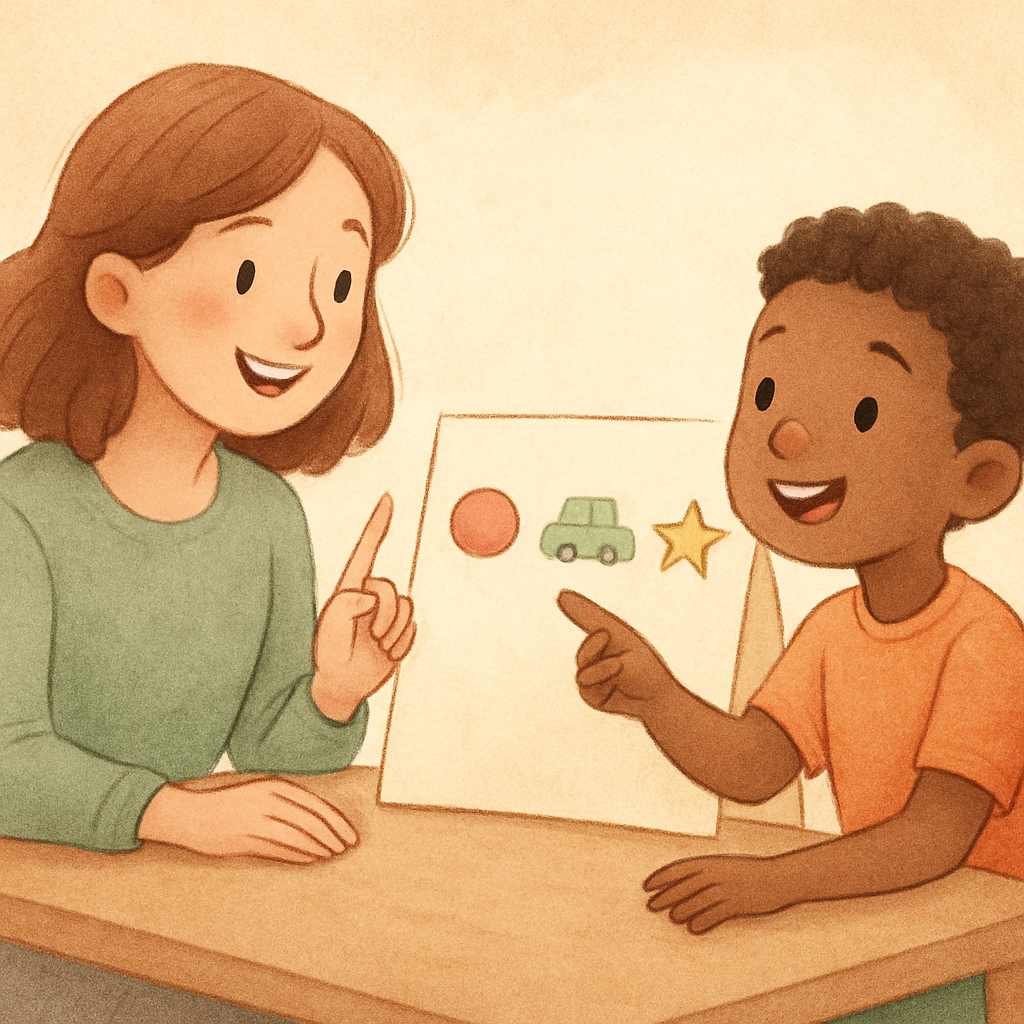
Young children process visual information faster than verbal instructions. Positive behaviour support in childcare often utilizes:
- Visual Schedules: Pictures showing the flow of the day.
- Emotion Charts: Helping children point to how they feel.
- Stop/Go Signs: Visual cues for safety boundaries.
Teaching Replacement Behaviours
If a child bites when they want a toy, simply saying "no biting" doesn't teach them how to get the toy. PBS focuses on teaching a replacement behaviour.
- The Strategy: The educator teaches the child to hold out their hand and say "My turn?" or use a sign. By giving the child a functional way to get what they want, the biting becomes unnecessary.
The "Calm Down" Corner
Unlike a "naughty corner" used for isolation, a calm-down corner in a PBS framework is a safe haven. It is filled with sensory tools like soft cushions, stress balls, or glitter jars. Children are encouraged to go there to self-regulate, not as a punishment, but as a coping strategy.
How Parents Can Mirror PBS at Home
The beauty of positive behaviour support in childcare is that it works just as well in the living room. Consistency between home and care is powerful.
- Use Positive Language: Instead of "Don't run," try "Walking feet, please." Tell them what to do, not just what not to do.
- Validate Feelings: "I know you are sad that we have to leave the park. It's okay to be sad, but we still have to go to the car."
- Establish Routines: Create a simple visual chart for the morning routine (brush teeth, get dressed, eat breakfast).
Conclusion
Raising children is a complex, beautiful, and sometimes messy job. Positive behaviour support in childcare offers a roadmap through the messy parts. It reminds us that behaviour is a skill to be learned, just like tying shoelaces or reading a book.
By choosing a childcare provider that embraces PBS, you are ensuring that your child is in an environment that respects their emotions, champions their success, and gently guides them toward becoming resilient, empathetic individuals.
We believe that every child deserves to feel understood and supported. Our centres are dedicated to implementing Positive behaviour support in childcare to help every little learner thrive.
Contact Us Today to book a consultation or call daar at 02 9133 2500 to see our positive strategies in action. Let’s build a happy, confident future for your child together.
FAQ: Common Questions About PBS
1. Does Positive Behaviour Support mean there are no consequences?
No. PBS is not permissive parenting. There are still boundaries and consequences, but they are logical and educational rather than punitive. For example, if a child throws a toy, the consequence is that the toy is put away for a while because it wasn't used safely—not that the child is shamed.
2. Is this only for children with behavioural issues?
Not at all. Positive behaviour support in childcare is a universal approach (Tier 1 support) that benefits every child. It creates a positive climate for the whole group. However, for children with specific needs, the strategies can be intensified (Tier 2 or 3) to provide more targeted support.
3. What if my child hits another child?
Safety is always the priority. The educator will intervene immediately to stop the hurting. Afterward, once everyone is calm, they will work with the child to understand what triggered the hit and practice a better way to handle that situation next time.
4. How do I know if my childcare centre uses PBS?
Ask them! During a tour, ask: "How do you handle challenging behaviour?" or "Do you use a specific framework like PBS or Circle of Security?" Look for centres that talk about "teaching skills" rather than "discipline."
5. Can PBS help with separation anxiety?
Yes. PBS strategies like visual schedules (showing when Mummy/Daddy comes back) and validating emotions ("You miss Daddy, he will be back after nap time") are very effective in helping children cope with separation.
.svg)




.svg)