
.png?width=48&height=48&name=Group%201%20(3).png)























30 September, 2026

The Benefits of Positive Behaviour Support for Children

Key Highlights
- Positive behaviour support uses a personalised support plan to understand why challenging behaviour happens.
- A behaviour support plan focuses on teaching safer, more effective ways to communicate needs.
- Positive reinforcement encourages helpful actions instead of relying on punishment alone.
- This approach can improve a child’s quality of life at home, school, and in daily routines.
- Families, teachers, and practitioners work together for consistency and best outcomes.
- Regular review helps the plan stay practical, supportive, and suited to the child’s changing needs.
Introduction
Positive behaviour support is an individualised approach that helps children move toward safer, more useful behaviour change. It works by understanding what a child’s behaviour is communicating, then teaching better ways to meet those needs. Instead of only reacting to problems, it looks at triggers, daily settings, and support from adults around the child. The goal is to create positive outcomes that improve a child’s life, including learning, participation, communication, and overall wellbeing.
Key Advantages of Positive Behaviour Support in Childhood
Positive behaviour support helps children build positive behaviour in a practical, respectful way. It looks at why behaviour happens, then uses support strategies that fit daily life. This can help at home and school because children get clearer guidance and more consistent responses from adults.
Just as important, positive behavioural interventions support skill development, communication, and positive social interactions. When children learn safer ways to express needs, stress can reduce, and mental health may improve. The next sections explain how these benefits show up in real settings.
Improving Behaviour at Home and School Settings
Children thrive when adults at home and school respond consistently. That’s why behaviour support is built into daily routines, not just used in crises. A shared plan guides parents, teachers, and support workers to act early, before problem behaviours escalate.
The first step is understanding the root of the behaviour. Families and professionals analyse triggers, patterns, and what the child may be seeking or avoiding—while ruling out medical issues like infections.
Once the cause is clear, adults can reduce triggers and teach better communication or coping skills. This steady approach leads to positive change over time, helping children participate more, learn more easily, and handle daily expectations with less frustration.
Enhancing Social Skills and Emotional Wellbeing
Children often struggle socially when they can’t clearly express their needs. Positive behaviour support addresses this by teaching new skills to replace behaviours that disrupt learning, play, or family routines—such as asking for help, sharing information, or using words or signs.
Supportive environments give children repeated opportunities to practice social skills in real-life situations. Learning is stronger when it happens where the child lives and interacts, and consistent adult support makes these lessons safe and manageable.
Over time, this leads to better friendships, classroom participation, and emotional control. As children communicate more effectively, stress decreases and mental health improves. The next section covers practical tools that make this possible.
Practical Strategies in Positive Behaviour Support
A strong support plan is based on assessment, teamwork, and regular review. The behaviour support plan outlines triggers to reduce, skills to teach, and how adults should respond if difficulties happen. This keeps support clear and consistent across settings.
These intervention strategies grew from applied behaviour analysis, but positive behaviour support is more person-centered and family-centered. It focuses on strengths, goals, and everyday life. Positive reinforcement is a key part of the process, and the following examples show how that can look in practice.
Examples of Positive Behaviour Support Techniques for Children
Positive behaviour support uses proactive strategies to prevent problems before they escalate. The goal is not just to stop difficult moments, but to teach positive ways for a child to meet needs, participate, and feel understood.
Common techniques are practical and tailored to each child, focusing on prevention, communication, and consistent adult responses. Examples include:
- identifying and reducing triggers
- teaching new behaviours like asking for help
- encouraging positive communication through words or signs
- using positive reinforcement
- guiding parents to respond calmly and clearly
- regularly reviewing the plan with the support team
Consistent use of these steps can improve learning, participation, and family routines. The approach depends on what the child’s behaviour is communicating and which supports work best in everyday settings.
Addressing Challenging Behaviours and Restrictive Practices
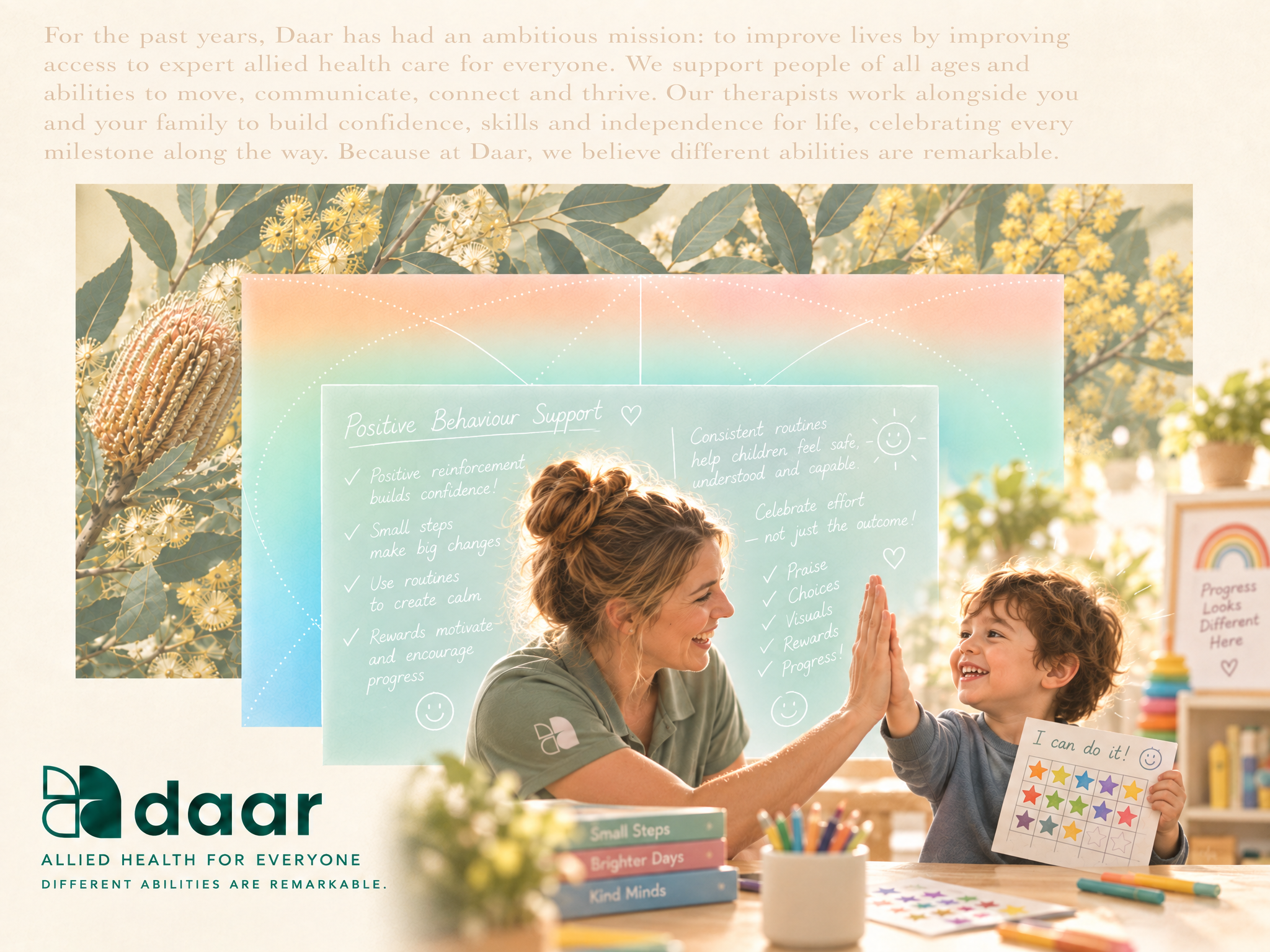
Challenging behaviours are approached by asking a simple question: what purpose does this behaviour serve for the child? A behaviour support plan is then built around that answer. This approach relies on behaviour analysis, not guesswork, so adults can respond in safer and more useful ways.
Positive behaviour support aims to reduce the need for restrictive practices by meeting unmet needs, removing triggers, and teaching replacement skills. Instead of focusing only on control, the plan supports communication, learning, and positive social interactions in everyday environments.
|
Focus area |
How positive behaviour support responds |
|---|---|
|
Understanding behaviour |
Uses assessment and observation to find the reason behind challenging behaviours |
|
Trigger reduction |
Changes situations that may lead to distress or escalation |
|
Skill teaching |
Builds communication and coping skills that replace unsafe responses |
|
Adult response |
Guides families and staff on calm, consistent actions |
|
Ongoing review |
Checks whether the plan is working and updates it when needed |
Conclusion
In conclusion, Positive Behaviour Support (PBS) is a transformative approach that prioritises the well-being and development of children. By focusing on improving behaviour, enhancing social skills, and supporting emotional well-being, PBS creates a nurturing environment both at home and in school. The practical strategies and techniques discussed can effectively address challenging behaviours while fostering positive interactions. It's essential to remember that every child is unique, and tailoring these methods to fit individual needs can yield the best results.
If you're interested in learning how PBS can specifically benefit your child, don’t hesitate to reach out for a consultation or call daar at 02 9133 2500.
Frequently Asked Questions
Is Positive Behaviour Support suitable for children with autism or special needs?
Yes. Positive behaviour support can be suitable for children with autism spectrum disorders, a learning disability, and other developmental or social challenges. It is individualised, so behaviour support practitioners build support around the child’s needs, strengths, goals, and daily environments rather than using a one-size-fits-all approach.
What is Positive Behaviour Support (PBS) and how does it work for children?
Positive behaviour support is a structured approach that helps children make behaviour change by understanding what their actions communicate. It uses assessment, a detailed plan, positive reinforcement, and support team work. Families and professionals then teach replacement skills, reduce triggers, and review progress together.
How can Positive Behaviour Support improve a child's social skills and emotional regulation?
Positive behaviour support improves social skills by teaching a new behaviour children can use to ask, share, and connect more clearly. As skill development grows, positive social interactions become easier. Better communication can also lower frustration, which may support mental health and emotional regulation in daily situations.
.svg)




.svg)