
.png?width=48&height=48&name=Group%201%20(3).png)























11 August, 2026

Understanding Positive Behaviour Support for Children
Key Highlights
- Positive behaviour support helps children replace challenging behaviour with safer, more useful skills.
- A strong positive behaviour support plan starts with assessment and a clear support plan.
- Behaviour support practitioners look at what a child is trying to communicate through behaviour.
- Positive reinforcement is used to encourage positive behaviour and steady progress.
- Family members, teachers, and other supports all play a part in daily success.
- The goal is better communication, greater independence, and an improved quality of life.
Introduction
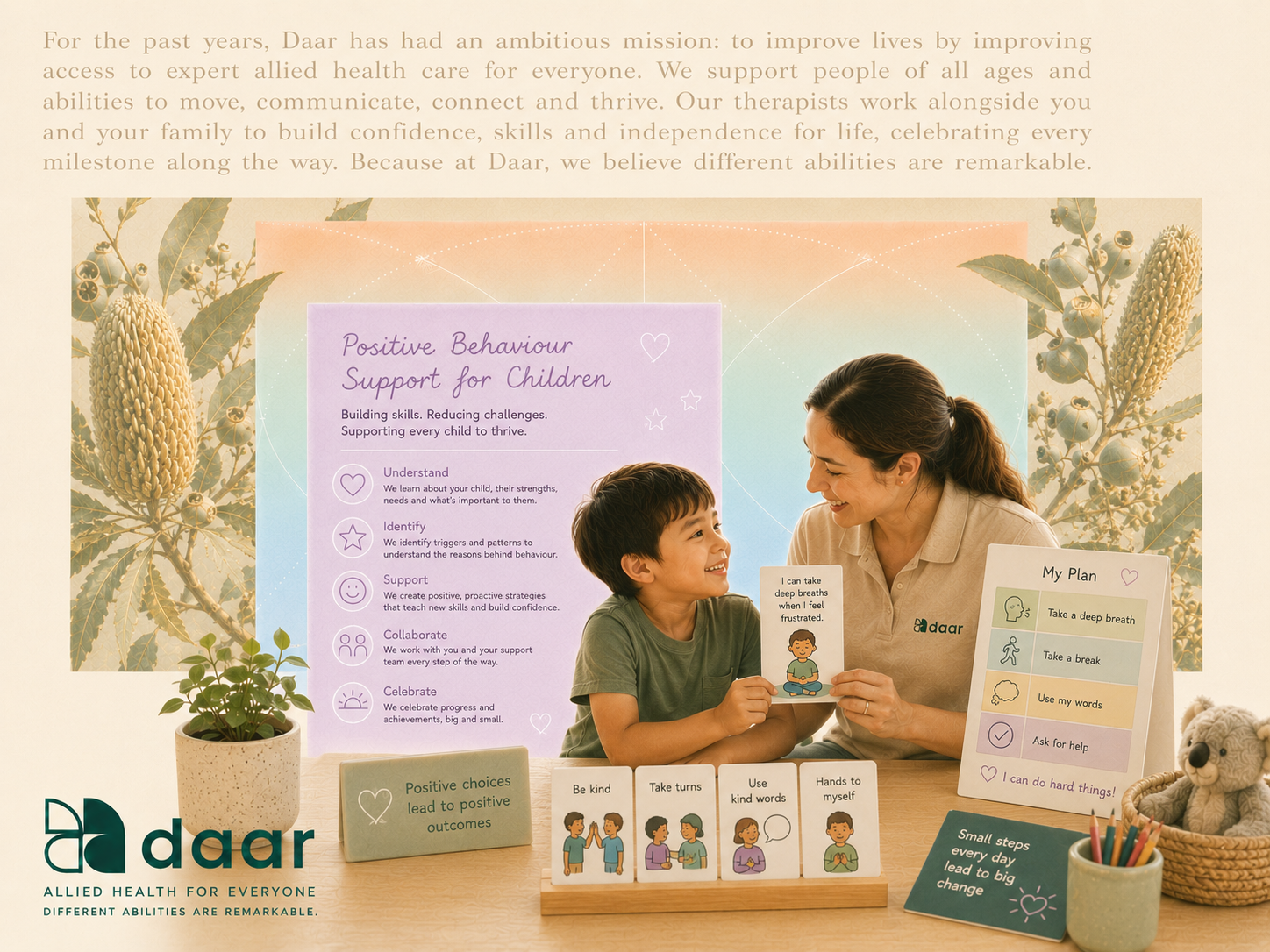
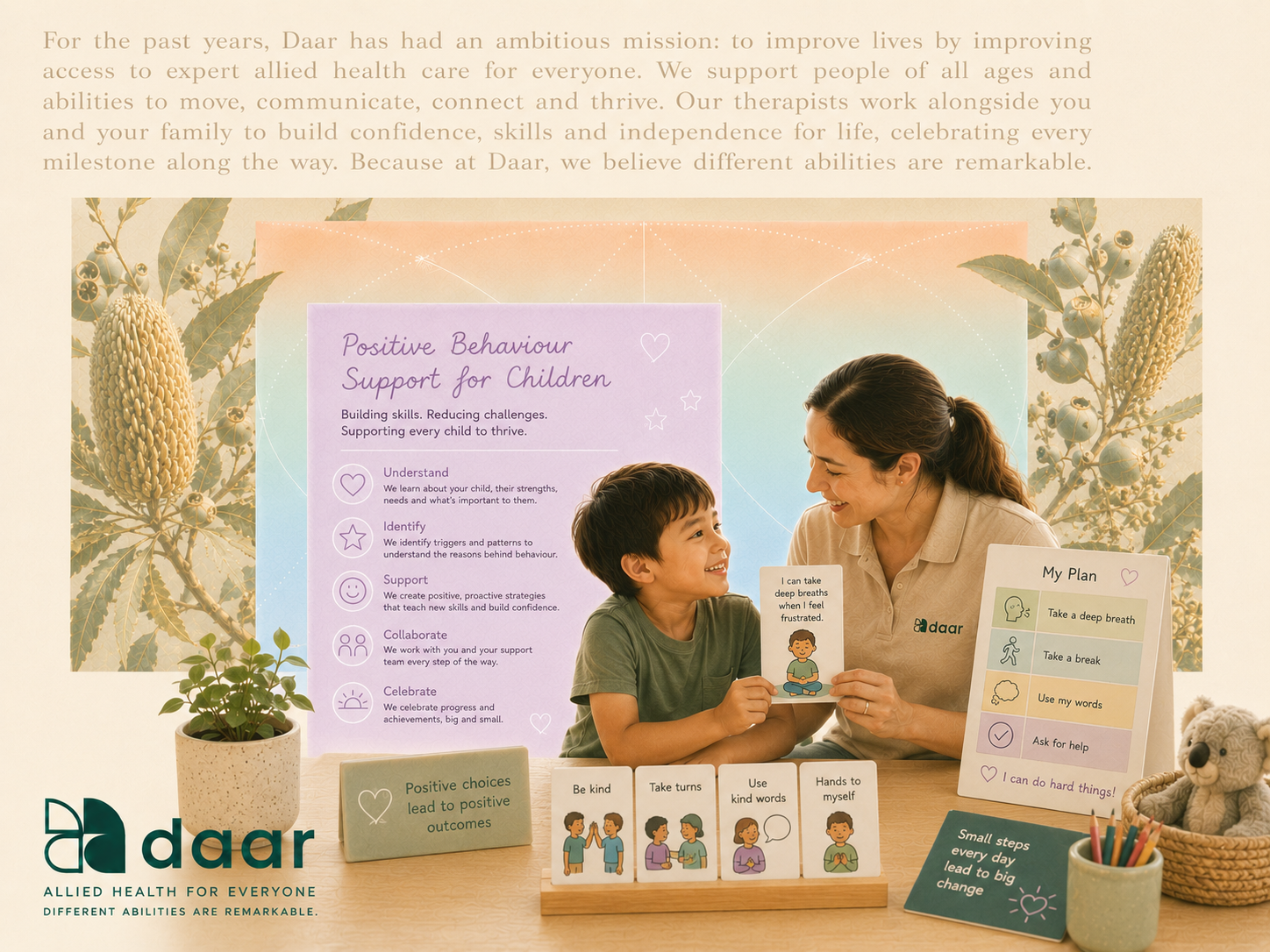
Positive behaviour support is a practical way to help children and young people build safer, more effective habits. Instead of only reacting when something goes wrong, it looks at why behaviour occurs and what support will be most helpful. This approach focuses on teaching skills, improving routines, and creating supportive environments. When used well, it can reduce stress, strengthen relationships, and improve a child’s quality of life at home, at school, and in everyday life.
What is Positive Behaviour Support for Children?
Positive behaviour support is an individualised approach that helps you understand your child’s behaviour and respond in more helpful ways. It is based on the idea that all behaviour serves a purpose. A child may be trying to communicate distress, avoid something difficult, or meet an unmet need. Positive behavioural support works by identifying the reason behind challenging behaviour or another behaviour of concern, then teaching safer and more effective alternatives.
It grew from applied behaviour analysis, but it is more person-centered and family-centered in practice. Rather than focusing only on stopping behaviour, it aims to improve a child’s overall quality of life through new skills, better routines, and environmental changes. Support services, family members, and the wider support team work together so the child gets consistent help across settings.
Key Principles Behind Positive Behaviour Support
At the heart of positive behaviour support is the belief that behaviour has meaning. When you understand what a child is trying to achieve, you can respond in a way that teaches rather than punishes. That shift matters.
Another key principle is person-centered planning. A support plan should reflect the child’s strengths, needs, goals, and daily routines. It is not a generic checklist. It should fit the child’s life and be realistic for the people around them.
Just as important, positive behaviour support relies on a collaborative team. Parents, teachers, support workers, and therapists each add useful insight. With a strong support network, everyone uses the same responses and strategies. That consistency helps protect progress, improve relationships, and support long-term quality of life.
How Positive Behaviour Support Differs From Traditional Approaches
Many traditional approaches focus on stopping a behaviour after it happens. That often means correction, consequences, or other punitive measures. While that may interrupt a moment, it may not explain why the behaviour started.
Positive behaviour support takes a proactive approach. It looks at triggers, routines, communication barriers, and unmet needs before problems grow. The goal is positive change through teaching, planning, and support, not just control.
|
Traditional approaches |
Positive behaviour support |
|---|---|
|
React to behaviour after it happens |
Uses proactive strategies before behaviour escalates |
|
Often focus on compliance |
Focuses on understanding needs and communication |
|
May rely on punitive measures |
Uses teaching, support, and positive reinforcement |
|
Short-term correction |
Long-term positive change and improved wellbeing |
Core Strategies Used in Positive Behaviour Support
The main behaviour support strategies in positive behaviour support include assessment, skill development, environmental changes, and consistent responses from adults. A good support plan teaches children better ways to communicate, cope, and participate in daily life.
Positive reinforcement is a key part of this proactive approach. Instead of waiting for problems, behaviour support practitioners help children practice helpful habits and reward progress. The next sections look at prevention and individualisation, which make these strategies more effective.
Prevention and Proactive Practices
Prevention begins with noticing what makes situations harder for a child—such as noise, sudden changes, unclear expectations, or stress at certain times. Understanding these factors lets you reduce pressure before behaviour escalates.
In schools, proactive strategies help staff create calmer routines. Support can include visual cues, clearer transitions, and planned breaks. These approaches work best when everyone responds consistently.
Helpful steps include:
- Adjusting routines to avoid common triggers
- Using supports for better communication and predictability
- Teaching alternative skills before issues arise
- Involving home, school, and therapy communities
These practical changes make positive behavioural support easier every day.
Individualisation and Person-Centered Interventions
Every child needs a personalised approach. Individualised support considers each child’s needs, strengths, preferences, and environment, making person-centered positive behaviour support highly effective.
Plans can involve changes at home, school, or both. For example, a child with autism may benefit from predictable routines at school and stronger family connections after school. In early childhood, small routine changes and simple communication tools can make a big difference.
If your child receives disability supports, an NDIA planner or early childhood partner may help. The goal is to create practical supports that fit daily life and help your child learn safer, more positive ways to communicate and cope.
Developing a Positive Behaviour Support Plan for Children
Creating a behaviour support plan begins with understanding the reason behind the behaviour. That first step is usually a functional behaviour assessment completed by trained behaviour support practitioners with input from parents, teachers, and others who know the child well.
From there, the support plan is built using a holistic approach. It should cover triggers, teaching goals, response strategies, and environmental adjustments. Because the support team helps shape the plan, it is more likely to work in everyday settings.
Conducting Functional Assessments
A functional behaviour assessment examines what happens before, during, and after concerning behaviour to understand its purpose. This approach is more effective than guesswork.
The process may involve observation, family interviews, and checking for physical issues. Simple discomforts like ear infections or toothaches can affect behaviour, making thorough assessment crucial—especially for children with developmental disabilities.
Once the reason for the behaviour is clearer, the support team can plan better responses. Instead of just reacting to the behaviour, you address its cause. This helps the child learn new skills and enables adults to respond more consistently and supportively.
Essential Components of an Effective Support Plan
An effective support plan gives clear, practical guidance for everyone in the child’s day. It should identify behaviour triggers, what the child is communicating, and how adults can help. A good plan focuses on teaching skills—not just managing behaviour.
The plan must be easy for families, teachers, and staff to follow, using clear language, realistic steps, and regular reviews. It should support long-term growth as well as immediate safety.
Key elements include:
- strategies to build communication skills
- supports for emotional regulation and coping
- changes to routines or environments to reduce triggers
- safe, consistent responses to behaviour
These components help children practice new skills in real situations.
Family and Teacher Roles in Positive Behaviour Support
Family members and teachers are central to positive behaviour support because they see the child most often. Their observations help shape the support plan, and their daily actions help bring it to life in real settings.
This work depends on collaboration. When parents, schools, support services, and therapy services share information, the child gets more consistent support. The next two sections explain how families can stay involved and how teachers can use practical strategies in the classroom.
How Families Can Be Actively Involved
Families play a key role in positive behaviour support. You know your child’s routines, stressors, motivators, and strengths best. This insight helps the support team tailor responses to fit daily life—not just therapy sessions.
Being involved means following the agreed plan at home and sharing feedback on what works. When families and professionals stay connected, children receive consistent messages across settings.
Helpful strategies include:
- establishing clear routines and predictable transitions
- using positive reinforcement to praise efforts
- practicing communication skills during daily activities
- keeping the support network updated about changes or concerns
These actions make support more consistent, calm, and practical for everyone.
Positive Behaviour Support Strategies in the Classroom
Positive behaviour support in the classroom helps children feel safe, clear, and ready to learn. Teachers don’t need to wait for a crisis; they can create supportive environments that lower stress and clarify expectations.
This approach is especially valuable in special education or settings where students need more structure or communication help. Consistent, small adjustments matched to each child’s plan can make a big difference.
Effective steps include:
- setting clear routines and visual expectations
- using positive reinforcement
- teaching replacement skills like asking for help
- planning calm responses to distress
When teachers use these strategies daily, children are more likely to succeed and stay engaged.
Conclusion
In conclusion, Positive Behaviour Support (PBS) prioritises understanding each child's unique needs through prevention, proactive strategies, and individualised support. PBS creates a nurturing environment for children to thrive. Families and educators are key to providing consistent guidance at home and school. Small, intentional changes can significantly improve behaviour and well-being.
For more information or consultation, call daar at 02 9133 2500. Reach out today.
Frequently Asked Questions
How can Positive Behaviour Support be implemented in a school setting?
Positive behavioural support in a school setting works best when teachers use proactive strategies, clear routines, and consistent responses. A shared support plan helps the support team reduce triggers, teach replacement skills, and reinforce progress so the child can participate more successfully in class.
How does Positive Behaviour Support differ from traditional discipline methods?
Unlike traditional approaches that may rely on punitive measures after behaviour happens, positive behaviour support uses a proactive approach. It looks at why the behaviour occurs, changes triggers, and teaches better alternatives. The aim is lasting positive change, not short-term compliance alone.
What are some effective strategies for parents to use Positive Behaviour Support at home?
Helpful home strategies include predictable routines, calm responses, and positive reinforcement for useful behaviour. Parents can also build communication skills during everyday activities and stay in contact with the support network. Behaviour support practitioners can help tailor these steps so they fit your child and home life.
.svg)




.svg)