
.png?width=48&height=48&name=Group%201%20(3).png)
























27 April, 2026

Understanding NDIS Behaviour Support Therapy for Clients
Key Highlights
- NDIS behaviour support uses tailored strategies to reduce concerning behaviours and improve your quality of life.
- The approach focuses on Positive Behaviour Support (PBS) to understand the reasons behind behaviours.
- A specialist behaviour support practitioner works with you to create a personalized support plan.
- This plan includes proactive strategies to enhance skills for daily living and promote positive change.
- The ultimate goal is to remove the need for restrictive practices and empower individuals.
- Funding for these services helps turn assessments into practical support for a better everyday life.
Introduction
Navigating the National Disability Insurance Scheme (NDIS) can sometimes feel complex, especially when you're seeking support for challenging behaviours. Behaviour support is a key service funded by the NDIS designed to improve quality of life and make daily living easier. It focuses on understanding why behaviours occur and developing positive, practical strategies to address them. This guide will walk you through what NDIS behaviour support therapy involves, who can access it, and how it helps create meaningful, lasting change for you and your family.
Overview of NDIS Behaviour Support Therapy
NDIS behaviour support is a person-centered approach that addresses behaviours of concern by identifying underlying needs. A skilled practitioner from a registered provider works with you and your support network to create a safer, more independent life.
This therapy is customized to your individual goals and circumstances, using personalized strategies to encourage positive change and minimize restrictive practices. Let’s look at how this approach works in practice.
What is NDIS Behaviour Support Therapy?
NDIS behaviour support therapy uses evidence-based methods to improve quality of life by addressing challenging behaviours. It recognizes that all behaviour communicates unmet needs and focuses on understanding, not just stopping, these actions.
The goal is to teach new skills and create supportive environments, helping you communicate better, manage emotions, and interact positively with others. This process involves you, your family, and your support network to ensure everyone works toward shared goals.
Ultimately, NDIS behaviour support fosters independence and well-being. Personalized strategies and strong support help reduce challenging behaviours and empower you to fully participate in daily life and your community.
How NDIS Behaviour Support Works in Practice
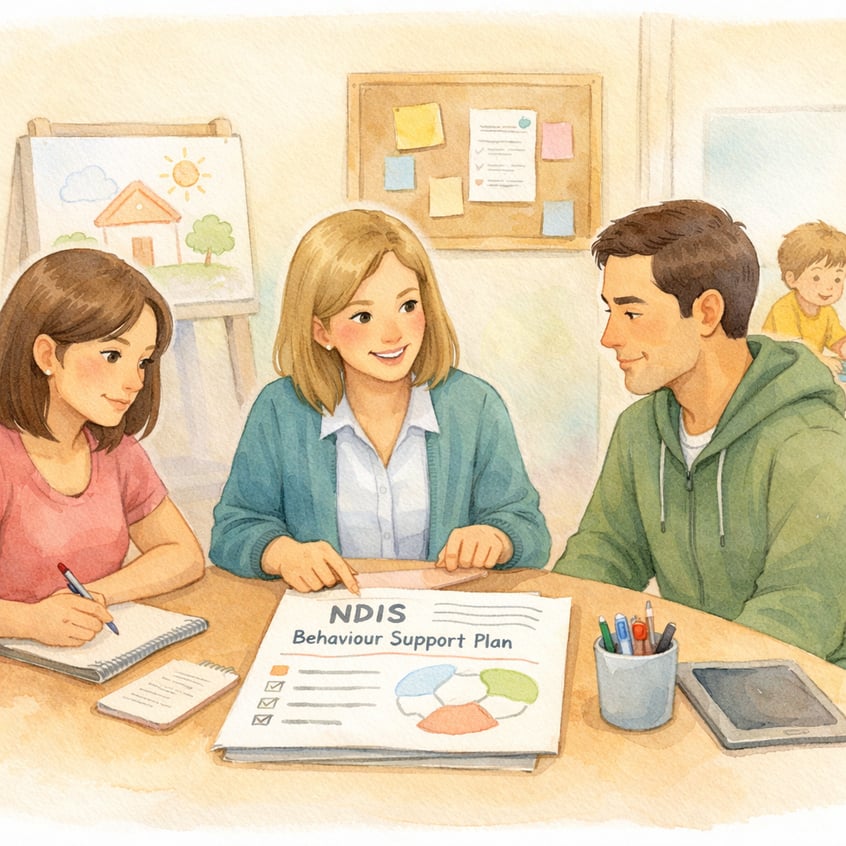
NDIS behaviour support starts with a thorough assessment to identify triggers for challenging behaviors. A practitioner works with you and your support team to create a personalized behaviour support plan, filled with proactive strategies to prevent difficulties.
The focus is on positive behaviour support—teaching new skills rather than simply reacting. For instance, a child with autism who struggles with transitions might learn routines to reduce anxiety and increase stability. The plan may also recommend environmental changes at home or school.
Your team—including family and support workers—receives clear guidance on implementing these strategies consistently. This collaborative approach integrates your NDIS plan into daily life, helping you build skills, confidence, and independence.
Eligibility and Access Criteria in Australia
Understanding your eligibility for NDIS behaviour support is the first step toward getting the help you need. The NDIS funds these services for participants who display behaviours that impact their safety, learning, or community involvement. Eligibility is determined by your individual support needs, not just a specific diagnosis.
If you are an NDIS participant and have funding for "Improved Relationships" or "Behaviour Support" in your support plan, you can access these services. If not, you may still be able to use "Improved Daily Living" funds for programs that help reduce moderate behaviours. Let's look at who can receive these services and the steps to access them.
Who Can Receive NDIS Behaviour Support Services?
NDIS behaviour support services help participants whose behaviours put themselves or others at risk or limit community participation. The focus is on how the behaviour affects daily life, not just diagnosis, so children and adults with various disabilities may qualify.
These services build new skills and improve well-being for individuals and their support networks, providing tools for consistent, effective assistance. Challenges like communication, emotional regulation, or mental health are addressed at the root, aiming to empower participants to live more independently and fully.
Steps for Accessing Behaviour Support Through the NDIS
Accessing behaviour support through the NDIS involves several key steps:
- Make sure your NDIS plan includes funding for "Improved Relationships" or "Behaviour Support." If you're unsure, ask your NDIS planner or support coordinator to review your plan.
- Choose a registered NDIS behaviour support provider who meets quality and safeguard standards. These providers have approved practitioners to develop and oversee behaviour support plans.
- Work with your chosen provider to begin assessment and create your support plan.
Following these steps helps ensure you receive high-quality, ethical support tailored to your needs.
Types of Behaviours Addressed by NDIS Positive Behaviour Support
NDIS positive behaviour support addresses a wide range of actions, often called challenging behaviours or behaviours of concern. These are behaviours that may put an individual or others at risk of harm or significantly impact their quality of life. The focus of positive behaviour support is not to punish these actions but to understand what they are communicating.
By identifying the purpose behind the behaviour, practitioners can develop behaviour support strategies that teach new skills and create better ways for a person to express their needs. This proactive approach helps reduce the frequency and intensity of challenging behaviours over time.
Examples of Challenging Behaviours Supported
Challenging behaviours, or behaviours of concern, can take many forms and vary in intensity. These are actions that might limit a person's access to community activities, education, or other support services. NDIS behaviour support is designed to help individuals who display such behaviours safely and respectfully.
The goal is to understand the underlying reasons for these actions, which are often related to difficulties with communication skills or unmet needs. By addressing the root cause, support plans can introduce positive alternatives. This reduces the need for a restrictive practice, such as a chemical restraint, which should only ever be used as a last resort.
Some examples of challenging behaviours that can be supported include:
- Physical aggression toward others, such as hitting or kicking.
- Verbal aggression, like screaming or shouting.
- Property damage.
- Running away or absconding into unsafe situations.
- Socially disruptive behaviours that create barriers to inclusion.
Role of Positive Behaviour Support Strategies
Positive behaviour support strategies improve quality of life by focusing on proactive, person-centered approaches. Unlike restrictive practices, which limit rights or freedom, positive support seeks to understand the reasons behind behaviour and teaches more effective ways to communicate needs.
These strategies are tailored to individual strengths and goals, emphasizing skill development in emotional regulation, communication, and social skills. This empowers people to manage emotions and interact positively with their environment.
Key principles include:
- Adjusting environments to reduce triggers
- Teaching replacement skills for challenging behaviours
- Reinforcing positive actions
By building capacity, these strategies create lasting change rather than simply controlling behaviour.
Creating an Individualised Behaviour Support Plan
Creating a personalized behaviour support plan is a collaborative process that puts the individual at the center. It starts with a comprehensive functional behaviour assessment to understand a person's unique support needs and the reasons behind their behaviours. This information forms the foundation of the plan.
A practitioner works closely with the individual and their support team to develop a comprehensive behaviour support plan filled with practical, evidence-based strategies. This ensures the plan is not just a document, but a useful tool for everyday life. Let's look at the key steps and components involved in this process.
Key Steps in Developing a Plan
Developing an effective support plan is a structured process led by an NDIS behaviour support practitioner. It begins with a thorough assessment of the individual’s strengths, needs, and behavioural context through observation, conversation, and data analysis.
The practitioner then takes a holistic approach, considering all aspects of the person’s life and potential environmental changes. The plan is created collaboratively with the individual and their family to ensure it aligns with their goals and preferences.
Key steps include:
- Conducting a functional behaviour assessment to identify why the behaviour occurs.
- Clearly defining behaviours in observable terms.
- Creating proactive strategies to prevent behaviours and teach alternative skills.
- Outlining safe, respectful responses if behaviours occur.
- Establishing regular monitoring and review of the plan.
Components Included in NDIS Behaviour Support Plans
An NDIS behaviour support plan outlines practical strategies to meet an individual’s needs. Developed within the NDIS framework, it ensures person-centered, evidence-based care focused on improving quality of life. The plan guides everyone involved in the person's support.
A key goal is to reduce or eliminate restrictive practices by offering positive alternatives. If a restrictive practice is necessary for safety, it must be clearly justified, documented, and approved under strict NDIS rules.
Effective plans include:
|
Component |
Description |
|---|---|
|
Functional Behaviour Assessment |
Analyzes reasons behind behaviours, including triggers and outcomes. |
|
Proactive Strategies |
Preventative interventions like environmental changes or skill-building. |
|
Reactive Strategies |
Steps to respond safely and calmly if behaviour occurs. |
|
Restrictive Practices Details |
Information on any regulated restrictive practice, including justification and reduction plan. |
|
Monitoring and Review |
Regular evaluation and updates to ensure effectiveness. |
Finding and Choosing an NDIS Behaviour Support Practitioner
Finding the right support is crucial for achieving positive outcomes. When looking for specialist behaviour support, you'll need to find a registered behaviour support practitioner. These are professionals who are considered suitable by the NDIS Commission to provide these specialized support services. You can find them through a registered NDIS support provider.
Choosing the right practitioner means finding someone with the right qualifications who you feel comfortable working with. It's important to ask questions and ensure their approach aligns with your goals. The following sections will cover what qualifications to look for and how to locate services in your area.
Practitioner Qualifications and Accreditation
Behaviour support practitioners are highly trained professionals with backgrounds in social work, occupational therapy, psychology, or developmental education. To be recognized by the NDIS Commission, they need a relevant university degree and experience in the disability sector.
They must follow the NDIS Positive Behaviour Support Capability Framework, which details the skills and knowledge needed for safe, effective, and ethical support. This framework ensures practitioners uphold participants’ rights and dignity.
Ongoing training is required so practitioners stay current with evidence-based practices, supporting skill development and positive change. High standards of qualification and practice help protect participants and ensure quality care.
Locating Services Across Regions in Australia

NDIS-funded behaviour support services are available across Australia, but access may vary by location. Most providers operate in cities and regional centers, with some offering outreach or telehealth for remote areas. The NDIS gives you the flexibility to choose your support provider.
To find services near you:
- Use the NDIS Provider Finder tool to search for "specialist behaviour support."
- Ask your support coordinator for a list of local registered providers.
- Contact national providers who may serve your area.
- Explore telehealth options if local services are limited.
You can also seek recommendations from your support coordinator, local area coordinator (LAC), or others in your network. Aim to choose a provider who offers consistent, ongoing support that suits your needs.
Conclusion
In summary, understanding NDIS Behaviour Support Therapy is vital for clients seeking effective strategies to address challenging behaviours. By recognizing the eligibility criteria and steps involved in accessing these services, individuals can better navigate the NDIS system. Furthermore, creating an individualized behaviour support plan tailored to specific needs is essential for achieving positive outcomes. The right practitioner can make all the difference, so take the time to find qualified professionals who resonate with your unique requirements.
If you're ready to explore the benefits of NDIS Behaviour Support Therapy further, reach out today for a consultation or call daar at 02 9133 2500 to discuss how we can assist you on this journey towards improved well-being.
Frequently Asked Questions
What disorders or disabilities are commonly supported through NDIS behaviour support therapy?
NDIS behaviour support is not limited by diagnosis but is based on functional need. It commonly supports individuals with autism, intellectual disabilities, developmental delays, and mental health conditions. These support services focus on helping with challenges in daily living and promoting skill development to improve overall well-being.
What happens during a session of NDIS behaviour support therapy?
A session typically involves working with your practitioner to review your behaviour support plan and practice proactive strategies. This could include building skills in communication or emotional regulation. The practitioner also collaborates with your support network to ensure everyone knows how to implement the plan effectively in different environments.
Are behaviour support services funded everywhere in Australia through the NDIS?
Yes, behaviour support services are funded for eligible NDIS participants across Australia under the National Disability Insurance Scheme. While the availability of a local support provider can vary by region, many organizations offer services in person or via telehealth to ensure NDIS participants can access the support they need.
.svg)




.svg)