
.png?width=48&height=48&name=Group%201%20(3).png)























11 September, 2026

Your Guide to Choosing an ABA Therapy NDIS Provider
Key Highlights
- Modern applied behaviour analysis NDIS services focus on positive reinforcement, breaking complex daily skills into small, highly achievable steps. As a registered ABA therapy NDIS provider, daar delivers support through a neuro-affirming lens, prioritising a child’s joy, autonomy, and natural development while reducing challenging behaviours. While both ABA therapy and Positive Behaviour Support (PBS) are grounded in behaviour analysis and utilize positive reinforcement, there are key differences under the NDIS. ABA therapy sessions often involve highly structured, individualized programs using applied behaviour analysis to teach daily skills, whereas PBS takes a broader approach, aiming to improve quality of life by addressing the environment and overall well-being, not just specific behaviours.
- As a registered ABA therapy NDIS provider, daar delivers support through individualized support plans that focus on a neuro-affirming lens, prioritizing a child’s joy, autonomy, and natural development. To start this process, it is essential to schedule an initial consultation.
- Telehealth transitions ABA out of rigid, clinical settings and into the "natural environment," where play and daily family routines become the primary teaching tools. The first step is ensuring that comprehensive behavioural support NDIS funding can be seamlessly utilised for online ABA programs, eliminating out-of-pocket travel fees for regional families. To apply for NDIS support for ABA therapy for your child, you need to contact the National Disability Insurance Scheme (NDIS) and begin the application process by submitting evidence of your child's needs and how ABA programs will support their development. You can discuss your goals with your NDIS planner, who will help determine eligibility and ensure NDIS funding is allocated for ABA services as part of your child's plan.
- Comprehensive behavioural support NDIS funding can be seamlessly utilised for online ABA programs, eliminating out-of-pocket travel fees for regional families.
- Our virtual delivery model heavily emphasises parent coaching, ensuring that caregivers are confident partners in their child's skill-building journey.
Introduction
When exploring therapy pathways for a child with developmental delays or autism, families frequently encounter the term Applied Behaviour Analysis (ABA). Historically, ABA was known for highly structured, repetitive table-work. However, the science of behaviour has evolved substantially since then. Today, modern, neuro-affirming ABA is a dynamic, play-based approach focused on empowering individuals and celebrating a child’s strengths, which is often sought after following an autism diagnosis.
Navigating the various therapies approved by the National Disability Insurance Scheme can be confusing. If you are seeking structured, evidence-based skill development, choosing the right ABA support provider is critical. At daar, we are redefining how ABA is delivered across Australia by fostering social interaction. By using telehealth, we bring compassionate, highly practical, and NDIS-aligned behavioural support directly into your living room. The NDIS does have guidelines regarding ABA therapy. Providers must ensure their supports are evidence-based, person-centered, and align with the NDIS Code of Conduct. This means ABA therapy should be ethically delivered and tailored to each participant's unique needs, with respect to participant choice and control. It's important to select an ABA therapy NDIS provider who adheres to these restrictions and guidelines for quality and compliant services.
Demystifying Applied Behaviour Analysis NDIS Support
At its core, applied behaviour analysis NDIS support is simply the science of learning. It looks closely at how our environment impacts our actions.
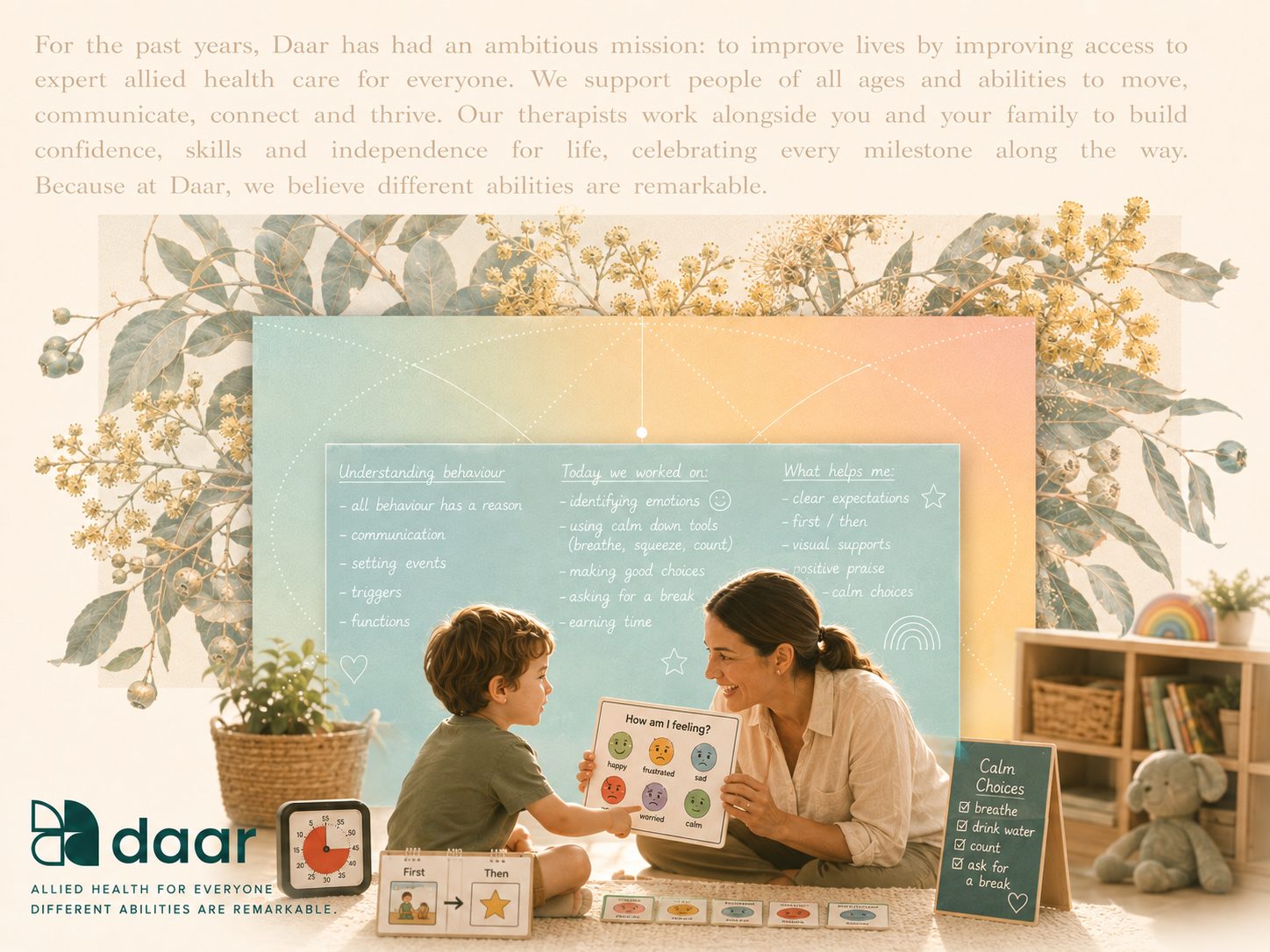
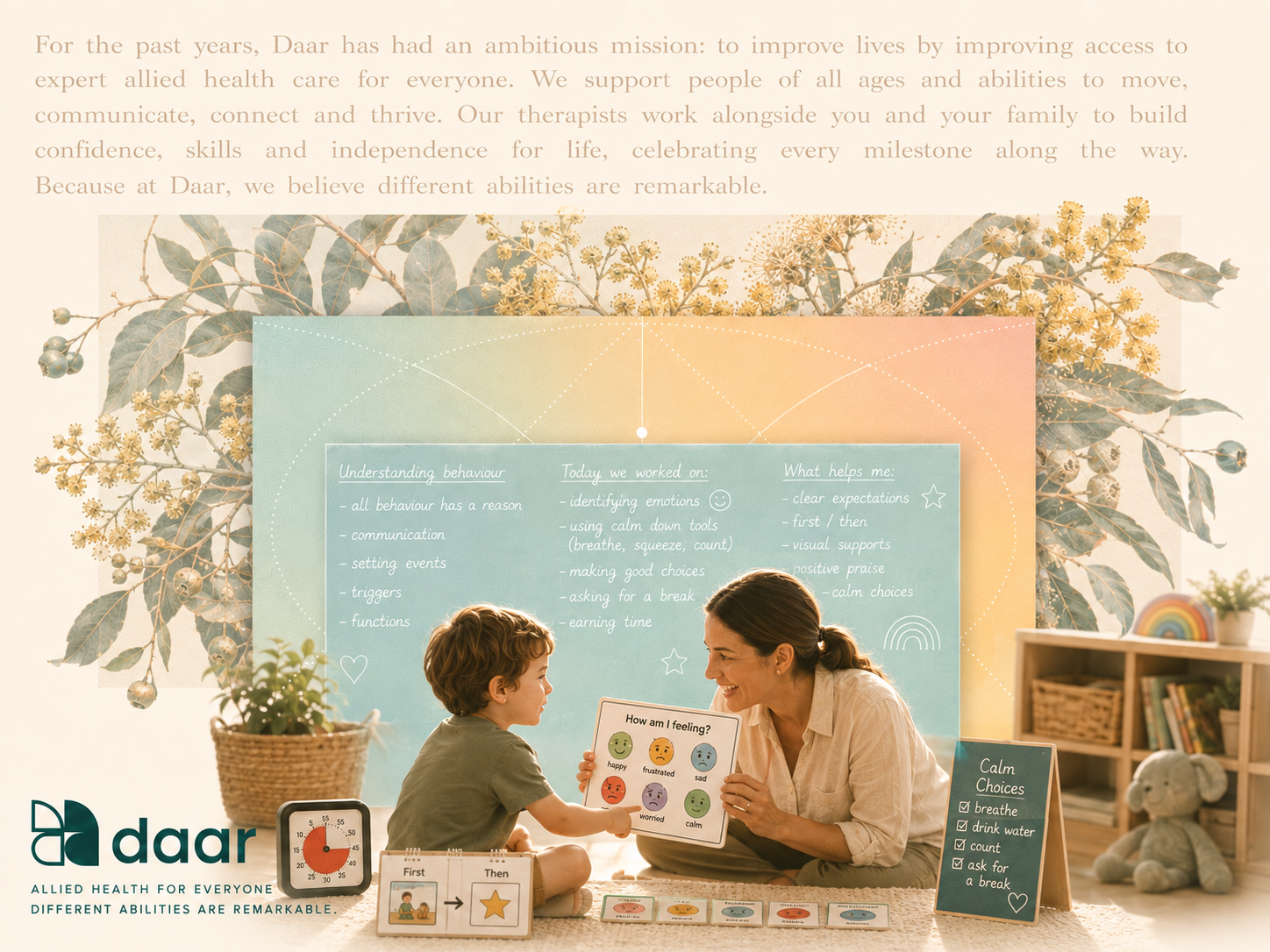
Modern ABA therapy breaks down complex, overwhelming tasks—such as using the toilet, brushing teeth, or transitioning between activities—into tiny, manageable steps. By heavily utilising positive reinforcement (praise, access to a special interest, or high-fives), practitioners encourage the development of new skills. At daar, our ABA programs never seek to change who a child is or force them to "mask" their neurodivergence. Instead, the focus is purely on building functional skills that increase the child's independence, safety, and ability to communicate their needs effectively.
Why Choose a Telehealth ABA Therapy NDIS Provider?
Traditionally, engaging an ABA therapy NDIS provider meant committing to hours of face-to-face clinic visits with a behaviour analyst, or having multiple therapists rotating through your home every week to support your child's daily routines. This can be exhaustingly intrusive for a family's privacy and a child's sensory load. Under the NDIS, ABA therapy providers are required to undergo specific training in applied behaviour analysis techniques, autism support strategies, and ethical standards. Providers must also meet professional registration requirements and participate in ongoing professional development to ensure high-quality and safe service delivery.
Telehealth offers a highly effective, modern alternative known as Natural Environment Teaching (NET) for children with autism spectrum disorder. Rather than sitting a child at a desk, our clinicians connect with your family via a screen while your child plays with their own toys in their own space. We observe the natural flow of your household and guide you on how to embed ABA principles organically into bath time, meal prep, or sibling play. This approach not only reduces stress but ensures that the skills learned are immediately generalisable to the child’s real life. If you are searching for an NDIS-approved ABA therapy provider in Australia, start by visiting the official NDIS website where you can browse their provider directory. You can filter for ABA therapy providers and check their approval status to ensure they meet NDIS standards. Many providers also indicate their NDIS approval, along with health insurance information, on their websites, so look for such information when researching telehealth ABA therapy options.
Maximising Your Behavioural Support NDIS Funding
A common question familytion families have is how to successfully fund structured therapy programs. Because ABA is an evidence-based capacity-building framework, it aligns perfectly with the goals of the NDIS.
Your behavioural support NDIS funding—typically found under "Capacity Building: Improved Daily Living" or "Capacity Building: Improved Relationships"—can be fully utilised for daar’s telehealth ABA programs. By choosing virtual delivery, you eliminate the expensive provider travel costs associated with bringing a specialist to your door. This means a significantly larger portion of your NDIS budget goes directly toward productive clinical hours, parent coaching, and ongoing program supervision, giving your child the consistency they need to thrive.
Conclusion
Finding a therapy model that is structured yet flexible, evidence-based yet deeply compassionate, is the key to early childhood progress. Modern Applied Behaviour Analysis provides a clear roadmap for skill acquisition, and telehealth ensures that this roadmap fits seamlessly into your family’s real-world routine. According to NDIS data, ABA therapy has demonstrated higher effectiveness in improving developmental outcomes for children on the autism spectrum and those with developmental disorders compared to other behavioural interventions, making it a preferred choice for families seeking measurable, supportive progress.
Don’t let geographical barriers or long clinic waitlists delay your child's progress.
If you are looking for an empowering, modern approach to learning and therapy services that aligns with individual goals, reach out to explore a consultation or call direct at 02 9133 2500 to find your perfect match.
Frequently Asked Questions
Is modern ABA therapy different from traditional ABA?
Yes, significantly. Traditional ABA (sometimes called Discrete Trial Training) was often very rigid and adult-directed. Modern ABA, which our clinicians practice at daar, is play-based, child-led, and neuro-affirming. , tailored to the child’s needs. We follow the child's motivation, using their natural interests to teach new skills, including important social skills, in a fun, positive, and affirming way.
How does an ABA therapy NDIS provider deliver a program via a screen?
We use a parent-coaching, "mediator" model. Our senior behaviour analysts and therapists don't run drills through the screen; instead, they observe you interacting with your child. We provide live, expert coaching to you, teaching you the exact prompts and reinforcement strategies to use for everyday life. This empowers parents as the primary teachers, which research shows leads to the most sustainable outcomes.
Do you provide behavioural support NDIS services for older children and teenagers?
Yes. While early intervention is highly discussed, ABA principles are incredibly effective for older children, adolescents, and adults. For older participants, our ABA programs focus heavily on building independence and achieving meaningful goals, such as learning daily living skills (cooking, hygiene), understanding community safety, and developing self-advocacy and emotional regulation techniques.
.svg)




.svg)