
.png?width=48&height=48&name=Group%201%20(3).png)























18 September, 2026

Emotional Regulation and Behaviour Support: A Masterclass
Key Highlights
- Challenging actions are rarely intentional acts of defiance; they are usually the direct result of a breakdown in two critical areas: speech capacity and internal self-soothing.
- Effective Behaviour Support acts as the umbrella, investigating the biological and environmental triggers that prevent a child from expressing their needs safely.
- The link between communication and behaviour support is profound: when a neurodivergent child lacks the functional words or tools to say "I am overwhelmed," their body will communicate that distress physically (e.g., hitting, eloping, or crying). Restrictive practices in behaviour support refer to interventions that limit a child's freedom or rights, such as physical restraint or removing access to preferred items, and are only used when necessary to ensure safety. These practices are implemented as a last resort when less intrusive supports are ineffective, always to protect a child and others from harm.
- You cannot reason with a brain in survival mode. Merging emotional regulation and behaviour support means teaching adults how to co-regulate with the child before attempting to teach them a new skill.
- By utilising the "mediator model" via telehealth, daar empowers Australian parents to seamlessly implement both communication strategies and regulatory tools in their own homes.
Introduction
Imagine sitting in a noisy, brightly lit room where the temperature is uncomfortably high and various physical surroundings are overwhelming. Now, imagine that your mouth has been taped shut, and someone is asking you to solve a complex math problem. How long would it take before you became intensely frustrated, pushed the math paper away, or even lashed out, making it challenging to engage in social activities?
For many neurodivergent children navigating a neurotypical world, this overwhelming scenario is their daily reality. When parents seek help from support workers for aggressive meltdowns or extreme non-compliance, they often view the "behaviour" as the primary problem to be fixed. However, at daar, our allied health professionals know that behaviour is merely the tip of the iceberg. Below the surface are the true drivers: an inability to process big feelings and an inability to be understood. Let’s explore the intricate web of communication and behaviour support in a supportive environment, why teaching calm and implementing proactive strategies is essential, and how our telehealth clinic unifies these elements to bring harmony to your home.
The Iceberg Analogy: Redefining Behaviour Support
Traditional discipline models treat the symptom, not the cause. If a child throws their dinner plate, a traditional approach punishes the throwing. But holistic Behaviour Support looks beneath the waterline.
Our practitioners behave like clinical detectives. We conduct thorough Functional Behaviour Assessments (FBAs) to determine exactly why the plate was thrown. The data almost always points to a deficit in two distinct, yet heavily overlapping, functional areas: the child is either experiencing severe sensory/emotional overwhelm, or they lack the robust communication bridge, often needing speech therapy, to politely say, "I am finished." Until we address the root deficits and the child's support needs through behaviour analysis, the challenging physical actions will continue to occur.
Finding the Words: Communication and Behaviour Support
There is a foundational mandate in our clinical practice: All behaviour is communication. When verbal language fails, physical action takes over.
This highlights the inseparable link between communication and behaviour support. Let's say a child becomes highly distressed when asked to transition away from their iPad. If they do not possess the expressive language or the Augmentative and Alternative Communication (AAC) tools to negotiate (e.g., "Five more minutes, please"), their only available option is to scream or refuse.
A comprehensive positive behaviour support plan (PBSP) always includes a heavy emphasis on proactive communication building. Instead of just instructing parents on how to handle the screaming, our specialists collaborate with you to scaffold new language skills. We teach you how to introduce visual choice boards, simple signs, or declarative language that equips your child with a safe, efficient way to get their needs met, fundamentally rendering the distress unnecessary.
Finding the Calm: Emotional Regulation and Behaviour Support
You can give a child all the communication tools in the world, but if their nervous system is flooded with stress hormones, they cannot access them. This is where emotional regulation, emotional dysregulation, and behavioural challenges support must intersect perfectly in their daily life.
When a child is triggered (perhaps by a loud noise or an unexpected disruption to their routine), their prefrontal cortex—the part of the brain responsible for logic, language, and reasoning—physically shuts down. They enter a state of fight, flight, or freeze. In this moment, using positive behaviour support strategies such as visual schedules or asking them to 'use their words' with the guidance of support teams is neurologically impossible.
Our telehealth practitioners teach caregivers the vital art of co-regulation to promote positive interactions. Before you can address communication skills and social interactions, you must address the biology. We coach parents on how to use deep pressure, quiet presence, or specific rhythmic movements to lower the child's cortisol levels. Only once the nervous system is settled can the proactive behavioural teaching begin.
Coaching the Ecosystem via Telehealth
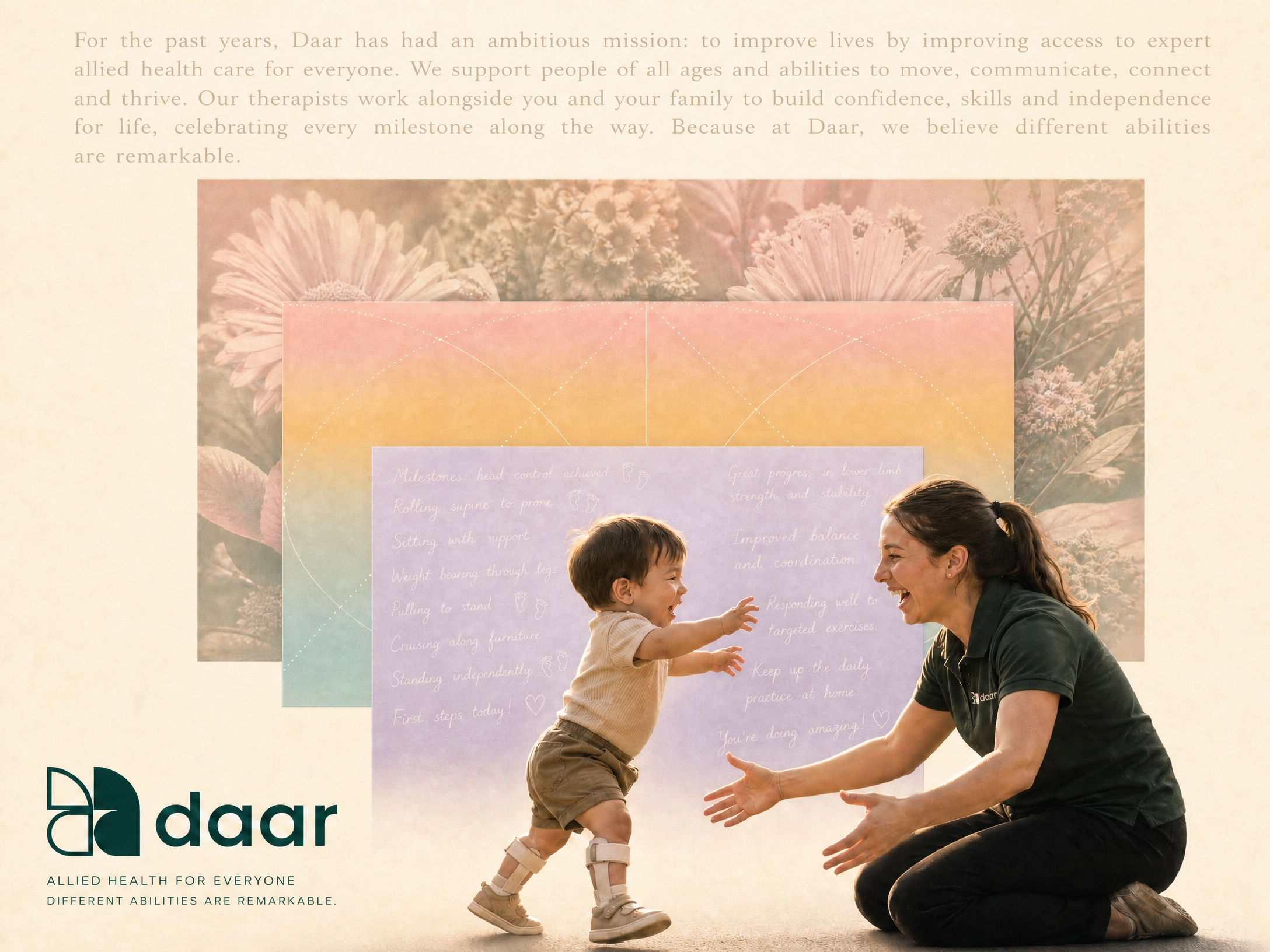
Because the breakdown of regulation and communication happens dynamically throughout the day—during morning routines, sibling squabbles, or grocery trips—therapy must happen in the real world.
Using the "mediator model," daar’s telehealth clinicians observe your family’s natural environment securely through your device. If a child begins to dysregulate during a play session, our practitioner is in your ear coaching you live: "Their nervous system is escalating. Pause the instruction, offer a deep squeeze for regulation, and then present the visual communication card." We give you the skills to bridge the gap in real-time. To see how we pair your family with the right clinical expert for these complex intersections, discover telehealth therapy and find your perfect match.
Conclusion
Challenging behaviours are not a sign of a "bad" child; they are a distress signal from a system that is struggling to cope and struggling with communication difficulties to speak. By unifying robust communication strategies with deep emotional regulation support, you can help your child feel safe, understood, connected, and teach alternative skills as part of a PBS plan.
Transform your daily routines with compassionate, evidence-based interventions that improve your quality of life in meaningful ways, focusing on the individual’s strengths. Premium NDIS-aligned guidance in the disability sector is available to Australian families right now. Reach out to explore a virtual consultation or call daar directly at 02 9133 2500 to find your perfect match today.
Frequently Asked Questions
Can NDIS fund interventions that cover both communication and emotional regulation through occupational therapy?
Yes, taking the next step, NDIS funding is designed to build holistic functional capacity tailored to each individual’s unique needs. Families typically draw from Capacity Building: Improved Relationships to fund a registered practitioner for formal Behaviour Support plans, while using Improved Daily Living for allied health coaching that targets speech, pragmatic communication, and daily emotional regulation strategies.
My child is fully verbal. How is communication and behaviour support relevant to them?
Being able to speak perfectly when calm is very different from being able to speak when distressed. Many fully verbal neurodivergent children (including those with Autism or PDA) experience situational mutism or lose their expressive language capacity when their anxiety spikes, which can sometimes be linked to underlying mental health concerns. Our practitioners help you build non-verbal safety nets—like visual supports, such as visual cards or hand signals—so your fully verbal child can achieve greater independence in their communication during a meltdown.
Why does emotional regulation and behaviour support focus so heavily on the parents?
Children co-regulate. They borrow the emotional state of the adults around them, putting the strategies in place to help individuals of all ages, tailored to individual needs. If a parent meets a child's screaming with shouting or high anxiety, the child's nervous system will only escalate further. Our 'mediator model' focuses on adults because equipping you with the tools to remain grounded, calm, and predictable, while considering environmental factors, is the fastest, most biologically effective way to de-escalate your child's distress.
.svg)




.svg)