
.png?width=48&height=48&name=Group%201%20(3).png)























9 October, 2026

The Role of Paediatric Allied Health in Child Development
Key Highlights
- Paediatric allied health supports child development by building communication skills, behaviour, and participation in everyday life.
- Speech therapy helps young children improve speech sounds, language development, and social communication through tailored therapy sessions.
- Occupational therapy can address motor skills, sensory processing, and daily routines that affect learning and independence.
- Early intervention supports better childhood outcomes, including confidence, emotional regulation, and academic performance.
- Parents should watch for developmental milestones, limited vocabulary, poor eye contact, and frustration during communication.
- In Australia, NDIS funding may help eligible families access allied health support and therapy services.
Introduction
Your child’s development is shaped by many small moments, from first sounds to first conversations. When communication skills, movement, or behaviour do not develop as expected, paediatric allied health can help. These services support young children in practical, family-centered ways that fit everyday life. Speech therapy, psychology, and occupational therapy each play a crucial role in helping children grow. With early intervention, families can address concerns sooner and support stronger progress across learning, play, and relationships. Capacity building in early childhood education provides families, teachers, and caregivers with the knowledge and tools to foster children's growth, enabling early identification and targeted support for developmental needs. This collaborative approach strengthens allied health outcomes by ensuring children have access to consistent strategies both in educational settings and at home.
Understanding Paediatric Allied Health and Its Importance in Child Development
Paediatric allied health includes professionals who help children build skills needed for communication, behaviour, learning, and daily routines. In the early years, this support can make a big difference when a child has specific needs or support needs that affect participation at home, child care, or school.
These professionals support child development by assessing challenges early and creating targeted plans. A speech pathologist may work on early speech, language skills, and social communication, while other allied health providers help with behaviour, movement, and emotional wellbeing. The next sections explain who supports children and what areas they address.
Key Allied Health Professions Supporting Children in Australia
Several allied health professions support young children in Australia. Speech therapy focuses on communication skills, including speech sounds, language development, and social communication. A speech pathologist may also help with fluency issues and alternative communication for children who are non-verbal or minimally verbal.
Occupational therapy supports participation in daily routines by working on fine motor skills, gross motor skills, and sensory processing. Psychology and behaviour services can help children with emotional regulation, positive behaviour, and social situations that feel hard to manage.
|
Profession |
Main Support Area |
|---|---|
|
Speech pathologist |
Paediatric speech therapy, language issues, speech disorders |
|
Occupational therapists |
Motor skills, sensory processing, daily routines |
|
Psychology/behaviour services |
Emotional regulation, behaviour, social skills |
When these professionals collaborate in early childhood education settings, therapy sessions become more consistent across different settings. That helps the individual child practice new skills more often and supports the child’s goals in real life.
Core Areas of Child Development Addressed by Allied Health
Allied health professionals support the parts of development that children use every day. This includes how they move, play, understand language, express ideas, and respond to others. Early intervention is especially helpful when these areas are not progressing as expected.
Many concerns appear in connected ways. A child with communication challenges may also struggle with behavioural development because they cannot clearly share needs. In the same way, movement difficulties can affect play, independence, and confidence.
Common areas addressed include:
- Motor skills, including fine motor skills and gross motor skills
- Social communication, such as turn-taking, eye contact, and social interactions
- Language development, including vocabulary and sentence structure
- Behavioural development, especially frustration and positive behaviour
- Everyday routines that support learning and participation
This broad support helps children build essential skills for home, school, and everyday life.
Early Identification of Developmental Delays in Children
Early identification gives families a clearer picture of how a child is developing in early childhood. It can highlight developmental delays before they begin to affect learning, behaviour, or confidence in bigger ways.
Parents often notice the first signs at home. A child may have language delays, unclear speech, or trouble responding during play and conversation. Some children also show frustration, tantrums, or reduced interest in social interactions when communication is hard. Recognising these patterns early can guide families toward the right support.
Recognising Early Signs of Speech, Language, and Behavioural Challenges
Parents often ask what to look for first. In many cases, early signs show up in simple moments, like play, mealtimes, or story time. A child may not babble much, may not use gestures, or may struggle to follow simple instructions. These early communication challenges matter because they are part of communication development.
Speech and language issues can also affect behaviour. When children cannot express needs, they may become upset or withdraw from social play. Trouble with speech sounds, limited vocabulary, or reduced eye contact can be worth discussing with a professional.
Signs that may need attention include:
- Limited vocabulary or no words by 18 months
- Difficulty following simple directions
- Speech sounds that are hard for others to understand
- Frustration or tantrums during communication
- Low interest in talking, turn-taking, or social play
These signs do not confirm a diagnosis, but they do suggest that an assessment may help.
When Should Parents Seek Allied Health Support for Their Child?
You do not need to wait for concerns to become severe before seeking health support. If your child is missing developmental milestones, has few words, struggles to follow directions, or becomes very frustrated when trying to communicate, it is reasonable to ask for allied health support.
Another sign is when challenges begin affecting daily life. Your child’s needs may show up during play, child care, family routines, or social situations. Some children need help with speech disorders, while others need support with behaviour, language skills, or social communication.
A speech pathologist or other provider can assess your child’s needs and explain whether therapy services are recommended. Early guidance is useful even when the picture is still developing, because support can be tailored to your child’s unique needs and adjusted over time.
The Value of Early Intervention: Enhancing Childhood Outcomes
Early intervention matters because children learn rapidly in the first years of life. When support starts early, it can strengthen communication, behaviour, and participation before difficulties become more established.
Early childhood intervention can improve a child’s quality of life by reducing frustration and helping them connect with family, peers, and educators. It also gives parents practical strategies to use at home. With support at the right time, children are better placed to reach their full potential across everyday routines and learning.
Long-term Benefits of Timely Allied Health Intervention
Timely support can shape childhood outcomes in meaningful ways. When children receive help early for speech or behavioural challenges, they often gain stronger skills before demands increase at school and in social settings. This can reduce ongoing frustration and help them participate more fully.
Over time, early intervention may support better academic performance because children can follow instructions, understand classroom language, and express ideas more clearly. It also helps with social skills such as turn-taking, conversation, and joining group play.
Just as important, therapy can strengthen emotional regulation and build confidence. Children who can communicate more effectively often feel more secure in everyday life. Families may also feel more supported because they learn strategies that make home routines easier and encourage steady progress across different settings.
How Early Therapy Supports Brain Development and Learning
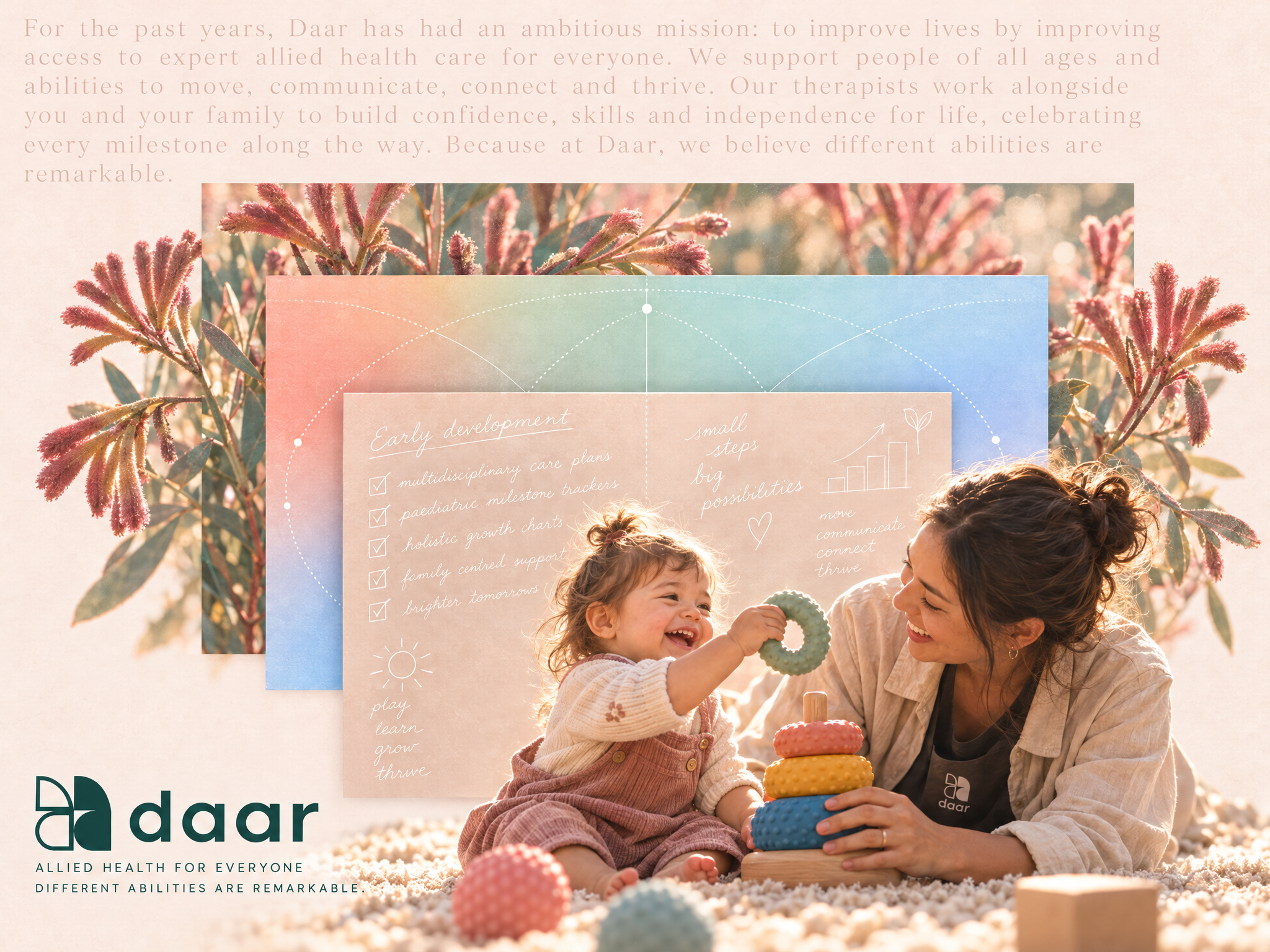
Early therapy supports brain development by giving children repeated chances to practice communication and interaction during a stage when learning happens quickly. Young children build skills through everyday experiences, and structured therapy sessions can guide that learning in clear, manageable steps.
Speech therapy supports early childhood development by targeting areas such as speech sounds, language development, and social communication. A therapist may use play, books, gestures, and routines to help children learn new skills that are useful right away. These strategies connect practice to real situations, which helps learning stick.
As children grow, these early gains can support other essential skills, including listening, following directions, storytelling, and classroom participation. Therapy does not just focus on isolated tasks. It helps children use communication in daily life, making learning more effective across home, school, and community settings.
Conclusion
In conclusion, the role of pediatric allied health professionals is pivotal in fostering healthy child development. By focusing on early identification and intervention, these experts help address developmental delays and support essential growth areas such as speech, language, and behaviour. Parents play an integral part in this journey by recognising early signs and seeking timely support. The long-term benefits of proactive measures can significantly enhance a child's outcomes, paving the way for a brighter future.
If you’re interested in ensuring the best for your child’s development, reach out for a consultation or call daar at 02 9133 2500 today to explore the options available.
Frequently Asked Questions
How do allied health professionals collaborate to support child development?
Allied health professionals support child development through collaboration around a child’s goals. They share strategies across therapy sessions, home, and education settings so progress is more consistent. This teamwork helps children practice communication, behaviour, and social interactions in ways that feel connected and relevant to daily life.
What strategies are used to encourage healthy speech and behaviour in young children?
Speech therapy and language therapy often use play, books, modeling, gestures, and short practice during daily routines. In early childhood, adults may pause to encourage responses, name objects, celebrate attempts, and support positive behaviour. These simple strategies strengthen communication skills without making practice feel stressful.
Are paediatric allied health services covered under the NDIS in Australia?
In Australia, some children can access allied health support through the NDIS if they have developmental delays, disability, or specific needs. Funding may cover therapy services such as speech therapy and related assessments. For eligible families, this support can improve participation, communication, and overall quality of life.
.svg)




.svg)