
.png?width=48&height=48&name=Group%201%20(3).png)























30 March, 2026

Fun Speech Therapy Activities Parents Can Do at Home
As a parent, you play a crucial role in your child's development. If you have concerns about your child's speech, or if they are already seeing a speech pathologist, you might be wondering what you can do at home to support their progress. The great news is that speech therapy activities don’t have to be boring or feel like a chore. In fact, they can be a fun and engaging way to bond with your child while helping them develop their communication skills.
At daar, a registered NDIS speech therapy provider serving families in Liverpool, NSW, and the greater Western Sydney area, we believe in empowering parents with the tools and knowledge to support their child's speech and language journey. Our team of experienced speech pathologists has put together a list of five fun and effective speech therapy activities you can easily incorporate into your daily routine.
Why At-Home Speech Therapy Activities are Important
Before we dive into the activities, let's talk about why your involvement is so important. Consistent practice in a familiar and comfortable environment can significantly boost your child's progress. When children practice their skills in everyday situations, they are more likely to generalise those skills to other settings, like school or the playground. Plus, it shows them that you are their biggest cheerleader!
Remember, these activities are designed to supplement, not replace, professional speech therapy. If you have any concerns about your child’s speech or language development, it’s always best to seek advice from a qualified speech pathologist. Our team at daar is here to help. Contact us for a consultation or to find out more about our pediatric speech therapy services. Book Now!
1. The "I Spy" Sound Game
This classic game is a fantastic way to work on articulation and sound awareness. It’s simple, requires no materials, and can be played anywhere – in the car, at the park, or even during bath time.
How to Play: Start by saying, "I spy with my little eye, something that starts with the sound..." and then make the sound of a letter, for example, "sssss". Encourage your child to look around and find an object that starts with that sound, like "sun" or "sock".
How it Helps: This activity helps children to isolate and identify initial sounds in words, a key phonological awareness skill. It also encourages them to practice producing different sounds. You can adapt the game to target specific sounds your child is working on in therapy. For a challenge, you can spy things that *end* with a certain sound.
Variations for All Ages: For younger children, keep it simple by focusing on sounds they are already familiar with and easily identifiable objects. As they get older, you can make the game more challenging. Try spying something that rhymes with a word, for example, "I spy with my little eye, something that rhymes with 'cat'." This helps to develop a different aspect of phonological awareness. You can also introduce categories, such as "I spy something that is a type of fruit."
Our speech pathologists at daar often use variations of this game in our sessions to make learning sounds fun and interactive. It’s a simple way to turn any moment into a learning opportunity.
2. Storybook Reading with a Twist
Reading together is one of the best things you can do for your child’s language development. To turn it into a targeted speech therapy activity, add a little twist.
How to Play: Choose a book with colourful pictures and a simple storyline. As you read, pause and ask your child questions about the story. Encourage them to describe what they see in the pictures. You can also take turns "reading" the story by making up your own words based on the illustrations.
How it Helps: This activity promotes a wide range of skills, including vocabulary building, sentence structure, and narrative skills. Asking "wh-" questions (who, what, where, when, why) encourages your child to use more complex sentences. Describing the pictures helps with vocabulary and descriptive language. For children working on specific speech sounds, you can choose books that feature those sounds prominently.
Making it More Interactive: Use different voices for the characters to make the story more engaging and to model different tones and expressions. Encourage your child to predict what might happen next in the story. This develops their inferencing and critical thinking skills. You can also choose 'predictable chart writing' books with repetitive phrases that your child can join in with. This builds their confidence and makes reading a more active experience.
At daar, we can recommend books that are not only engaging but also beneficial for your child’s specific speech and language goals. Don't hesitate to ask us for suggestions!
3. The Mystery Bag
The mystery bag is a fun, hands-on activity that encourages descriptive language and questioning.
How to Play: Find a bag or a box that your child can’t see through. Place a variety of common household objects inside, such as a spoon, a toy car, a ball, or a brush. Have your child reach into the bag (without looking!) and choose an object. Before they pull it out, ask them to describe what they feel. Is it hard or soft? Big or small? Smooth or bumpy? Once they’ve described it, they can pull it out and name it.
How it Helps: This activity is excellent for building vocabulary and descriptive language skills. It also helps with categorisation and understanding of concepts like size, shape, and texture. You can also switch roles and have your child put an object in the bag for you to guess.
Creative Twists: Create themed mystery bags to focus on specific vocabulary sets. For example, you could have a 'farm animal' bag or a 'transport' bag. This helps to build your child's knowledge in different areas. You can also encourage your child to think about the function of the object. For example, if they pull out a spoon, you can ask, "What do we use a spoon for?"
This is a great activity to do while waiting for dinner or during a quiet afternoon at home. It’s another example of how everyday objects can be used to create powerful learning experiences. If you're looking for more ideas, our Daar therapists are full of them! Book Now to schedule a session.
4. Cooking and Baking Together
The kitchen is a fantastic place for language learning. Cooking or baking together provides a natural and motivating context for practicing a variety of speech and language skills.
How to Play: Choose a simple recipe to make with your child, like cookies or a fruit salad. As you go through the steps, talk about what you are doing. Use action words like "mix," "pour," "stir," and "cut." You can also work on sequencing by talking about what you need to do first, next, and last.
How it Helps: Cooking together is a language-rich activity that can help with following directions, sequencing, vocabulary, and understanding of concepts. It’s also a great way to practice social skills like taking turns and working together. Plus, you get to enjoy a tasty treat at the end!
Language in the Kitchen: Use this opportunity to introduce new vocabulary related to food and cooking. Talk about the different ingredients and their properties (e.g., "The sugar is sweet," "The lemon is sour"). You can also work on concepts like 'hot' and 'cold'. For older children, you can have them read the recipe, which is great for literacy skills. Even a pretend cooking session with a toy kitchen can be a fantastic language-learning opportunity for younger children.
Our team at daar encourages parents in the Liverpool and Western Sydney area to find these everyday opportunities for language enrichment. It’s about making learning a natural part of your family’s life.
5. Simon Says: Action Word Fun
"Simon Says" is another classic game that can be easily adapted for speech therapy. It’s a fun way to work on listening skills, following directions, and vocabulary.
How to Play: Give your child a series of commands, starting some with "Simon says..." and others without. For example, "Simon says touch your nose," or "Jump up and down." Your child should only follow the commands that start with "Simon says."
How it Helps: This game is great for improving listening comprehension and the ability to follow multi-step directions. You can also use it to target specific action words or body parts. To make it more challenging, you can give two- or three-step commands, like "Simon says clap your hands and then stomp your feet."
Expanding the Game: Introduce prepositions and spatial concepts into the game. For example, "Simon says put the teddy bear *under* the chair" or "Simon says stand *behind* the sofa." This helps your child to understand and use these important concept words. You can also let your child be 'Simon', which gives them a chance to practice their expressive language skills by giving clear instructions.
This is a fun and active way to get your child moving while they learn. It’s a game that can be played with the whole family, making it a great bonding experience.
Your Partner in Your Child's Speech Journey
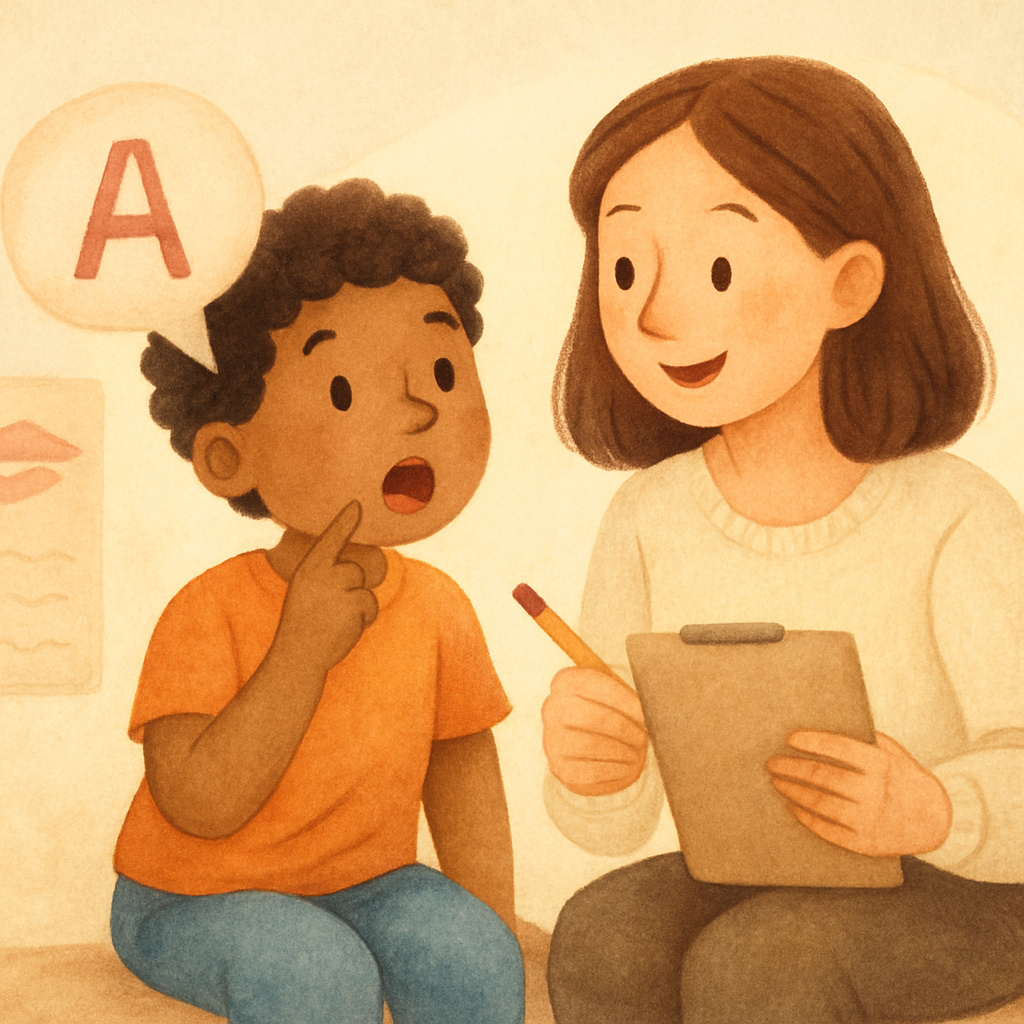
We hope you and your child enjoy these fun speech therapy activities. Remember to keep it light, positive, and playful. The goal is to create a supportive and encouraging environment for your child to practice their communication skills.
If you live in Liverpool, NSW, or the surrounding Western Sydney area and have concerns about your child’s speech and language development, our team at Daar is here to support you. We are a registered NDIS provider and offer comprehensive assessments and evidence-based therapy for children of all ages. Contact us today to learn more about our services or to book an appointment. Your journey to clearer communication starts here. Book Now!
.svg)




.svg)