
.png?width=48&height=48&name=Group%201%20(3).png)























26 August, 2026

Essential Support for Autistic Children: A Parent's Guide
Key Highlights
- Early intervention can support autistic children during early childhood and help build daily routines and communication.
- Therapy services may include speech pathology, occupational therapy, psychology, and behaviour support based on your child’s needs.
- In Australia, support services are available through public programs, private providers, and NDIS pathways.
- Education programs can include mainstream inclusion, specialist classes, and school-based educational support.
- Parents and carers can use support groups, advocacy, and advisory services to strengthen their support network.
- The right NDIS plan can help families access practical help that improves quality of life.
Introduction
Raising autistic children can bring questions, new routines, and a need for clear guidance. You may be thinking about diagnosis, school, therapy, or what support services are available in early childhood. The good news is that families in Australia can access a range of services designed to support development, learning, and daily life. When you understand your options early, it becomes easier to choose the right support for your child and build a plan that fits your family.
The Role of Early Childhood Intervention
Early intervention matters because the early years are a key time in a child’s development. Research shows that structured help started as early as possible can improve outcomes and give autistic children a better chance to build important skills.
In practice, early childhood intervention helps families understand support needs and connect with therapy services that match the child’s needs. It can also guide parents through the next steps. The sections below explain how this support works and which approaches are commonly used in Australia.
How Early Intervention Supports Development
Children learn rapidly in their early years through daily routines and relationships. Early intervention supports development by focusing on communication, play, social interaction, and behaviour in a structured way. This gives families a clear starting point and helps them address challenges sooner.
Support is tailored to each child’s strengths and needs—whether in sensory processing, communication, or behaviour. Therapists often work together to address all areas practically.
Over time, this helps children build skills for learning and participation at home, preschool, and in the community. It also boosts carers’ confidence. When parents understand what drives a behaviour, they can respond with calmer, more consistent, and effective strategies.
Evidence-Based Approaches Used in Australia
Families often ask which autism intervention is most effective. The compiled guidance points to structured educational and behavioural strategies that are matched to the individual child. In Australia, this may include speech pathology, occupational therapy, psychology, and forms of behaviour analysis when they fit the child’s needs.
|
Approach |
What it may support |
|---|---|
|
Speech pathology |
Communication skills, language, and understanding |
|
Occupational therapy |
Sensory processing, routines, and daily activities |
|
Applied behaviour analysis / behaviour analysis |
Structured learning and support for behaviours of concern |
|
Psychology |
Emotional support, coping, and family guidance |
No single method suits every child. The strongest approach is usually a coordinated plan built around your child and your support network. Health professionals can help you review options, ask good questions, and avoid any service that promises a cure.
Exploring Autism Care and Support Services in Australia
Across Australia, families can access a range of support services for children on the autism spectrum. These include assessment, early intervention therapies, school help, behaviour support, respite, advocacy, and information services for carers. Public teams and private practitioners both play a role.
Some families also use the NDIS to access individualised supports and services. If you are trying to understand what is available, it helps to look at therapy choices first and then explore where parents and carers can get reliable advice.
Public and Private Therapy Options for Autistic Children
You can access therapy services through public or private providers. Government-funded teams may offer assessment and early childhood intervention, often requiring a referral from a GP or pediatrician. Private practitioners provide fee-based services, useful for more specific or urgent needs.
Common therapies include:
- Occupational therapy for sensory processing and daily routines
- Speech pathology for communication and language
- Psychology for emotional and behavioural support
- Behaviour support for safety or participation concerns
NDIS funding may assist eligible families in accessing these supports. Trusted autism organizations and your support network can help compare services, check wait times, and find the best fit for your child.
Advisory Services for Parents and Carers
Parents and carers often need more than therapy referrals—they also need advice, advocacy, and practical support to understand autism at different ages. The information below highlights services offering phone support, workshops, and guidance on available resources.
Helpful options include:
- Autism helplines (national and state)
- Parent workshops for families with young children (ages 0–6)
- Support groups for carers to connect and share experiences
These services can reduce confusion and help you create an action plan. They are also helpful for school transitions, respite care, or referrals. When contacting advisory organizations, ask about advocacy, local groups, and guidance on eligibility or NDIS steps.
Education Programs and School Support
Education programs for autistic children can include support in mainstream school settings as well as more specialist options. Because every child has different support needs, schools may use personalised learning and support plans to help with inclusion, communication, and daily activities.
Planning early can make school transitions smoother. Families are encouraged to talk with teachers and staff about strengths, routines, and challenges before enrollment. From there, the focus shifts to choosing the right setting and using practical strategies that support learning and participation.
Specialist Classes and Mainstream School Inclusion
There’s no one-size-fits-all school pathway for autistic children. Some thrive in mainstream settings with proper support, while others benefit from specialist classes or tailored environments. The key is matching the setting to your child’s strengths, challenges, and routines.
Successful inclusion starts with early planning. Families should visit schools, talk with staff, and find a welcoming, flexible team. That first conversation helps schools understand your child’s communication needs, sensory differences, and required support.
While NDIS supports daily living, school planning relies on education systems and family involvement. Regular contact with teachers helps your child adjust, maintain routines, and receive support as their needs change.
Strategies for Success at School
School success usually comes from steady teamwork. Your child may need support with routines, transitions, social skills, or emotional regulation. A strong support network can include teachers, carers, and therapists working toward the same goals, using similar language and expectations across home and school.
Useful strategies may include:
- clear routines and preparation for changes
- regular communication between school and home
- behaviour support linked to the reason behind the behaviour
- practical help with social skills and daily living tasks
These steps can reduce stress and help your child feel safer and more understood. If a behaviour is linked to communication or sensory overload, the right professional input can make school support more effective. Consistency is often what turns a difficult day into a manageable one.
Empowering Families to Support Autistic Children
Support services do not only help the child. They also help families manage daily living, understand support needs, and feel less alone. Carers often carry a heavy load, so practical guidance, respite, and behaviour support can make home life more stable.
A good support network can also open the door to community participation. When families have the right information and practical help, they can focus more on routines, wellbeing, and confidence. The next two sections look at home life and social connection.
Building a Positive Home Environment
Home is often where your child feels safest, but also where stress appears first. Creating a positive home environment begins with understanding your child’s needs and identifying sources of distress, like routine changes, communication challenges, or sensory discomfort.
Support services offer families practical strategies through parenting programs and behaviour support, helping address issues such as meltdowns, mealtime struggles, bedtime difficulties, or wandering.
When families feel supported, everyone’s wellbeing improves. Positive behaviours develop when expectations are clear, and adults respond consistently. You don’t need to fix everything at once—small changes with reliable support can make daily life more manageable and predictable.
Navigating Community and Social Participation
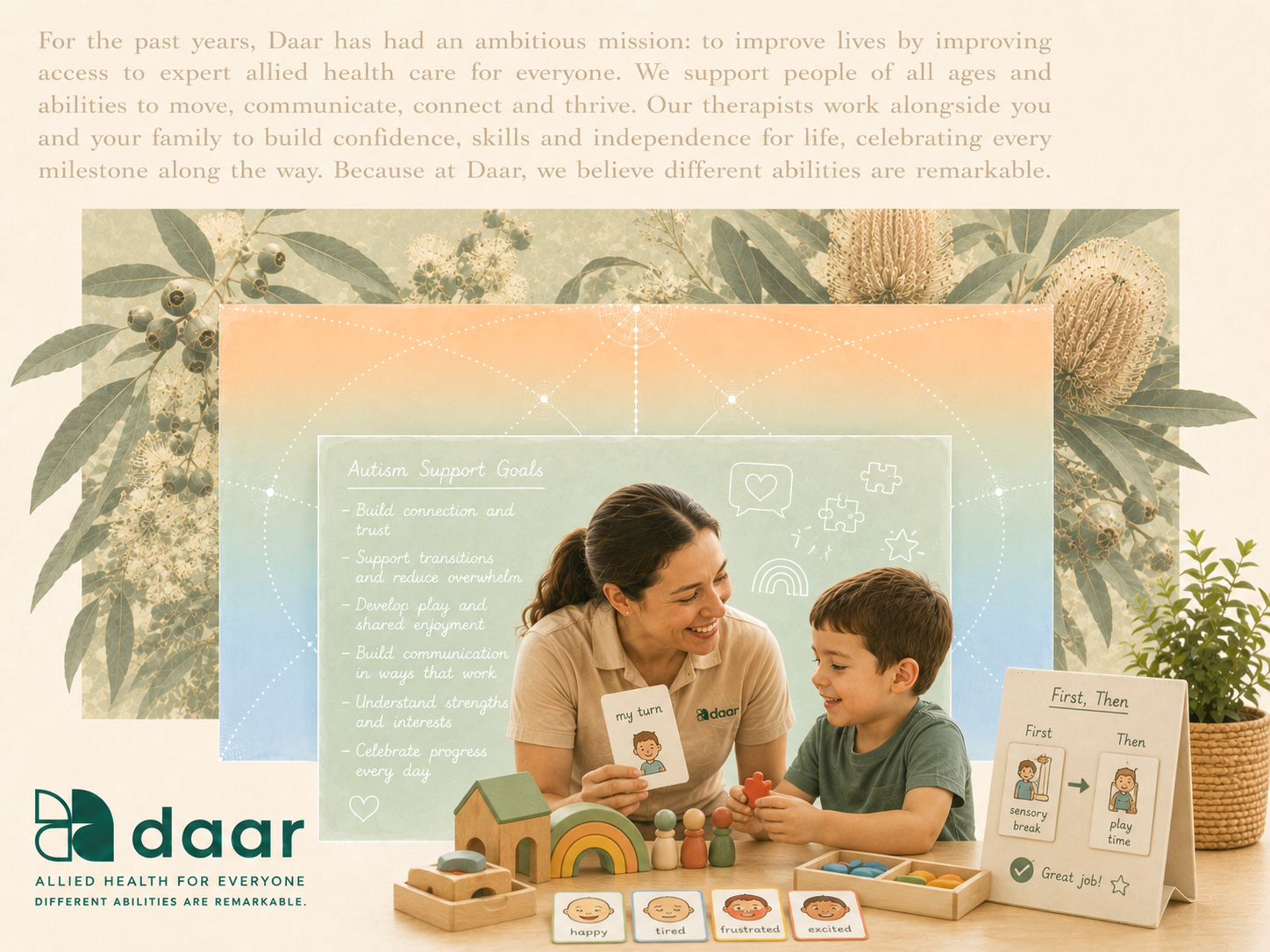
Community participation helps autistic children and their families feel connected, supporting social interaction, confidence, and recreation at the child’s pace. Many families start with autism-friendly spaces that embrace differences.
Helpful options include:
- ASD-specific playgroups (welcoming siblings)
- MyTime or parent support groups
- Community access support from disability services or NDIS providers
These supports make outings less overwhelming and help families connect with others who share similar experiences, strengthening the autistic community and reducing isolation. Whether joining a playgroup or practicing social routines, familiar support makes participation easier.
Conclusion
In conclusion, supporting autistic children requires a multifaceted approach that involves early intervention, tailored educational programs, and community engagement. By prioritising these aspects, parents can create a nurturing environment that fosters growth and development. It’s crucial to remain informed about available resources, from therapy options to school support strategies, as these can make a significant difference in your child's life. Empowering yourself with knowledge and building a positive home environment will not only benefit your child but also strengthen family dynamics.
If you're ready to explore how to better support your child, don’t hesitate to reach out for a consultation or call daar at 02 9133 2500 for guidance and assistance.
Frequently Asked Questions
How can parents access autism care and support services?
Parents can start by speaking with a GP, pediatrician, or autism support organization about support services and eligibility. In some cases, public teams or private practitioners can assess needs and suggest next steps. If your child qualifies for NDIS, an NDIS plan may help you build a broader support network.
What types of therapy are most effective for autistic children?
The most useful therapy services are those matched to your child’s needs. Based on the compiled information, common options include speech therapists, occupational therapists, psychology, and applied behaviour analysis or behaviour analysis approaches. Structured, individualised support is usually more helpful than a one-size-fits-all method.
Are there government strategies and funding options available for families?
Yes. In Australia, families may access supports through the NDIS and other government-funded services, depending on support needs and local pathways. NDIS funding under the National Disability Insurance Scheme can help with individualised services, while public early intervention and assessment programs may also be available.
.svg)




.svg)