
.png?width=48&height=48&name=Group%201%20(3).png)
























30 March, 2026

Screen Time Limits for Kids: Finding the Right Balance
Key Highlights
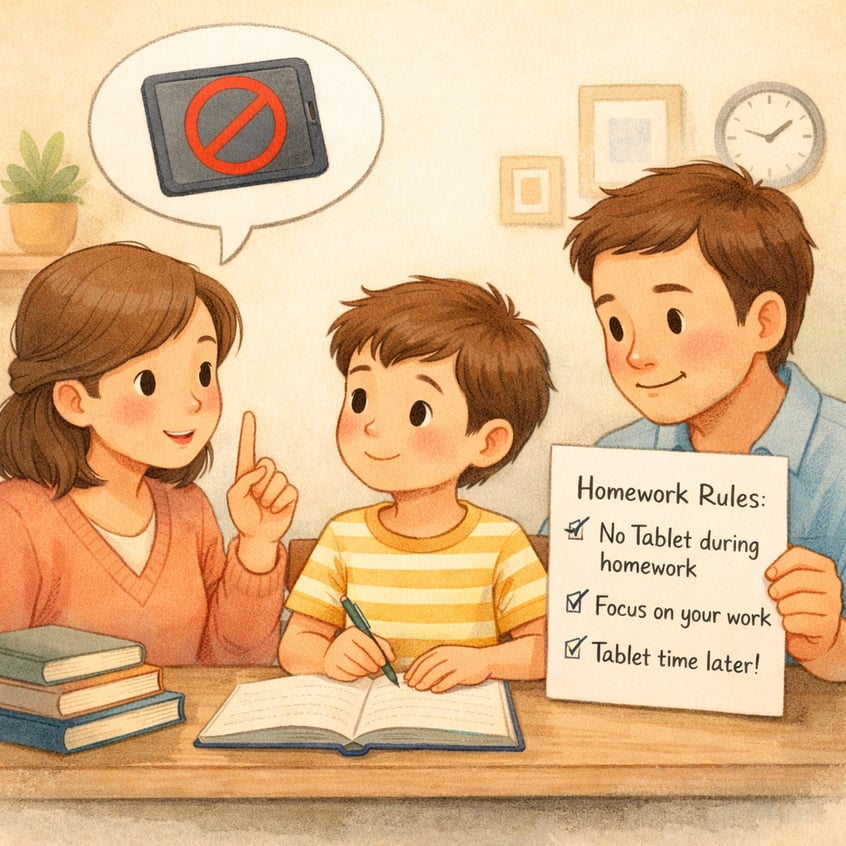
Here are the key takeaways from our guide on managing your child's screen time: The American Academy of Pediatrics (AAP) now focuses on the quality of screen time over strict time limits. Common signs that your child may be spending too much time on screens include trouble sleeping, irritability when not using devices, declining grades, and less interest in hobbies or social activities.
- The American Academy of Pediatrics (AAP) now focuses on the quality of screen time over strict time limits.
- Establishing healthy digital habits is crucial for a child's healthy development and well-being. Parents can use strategies like creating a family media plan and setting up device-free zones. Parental control features on devices and apps can help manage content and set time limits. If your child resists or becomes upset about having screen time limits, try to communicate openly about the reasons behind these boundaries and involve them in creating the family media plan. Consistency with time limits, along with offering alternatives and support, can help your child adjust to new routines more comfortably.
- Parents can use strategies like creating a family media plan and setting up device-free zones.
- Parental control features on devices and apps can help manage content and set time limits.
- Balancing screen time with offline activities supports social skills and physical activity.
- Open conversations about social media use and self-regulation are essential for young people.
Introduction
In a world where digital media is part of everyday life, figuring out the right amount of screen time for your kids can feel overwhelming. From tablets and smartphones to gaming consoles, screens are everywhere. The goal isn't to eliminate them but to find a healthy balance, much like the care of everything Country. It's about ensuring that digital engagement supports, rather than hinders, your child’s healthy development. This guide will help you navigate the challenges and create a positive digital environment for your family.
Building Healthy Digital Habits and Child Digital Wellbeing
Promoting child digital well-being begins with building healthy habits early. Focus on the quality of screen use—are children creating, learning, or connecting with family, including First Nations people? Teach them to use technology in ways that enrich their lives, including understanding privacy and maintaining healthy relationships online and offline.
Too much screen time, especially before bed, can disrupt sleep and replace important activities like exercise and family time, potentially leading to various mental health issues. If screens start to crowd out these essentials, it’s time for a change. By guiding your children’s digital habits from the start, you help set the foundation for balanced technology use.
Next, we’ll look at practical ways to encourage this balance.
Encouraging positive screen use and offline activities
A key strategy for managing your child's digital life is balancing screen time with reasonable steps to ensure offline activities. Make sure technology doesn't replace real-world experiences essential for healthy development. Encourage kids to take breaks from devices and engage in hobbies that involve movement and social interaction.
This balance lets young children enjoy digital media while getting enough physical activity and social time. Setting clear limits helps, but offering fun alternatives makes rules easier to follow. Have engaging options ready when screen time ends.
Here are some ideas:
- Plan daily outdoor play or family walks.
- Schedule board game nights.
- Encourage participation in sports, art classes, or clubs.
Teaching children about balance and self-regulation
Teaching balance is more effective than enforcing strict rules, especially considering your child’s age. The goal is for young people to develop self-regulation and manage their screen time responsibly. Discuss why balance matters for their health, friendships, and schoolwork.
Explain that too much screen time, like eating dessert all day, can be unhealthy. Help them recognize when they've spent too long on a device and encourage them to choose to log off, as this allows the voices of people around them to be heard more clearly. This builds trust and teaches valuable life skills.
Setting limits together makes kids more likely to understand and respect them. A collaborative approach helps them feel trusted and in control, turning rule-setting into a shared effort toward healthy habits, including the importance of zero screen time for younger children.
Effective Strategies to Manage Kids' Device Usage at Home
Having a clear plan is an effective way to manage device use at home. A family media plan sets shared rules for screen time, outlining when, where, how long devices can be used, and how to prevent explicit content. This reduces daily arguments over screen limits.
Most devices offer parental controls to filter content, block apps, and set time limits. These tools support your family’s rules and make enforcing boundaries easier. Combining these features with open communication creates a safe, balanced digital environment, and for more options, check the latest list for parental control tools for your kids.
Here’s how to set these rules and create device-free spaces.
Setting practical rules and family agreements
Creating a family tech agreement sets clear, consistent rules for everyone, including parental control settings. It’s a collaborative process—not about dictating terms, but working together on a media plan. When children help set rules, they’re more likely to follow them. Your agreement should cover device expectations, curfews, and content limits.
The American Academy of Pediatrics (AAP) now emphasizes quality and balance over strict time limits but still offers age-based guidance:
|
Age Group |
Recommended Screen Time |
|---|---|
|
Under 18 months |
No screen time, except video-chatting with family. |
|
18–24 months |
Limited high-quality educational content, watched with a parent. |
|
2–5 years |
Up to 1 hour per day of high-quality content, co-viewed with a parent. |
|
6 years and older |
Set consistent limits; ensure screens don’t replace sleep, physical activity, or social time. |
Creating device-free zones and tech-free times
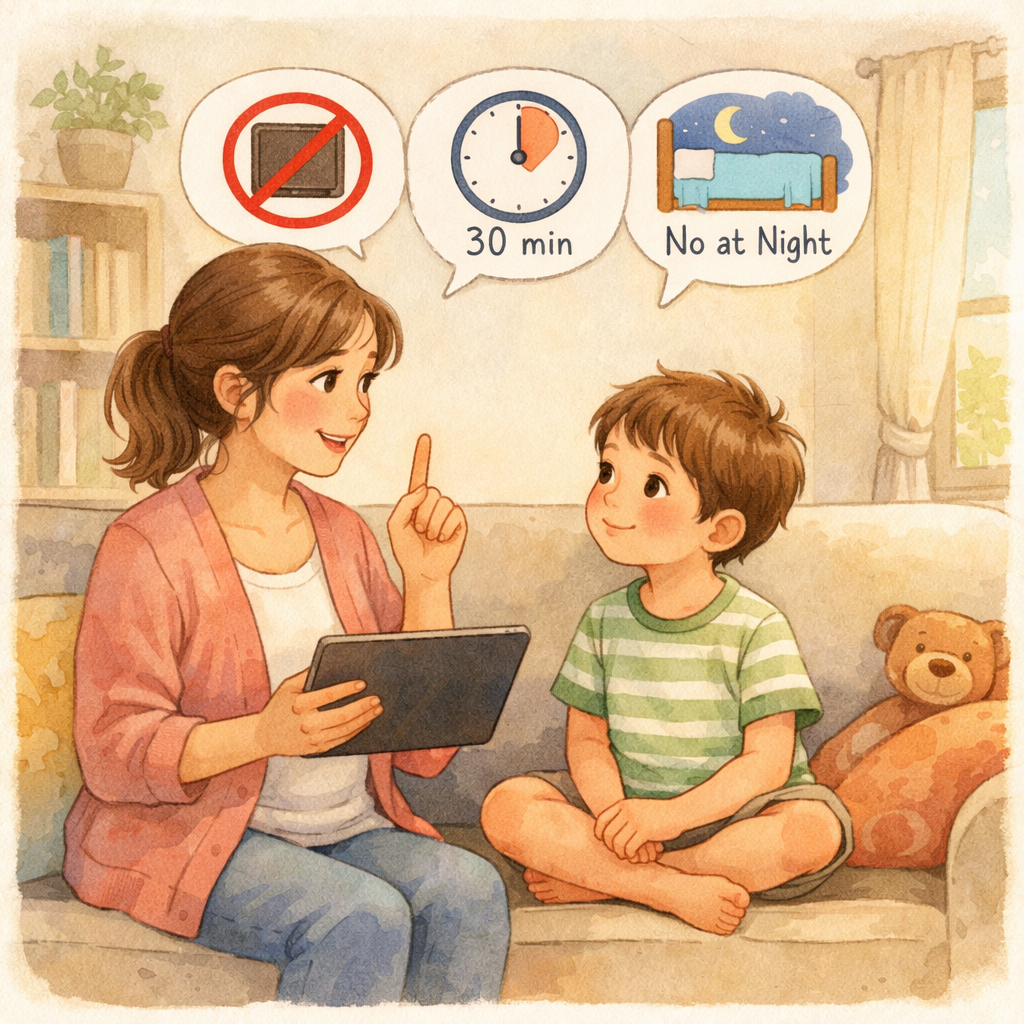
Create device-free zones at home to manage screen time and block unwanted contact. Keep screens out of bedrooms to protect sleep and support healthy development. Make the dinner table tech-free to encourage conversation and strengthen family bonds.
Set tech-free times, such as no screens after school or before bed, to allow for homework, outdoor play, and face-to-face interaction—all important for social skills.
These boundaries help kids disconnect and be present. Prioritizing family time and daily screen-free moments shows that life happens offline and encourages a healthier relationship with technology for everyone.
Conclusion
In summary, balancing screen time is crucial for kids’ development and well-being. Encourage positive use, set device-free zones, and talk openly about healthy habits to help children build good digital routines and navigate online spaces safely. Not all screen time is harmful—when guided, it can boost learning and creativity. These strategies support both digital engagement and offline activities.
For more tips or resources tailored to your family, feel free to contact us for a consultation or call daar at 02 9133 2500!
Frequently Asked Questions
Is all screen time harmful, or are some types better for kids?
Not all screen time is the same. Active, creative, or educational online activity is better than passive consumption of social media content. The types of media your child engages with matter, especially considering that parents should aim for no more than one hour of screen time a day. Co-viewing high-quality, age-appropriate programs can be a positive experience that supports healthy development, while endless scrolling offers little benefit.
What programs or resources help parents manage screen time?
Many resources are available to help you set screen time limits, including managing Game Center features. Organizations like Common Sense Media offer reviews and guidance. Most devices have built-in parental control features to filter content and manage usage. Additionally, various third-party software tools and apps can provide more advanced filtering and monitoring capabilities.
How can I talk to my child about balancing screens with other activities?
Start a positive conversation about how balancing screen use with other activities helps them grow. Explain the importance of spending much time on hobbies, with friends, and with family for building healthy relationships and social skills. Frame it as making time for all the things they love, not just taking screens away.
Screentime for Kids, how long should we allow them?
Screen time limits for kids should be balanced based on age and activity. The American Academy of Pediatrics recommends no more than one hour of high-quality programming for children aged 2-5, while older kids can have varied limits depending on educational content and family guidelines. Prioritize healthy habits!
.svg)




.svg)