
.png?width=48&height=48&name=Group%201%20(3).png)























19 August, 2026

Beginner's Guide to Early Intervention for My Child
Key Highlights
- Early intervention gives young children early support during early childhood when growth is rapid.
- It can strengthen your child’s development in communication, behaviour, learning, and daily routines.
- Early intervention services may include speech therapy, occupational therapy, physical therapy, and behaviour support.
- You might seek help if developmental milestones, play, movement, or communication skills seem delayed.
- In Australia, eligible children can access support through the NDIS early childhood approach.
- Family-centered support helps you build skills to support your child at home and in community settings.
Introduction
If you are wondering whether early intervention is right for your child, you are not alone. Many parents notice small worries about a child’s development and are unsure what to do next. The good news is that early support can begin before problems grow bigger. When services match your child’s needs, they can help with learning, communication, behaviour, and everyday activities. This guide explains what early intervention means in Australia and how families can take practical first steps.
Understanding Early Intervention for Children in Australia
In early intervention Australia settings, support is designed for young children with developmental delay, disability, or other additional needs. The aim is to strengthen child development during the early years, when learning happens quickly.
That matters because early childhood intervention can improve participation, wellbeing, and daily functioning. For many families, the main benefits are better communication, movement, behaviour, and confidence, helping children work toward their full potential. The next sections explain what this support looks like and why it can matter so much.
What Is Early Intervention and Why Does It Matter?
Early intervention combines therapies, learning activities, and support services for young children with disabilities, developmental delays, ADHD, autism, or other needs. It supports development not only in clinics but also at home, preschool, and in the community.
This matters because a child’s brain develops fastest in early years. Early support can greatly improve learning, communication, movement, and participation in daily life—and may reduce future support needs.
For your child, this means greater independence, stronger emotional development, and increased confidence—especially when the support matches your family’s routines and goals.
Key Benefits of Early Intervention for Your Child and Family
Many parents wonder if early intervention services truly benefit children with disabilities or additional needs. The answer is yes. Effective support targets your child’s development and helps your family build daily strategies.
These family-centered services respect your routines and values, supporting progress during everyday activities at home, preschool, and in the community. This approach makes learning more natural and less stressful.
- Early intervention builds skills in communication, movement, and self-care.
- It improves participation in daily activities and learning.
- It supports social, emotional, and behavioural growth at your child’s pace.
- It helps your child reach their potential while equipping your family with practical tools.
Recognising When Your Child May Need Early Intervention
You may start thinking about early intervention when your child’s needs seem different from other children of the same age. Sometimes the signs show up in play, communication, movement, behaviour, or daily routines. Developmental concerns do not always mean a diagnosis is needed straight away.
In Australia, support can be considered when developmental needs affect your child’s learning or participation in everyday activities. If you are unsure, it helps to look closely at common signs and age-based eligibility, which the next sections break down clearly.
Common Signs of Developmental Delays or Additional Needs
Identifying developmental delays or additional needs in young children can be vital for early intervention effectiveness. Parents should observe critical milestones such as communication skills, motor skills, and social skills during their child’s early years. For instance, delays in speech or difficulty in establishing eye contact may indicate the need for early childhood support services.
Additionally, challenges in everyday activities, such as self-feeding or dressing, can suggest that a child requires specialised attention. Emotional development may also present signs of concern if a child struggles to express feelings or connect with peers. Recognising these indicators early can facilitate timely access to therapy services and early intervention programs, setting the foundation for a child’s ongoing development and ability to thrive.
Age Requirements and Eligibility for Early Childhood Intervention Programs
Age matters in the Australian early childhood intervention pathway. The early childhood approach is designed for children up to nine years of age with developmental delay or disabilities and their families. Children younger than six with developmental concerns may also receive early support, even without a formal diagnosis.
Eligibility for NDIS funding also depends on residency rules. Your child must be an Australian citizen or permanent resident and live in Australia. In practice, families often start by speaking with early childhood partners, a GP, a child health nurse, or early childhood educators before school entry.
|
Group |
What the compiled information says |
|---|---|
|
Under 6 years of age |
Children with developmental delay or developmental concerns may access the early childhood approach. A formal diagnosis is not always required. |
|
Up to 9 years of age |
Early childhood intervention can support eligible children with disability or developmental delay. |
|
Residency requirement |
Child must be an Australian citizen or permanent resident and live in Australia. |
|
Support pathway |
Families may connect through early childhood partners, GP, allied health, or educators. |
Types of Support and Services Available in Early Childhood Intervention
Early intervention support can include therapies, learning support, behaviour guidance, and family coaching. In the compiled information, early childhood support services are designed to help children develop everyday skills and take part in home, preschool, and community life.
A wide range of services may be coordinated through a key worker model, which acts much like a service coordinator for your family. This can make it easier to organize additional support and keep everyone focused on the same goals. Next, let’s look at the available therapies and targeted support.
Therapies Offered (Speech, Occupational, Physical, and More)
Early childhood intervention offers a range of therapy services, including pediatric speech pathology, occupational therapy, physiotherapy, positive behaviour support, and habit coaching. Availability varies by location, so families should contact local providers or early childhood partners.
Each therapy targets different developmental needs—communication, motor skills, behaviour, routines, or daily activities. Support is tailored to your child rather than using a one-size-fits-all approach.
Services may include:
- Speech therapy for communication and participation
- Occupational therapy for self-care, play, and routines
- Physical therapy for movement and motor skills
- Positive behaviour support or habit coaching for regulation and daily habits
How Early Intervention Supports Children with Disabilities or Additional Needs
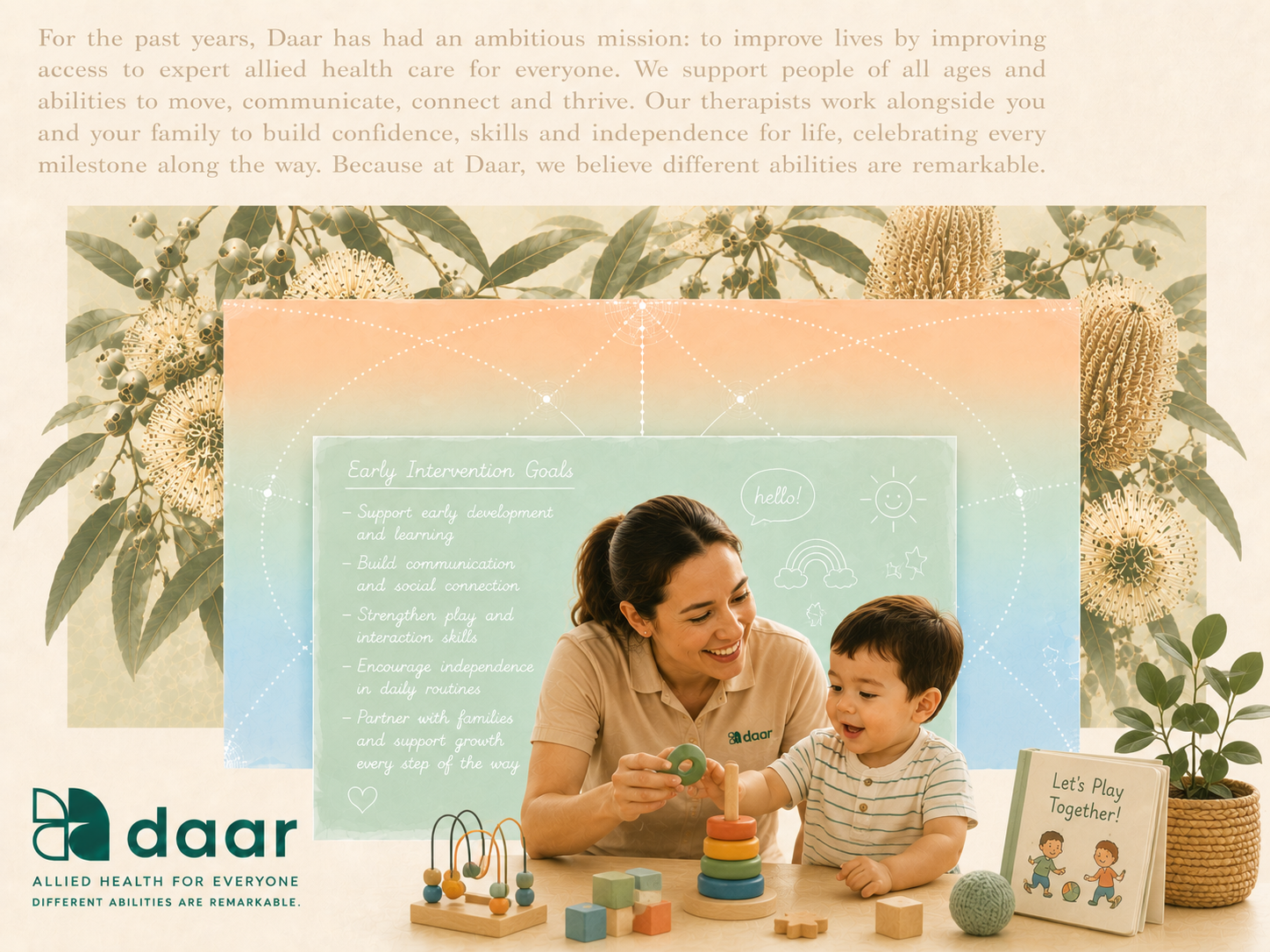
Yes, early intervention can help children with developmental disabilities or additional needs. Support is individualised and family-centered, meaning the team tailors services to your child’s strengths, needs, and routines—instead of expecting your family to fit a set program.
Support often uses a key worker model: your main contact helps plan services, coordinates with therapists, and connects with education or medical professionals. While some systems use terms like the Disabilities Education Act or Individualised Family Service Plan, the Australian approach focuses on coordinated early childhood supports and NDIS processes.
This method helps your child develop communication, self-regulation, movement, personal care, and participation skills. It also teaches you strategies to support your child’s growth during everyday routines, making progress more meaningful and lasting.
Conclusion
In conclusion, early intervention plays a crucial role in supporting your child's development and well-being. By recognising the signs and accessing the right services, you can make a positive impact on their future. The benefits of early intervention extend far beyond immediate support; they create a solid foundation for lifelong learning and growth. Remember, the sooner you act, the better the outcomes for your child and family.
If you're ready to take the next step, don’t hesitate to reach out for a consultation or call daar at 02 9133 2500 for guidance on accessing early intervention services tailored to your child's unique needs.
Frequently Asked Questions
How does the NDIS help families access early intervention for children?
The National Disability Insurance Scheme helps families access support through its early childhood approach. Early childhood partners can guide you, explain eligibility, and help with access support. If your child is approved, NDIS funding can be used for early intervention services that match your child’s needs and goals.
Can early intervention services be accessed for children without a formal diagnosis?
Yes, some eligible children can receive early intervention support without a formal diagnosis. The compiled information states that children under six with developmental concerns may access the early childhood approach. Families may still need evidence through an access request form or professional reports to show support is needed.
What should I expect when my child begins an early intervention program?
At the start of an early intervention program, you can expect goal setting, discussion about your child’s needs, and planning for early support in everyday routines. Service coordination may involve therapists, key workers, and early childhood educators so everyone uses consistent strategies across home, preschool, and community settings.
.svg)




.svg)