
.png?width=48&height=48&name=Group%201%20(3).png)























21 August, 2026

The Benefits of Specialised Behavioural Therapy Explored
Key Highlights
- Specialised behavioural therapy focuses on practical change, helping people manage challenging behaviours with clear, structured support.
- It can support children, adults, families, and caregivers who need effective treatment matched to unique goals.
- Common approaches include positive reinforcement, behaviour analysis, and targeted skill development for daily life.
- Positive behaviour support is often used to reduce harm and teach replacement skills.
- Therapy may be available through the NDIS, with services shaped around individual needs.
- With steady input, many people see positive outcomes in communication, regulation, and independence.
Introduction
Specialised behavioural therapy is a practical way to support mental health, daily functioning, and long-term growth. Instead of staying broad, it focuses on specific goals such as emotional regulation, social skills, communication, and reducing behaviours that disrupt daily life. In therapy sessions, clinicians use evidence-based strategies to teach helpful responses and build confidence over time. If you are wondering whether this kind of support fits your situation, it helps to look at who benefits most and how these services are delivered.
Who Can Benefit From Specialised Behavioural Therapy
Many people can benefit from specialised behavioural therapy, especially when standard behaviour therapy does not fully address their unique needs. This includes children with developmental delays, adults facing mental health challenges, and families who need structured guidance for behaviour management at home or in the community.
What makes it useful is its focus on positive change through practical resources and tailored goals. Rather than using one fixed approach, clinicians adjust support to match the person’s daily routines, strengths, and barriers. The groups below show how that works in real situations.
Children and Young People With Developmental Disorders
Specialised behavioural therapy provides direct, structured support for children and young people with developmental disorders. Early intervention helps build core developmental and communication skills, making daily routines easier and laying a strong foundation for future learning.
Therapy often focuses on practical behaviour management for families—reducing challenging behaviours, improving social interactions, and strengthening daily living skills. Support is broken into small steps so children can practice and succeed.
There are specialised therapy options for children with learning difficulties. These services teach new skills, improve communication, and support independence through personalised strategies, caregiver involvement, and consistent follow-through at home, school, and in the community.
Families and Caregivers Seeking Support
Sometimes the person needing help is not the only one who benefits. Families and caregivers often need guidance with behaviour management, especially when responses must stay consistent across home, school, and community settings. Clear advice can reduce stress and make day-to-day support feel more manageable.
A strong plan usually includes family support, coaching, and practical steps that caregivers can actually use. This may involve understanding triggers, responding safely, and teaching better alternatives. It can also strengthen communication skills so everyone involved knows how to support progress in the same way.
So, who can benefit from specialised behavioural therapy? Families can too. When caregivers receive ongoing support, they are better prepared to create a supportive environment that helps new skills stick and reduces pressure on everyone in the household.
Techniques Used in Specialised Behavioural Therapy
Specialised behavioural therapy uses structured methods designed to create lasting change. The main behavioural therapy techniques often include behaviour analysis, positive reinforcement, social teaching, and planned support that helps replace unsafe or unhelpful actions with positive behaviours. The goal is not just short-term control but steady skill development.
These approaches are selected based on the person’s needs, daily environment, and goals. Some strategies are highly individualised, while others are taught to families and caregivers so progress continues outside sessions. The next sections explain a few of the most common methods.
Positive Support Reflex and Positive Behaviour Support
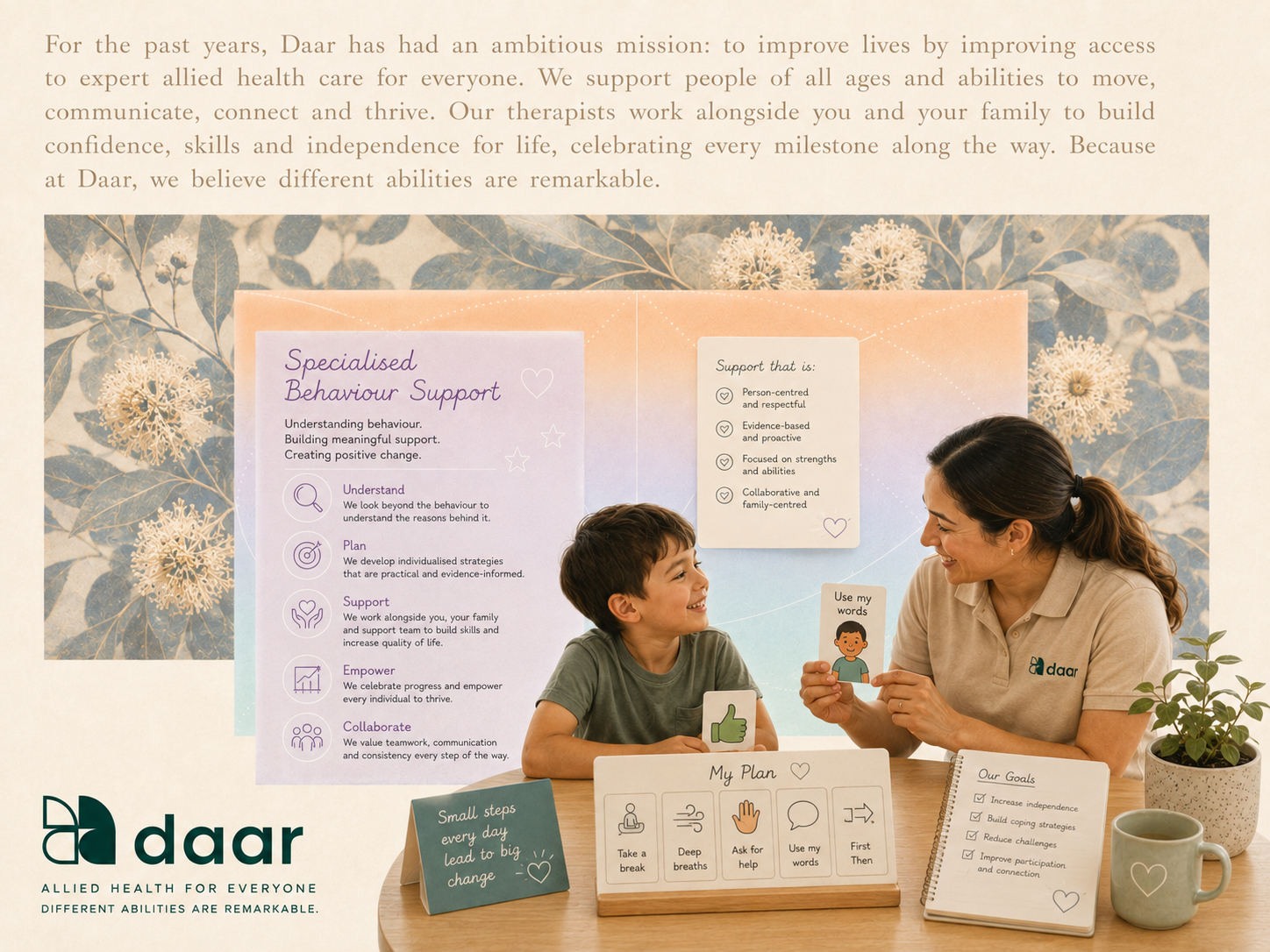
Positive Support Reflex and positive behaviour support are built around understanding why behaviour happens before trying to change it. In specialised behavioural therapy, clinicians use behaviour analysis to identify triggers, patterns, and outcomes linked to challenging behaviours. This helps create support that is safer, more practical, and more respectful of the person’s needs.
Instead of relying on punishment, the approach emphasises positive reinforcement and replacement skills. That means the person learns what to do, not just what to stop doing. It also supports caregivers, schools, and other helpers so behaviour management stays consistent across settings.
How is positive behaviour support included in specialised behavioural therapy? It is included through structured planning, assessment, and ongoing teaching, as shown below.
|
Element |
How it helps |
|---|---|
|
Functional understanding |
Identifies triggers and the purpose behind behaviours |
|
Positive reinforcement |
Encourages safer, more helpful responses |
|
Replacement skills |
Teaches new actions that meet the same need |
|
Caregiver guidance |
Builds consistency across daily environments |
|
Monitoring |
Tracks what is working and what needs adjustment |
Reward Systems and Reinforcement Strategies
Reward systems are one of the clearest ways to support change in specialised behavioural therapy. They are based on operant conditioning, which means a behaviour is more likely to happen again when it is followed by something rewarding. This makes learning feel more concrete and easier to repeat.
In practice, clinicians choose simple, meaningful reinforcement strategies that match the person’s age, goals, and interests. For children, this might involve tokens or praise. For adults, it may involve preferred activities or a sense of progress linked to a routine. The aim is steady skill development, not quick fixes.
Common examples include:
- Praise after using a new communication skill
- Tokens or stickers for completing a target task
- Access to a preferred activity after practicing a positive behaviour
These reward systems help answer a common question about the main techniques used in specialised behavioural therapy: they make progress visible and easier to maintain.
Social Skills Training and Behavioural Modeling
Not every challenge is about stopping a behaviour. Sometimes the real need is learning what to do instead. Social skills training helps people build communication skills, confidence, and better interactions with others. This can be useful for children, teens, and adults, including those dealing with social anxiety.
Behavioural modeling is often part of this process. A therapist demonstrates a skill first, then the person practices it in a supported way. This step-by-step format makes skill development more manageable and helps turn complex interactions into clear actions that can be repeated in daily settings.
This may include:
- Practicing how to start and end conversations
- Learning eye contact and open body language
- Rehearsing calm responses in social situations
These methods are among the main techniques used in specialised behavioural therapy because they turn abstract social goals into practical, teachable behaviours.
Accessing Specialised Behavioural Therapy in Australia
Accessing specialised behavioural therapy in Australia often starts with identifying the kind of support you need and how it fits your daily life. Providers may offer therapy services in clinics, homes, schools, or community settings, with plans shaped around individual needs and clear goals.
For many people, the NDIS is an important pathway. Yes, specialised behavioural therapy can be available through the NDIS when it aligns with treatment plans and approved supports. Funding and service options depend on the person’s circumstances, which is why understanding the pathways matters.
NDIS Pathways for Therapy Funding
The NDIS can play a crucial role in accessing specialised behavioural therapy for people who need structured support. When a participant has goals linked to behaviour, daily functioning, or relationships, therapy funding may be included in their plan. This can help cover assessments, sessions, and behaviour support planning.
A useful first step is raising the need during an NDIS planning meeting. Participants may work with a planner, Local Area Coordinator, support coordinator, or plan manager to make sure the request is clearly linked to daily needs and expected outcomes. Funding is often connected to categories such as Improved Daily Living or Improved Relationships.
Specialised services may also sit alongside early intervention, autism support, or other s programs already in a plan. So, is specialised behavioural therapy available through the NDIS? In many cases, yes, when the support is relevant, justified, and matched to the participant’s goals.
In-Home, Mobile, and Community-Based Service Options
Specialised behavioural therapy does not always need to happen in one office. In-home therapy, mobile visits, and community-based services can make support more practical because the clinician sees what daily life really looks like. That can be especially helpful when goals involve routines, communication, or behaviour across different settings.
These options also make therapy sessions easier to connect to real situations. A child may practice skills at home. A caregiver may receive coaching where challenges happen most often. Community work can support generalization, which means using a skill in more than one place.
Can specialised behavioural therapy be provided in-home or via mobile services? Yes, many providers offer flexible support options such as:
- In-home therapy for routines, family coaching, and behaviour support
- Mobile services that bring therapy to the person
- Community-based services that build skills in everyday environments
Conclusion
In conclusion, specialised behavioural therapy offers numerous benefits for individuals across various age groups and circumstances. From children with developmental disorders to adults facing mental health challenges, this therapy provides targeted strategies to foster positive behaviour and emotional well-being. By employing techniques such as positive reinforcement, social skills training, and tailored interventions, individuals can experience personal growth and improved relationships.
If you're interested in exploring how specialised behavioural therapy can enhance your or your loved one's life, consider reaching out for a consultation or call daar at 02 9133 2500.
Frequently Asked Questions
What qualifications should a specialised behavioural therapist have in Australia?
A specialised behavioural therapist in Australia should have relevant qualifications in fields such as psychology, social work, or related therapy services, along with appropriate professional registration where required. For effective treatment, it also helps if they have experience in behaviour support, assessments, and working within NDIS-funded settings.
Are there specialised behavioural therapy options for children with learning difficulties?
Yes, behavioural therapy can be tailored for children with learning difficulties. These supports often focus on practical skills, communication, daily routines, and behaviour management using structured teaching and reinforcement. When matched to the child’s needs, this approach can support positive outcomes at home, school, and in the community.
What outcomes can be expected from positive support reflex and specialised behavioural therapy?
Positive support reflex and specialised behavioural therapy can help increase positive behaviours, reduce challenging behaviours, and strengthen skill development over time. Expected outcomes often include better communication, safer responses, improved participation in daily routines, and a stronger quality of life for both the person receiving support and their caregivers.
.svg)




.svg)