
.png?width=48&height=48&name=Group%201%20(3).png)























24 August, 2026

Finding the Right Paediatric Behaviour Therapy for Your Child
Key Highlights
- Paediatric behavioural therapy helps children build positive behaviour and handle everyday life with more confidence.
- Support is tailored to each child’s unique needs, strengths, goals, and family situation.
- Positive reinforcement is a core strategy used to encourage helpful actions and teach new skills.
- Therapy can improve communication, emotional regulation, social skills, and daily living abilities.
- Families play a key role, since consistent support at home often leads to better quality of life.
- Early, personalized help can reduce challenging behaviours and support long-term growth.
Introduction
Finding the right support for your child can feel overwhelming, especially when behaviour is affecting home, school, or relationships. The good news is that paediatric behaviour therapy is designed around your child’s needs, not a one-size-fits-all plan. It focuses on teaching skills, encouraging positive behaviour, and helping families respond in practical ways. With the right approach, therapy can support mental health, improve daily routines, and help your child feel more confident, understood, and ready to grow.
What Is Paediatric Behaviour Therapy?
Paediatric behaviour therapy is a structured form of behavioural therapy that helps children learn better ways to act, communicate, and cope. It is based on the idea that behaviour is learned and can be changed through support, practice, and clear guidance.
This kind of mental health care is shaped around a child’s unique needs and daily challenges. It can help when behavioural challenges start affecting child development, relationships, or everyday life. When these struggles keep repeating, seeking support may be a helpful first step.
Understanding the Goals of Behaviour Therapy for Children
At its core, behaviour therapy aims to create positive change that lasts beyond one difficult moment. It helps children replace patterns that are not working with safer, more effective responses. That may mean learning how to follow routines, communicate needs, or respond better in social situations.
Another key focus is setting specific goals. These goals are practical, clear, and based on what matters most in your child’s everyday life. A therapist may target sharing, waiting, listening, or handling frustration in more manageable steps so progress feels realistic.
Just as important, therapy supports emotional development. Children are not only working on behaviour. They are also building positive behaviour, confidence, and coping skills that support stronger relationships, better participation, and improved quality of life over time.
How Paediatric Behaviour Therapy Supports Child Development
Behaviour support does more than reduce difficult moments. It helps children strengthen skills that support healthy child development across home, school, and community settings. Therapists look at where your child is now and identify what will help them participate more successfully each day.
From there, children practice new skills in ways that feel active and meaningful. This may include communication, daily living tasks, social skills, or learning how to move through routines with less stress. For some children, support also includes building independence and stronger peer interactions.
Families are part of that process. Therapists work closely with parents and other caregivers so strategies can be used consistently in daily life. That teamwork often leads to positive outcomes, better emotional regulation, and progress that carries into real-world situations.
Common Childhood Behavioural Challenges Addressed
Children can show behavioural challenges for many reasons, including developmental needs, communication difficulties, or stress that affects behaviour across the day. Some may struggle with routines, attention, emotional control, or social interaction.
In other cases, families seek help for disruptive behaviours, aggression, anxiety, or challenges linked to developmental disabilities. Therapy can also support children with mental health concerns when those issues affect learning, relationships, or home life. Because every child is different, support is shaped around the family’s needs and the reasons the behaviour is happening.
Autism Spectrum Disorder and Behavioural Interventions
For children with autism spectrum disorder, behaviour support often focuses on communication, social engagement, and daily living skills. Since autism is one of the developmental disabilities commonly supported through therapy, early intervention can make a meaningful difference in helping young children build core skills from an early age.
Services may use behaviour analysis and ABA therapy principles to understand why a behaviour happens and what skill should be taught instead. This does not mean using a generic plan. Support is personalized, practical, and based on the child’s unique needs, strengths, and environment.
Specialized clinics and professionals can support toddlers and older children through targeted services such as:
- Early intervention for communication, play, and social development
- ABA therapy to strengthen skills and reduce challenging behaviours
- Family-guided strategies that support progress at home and in other settings
Managing Attention-Deficit/Hyperactivity Disorder (ADHD) Through Therapy
Children withattention-deficit/hyperactivity disorder may find it hard to sit still, stay focused, follow directions, or pause before reacting. These patterns can affect schoolwork, friendships, and routines at home. When those struggles keep interfering with daily life, behaviour management support may be worth considering.
Therapy for hyperactivity disorder focuses on teaching practical skills instead of only reacting to difficult moments. A therapist may use positive behaviour strategies, clear expectations, and manageable steps to help a child build attention, self-control, and better routines over time.
Some services may also include physical activity as part of broader support for regulation and well-being. Just as important, families learn how to respond in consistent ways. That shared approach can reduce stress, strengthen skills, and improve progress across settings.
Addressing Anxiety, Aggression, and Social Skills Difficulties
Some children need help with anxiety, aggression, or trouble connecting with others. These concerns can show up as outbursts, avoidance, arguments, or difficulty joining play and conversation. In many cases, the behaviour is a signal that the child needs better tools to cope, communicate, or feel safe.
That is where behaviour support becomes useful. A thoughtful plan looks at triggers, patterns, and what the child may be trying to express. Then it teaches replacement skills that improve emotional regulation and reduce stress for the child and family.
A behaviour plan can improve outcomes by targeting skills such as:
- communication skills for asking, refusing, or expressing feelings
- social skills for turn-taking, joining activities, and reading cues
- calming strategies that help children respond with more control
Techniques Used in Paediatric Behaviour Therapy
Paediatric behaviour therapy uses practical strategies that are clear, structured, and easy to apply across real-life situations. Instead of focusing only on stopping a problem, therapists look at why it happens and what skill needs to be taught.
That is why behaviour support often includes positive reinforcement, direct teaching, and step-by-step practice. Many therapy services also involve parents, schools, or caregivers so children can use the same tools in different settings. The next sections explain common methods that support skill-building and lasting progress.
Positive Reinforcement and Reward Systems
One of the most common tools in paediatric behaviour therapy is positive reinforcement. This means rewarding a child right after a helpful action so that action is more likely to happen again. It shifts the focus from punishment to teaching and encouragement.
The reward should match the child’s interests and the specific behaviours being taught. Some children respond well to praise, while others do better with tokens, stickers, or time with a favorite activity. The key is making the connection between the action and the reward clear.
Therapists often break goals into manageable steps so success feels possible. A child might first practice waiting for a few seconds, asking politely, or following one instruction. As positive behaviour grows, the reward system can support stronger habits in everyday routines and social situations.
Functional Behaviour Assessments and Targeted Interventions
Before choosing a strategy, therapists often start with a comprehensive assessment. This process, often called a functional behaviour assessment, looks at what happens before, during, and after a behaviour. The goal is to understand the reason behind the action rather than guessing.
Using behaviour analysis, the therapist gathers information through observation, interviews, and review of records. That information shapes a behaviour support plan with targeted interventions that match the child’s needs. When support is based on function, children are more likely to learn effective replacement skills.
Here is a simple view of how this process works:
|
Step |
What It Focuses On |
|---|---|
|
Observation |
Identifies triggers, patterns, and what happens after the behaviour |
|
Information Gathering |
Uses family, school, and record input to build a full picture |
|
Behaviour Analysis |
Explains what the behaviour may be communicating or achieving |
|
Behaviour Support Plan |
Sets clear strategies, goals, and responses for home or school |
|
Targeted Interventions |
Teaches new skills and adjusts the environment to improve outcomes |
Skill-Building for Communication and Emotional Regulation
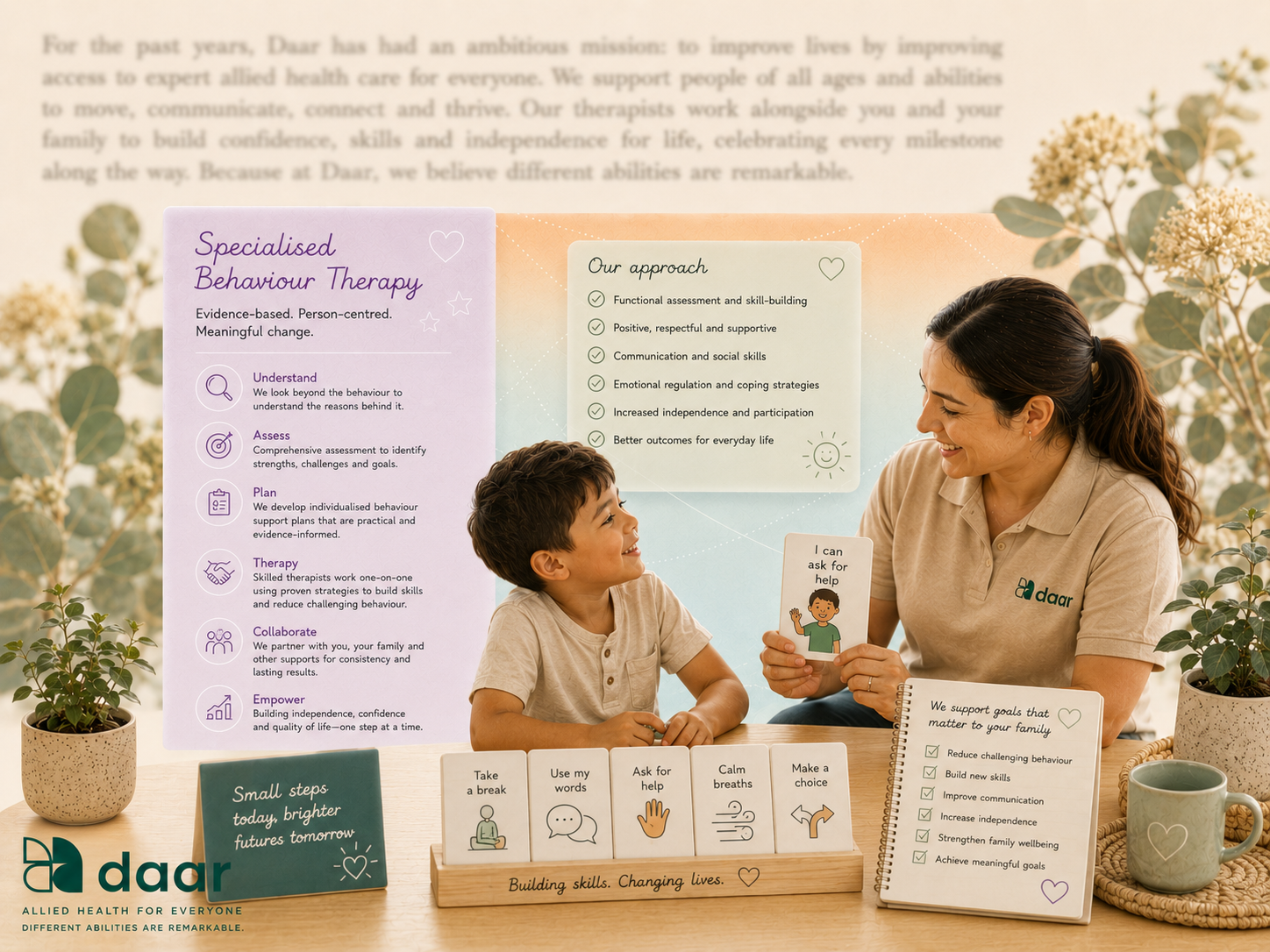
Many children act out because they do not yet have the right tools to express what they need. That is why therapy often teaches communication skills and emotional regulation directly. When a child can ask for help, wait, or calm down, behaviour often improves naturally.
Skill-building also supports daily independence. Therapists may work on life skills, routines, and social skills training in small, teachable steps. Children practice these new skills repeatedly with feedback and encouragement so they can use them outside the session too.
Areas commonly targeted include:
- communication skills for requests, choices, and expressing feelings
- emotional regulation strategies for handling frustration or stress
- life skills and social skills training for routines, play, and peer interaction
Conclusion
Finding the right paediatric behaviour therapy for your child can be a transformative journey. It's essential to recognize that every child is unique, and their needs may vary. Understanding the goals of behaviour therapy, common challenges, and techniques involved will empower you to make informed decisions that support your child's development. Remember, a compassionate approach that includes positive reinforcement and skill-building can significantly improve your child's behavioural and emotional well-being.
If you're ready to take the next step toward finding the best therapy options for your child, don’t hesitate to reach out for a consultation or call daar at 02 9133 2500.
Frequently Asked Questions
What qualifications should a child behaviour therapist have in Australia?
A certified child behaviour therapist in Australia should have relevant training in fields such as psychology, education, or a related area, plus specialized experience in behaviour management. It also helps if they work within registered therapy services and understand how to tailor mental health care to a child’s needs.
How can I choose the right therapist for my child's specific needs?
Start by looking for therapy services that offer a comprehensive assessment and create plans around specific goals. Ask about experience with children who have similar challenges, how they involve families, and whether their approach fits your child’s unique needs and your family’s needs.
How can I support my child during and after their therapy sessions?
Stay involved in the support plan and use the same strategies at home that your child practices in sessions. Family members can reinforce positive behaviour, help the child express feelings, and create consistency in daily life, which often makes progress smoother and more meaningful.
.svg)




.svg)