
.png?width=48&height=48&name=Group%201%20(3).png)























13 February, 2026

Empowering Growth: A Guide to Behavioral Therapy for ADHD Children
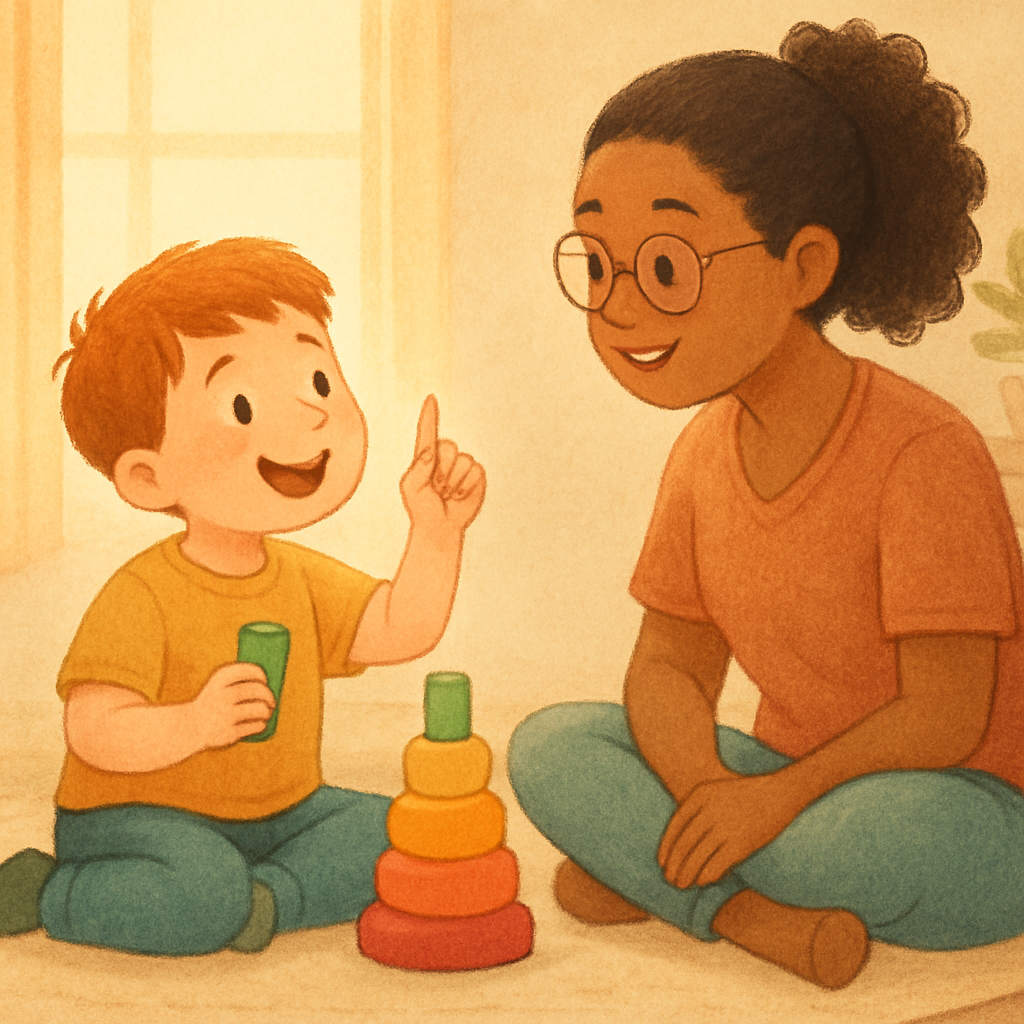
Raising a child with Attention Deficit Hyperactivity Disorder (ADHD) is a journey filled with unique joys and distinct challenges. You may marvel at your child’s creativity and energy one moment, only to feel exhausted by impulsive outbursts, forgotten homework, or morning battles the next.
For many parents, the diagnosis brings a big question: What now?
While medication is a well-known treatment, it is not the only tool in the box. In fact, for children under the age of six, the American Academy of Pediatrics recommends behavioral therapy for ADHD children as the first line of treatment, before medication is even considered. For older children, it remains a critical component of a comprehensive care plan.
But what exactly is behavioral therapy for ADHD? Is it just a reward chart? Is it strict discipline?
In reality, Behaviour Therapy is a structured, supportive, and evidence-based approach that teaches children the skills they need to control their own behaviour. It shifts the focus from "managing symptoms" to "building skills," empowering both you and your child to turn daily chaos into calm confidence.
What is Behavioral Therapy for ADHD Children?
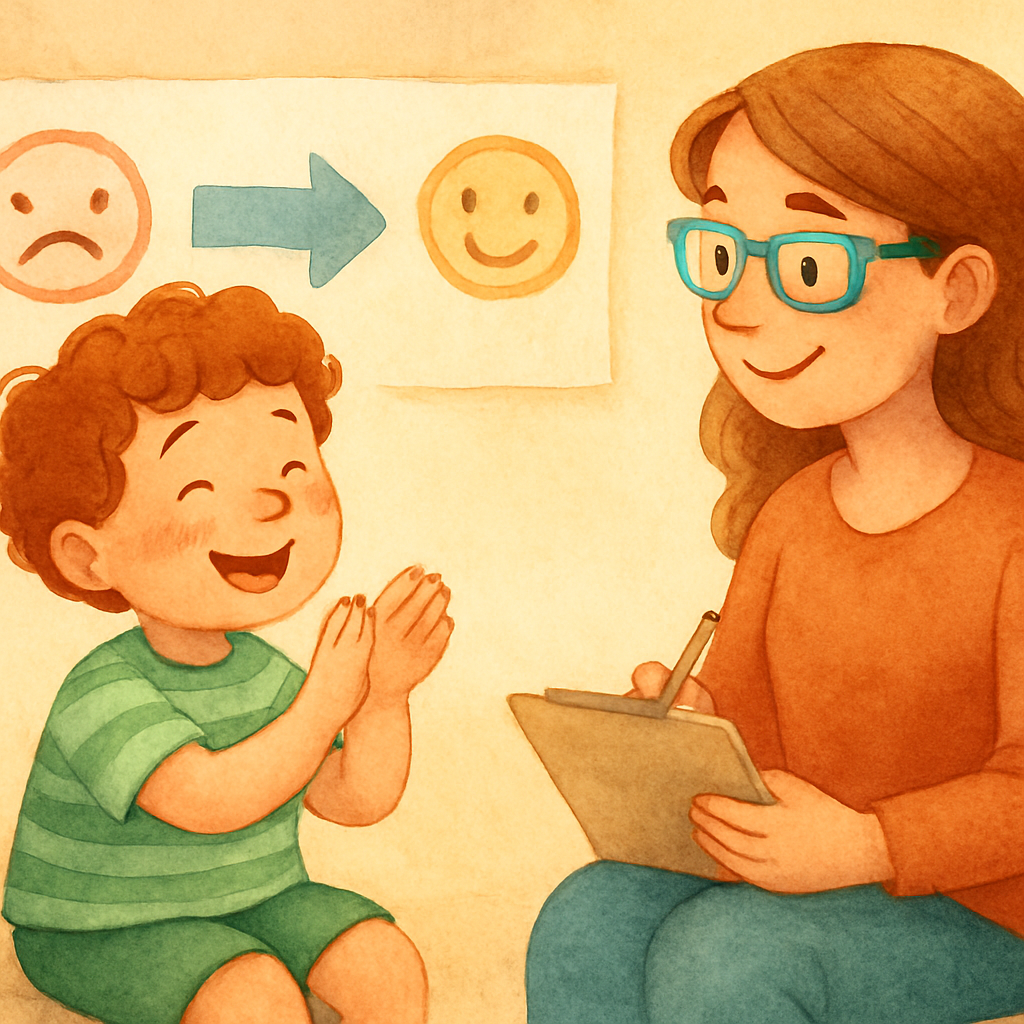
Unlike traditional talk therapy, where a child might discuss their feelings or dreams, behavioral therapy for ADHD children is practical and action-oriented. It is based on the understanding that children with ADHD process consequences and rewards differently than their neurotypical peers.
The ADHD brain often struggles with executive functions—planning, organizing, and regulating emotions. It also has a harder time connecting a future consequence (like a bad grade) with a present action (not studying).
Behaviour Therapy bridges this gap by changing the child's environment to provide immediate, clear, and consistent feedback. It operates on a simple but powerful principle:
- Positive Reinforcement: When a child behaves in a desired way and is immediately rewarded, they are more likely to do it again.
- Consistent Consequences: When negative behaviour is met with a calm, consistent response (not anger), the behaviour decreases over time.
The Role of Parents: You Are the Therapist
One of the biggest misconceptions about behavioral therapy for ADHD is that it happens solely in a therapist's office once a week. While therapists guide the process, the real magic happens at home.
For young children, the most effective form of therapy is actually Parent Behavior Training (PBT).
In PBT, parents learn specific strategies to become the agents of change. You learn how to:
- Give clear, effective commands that your child is likely to follow.
- Ignore minor annoyances to prevent power struggles.
- Use praise strategically to boost your child's self-esteem.
- Implement time-outs or privilege removal effectively, without emotion.
By equipping you with these tools, Behaviour Therapy ensures that your child receives support 24/7, not just during a 50-minute session.
Core Strategies That Work
Successful behavioral therapy for ADHD children relies on a toolkit of proven strategies. Here are three of the most effective techniques used to reshape behaviour.
1. The Token Economy
Children with ADHD live very much in the "now." They need tangible proof of their progress. A token economy—using stickers, poker chips, or points—provides this.
- How it works: The child earns a token for specific positive behaviours (e.g., putting shoes away, finishing dinner).
- The Payoff: Tokens are exchanged for a reward (e.g., screen time, a special dessert).
- Why it works: It makes the reward system visual and immediate, keeping the child motivated.
2. The "When-Then" Routine
This strategy uses a child’s own motivation to drive compliance.
- The Phrase: "When you have brushed your teeth, then we can read a story."
- Why it works: It avoids the word "no" and sets up a positive sequence. The child learns that the "have-to" task is the key to unlocking the "want-to" task.
3. Planned Ignoring
Children often act out to get attention—even negative attention (yelling) is stimulating for an ADHD brain.
- The Strategy: Deliberately ignoring minor misbehaviours (whining, fidgeting, making noises) while they are happening, and immediately praising the child the moment the behaviour stops.
- Why it works: It teaches the child that annoying behaviour yields zero results, while calm behaviour yields connection.
Collaboration with Schools
ADHD doesn't stop at the front door. Effective behavioral therapy for ADHD must extend into the classroom.
A key component of therapy often involves setting up a Daily Report Card (DRC). This is a collaborative tool between the teacher and parent.
- The teacher rates the child on 3-4 specific goals (e.g., "Raised hand to speak," "Stayed in seat").
- The card comes home daily.
- If the child had a good day, they earn a reward at home.
This system links school performance with home consequences, creating a consistent world of expectations for the child.
Why Choose Behaviour Therapy?
In a world of quick fixes, Behaviour Therapy requires time and effort. So, why is it worth it?
- Skill Building: Medication wears off after a few hours. The skills learned in therapy—organization, self-control, social interaction—last a lifetime.
- Reduced Dosage: Children who undergo behavioral therapy for ADHD may require lower doses of medication if they are prescribed it.
- Improved Relationships: Perhaps the most important benefit is the restoration of the parent-child bond. By replacing yelling and punishment with structure and praise, the home becomes a happier place.
Conclusion
ADHD is a complex condition, but it does not have to define your child’s future. Behavioral therapy for ADHD children offers a roadmap out of the frustration.
By understanding how your child’s brain works and implementing a structured, positive environment, you are giving them the greatest gift of all: the ability to regulate themselves. You are teaching them that they are capable, successful, and loved—not in spite of their ADHD, but alongside it.
If you are looking for guidance on behavioral therapy for ADHD, we are here to help. Our team of specialists is dedicated to providing evidence-based, compassionate support for families.
Contact Us Today to schedule a consultation or call daar at 02 9133 2500 and start building a brighter, calmer future for your child.
FAQ: Common Questions for Parents
Is behavioral therapy for ADHD children a substitute for medication?
For children under 6, yes, it is the recommended first step. For older children (6+), the most effective treatment is often a "multimodal" approach—combining medication (to help the brain focus) with Behaviour Therapy (to teach the child how to behave).
How long does it take to see results?
It is not an overnight fix. Parents often see a shift in the home dynamic within a few weeks of consistently applying the strategies. However, for the child to internalize these new habits, it typically takes several months of consistent reinforcement.
What if the reward chart stops working?
This is common! The ADHD brain craves novelty. If a reward system loses its shine, you need to "refresh the menu." Change the rewards, change the look of the chart, or increase the challenge. Flexibility is key.
.svg)




.svg)