
.png?width=48&height=48&name=Group%201%20(3).png)























20 August, 2026

How Speech Pathologists Help Improve Communication Skills
Key Highlights
- Speech pathologists help improve communication skills across speaking, understanding, and social use of language.
- They support people with speech disorders, language disorders, fluency disorders, and voice disorders.
- Services often begin with assessment, followed by clear treatment plans based on individual communication needs.
- Early intervention can strengthen language development, social interaction, and daily participation in young children.
- Language therapy may be offered one-on-one or in groups to build real-world skills.
- Support is tailored for children and adults with different communication challenges.
Introduction
A speech pathologist helps people build stronger communication skills when speech, understanding, or social use of language becomes hard. That support can matter at any age, from young children with language development concerns to adults managing communication difficulties after illness or injury. If you or your child struggles to express ideas, follow conversation, or connect in social settings, a speech pathologist can guide the next steps with practical, personalised care that supports progress in everyday life.
Role of Speech Pathologists in Enhancing Communication
A speech therapist assesses, diagnoses, and treats communication problems that affect speaking, understanding, and interaction. Their work often includes language therapy, support for speech sounds, and help with social communication skills in real-life situations.
People of all ages can benefit, including children with language delays and adults with brain injuries or other health conditions. Good treatment planning matters because each person’s communication skills, goals, and daily demands are different.
Understanding the Scope of Speech Pathology
Speech pathology is the broader field focused on assessing, diagnosing, and managing communication disorders. It covers speech, language, voice, fluency, and social communication. In practice, this means a professional may evaluate how you speak, how you understand others, and how you use language in different social contexts.
Speech therapy is one part of that bigger picture. Therapy refers to the direct support used to build skills, while speech pathology also includes screening, assessment, diagnosis, referrals, counseling, advocacy, and treatment planning. That distinction helps explain why the role is wider than weekly sessions alone.
In many settings, speech pathologists also work with families, teachers, and other healthcare professionals. They set communication goals that fit daily life, then choose language therapy and support strategies that match the person’s strengths, challenges, and environment.
Who Can Benefit From Speech Pathology Services
Speech pathology services can help anyone with communication needs that affect daily participation. You do not need to fit one narrow profile. Support may be useful for toddlers, school-aged children, teens, and adults when communication problems interfere with learning, work, relationships, or independence.
Some people need help because of developmental differences. Others develop language difficulties later because of neurological conditions, hearing loss, or brain injuries. A speech pathologist looks at the whole person rather than using a one-size-fits-all approach.
- Children with language delays or trouble understanding directions
- People with hearing loss who need support with communication abilities
- Individuals with neurological conditions that affect speech or language
- Adults after stroke or traumatic brain injuries
- People with unique needs in social interaction or everyday conversation
Qualifications and Professional Training in Australia
To work in speech-language services, professionals need strong academic and practical preparation. The compiled information shows that speech-language pathologists should be specifically educated and appropriately trained to serve the populations they support. That training is built on communication sciences, assessment skills, and supervised work with real clients.
Clinical experience is essential because speech pathologists do more than deliver therapy sessions. They screen, assess, diagnose, plan intervention, and collaborate with families and other professionals. Ongoing professional development also matters, since communication needs can vary across ages, cultures, and health conditions.
|
Training area |
Why it matters |
|---|---|
|
Communication sciences |
Builds knowledge of speech language development and disorders |
|
Clinical experience |
Prepares clinicians to assess and treat real communication challenges |
|
Related fields |
Supports teamwork with psychologists, teachers, and other providers |
|
Professional development |
Helps clinicians stay current with assessment and treatment practices |
Conditions Addressed by Speech Pathologists
Speech pathologists help with many communication disorders, not only pronunciation issues. Their work can include support for speech disorders, language disorders, fluency disorders such as stuttering, and voice disorders that affect how someone sounds.
They also address social communication problems that make conversation and relationships harder. Because these challenges can appear in children and adults, the right support depends on how the condition affects learning, work, social settings, and daily routines. The sections below explain these areas more clearly.
Speech and Language Disorders
Speech disorders affect how sounds are produced. A person may omit sounds, distort them, or have trouble making certain speech sounds clearly. Articulation disorders are one example, and they can make speech harder for others to understand in class, at work, or at home.
Language disorders are different. They affect understanding and using language. Someone may struggle with language comprehension, have trouble following directions, or find it hard to organise ideas into clear messages. Others may know what they want to say but have difficulty building accurate sentence structure.
These challenges can affect confidence as well as participation. A speech pathologist assesses both speech and language rather than assuming they are the same issue. That matters because treatment for articulation disorders looks different from support for comprehension, vocabulary, or grammar.
Social Communication Disorder
Social communication disorder involves persistent difficulty using verbal and nonverbal language for social purposes. The challenge may show up in social interaction, social understanding, pragmatics, or language processing. In simple terms, a person may know words but still struggle to use them well with other people.
For example, someone may find it hard to adjust language across social contexts, follow conversation rules, or understand meaning that is not stated directly. Trouble with eye contact, gestures, topic changes, storytelling, or reading the listener’s needs can also affect social situations.
Speech pathologists play a central role in screening, assessment, diagnosis, and treatment. They help people practice social skills, repair communication breakdowns, understand nonliteral language, and build strategies that improve participation in school, work, and relationships.
Fluency Challenges, Including Stuttering
Fluency disorders affect the smooth pace and rhythm of speaking. The best-known example is stuttering, which may include repetitions, prolongations, or moments when speech feels blocked. These patterns can interrupt speech sounds and make talking feel stressful.
The impact often goes beyond the words themselves. A person may avoid certain conversations, speak less in class, or feel anxious in meetings and social settings. That is why fluency challenges can influence confidence, participation, and daily life in very real ways.
Speech pathologists support people by assessing how fluency affects communication challenges across situations. Therapy can focus on building easier speaking patterns, reducing breakdowns, and helping the person communicate with more comfort and control in the places that matter most.
Voice and Resonance Issues
Voice disorders affect how the voice sounds. A person may sound hoarse, strained, weak, or unusually breathy. Changes in voice quality can make it harder to speak clearly and comfortably, especially in school, work, or active social settings.
Resonance issues relate to how sound moves through the mouth and nose during speech. These concerns can change the sound of speech and may appear in people with structural differences such as cleft palate. Because resonance affects clarity, it can also shape how easily others understand the speaker.
Speech pathologists assess the nature of the problem and how it affects communication. Support may include exercises, habit changes, and structured practice. While language therapy often targets understanding and expression, voice work focuses on producing speech more healthily and effectively.
Supporting Children With Communication Difficulties
Children with communication difficulties often need support that matches their age, environment, and learning style. A speech pathologist may help with language delays, speech sound errors, social interaction, or trouble understanding and expressing ideas.
Early intervention is especially important because strong language skills support learning, play, and relationships. When services are built around a child’s specific needs, therapy can strengthen communication in ways that matter at home, in school, and with peers. The next sections look at how that support is delivered.
Early Intervention and Its Benefits
Early intervention gives young children support during a key period for language development. When concerns are noticed early, speech pathologists can begin working on the skills that help children communicate needs, join play, and understand what others say.
This kind of support can improve more than speech alone. Better communication often helps with social interaction, classroom readiness, and family routines. It can also reduce frustration when a child cannot yet express ideas clearly.
Benefits of early intervention may include:
- stronger language development in everyday routines
- better social interaction with family members and peers
- improved participation for young children in learning settings
- gains that support long-term quality of life
Because every child is different, services are shaped around real needs rather than a fixed program.
Speech Pathology Services for Children
Speech pathology services for children usually begin with screening or a full assessment. The speech pathologist looks at how the child understands language, uses words, produces sounds, and communicates with others in play or learning activities.
From there, therapy sessions are tailored to the child’s communication challenges. Some children need help with speech sounds. Others need language therapy to build vocabulary, grammar, storytelling, or comprehension. Support may also target social use of language, especially when a child struggles with conversation or interpreting cues.
Services are often most effective when they connect with daily life. That may mean involving caregivers, teachers, or other communication partners. The aim is not only to improve test performance, but to strengthen language abilities in the places where children actually talk, learn, and interact.
Helping With Social Communication Skills
Some children understand words well but still struggle in conversation. They may miss turn-taking rules, give too much or too little information, or have trouble reading what others mean. These are social communication skills, and they affect friendships, classroom learning, and group participation.
Speech pathologists help children learn how communication changes across social situations. They may work on greetings, topic maintenance, repairing misunderstandings, interpreting gestures, and understanding what is implied rather than directly stated. Social norms are considered carefully because they can vary across families and communities.
This support is also relevant for some children with autism spectrum disorder, although social communication disorder is not diagnosed together with autism spectrum disorder. In either case, therapy focuses on practical communication goals that help the child participate more successfully with others.
Strategies for School-Aged Children
School-aged children often need support that fits classroom demands and peer relationships. A speech pathologist may target speaking, listening, storytelling, and understanding hidden meaning. Therapy sessions can also help children manage the social side of school, where communication abilities affect participation every day.
Support works best when children can practice in situations that feel real. That is why intervention may include one-on-one teaching, group practice, teacher support, and peer activities. These approaches help children use new skills in social settings, not just during structured tasks.
Common strategies include:
- practicing conversation turns and topic maintenance
- building language skills for stories, class discussion, and instructions
- teaching problem-solving during peer interaction
- using group activities to generalise skills
- supporting communication abilities across home and school
Speech Pathology Assessment Process
The assessment process helps a speech pathologist understand how communication problems affect everyday life. It may include interviews, observations, questionnaires, and formal testing. The goal is to identify communication needs clearly, not just label a difficulty.
Assessment also guides treatment planning. A strong evaluation looks at functional communication, language comprehension, strengths, barriers, and the person’s environment. For social communication concerns, clinicians often combine several tools and settings so they can see how skills work in real interactions.
Common Components of Social Communication Assessment
When assessing social communication, speech pathologists do not rely on one score alone. They gather information from interviews, observations, and reports from people who know the individual well. This is important because communication challenges can look different across home, school, work, and community settings.
Assessment usually considers how a person understands and uses verbal and nonverbal messages. It also looks at how well they adapt communication to different social contexts. Since behaviour varies by culture and setting, clinicians need to be sensitive to local social expectations.
Common components may include:
- use of eye contact, gestures, and facial expressions
- turn-taking, topic maintenance, and repairing breakdowns
- understanding implied meaning, figurative language, and inferences
- social communication linked to language processing and interaction goals
These findings help show where support is most needed.
Functional Communication Evaluations
A functional communication evaluation looks at how well a person communicates in real life. Instead of focusing only on test tasks, the speech pathologist considers daily activities such as greeting others, asking for help, following conversation, and managing breakdowns.
This type of assessment may examine spoken language, natural gestures, signs, pictures, written words, or alternative communication systems. The purpose is to understand which methods help the person express needs and understand others across different environments.
Why does this matter? Because communication skills are most meaningful when they support participation in social settings, school tasks, work demands, and relationships. Functional information also helps families and providers see what support will make the biggest difference in everyday routines, not just in the clinic.
Designing Individualised Treatment Plans
After assessment, the speech therapist creates treatment plans based on the person’s strengths, challenges, and goals. Good planning is never generic. It reflects how communication affects school, work, relationships, and confidence in everyday situations.
For social communication disorder, this may mean targeting conversation rules, understanding context, interpreting nonverbal cues, or repairing misunderstandings. Language therapy can be offered one-on-one to teach new skills, then expanded into groups or natural settings for practice and carryover.
Effective treatment plans also consider family input, culture, environment, and the person’s unique needs. Therapy sessions are more useful when goals feel relevant and functional. That is why speech pathologists focus on outcomes that improve participation, not just isolated drill work.
Accessing Speech Pathology Services in Australia
People usually begin by talking with a speech therapist or other healthcare professionals when communication concerns become clear. Access may involve screening, referral, or direct contact with a provider, depending on the setting and the person’s needs.
Services can be offered through different pathways, including public services and private practice. What matters most is finding support that fits communication goals, life stage, and patient care needs. Once contact is made, assessment helps determine the right treatment options and whether other professionals should also be involved.
Public and Private Service Options
When looking for speech support, people may compare public services and private practice. Both can provide patient care, assessment, and therapy. The best choice often depends on urgency, availability, goals, and whether the person needs support in school, health, or community settings.
A speech therapist may also work as part of a wider team. In some cases, the person is referred after screening or because another provider suspects a communication disorder. In other cases, families seek help directly when they notice ongoing communication difficulties.
|
Service option |
What it may offer |
|---|---|
|
Public services |
Access through broader health or education systems and team-based support |
|
Private practice |
Direct contact with a speech therapist and flexible treatment options |
|
Team-based care |
Collaboration with healthcare professionals when needs are complex |
|
Assessment pathway |
Screening, full evaluation, and planning for next steps |
How to Find a Qualified Speech Pathologist
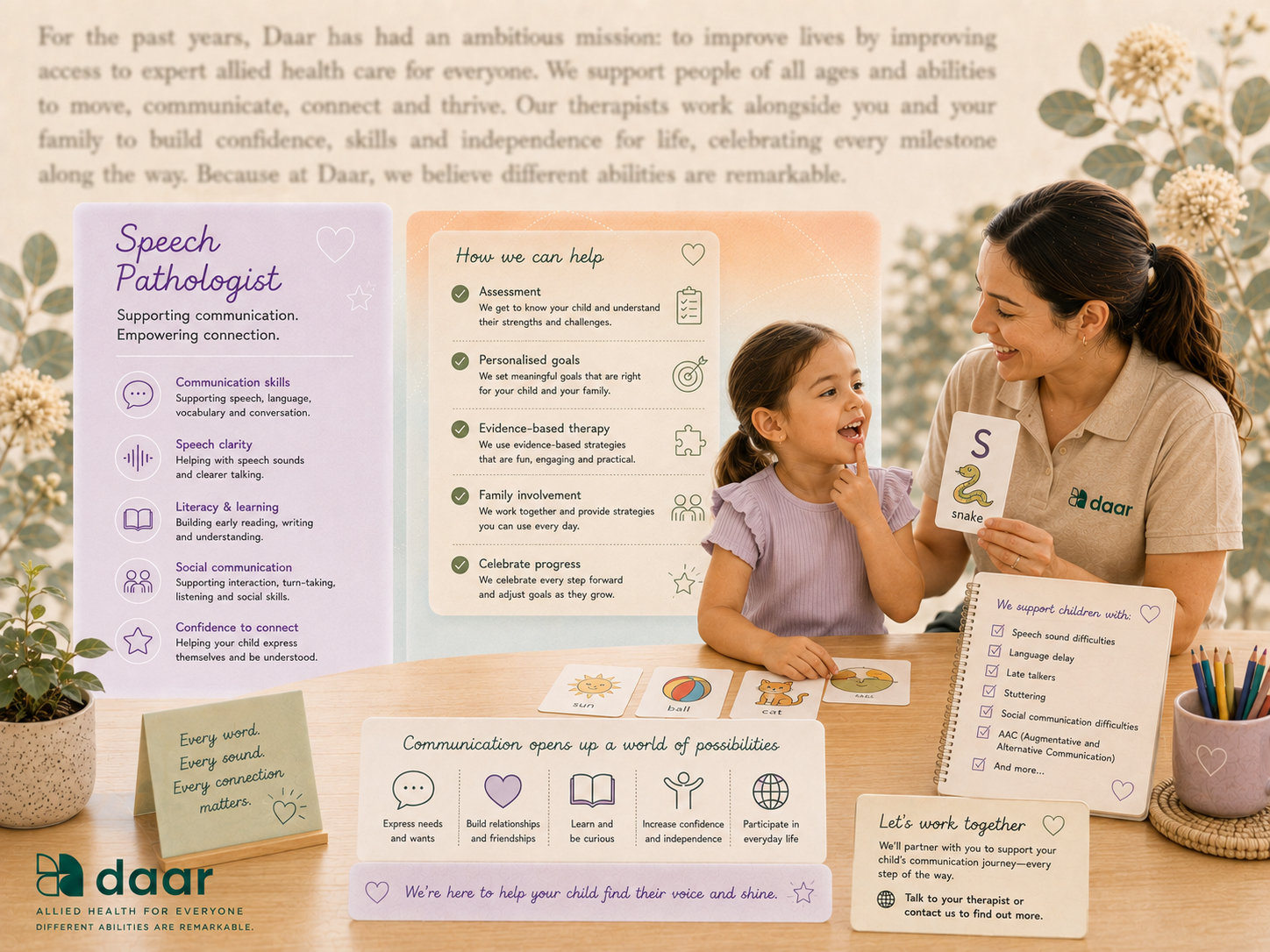
Start by looking for a speech pathologist with education in communication sciences and experience with the specific issue you are facing. Someone working with young children may need different strengths than someone supporting adults after brain injury or voice changes.
Clinical experience matters because communication disorders can overlap. A qualified provider should be able to assess needs carefully, explain findings in simple language, and connect those findings to realistic treatment options. You want clear goals, not vague promises.
It also helps to ask how the clinician stays current. Ongoing professional development supports better care, especially in areas like social communication, culturally responsive assessment, and complex language needs. A good speech pathologist will make the process understandable and centered on meaningful daily outcomes.
Conclusion
In conclusion, speech pathologists play a vital role in enhancing communication skills across various age groups. By addressing disorders related to speech, language, and social communication, these professionals provide invaluable support to individuals struggling with communication challenges. Early intervention is particularly crucial for children, as it can lead to significant improvements in their social interactions and academic performance. The assessment process ensures that treatment plans are tailored to meet the unique needs of each individual, fostering effective communication.
If you or a loved one could benefit from expert guidance, consider reaching out for a consultation or call daar at 02 9133 2500 to speak to a qualified speech pathologist to explore the available services and support options.
Frequently Asked Questions
What does a speech pathologist do?
A speech pathologist, also called a speech therapist, assesses and treats difficulties with speech language, understanding, voice, fluency, and social use of communication. Their patient care may include screening, diagnosis, therapy, counseling, and treatment options designed to improve communication skills in daily life.
How do speech pathologists help with social communication disorder?
A speech pathologist helps by assessing social communication skills such as turn-taking, topic maintenance, nonverbal cues, and understanding implied meaning. Therapy sessions are tailored to communication needs and support language development so the person can participate more successfully in conversations, school, work, and relationships.
What qualifications are needed to become a speech pathologist in Australia?
Based on the compiled information, a speech pathologist needs specific education and appropriate training in speech pathology, strong foundations in communication sciences, supervised clinical preparation, and ongoing professional development. Knowledge from related fields also supports effective assessment, collaboration, and treatment across different communication needs.
.svg)




.svg)