
.png?width=48&height=48&name=Group%201%20(3).png)
























Oliver (name changed for privacy) is a vivacious, mechanically inclined, and fiercely independent six-year-old boy. He lives with his family in a rural agricultural community and loves spending time outdoors, building intricate forts, and learning about farm machinery. However, Oliver’s strong will and intense need for autonomy were clashing aggressively with the structured demands of early childhood education and daily family routines.
Oliver was presenting with severe oppositional behaviours and acute emotional dysregulation. When given an adult-led directive—such as being told it was time to leave the park, pack up his toys, or sit at his desk—Oliver would exhibit explosive pushback. His presenting behaviour issues included shouting, throwing heavy objects, and most concerningly, elopement (bolting away from his caregivers or teachers when he felt overwhelmed). Living in a remote regional town, his family faced a massive geographical barrier to care. With the nearest allied health clinic a grueling three-hour drive away and local waitlists exceeding a year, his parents felt entirely isolated and exhausted. Desperate for immediate, expert intervention, they reached out to the digital health specialists at daar to explore comprehensive telehealth support.
The Challenge
The inability to access local, specialised healthcare was causing Oliver's behavioural challenges to compound, impacting every facet of his life:
- At Home: The daily routine was a constant battle of wills. Attempting to get Oliver dressed and onto the school bus routinely ended with him screaming, throwing his belongings, and hiding under the house. The exhaustion of these daily meltdowns was taking a severe toll on his parents' mental health. They felt completely untethered, reading generic parenting blogs that simply did not apply to their neurodivergent child's intense needs.
- At School: The impact on his education was reaching a crisis point. Oliver’s rural primary school was under-resourced and lacked a dedicated behavioural support unit. When Oliver became frustrated by a classroom transition, he would bolt out of the classroom door and attempt to run toward the school gates. The school was deeply concerned for his physical safety and was contemplating placing him on a restricted, part-time timetable, which would further isolate him from his peers.
The family urgently needed an expert lifeline—a way to bring high-level, specialised clinical care directly into their living room and into the rural classroom.
Therapy Approach
The clinicians at daar understand that a family’s postcode should never dictate their access to vital developmental resources. Delivering behaviour therapy for children via telehealth is not a secondary alternative; it is an incredibly powerful tool that allows clinicians to observe and coach within the child's natural environment.
Our customised, multi-layered telehealth intervention included:
- Live Parent Coaching via Telehealth: Instead of treating Oliver in a sterile clinical room, a daar behaviour practitioner used video conferencing to observe the morning routine live. We implemented robust positive behaviour support by directly coaching the parents through an earpiece. We taught them to replace rigid commands with "structured choices" (e.g., "Oliver, do you want to put your left shoe on first or your right shoe?"). This granted him the autonomy his ODD craved, instantly defusing the power struggle.
- Interactive Digital Skill Building: We utilised highly engaging, screen-based interactive tools to work directly with Oliver. Through gamified telehealth sessions, we taught him to identify his internal frustration. He learned to recognise the physical signs of his anger and was explicitly taught exactly how to use a "Take a Break" strategy before his frustration escalated into elopement.
- Remote School Collaboration and Socialised Behaviour Therapy: Telehealth allowed our team to seamlessly bridge the gap between the family home and the rural school. We held virtual workshops with Oliver's teacher and the school principal. We guided them in establishing a designated "Safe Zone" within the classroom. Furthermore, we utilised the principles of socialised behaviour therapy to help the teacher set up a structured peer-buddy system, teaching Oliver how to engage safely and collaboratively with his classmates during recess.
Results & Progress
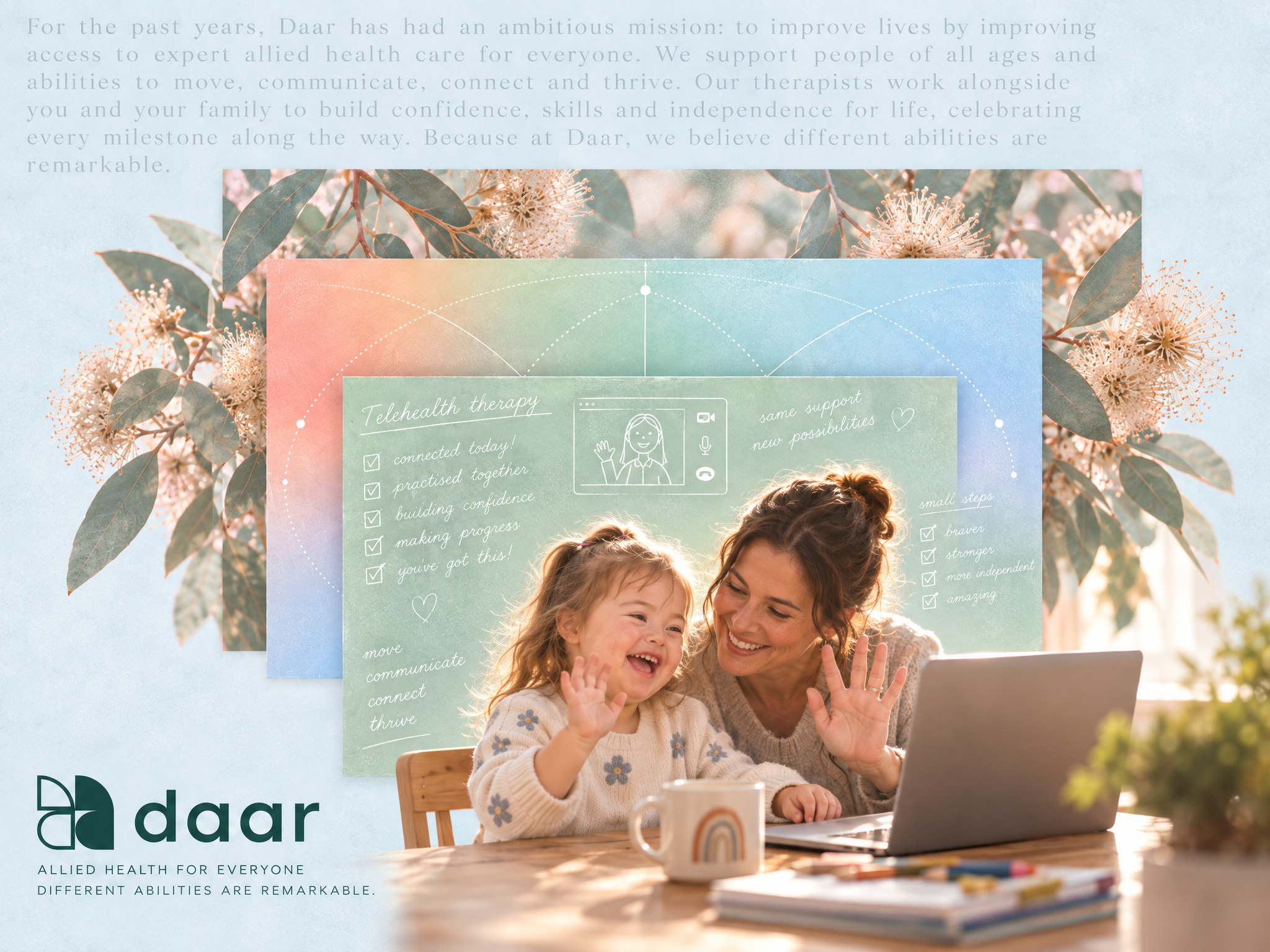
Leveraging the power of telehealth fundamentally transformed Oliver's trajectory. By empowering his parents and educators with specialised strategies in real-time, Oliver’s environment shifted from a source of conflict to a foundation of support.
Within eight weeks of beginning the remote intervention, the home dynamic experienced a massive breakthrough. Because his parents were thoroughly trained in positive behaviour support and structured choices, the morning battles ceased. Oliver felt respected and in control of his environment, which entirely removed his need to yell or throw objects.
At school, the virtual collaboration yielded equally impressive results. Equipped with an evidence-based roadmap, the school abandoned the punitive discipline model. When Oliver felt the urge to bolt, he successfully utilised the "Take a Break" protocol he learned in his online sessions, retreating to the classroom Safe Zone instead of running out the door. The threat of a restricted timetable was completely lifted, and Oliver began thriving alongside his friends.
By closely tracking his child's behaviour and progress through weekly video consultations and digital data-sharing, the clinical team at daar logged remarkable, life-changing improvements.
elimination of flight-risk behaviour.
minutes of cooperative play
alignment using virtual collaboration

Key Outcomes
Telehealth is revolutionising the allied health landscape, proving that world-class intervention can be successfully delivered outside of a traditional clinic wall. Oliver’s highly customised intervention highlighted several vital outcomes:
- Overcame Geographic Isolation: Telehealth obliterated the three-hour drive and the year-long waitlist, granting Oliver immediate access to specialised behaviour therapy for children right when he needed it most.
- Facilitated Natural Environment Training: By coaching parents live in their own home, the strategies took root instantly. The family wasn't trying to remember what a therapist said in an office; they were practicing the skills in real-time during actual transitions.
- Ensured Physical Safety: By replacing school elopement with a structured, safely managed "Take a Break" system, Oliver was kept safe on school grounds, preserving his mainstream academic inclusion.
- Empowered a Unified Team: Video conferencing allowed the clinical experts to bring the parents and the rural educators to the exact same table, ensuring Oliver received consistent, neuro-affirming support across all his daily environments.
Conclusion & Call to Action
For families living outside of major metropolitan hubs, accessing specialised pediatric healthcare often feels like an impossible dream. Long waitlists, overwhelming travel times, and a lack of local specialists can leave children struggling and parents feeling abandoned. However, geography should never be a barrier to a child's success. Telehealth provides an innovative, highly effective bridge, delivering expert clinical support directly into your living room. By combining live parent coaching, interactive digital therapy, and remote school collaboration, we can establish profound positive behaviour support networks anywhere in the country.
As Oliver’s mother expressed during their final virtual review:
Living out in the country is beautiful, but when your child is struggling, it feels like you are on an island. The school didn't know what to do, and driving six hours round-trip for a single therapy session was going to bankrupt us. Finding the telehealth program at daar was literally a lifeline. The behaviour therapist was right there on the iPad, watching our morning routine and gently talking us through how to speak to him without triggering a meltdown. They trained his teacher over Zoom. He hasn’t tried to run away from school in two months. daar didn’t just help Oliver; they brought expert help right to our dining table and saved our family.
Are geographic barriers, long waitlists, or incredibly busy schedules preventing your child from accessing the crucial behaviour support they deserve? You do not have to wait to get the expert help your family needs.
Enhance your child's access to world-class care from the comfort of your own home.
Contact the innovative telehealth specialists and multidisciplinary allied health team at daar today. Let us help you design a customised, highly effective remote intervention plan that fits seamlessly into your life. Call us at 02 9133 2500 or visit our website to secure your family's consultation!


.svg)

Get access to quality, Efficient, and professional care.
Request a call to find out how daar can help you achieve your health goals.

Leading source of information for allied health news, studies and resources.

We support you to be self-determined and independent, giving you the control and freedom to achieve your individual goals.

We provide superior quality, client-centric and innovative treatment to support you to realise your full potential.
.svg)




.svg)