
.png?width=48&height=48&name=Group%201%20(3).png)
























At daar, we believe that every child has the potential to learn, grow, and thrive. However, behavioural challenges and communication barriers can sometimes lock that potential away. This case study explores how Applied Behaviour Analysis (ABA)—a scientifically validated approach to understanding behaviour—helped a young client find his voice and succeed in a school setting.
Lucas (Name changed for privacy) is an affectionate and curious 6-year-old diagnosed with Autism Spectrum Disorder (ASD). He loves puzzles and water play but has historically struggled with verbal communication. Lucas lives with his parents and older brother, attending a mainstream primary school with support.
Presenting Issues:
Lucas’s parents reached out to daar seeking behaviour therapy for children after noticing an escalation in frustration-based behaviours. Lucas had limited functional speech, often resorting to physical aggression or dropping to the floor when he could not communicate his needs or when asked to transition between activities.
The Challenge
The core challenge for Lucas was a "communication breakdown." Without the words to express his wants or feelings, his behaviour became his language.
Impact at Home and School:
- School: Lucas was frequently being removed from the classroom due to disruptive outbursts during transition times (e.g., moving from play to desk work). This was affecting his academic progress and social inclusion.
- Home: His parents felt they were "walking on eggshells." Simple daily routines, like getting dressed or turning off the TV, would trigger prolonged meltdowns, causing significant stress for the entire family.
The difference in Lucas is night and day. We used to dread the morning school drop-off, but now he walks in with confidence. The team at daar didn't just change his behaviour; they gave him a voice. We finally feel like we understand our son.
daar Therapy Approach
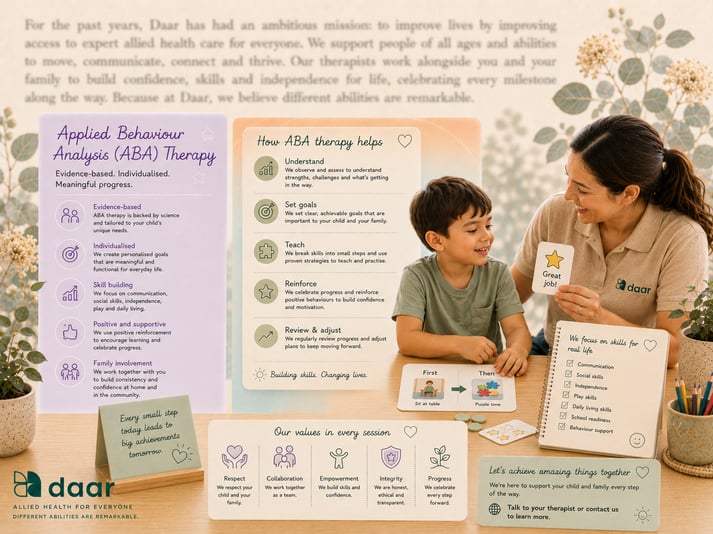
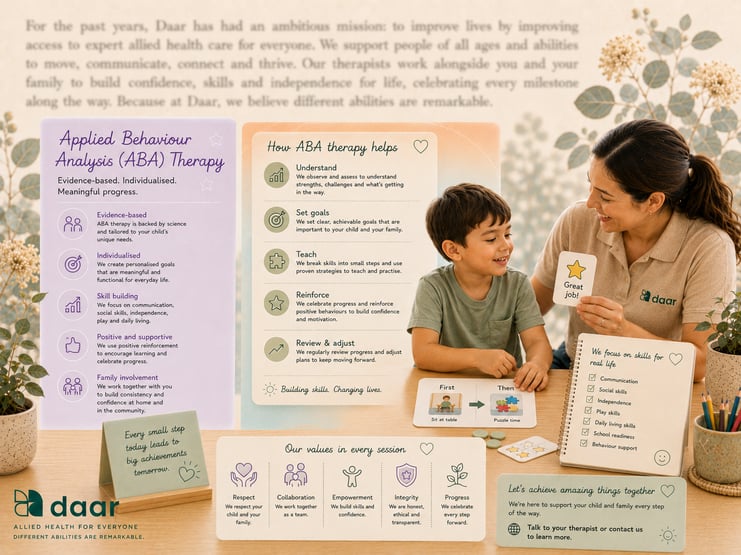
Our team at daar utilized Applied Behaviour Analysis (ABA) to create a structured, evidence-based intervention plan. We began with a Functional Behaviour Assessment (FBA) to understand the "why" behind Lucas's actions. The assessment revealed that his outbursts primarily served an "escape" function—he was trying to avoid difficult tasks or transitions he didn't understand.
Methods Applied:
- Functional Communication Training (FCT): We replaced the aggressive behaviour with a functional alternative. We taught Lucas to use a picture exchange system and simple verbal approximations (like "break" or "help") to request what he needed without resorting to behaviour.
- Discrete Trial Training (DTT): To build his vocabulary and focus, we used DTT. This involved breaking down complex skills into small, teachable steps, allowing Lucas to master one concept at a time before moving on.
- Positive Behaviour Support: We implemented a visual schedule and a token economy system. Lucas earned tokens for "safe hands" and following instructions, which he could trade for time with his favourite puzzles. This shifted the focus from punishing the negative to reinforcing the positive.
.svg)

Results and Progress
The implementation of socialised behaviour therapy principles yielded significant results over a six-month period. By making the environment predictable and giving Lucas a way to communicate, his anxiety decreased, and his compliance increased.
Specific Improvements:
- Reduction in Outbursts: Aggressive incidents at school dropped significantly within the first four months.
- Communication Gains: Lucas mastered over 30 new functional words and can now request a "break" independently, eliminating the need for escape-based tantrums.
- Successful Transitions: With the help of visual timers and positive reinforcement, Lucas now transitions between school activities with verbal prompting only, requiring no physical guidance.
Key Outcomes
This case study highlights that child behaviour and progress are best supported when we understand the function of the behaviour.
- Empowered Communication: Lucas learned that using words (or pictures) is more effective than acting out.
- School Inclusion: Lucas is now spending 100% of his day in the classroom with his peers, participating in group activities he previously avoided.
- Family Harmony: The strategies learned through positive behaviour support have been adopted at home, leading to calmer evenings and a stronger bond between Lucas and his brother.
Did you know? Research indicates that early intensive behavioural intervention, such as ABA, can lead to a 47% increase in successful mainstream school placement for children with autism.
reduction insocial avoidance behaviors
success in daily classroom inclusion
new functional words mastered

Conclusion
Behaviour is a form of communication, and with the right tools, we can help children express themselves in healthier, happier ways. As seen with Lucas, Applied Behaviour Analysis is not just about reducing problem behaviour—it is about unlocking a child's potential to learn and connect with the world around them.
If your family is navigating similar challenges, you don't have to do it alone.
Ready to unlock your child's potential?
Contact daar today to discuss how our specialised behaviour therapy programs can support your family.



Get access to quality, Efficient, and professional care.
Request a call to find out how daar can help you achieve your health goals.

Leading source of information for allied health news, studies and resources.

We support you to be self-determined and independent, giving you the control and freedom to achieve your individual goals

We provide superior quality, client-centric and innovative treatment to support you to realise your full potential
.svg)




.svg)