
.png?width=48&height=48&name=Group%201%20(3).png)























17 August, 2026

The Benefits of Early Intervention in Childhood Development
Key Highlights
- Early childhood intervention can support children during key stages of growth and learning.
- Positive behaviour support helps reduce stress by teaching safer, more useful responses.
- For children with autism spectrum needs, early action can improve communication and social skills.
- Behaviour analysis helps teams understand what a child’s behaviour may be communicating.
- Families, therapists, and educators work together to build consistent routines and support.
- Early support can strengthen independence, school readiness, and everyday participation.
Introduction
Early intervention services can make a real difference when concerns about a child’s development appear in the first few years. For young children, this stage is a time of rapid learning, so support started early can shape communication, behaviour, and daily routines in helpful ways. If you have worries about delays, social interaction, or emotional regulation, acting sooner gives your child more opportunities to build skills. That early start often leads to smoother progress at home, in preschool, and beyond.
Understanding Early Intervention in Childhood Development
In early childhood, children learn quickly, and that is why early intervention matters so much. It is a planned response to a child’s needs when developmental delays, communication concerns, or behaviour difficulties begin to show.
For children with autism spectrum needs, early intervention behaviour support means identifying what the child is communicating through actions, then teaching safer and more effective ways to respond. This support can begin when concerns are first noticed and is shaped around the child’s strengths, routines, and everyday environments.
What Constitutes Early Intervention for Children
Early childhood intervention provides services for young children with developmental disabilities, delays, or emerging behavioural concerns. Support may begin in infancy and continue through preschool, depending on the child’s needs.
Services typically include assessment, goal setting, and practical support at home, preschool, or in the community. Interventions often involve speech therapy, occupational therapy, family training, and strategies to improve communication, routines, and participation.
For children from birth to preschool age with autism, early intervention focuses on understanding behaviours and teaching helpful skills. The goal is not only to reduce challenges but also to help children communicate, connect with others, and build confidence in daily life.
Early Signs That Indicate the Need for Support
Sometimes the first clues are small, but they matter. Developmental delays, repeated frustration, or difficulty coping with everyday routines can point to a need for support. In some children, autism spectrum disorder may also become clearer during the toddler years, especially if communication or social interaction is not developing as expected.
You may notice signs such as:
- delayed speech or language development
- trouble with social interaction or limited response to others
- frequent tantrums, meltdowns, or other challenging behaviours
- difficulty with self-care skills, routines, sleep, or eating
If you suspect your child needs help, gather information and seek an assessment from a qualified professional. Acting early helps teams understand your child’s needs before patterns become harder to change. That can lead to more targeted support and better day-to-day progress.
The Role of Behaviour Support in Early Intervention
Behaviour support plays a central role in early intervention because a child’s behaviour often communicates a need, stress point, or skill gap. Positive behaviour support looks beyond the surface and focuses on teaching useful alternatives.
In practice, behaviour support specialists assess patterns, identify triggers, and build a PBS plan or support plan that fits the child and family. This approach helps adults respond consistently across home, preschool, and community settings. The next sections explain how these methods work and why they can reduce disruption while building stronger everyday skills.
Positive Behaviour Support (PBS) Approaches
Positive Behaviour Support (PBS) helps children learn better ways to communicate and cope. Instead of just stopping problem behaviours, specialists look for what the behaviour means and which skills the child needs next.
A strong PBS plan includes:
- observation in different routines and settings
- clear goals tied to daily activities
- positive reinforcement for helpful behaviours
- coaching for parents, carers, and teachers
PBS is part of early intervention. It combines assessment, teaching, and consistent responses across environments. Children get support where they spend time, and adults learn to guide them through routines and transitions. Positive behaviour increases as children practice skills that meet their needs.
How Early Intervention Strategies Target Challenging Behaviours
Early intervention is important for challenging behaviours because actions that are ignored can become more established over time. When support starts early, children have a better chance to learn safer and more effective ways to communicate before frustration becomes a regular pattern.
Behaviour support specialists often use behaviour analysis to understand what happens before, during, and after a behaviour. That information helps them choose the right application of strategies for the child, not a one-size-fits-all response. The goal is to reduce triggers, increase predictability, and teach alternatives.
As a result, children can build new skills in communication, emotional regulation, and participation. Families also gain practical tools they can use in real situations. That makes progress more likely across home routines, preschool activities, and community life.
Types of Behavioural Interventions Used in Early Childhood
Several approaches are used in early childhood to support behaviour, learning, and participation. The main types of behavioural interventions used in early intervention include applied behaviour methods, social skills teaching, family training, and broader developmental and behavioural supports.
For children with autism spectrum disorder or other developmental concerns, teams may combine behaviour analysis with communication, routine-based teaching, and emotional support. The right mix depends on the child, the setting, and the goals. Two common approaches are outlined below.
Applied Behaviour Analysis (ABA) and Its Impact
Applied behaviour analysis uses observation and structured teaching to help children learn useful skills and reduce barriers to participation. In early childhood, this approach is often used as part of a wider support program rather than in isolation.
Some children may receive intensive behavioural intervention, especially when their needs are more significant. Early childhood partners, families, and therapists can use behaviour analysis findings to shape goals, track progress, and make changes when needed. This keeps support practical and responsive.
|
Approach Area |
How It Helps |
|---|---|
|
Assessment |
Identifies patterns, triggers, and what the child may be communicating |
|
Skill teaching |
Builds communication, routines, and participation step by step |
|
Intensive behavioural intervention |
Provides more focused support for children with higher needs |
|
Team use |
Helps early childhood partners apply strategies consistently across settings |
Social Skills Training and Emotional Regulation
Not all challenges are behavioural. Many young children need direct teaching in social skills, such as turn-taking and managing big feelings. Social skills training helps them follow routines, interact with others, and join group activities confidently.
Emotional regulation is equally important. When children recognise their feelings and recover from frustration, meltdowns are less likely. Support may include visual aids, clear routines, and repeated practice during play, transitions, and group tasks.
These strategies also build communication skills. Children who can ask for help, wait briefly, or anticipate what comes next cope better at preschool and home—leading to calmer days and stronger relationships.
The Importance of Collaboration with Families and Educators
Support works best when the adults around a child are working toward the same goals. Parental involvement is especially important because children practice skills most often at home, during routines, and in community life.
At the same time, early childhood education settings give children many chances to use those skills with others. When families, educators, and early childhood partners share one support plan, strategies become more consistent. That consistency helps children learn faster and gives parents clearer pathways to access help.
Parental Involvement in Early Intervention Programs
Parents are central to early intervention success—not just observers. Since children spend most of their time at home, family strategies help skills from therapy carry over into daily life.
Parent training supports families during:
- meals, bedtime, and routines
- transitions between activities or places
- play and communication
- outings and community participation
Parents can access behaviour support by requesting an assessment, talking with providers, and exploring funding options such as the National Disability Insurance Scheme, private funds, Medicare, private insurance, or telehealth. Seeking help early also aids in documenting needs for specialised services.
Partnering with Early Childhood Educators
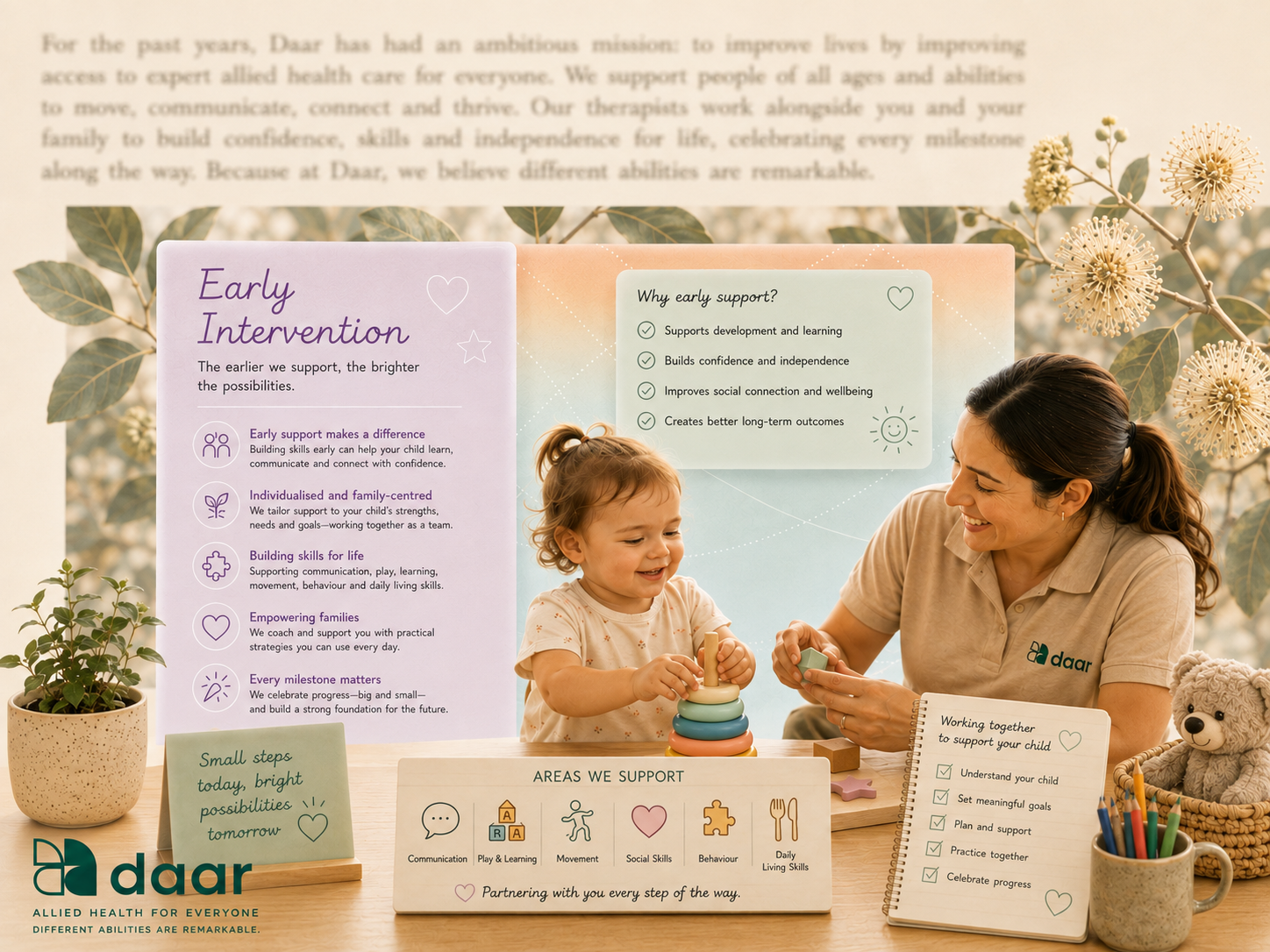
Early childhood educators often first notice learning patterns, transitions, and peer interactions in group settings. They can offer valuable insights about what works and where support is needed.
Behaviour support in early intervention may come from therapists, specialist practitioners, educators, and other trained professionals working as a team. In schools, staff may collaborate with external providers through education department pathways.
Consistency is key. When educators and families use similar prompts, routines, and expectations, children receive clearer messages. This reduces confusion and helps skills transfer smoothly during transitions to preschool or school.
Conclusion
Early intervention in childhood development is essential for future success. By identifying early signs and working together, families and educators can implement effective, personalised behavioural interventions. Positive Behaviour Support fosters growth and empowers parents and teachers. Prioritising early intervention improves social skills, emotional regulation, and overall well-being. To support a child’s development, explore early intervention options today.
Reach out for a consultation or call daar at 02 9133 2500 for expert guidance tailored to your child’s needs.
Frequently Asked Questions
Who qualifies for early intervention behaviour support?
Children who show developmental delays, disability-related needs, or early behaviour concerns may qualify for early intervention services, often from birth through preschool years of age. Eligibility depends on assessment results, functional needs, and available pathways. A support plan is then built to help families access support in daily settings.
Can early intervention prevent future behavioural difficulties?
Early childhood support can reduce the chance that behavioural challenges become more severe. Positive behaviour support focuses on prevention by teaching useful skills early, improving routines, and helping adults respond consistently. It does not guarantee every difficulty disappears, but it gives children a much stronger best start.
What should parents do if they suspect their child needs help?
Start by observing patterns and noting your concerns. Gather information from caregivers, teachers, and health professionals, then seek an assessment through early childhood intervention services or early childhood partners. If autism spectrum concerns are present, early action matters. Parent training can also help you support your child while next steps are arranged.
.svg)




.svg)