
.png?width=48&height=48&name=Group%201%20(3).png)























17 August, 2026

Paediatric speech pathology
Key Highlights
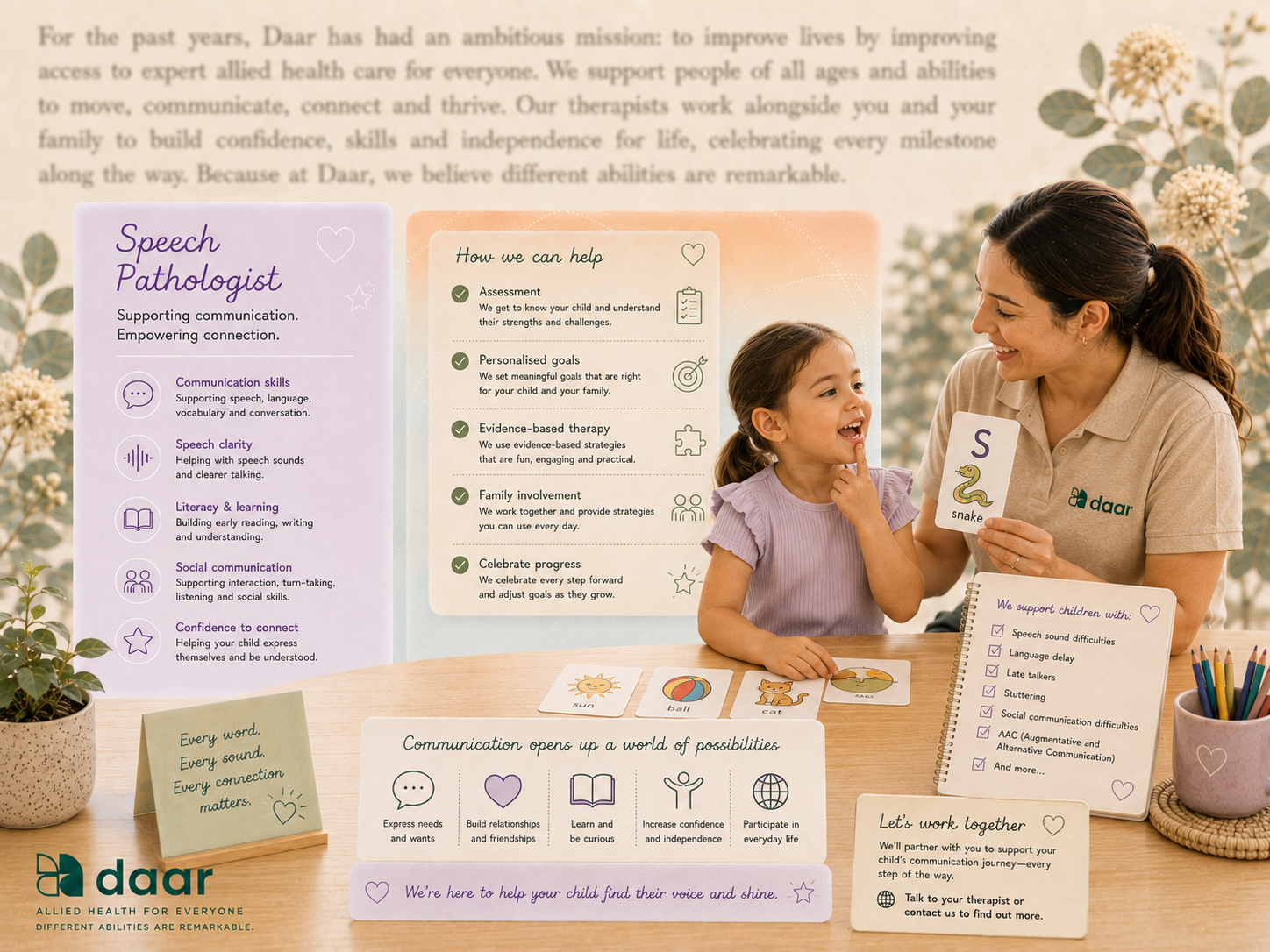
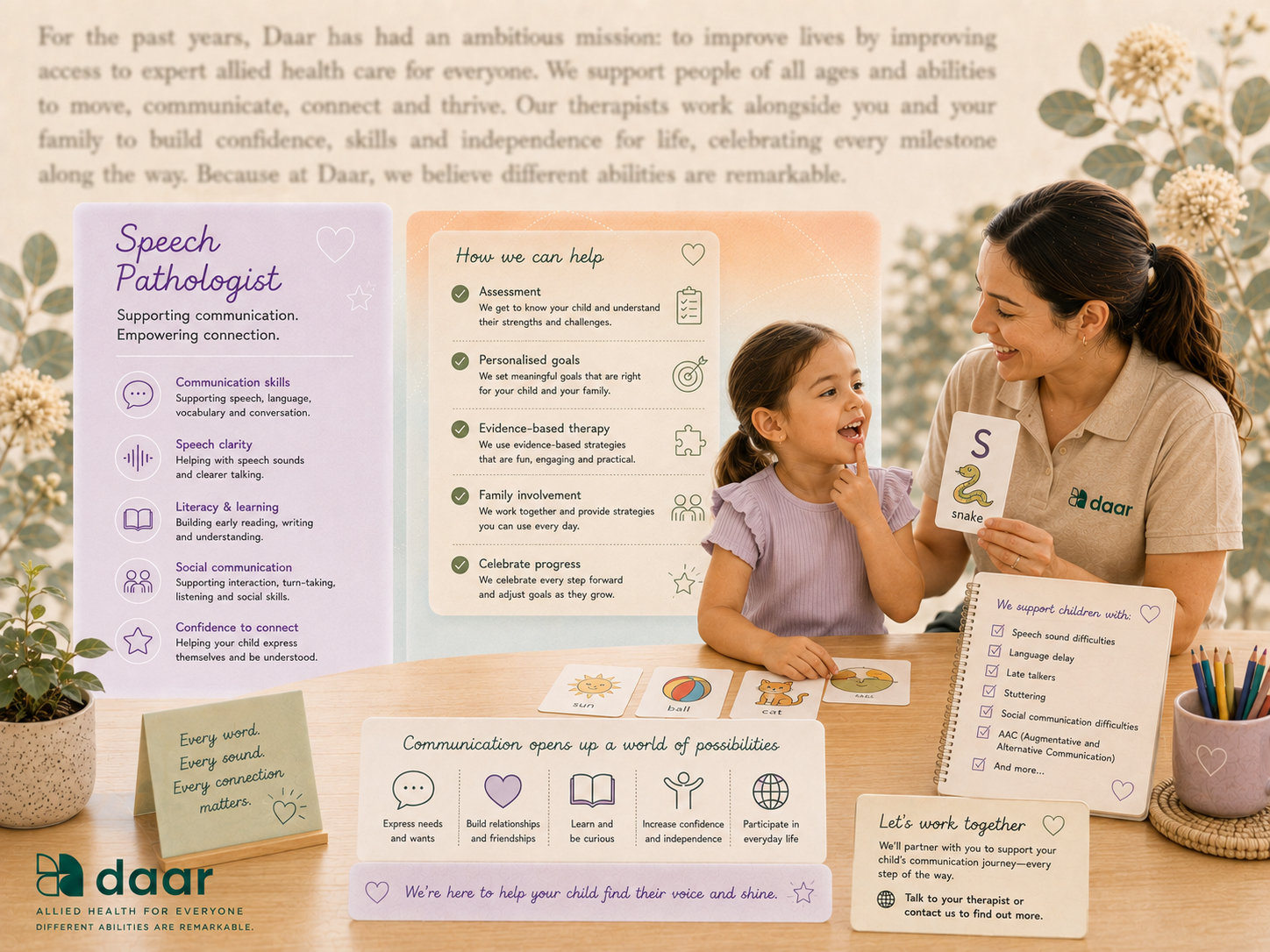
- A speech pathologist helps children with speech disorders, language skills, listening, social communication, and feeding concerns.
- Paediatric speech therapy is tailored to your child’s age, goals, and everyday communication needs.
- Early intervention can support stronger progress in your child’s speech, confidence, and participation at home and school.
- Speech therapy services may include assessments, one-on-one sessions, group support, and parent coaching.
- Clinics often support children with articulation, fluency, receptive language, autism, and speech delays.
- In Australia, services may be available through public care, private providers, Medicare pathways, or the NDIS.
Introduction
If you are worried about your child’s speech, you are not alone. A speech pathologist can assess communication challenges and guide you toward practical next steps. Paediatric speech therapy helps children build clearer speech, stronger understanding, and better self-expression in everyday life. It can also support social interaction, learning, and feeding when needed. The earlier you act on concerns about your child’s speech, the easier it is to put the right support in place.
Understanding Pediatric Speech Pathology
A speech therapist, also called a speech pathologist, is an allied health professional trained to assess and treat a communication disorder. They work with people of all ages, including young children who need help with speech sounds, understanding language, or social communication.
For children, speech pathology services focus on practical support. That may include testing, observation, home strategies, and therapy activities matched to your child’s daily life. This creates a clear starting point for the specific therapy areas explained below.
What is pediatric speech therapy and how does it differ from language therapy?
Pediatric speech therapy helps children speak more clearly and communicate better. Therapists may work on pronunciation, fluency, voice, mouth movements, or feeding and swallowing.
Language therapy is different—it focuses on understanding words, following directions, building vocabulary, using sentences, and expressing ideas. Simply put, speech is how words are spoken; language is how they are understood and used.
In practice, speech and language therapy often overlap because many children need help with both. The therapy plan depends on the child’s needs, age, and goals. A speech pathologist uses assessments and observation to identify whether difficulties are with speech sounds, language development, or both.
Common conditions treated with speech pathology in children
Speech pathology addresses a wide range of childhood communication challenges. Some children struggle to pronounce sounds, understand language, express ideas, or speak fluently. Support is also helpful when speech is affected by developmental delays or hearing issues.
Common concerns include:
- Articulation disorders (trouble saying certain sounds)
- Fluency disorders (stuttering or blocked speech)
- Receptive disorders (difficulty understanding language)
- Speech issues related to autism or developmental delays
- Communication problems linked to hearing loss
Children may also need help with literacy, social skills, feeding, or swallowing. A speech pathologist identifies the core issue and tailors therapy accordingly, which guides the services clinics provide.
Services Offered in Pediatric Speech Therapy Clinics
Pediatric clinics offer a mix of speech pathology services designed around assessment, treatment, and family guidance. You may find these supports in community health services, hospitals, schools, or private practices. Some providers also offer home visits, school visits, group programs, and online sessions.
Many speech therapy services begin with early intervention and a clear therapy plan. Clinics may support speech, language, social communication, literacy, feeding, and alternative communication systems. The next sections break down what assessments and therapies can look like in practice.
Types of assessments and therapies available
At the first appointment, a speech pathologist will ask about your child’s communication, health, and daily life. They may observe your child, use assessments, or watch them interact at home or school to identify strengths and challenges.
Speech therapy sessions often include targeted practice, play-based activities, and home strategies. Children benefit from word games, memory games, sequencing tasks, and reading aloud to improve speech, comprehension, thinking skills, and confidence.
|
Assessment or Therapy |
What it may involve |
|---|---|
|
Initial assessments |
Questions, observation, simple tests, and goal setting |
|
Speech therapy |
Practice for speech sounds, fluency, expression, understanding |
|
Play-based tasks |
Word games, memory games, board games, sequencing activities |
|
Parent support |
Strategies and coaching for practice at home |
Specialised programs for speech delays, lisps, and other conditions
Some clinics offer specialized programs for speech delays, lisps, literacy needs, feeding challenges, and social communication. These programs are tailored to your child’s goals and can take place in clinics, schools, childcare centers, or at home. Therapy is often play-based and integrated into daily routines.
Depending on the provider, programs may include:
- Support with speech sounds and pronunciation
- Help for speech delays and language development
- Social communication and school readiness programs
- Feeding or mealtime therapy
Families in Australia can find speech therapy through large providers, local clinics, and Speech Pathology Australia search tools. Services are available in cities like Perth and Hobart, with some providers offering telehealth for easier access.
Conclusion
In conclusion, pediatric speech pathology plays a vital role in helping children communicate effectively and confidently. It addresses various speech and language disorders, ensuring that every child has the opportunity to express themselves and connect with others. By utilizing specialized assessments and tailored programs, speech pathologists can support children with conditions like speech delays and lisps, fostering their growth and development.
If you have concerns about your child's speech and language skills, don't hesitate to reach out for consultation or call daar at 02 9133 2500 for guidance. Prioritizing their communication needs now can make a lasting difference in their lives.
Frequently Asked Questions
Is pediatric speech therapy covered by the NDIS in Australia?
Yes, speech therapy may be covered by the NDIS in Australia for eligible children. The National Disability Insurance Scheme can fund speech pathology services when they relate to a child’s disability goals and support needs. Some providers are registered NDIS providers and can guide families through the process.
What are the common signs that indicate a child may need speech pathology services?
You may want to see a speech pathologist if your child is hard to understand, talks less than expected, struggles to follow simple directions, gets frustrated when communicating, or has concerns raised by teachers, GPs, or other health professionals. Early intervention can make speech therapy services more effective.
What types of disorders can pediatric speech pathologists help with?
A speech pathologist can help with articulation disorders, delayed language skills, fluency disorders such as stuttering, social communication difficulties, feeding issues, and communication challenges linked to hearing impairment. They also support children with developmental delays, autism, and other conditions that affect understanding or expression.
.svg)




.svg)