
.png?width=48&height=48&name=Group%201%20(3).png)























21 September, 2026

NDIS Early Intervention: Unlocking Potential for Children
Key Highlights
- Securing funding through the NDIS Early Childhood Early Intervention (ECEI) pathway is a major milestone, but converting those line items into real-world progress that supports children’s daily activities and early connections can feel overwhelming for Australian parents. To apply for NDIS early intervention behaviour support for your child, you can contact your local ECEI partner, who will help you understand eligibility, assist with the application process, and guide you in gathering necessary documentation. This ensures your child receives appropriate support as soon as possible.
- NDIS early intervention is designed to provide rapid support during a child’s peak window of neuroplasticity, often without requiring families to wait years for a formal medical diagnosis.
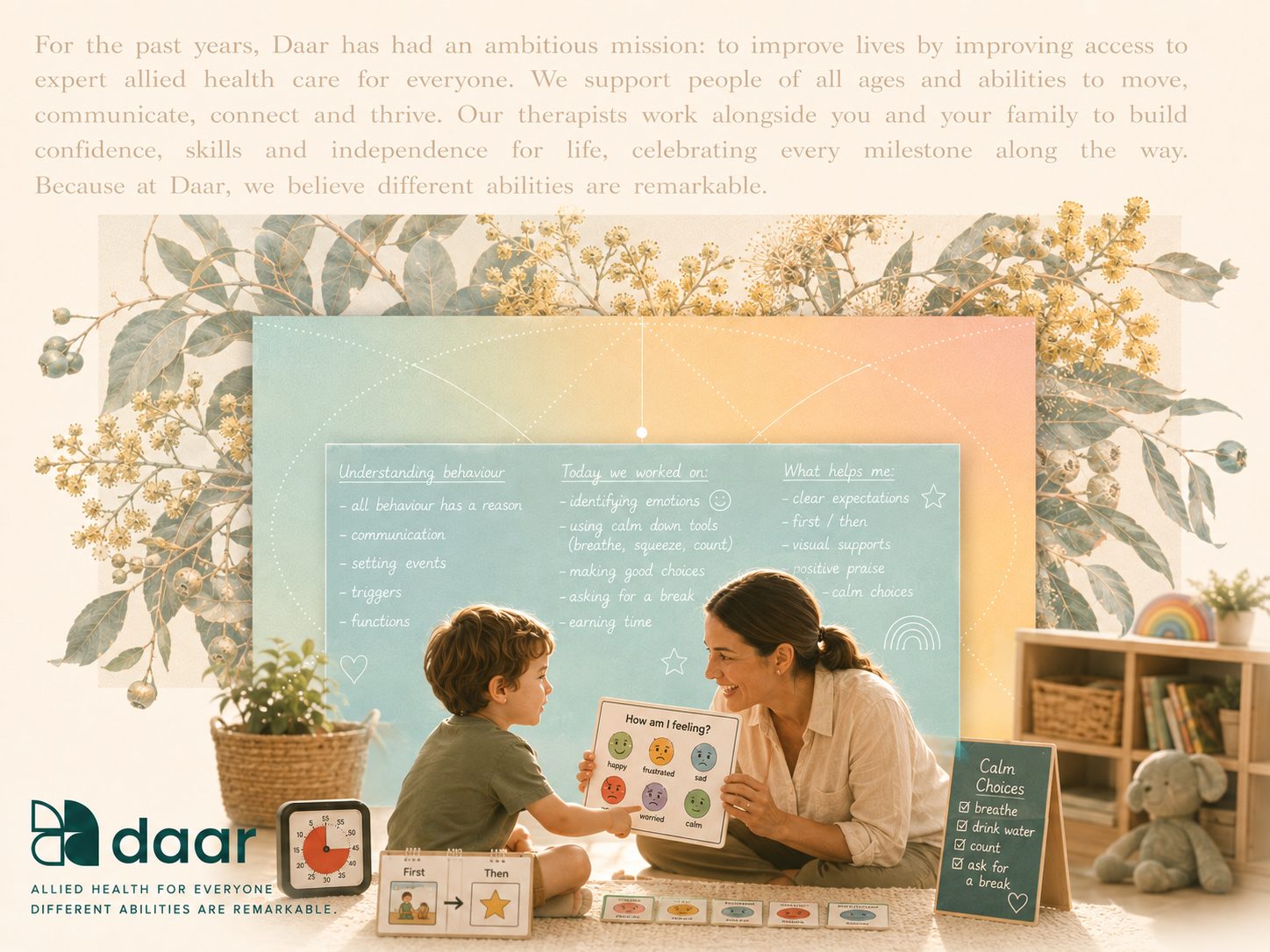
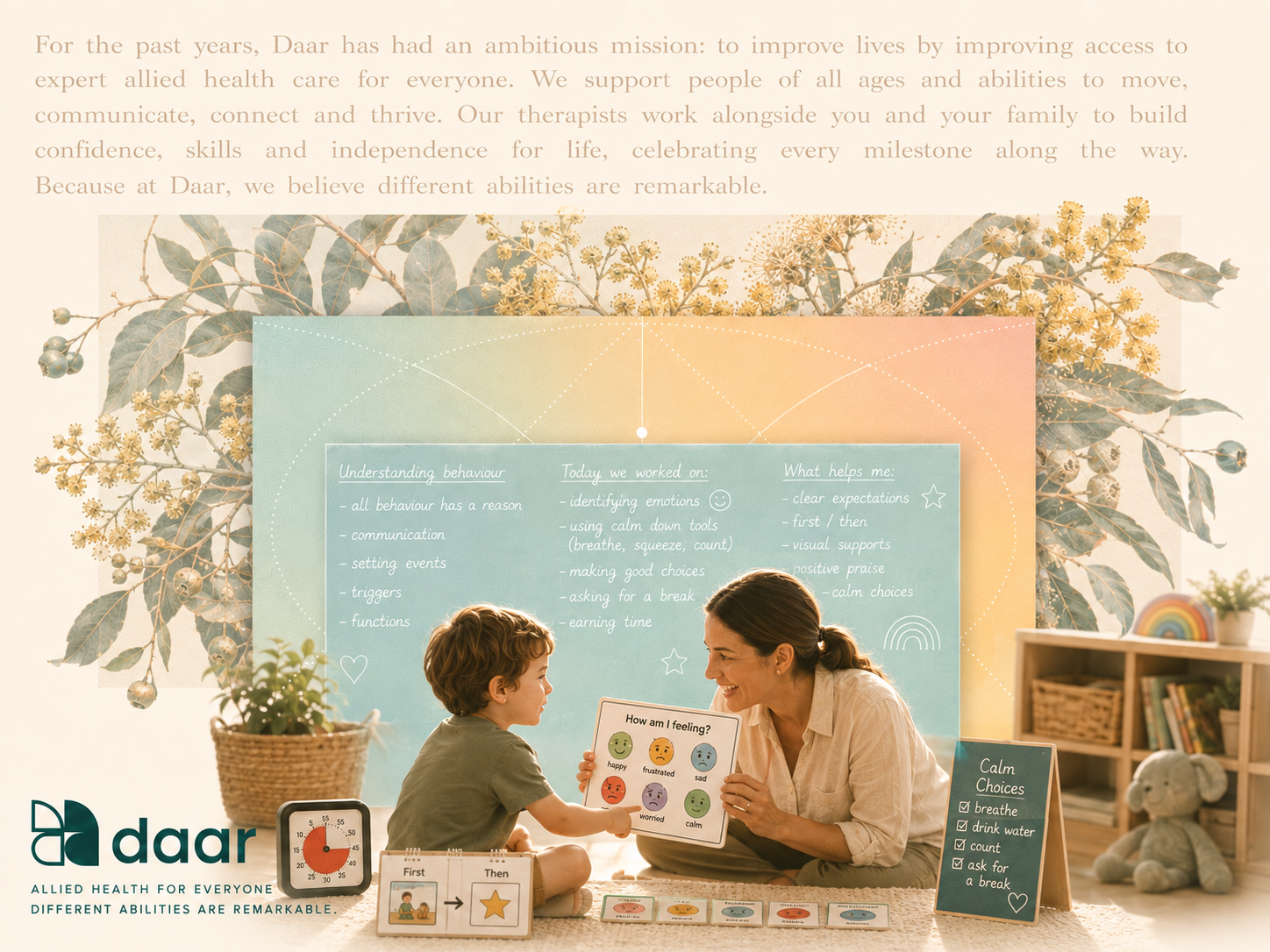
- There is a misconception that behaviour support is only for older children in crisis. In reality, NDIS early intervention behaviour support focuses on proactive prevention—teaching emotional regulation before distress becomes an ingrained habit.
- By investing strategically in NDIS behaviour support for children during the early years, families can radically change their child's developmental trajectory, paving the way for a smoother transition into school.
- Delivered securely via telehealth, daar uses the "mediator model" to ensure your NDIS funding is spent empowering you, the parent, providing a massive return on investment for your daily family life.
Introduction
The moment an NDIS plan arrives in your inbox, it is common to feel a mix of profound relief and immediate confusion. The document is filled with complex terminology, varying capacity-building categories, and broad recommendations, including information about vital services such as occupational therapy and ongoing support needs. Families often ask, "Where do we actually start, and how do we ensure this funding makes a real difference?" For children with autism, the NDIS supports effective behavioural interventions such as Applied Behaviour Analysis (ABA), social skills training, positive behaviour support, and parent coaching. These evidence-based strategies are frequently integrated with other services to help children develop communication, social, and adaptive skills, ensuring families can leverage NDIS funding to achieve meaningful outcomes.
When a young child is struggling with emotional dysregulation, sensory overwhelm, or extreme distress, timing for early support is everything. If your child is showing signs of developmental delay, at daar, our allied health professionals act as your clinical compass, helping you translate NDIS jargon into actionable, life-changing support. Let’s explore how to strategically navigate NDIS early intervention, the immense preventative value of NDIS early intervention behaviour support, and how our telehealth clinic ensures your funding is maximised.
The Fast Track: NDIS Early Intervention Explained
The overarching philosophy of the NDIS Early Childhood approach (which supports children younger than nine) is rapid response.
Historically, families had to wait on two-year public health waitlists to secure an Autism or ADHD diagnosis before they could access support therapies. The NDIS early intervention model bypasses this waiting game. Funding is allocated based on the child's presenting functional delay, rather than a diagnostic label. If your three-year-old is non-speaking or having multi-hour meltdowns, the NDIS recognises that stepping in now—while the brain is highly adaptable—is critical. The goal is to build foundational capacity early, so the child requires less intensive support as they grow into adolescence.
The Power of Prevention: NDIS Early Intervention Behaviour Support
When parents hear the term "behaviour support," they often picture a crisis intervention for a teenager. But what does it look like for a toddler?
NDIS early intervention behaviour support is all about proactive prevention. If a four-year-old experiences severe distress when leaving the house, their nervous system is learning to associate the outside world with panic. If left unaddressed, by the time they are ten, that panic response is deeply neurologically hardwired and much harder to alter. Our practitioners intervene early to assess the sensory or communicative triggers causing the distress. By adjusting the home environment and teaching the child safe coping mechanisms now, we prevent these stress responses from escalating into long-term crises.
Funding Strategies: NDIS Behaviour Support for Children
To maximise your NDIS plan, you must understand your Capacity Building budgets.
For general emotional regulation coaching, parent education, and sensory support, families can comfortably tap into their Improved Daily Living budget. However, if your child's distress includes actions that threaten their safety (like severe elopement or head-banging), your plan will likely include Improved Relationships funding. This specific category is heavily regulated and requires an NDIS-registered practitioner. At daar, we help you align your NDIS behaviour support for children funding with the correct clinical pathway, ensuring you receive the comprehensive assessments and formal Positive Behaviour Support Plans your child legally requires.
The Telehealth Advantage: Stretching Your Funding Further
A common pitfall in NDIS planning is burning through funding on travel costs to address your child's developmental needs. In traditional models, a practitioner might bill your child's plan for the 45 minutes it takes them to drive to and from your home. Restrictive practices play a key role in NDIS behaviour support plans by providing strategies and guidelines to manage challenging behaviours safely and responsibly. These practices are carefully monitored and are only used when necessary to protect participants or others, ensuring that any interventions are consistent with NDIS principles and aimed at promoting positive outcomes.
Because daar operates exclusively via a premium telehealth platform, travel fees are eliminated, preserving your plan’s budget for actual clinical care. More importantly, we utilise the collaborative "mediator model." Instead of spending 50 minutes trying to coax a dysregulated toddler to look at a webcam, our clinicians observe your natural home environment and actively coach you. We empower you to become the primary daily therapist. To learn how we connect families with the nation’s leading clinicians without the geographic barriers, discover telehealth therapy and find your perfect match.
Conclusion
An NDIS plan is only as powerful as the clinical team and support workers executing it, under the guidance of the NDIS Commission. By acting early, focusing on proactive regulation, and utilising models of care that empower the whole family, you can ensure your funding translates to lasting harmony and independence for your child. For resources and guidelines on NDIS early intervention behaviour support, you can visit the official NDIS Commission website, where detailed information and documentation are available for families and providers. Additional support materials can be found through registered NDIS providers who specialise in early intervention, as well as government health agencies that offer guidance tailored to children and families.
Don't let your child's early intervention window close while waiting on local clinic lists. Expert, NDIS-aligned therapy services and guidance is available to Australian families right now, including strategies for enhancing social interaction. The NDIS early childhood approach to behaviour support involves several key steps: identifying individual needs through initial assessments, collaborating with families and professionals to design tailored intervention plans, implementing evidence-based strategies, monitoring progress, and making adjustments as necessary.
Reach out to explore a consultation or call daar directly at 02 9133 2500 to find your perfect match today.
Frequently Asked Questions
Does early intervention mean my child will 'grow out' of being neurodivergent?
No. Neurodiversity (like Autism or ADHD) is a lifelong, valid neurotype, not a disease to be cured. NDIS early intervention does not seek to change who your child is. Instead, it provides them with the communication tools, emotional regulation strategies, and social skills, along with environmental accommodations they need at the right time to navigate a predominantly neurotypical world feeling safe, understood, and confident.
If my child is currently undiagnosed but receiving ECEI funding, what happens when they turn nine?
Under the NDIS early childhood framework, children are supported with the right support without a formal diagnosis up to the age of nine. As they approach this age, the NDIS will require evidence of a permanent disability (such as a formal diagnostic assessment) to transition them into the standard NDIS pathway. Taking this important first step, the data and assessments gathered by our practitioners during your early intervention years provide vital, robust evidence to assist your paediatrician during this eventual diagnostic process.
Can I use self-managed or plan-managed NDIS funds for daar's telehealth services?
Yes. daar is a fully registered NDIS provider. We are proud to support families right across Australia, regardless of how their NDIS funds are managed. Whether you are NDIA-managed (Agency), plan-managed, or self-managed, you can seamlessly access our comprehensive NDIS behaviour therapy support for children, including services from speech therapists, and allied health services.
.svg)




.svg)