
.png?width=48&height=48&name=Group%201%20(3).png)























21 August, 2026

The Power of Applied Behaviour Analysis (ABA) in Therapy
Key Highlights
- Applied behaviour analysis uses learning science to support helpful behaviour change.
- ABA therapy is often used with autism spectrum disorder to build communication and social skills.
- Positive reinforcement encourages desired behaviours by rewarding progress in meaningful ways.
- Early intervention can help young children practice useful skills in daily routines.
- Programs are tailored to the child’s needs, interests, family goals, and ability level.
- Data collection helps the behaviour analyst track progress and adjust teaching plans.
Introduction
Applied Behaviour Analysis (ABA) offers a structured approach to understanding and improving behaviours. With its roots in behavioural psychology, ABA focuses on identifying target behaviours and using tailored interventions to foster positive change. This evidence-based therapy emphasizes the importance of reinforcement strategies to enhance learning and develop new skills. Whether in educational settings or at home, ABA serves as a powerful tool for therapists and families, promoting better communication, social interactions, and overall quality of life for children, particularly those on the autism spectrum.
Applications of ABA Therapy in Australia
In Australia, ABA therapy has found its way into various settings, positively impacting the lives of many. Schools and community programs widely adopt ABA principles to promote essential skills in autistic children, enhancing communication and social interactions. Additionally, ABA techniques are effectively implemented within families, helping to foster daily living skills and positively modify challenging behaviours. Through certified behaviour analysts and trained therapists, this approach ensures individualised support, allowing children to thrive and improve their quality of life in a nurturing environment.
How ABA is commonly used with autistic children
Applied Behaviour Analysis is widely utilised to support autistic children in developing key skills. By focusing on positive reinforcement, therapists help children achieve desired behaviours, enhancing their communication and social interactions. Techniques like Discrete Trial Training allow for structured learning, increasing the likelihood of mastering new skills. Tailored to each child’s individual needs, ABA therapy can significantly improve daily living skills and promote positive behaviour changes, ultimately elevating their quality of life within various community settings.
ABA therapy for other behavioural challenges
ABA therapy is also used beyond autism treatment. Because behaviour analysis studies how learning happens, it can support people working on many kinds of goals. That includes building healthier habits, learning new skills, and improving everyday functioning across different settings.
For some individuals with developmental disorders, ABA-informed behaviour modification can help reduce challenging behaviours that affect safety, learning, or participation. The process starts with understanding why a behaviour happens and what changes might support a better response. That makes treatment practical rather than guesswork.
It can also be relevant in areas connected to mental health and behaviour support, as long as the focus stays on observable actions, clear goals, and consistent teaching. The same core methods guide this work, which leads naturally into the main techniques used in ABA.
Key Techniques in ABA Therapy
ABA techniques are built around understanding a target behaviour and teaching a more helpful response. In behaviour therapy, professionals often look at antecedents, behaviour, and consequences to see what is driving the action and what may strengthen or weaken it over time.
One of the best-known tools is positive reinforcement, but it is only part of the process. ABA also relies on breaking skills into steps, repeated practice, and careful review of progress. The next two sections show how motivation and measurement work together to support lasting behaviour change.
Positive reinforcement and motivation strategies
Positive reinforcement sets ABA apart from correction-based methods. When a child displays a desired behaviour and receives a meaningful reward, that behaviour is more likely to recur. A behaviour analyst first defines clear goals, then selects rewards tailored to the individual child.
This approach works best when rewards are personal—some children respond to praise, while others prefer time with a favorite toy, book, video, or activity. The reward must matter to the child for effective learning.
Common strategies include:
- Praising the child immediately after the skill is shown
- Using favorite items or activities as rewards
- Matching rewards to the child’s interests
- Reinforcing small steps toward larger goals
- Creating enjoyable learning opportunities throughout the day
The role of data collection and progress measurement
Data collection is a major part of ABA principles. During sessions, therapists record what the child did, what support was given, and how often the target behaviour occurred. This gives the team a clear picture of what is improving and what still needs work.
Without progress measurement, it is hard to know whether teaching is effective. A qualified supervisor, often guided by standards linked to the Behaviour Analyst Certification Board, reviews this information and updates goals or teaching steps when needed. That keeps the program responsive to the learner.
A simple example looks like this:
|
Skill Area |
Target behaviour |
What is tracked |
Why it matters |
|---|---|---|---|
|
Communication |
Asking for help |
Number of times used independently |
Shows growth in functional language |
|
Social skills |
Saying hello |
Success in planned and natural settings |
Checks generalization |
|
Daily living |
Cleaning up toys |
Prompts needed to complete task |
Measures independence |
The Benefits of ABA for Children with Autism
A strong ABA program can help children with autism build new skills that matter in everyday life. These may include communication skills, attention, play, social participation, and self-care. Teaching is usually broken into smaller steps, which makes learning more manageable and clear.
Over time, these gains can support better daily living skills and greater independence. For many families, the wider goal is improved quality of life, not just fewer problem behaviours. The following sections focus on functioning at home and in social situations.
Skill development and improved daily functioning
ABA excels at skill development, targeting daily living tasks like toileting, dressing, washing, cleaning, and routines. Teaching these step by step helps children achieve success.
ABA also builds motor skills, play abilities, and learning behaviours for school readiness. Therapists start with simple actions and gradually move to complex ones, providing clear structure, so children know what to do and when.
Goals are tailored to each child’s needs—not a preset checklist—so progress varies but always aims for greater independence, stronger skills, and better participation in daily life.
Social interaction and communication enhancements
Many children in ABA work on social skills and communication skills because these areas affect so much of daily life. Goals may include requesting help, answering questions, taking turns, greeting others, or joining simple play. Each target is taught clearly and practiced often.
In some cases, therapy may also focus on behaviours linked to social interactions, such as eye contact, responding to a name, or using words instead of yelling. Language development can improve when children are given repeated chances to communicate in meaningful situations.
These gains are important because they help children connect with family members, teachers, and peers. Even small improvements can make routines smoother, reduce frustration, and open the door to more positive social experiences over time.
ABA and the NDIS: Coverage and Access
Families often want to know whether NDIS support can help with ABA services. The key point is to understand what therapy programs are being requested, why they are needed, and how they connect to the child’s day-to-day functioning after an autism diagnosis.
Access questions can feel overwhelming at first. Still, it helps to stay focused on goals, assessment findings, and the practical supports your child may need. The next two sections walk through funding questions and the steps parents can take when seeking ABA-related support.
Is ABA therapy funded by the NDIS in Australia?
When families inquire about NDIS and ABA therapy, coverage depends on the supports approved for the child. Clear information about goals, needs, and recommended services strengthens the support case.
It’s also important to specify who will deliver the program and how progress will be monitored. Involving a board-certified behaviour analyst or qualified professional to assess, set goals, and supervise intervention improves care planning.
Access isn’t just about diagnoses; a strong request connects therapy to communication, behaviour, self-care, learning, and daily participation. Such details make coverage discussions clearer and more effective.
Navigating the NDIS process for ABA support
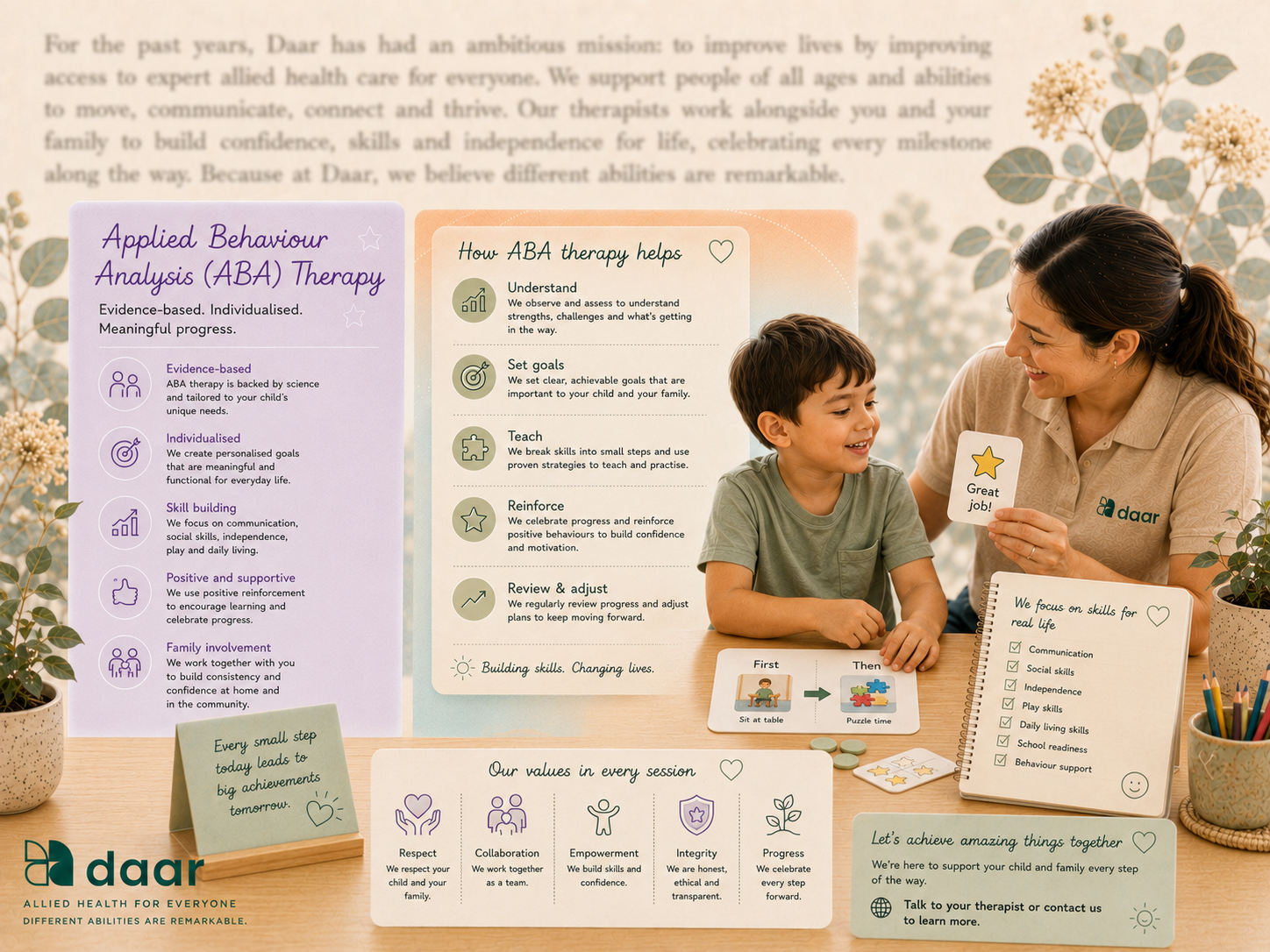
Getting NDIS-related ABA support usually starts with preparation. You want a clear picture of your child’s needs, current challenges, and the skills that would make daily life easier. Reports, assessments, and treatment goals can help organize that picture before any planning conversation.
A behaviour analyst can be useful here because they can explain how goals are selected, how progress will be measured, and what level of support may be appropriate. Family members should also share what matters most at home, school, and in the community.
Helpful steps include:
- Gather assessments that describe your child’s needs
- List priority goals for home, school, and community life
- Ask how progress will be tracked and reviewed
- Include input from family members and key professionals
Conclusion
In conclusion, Applied Behaviour Analysis (ABA) is a highly effective therapy for children with autism and behavioural challenges. Using positive reinforcement and tailored, data-driven strategies, ABA promotes skill development, social interaction, and daily functioning. Choosing the right therapist is key to success. For guidance on accessing ABA therapy through the NDIS, reach out for support—your child's path to growth starts today.
For personalised guidance and support, reach out for a consultation or call daar at 02 9133 2500 today to explore how we can assist you on this journey.
Frequently Asked Questions
What should parents look for in a qualified ABA therapist?
Look for ABA therapists who are supervised by a board certified behaviour analyst. A qualified BCBA typically has a master’s degree, certification standards linked to the Board-Certified Behaviour Analyst Certification Board, and experience creating individualised goals. Just as important, make sure the provider feels like a good fit for your child and family.
How does ABA differ from other behavioural interventions?
ABA principles focus on observing behaviour closely, identifying what happens before and after it, and using data to guide behaviour modification. Unlike some broader approaches, behaviour analysis uses measurable goals, structured teaching, and reinforcement. It can also be part of intensive behavioural intervention when a child needs consistent, high-frequency support.
How long does it take to see results from ABA therapy?
Results from an ABA program vary by target behaviour, the child’s ability level, and how often therapy is delivered. Some small changes may appear sooner, while bigger goals take longer. Early intervention can help, but steady behaviour change usually depends on consistent teaching, practice, and regular review of progress.
.svg)




.svg)