
.png?width=48&height=48&name=Group%201%20(3).png)























1 July, 2026

12 ABA Techniques: Mastering Analysis Behaviour Analysis

Key Highlights
- ABA therapy is an evidence-based approach that supports people across the autism spectrum through structured, goal-based teaching.
- Many aba techniques focus on positive reinforcement to build communication, learning, and social skills over time.
- Providers often target daily living skills such as dressing, hygiene, transitions, and following routines.
- Programs can be adapted to a child’s individual needs, interests, and current strengths.
- Common methods include DTT, PRT, NET, PECS, task analysis, and antecedent supports.
- Strong ABA planning also depends on qualified professionals, family input, and ethical care.
Introduction
Applied behaviour analysis, often called ABA therapy, is a structured and practical approach used to support autistic children and others with developmental needs. In autism spectrum disorder care, it focuses on teaching helpful skills, reducing unsafe or disruptive actions, and improving independence in daily life. Rather than using one fixed method, ABA can include several teaching styles, from highly structured lessons to play-based routines. The goal is simple: help each child learn skills that matter in real situations.
Evidence-Based Applications of ABA for Autism
Behaviour analysis is used in autism care to understand why specific behaviours happen and what supports positive change. Practitioners look at what comes before a behaviour, the behaviour itself, and what follows it. That process helps shape ABA interventions that are measurable and practical.
These effective interventions can support communication, learning, safety, and independence. Research also shows broader value for mental health and behaviour support across settings. To see how this applies in real life, it helps to look at the kinds of conditions and age groups ABA can support.
Types of Conditions ABA Can Help Address
ABA is most closely linked to autism, where it improves communication, social skills, school readiness, and self-care. It also addresses behaviours like aggression, tantrums, refusal, and self-injury by identifying their causes and teaching safer alternatives.
Beyond autism, behaviour-based methods are used for broader mental health issues and health behaviour change. They help with depression, anxiety, psychosis, chronic illness management, and fear-based avoidance. Related therapies are also used to boost treatment adherence and coping skills in various settings.
Behavioural approaches have been applied to substance use disorders and impulsive behaviours as well. Plans are tailored to each person’s goals, symptoms, resources, and support system—an individualised approach especially important for children and teens.
Role of ABA in Supporting Children and Adolescents
For children and adolescents, ABA therapy often focuses on skills that improve day-to-day functioning. That can include following directions, communicating needs, joining play, managing transitions, and learning classroom routines. Many goals center on social skills, safety, and independence.
Early intervention is often emphasised because younger children may benefit from focused teaching during key developmental years. Therapy sessions usually begin with assessment, observation, and goal setting. A behaviour analyst then designs a plan around the child’s strengths, current level, and family priorities.
Just as important, good care should reflect individual needs rather than pushing one standard program. Some children do better with structured table work, while others respond more to play, natural routines, or visual supports. Those differences lead directly into the core ABA methods used in autism intervention.
Core ABA Therapy Techniques Used in Autism Intervention
Applied behaviour analysis includes a range of ABA therapy techniques, not just one teaching style. Some methods use structured teaching with repeated practice, while others build learning into play, home routines, or social interaction. The shared goal is steady, positive behaviour change.
Most ABA interventions are chosen after assessment and adjusted over time. Common examples include discrete trial training, pivotal response treatment, and natural environment teaching. Each one teaches skills in a different way, which makes it easier to match support to a child’s learning style and needs.
Discrete Trial Training (DTT) Explained
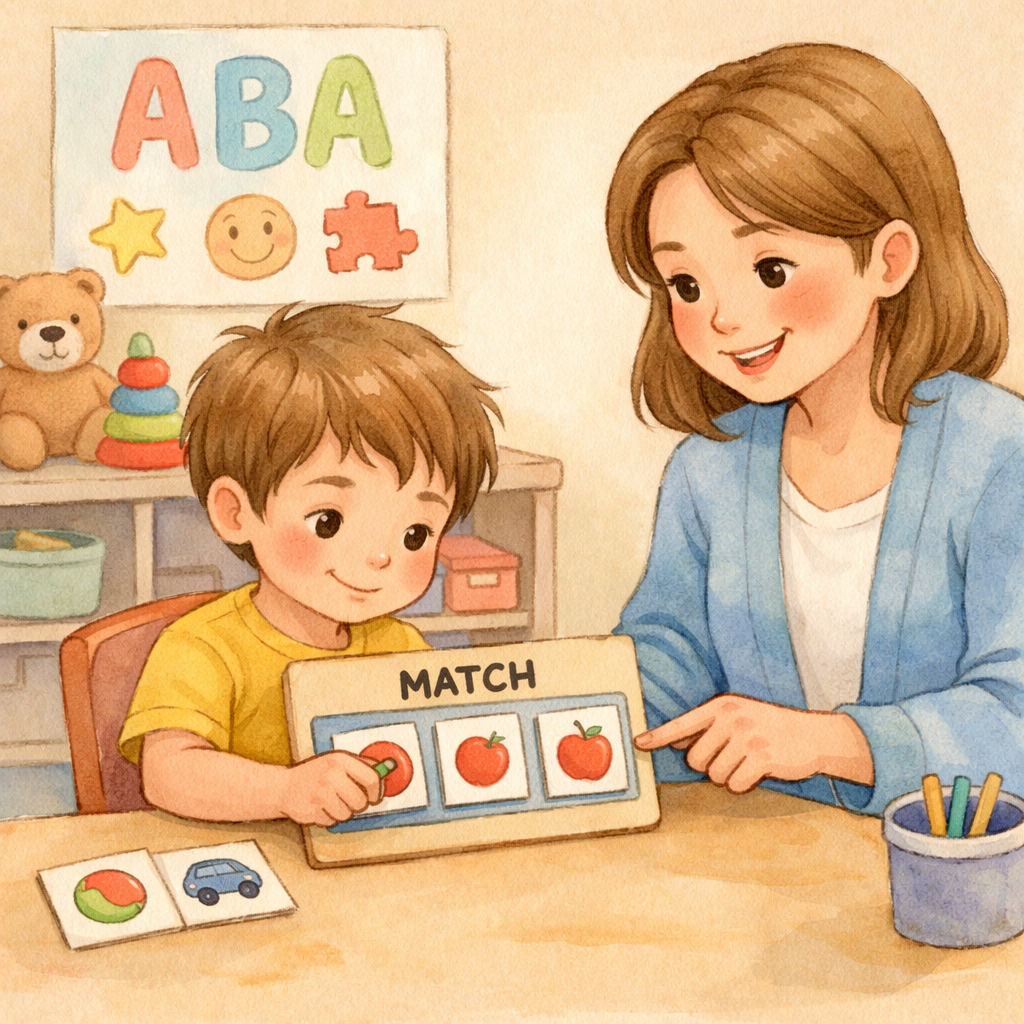
Discrete trial training is one of the most structured forms of ABA therapy. It breaks learning into small parts and teaches one step at a time. A therapist gives a clear instruction, the child responds, and the response is followed by feedback or reinforcement. That pattern is repeated to build accuracy.
This method is often used for specific behaviours or early learning targets that need clear practice. For example, a child might learn to label an object, follow a one-step direction, or complete part of a daily task. Repetition helps strengthen the desired behaviour.
In simple terms, this shows how applied behaviour analysis works: observe a response, shape it with consequences, and measure progress. DTT can be helpful when a child benefits from routine, predictability, and short teaching opportunities. Other children may need a more natural style, which leads to PRT.
Using Pivotal Response Treatment (PRT)
Pivotal response treatment is a more child-led approach built on ABA principles. Instead of relying mainly on table work, it uses motivation, choice, and natural interaction to teach broader skills. The idea is that progress in key areas can improve learning across many situations.
A therapist may follow the child’s interests and turn that moment into teaching. Positive reinforcement is tied directly to the activity. If a child asks for a toy appropriately, getting access to that toy becomes the reward. That makes learning feel meaningful rather than forced.
Because it is flexible, pivotal response treatment can fit many social situations and routines. It may be especially useful for children who learn best through play or need support that reflects their unique needs. Another naturalistic option is NET, which brings teaching into everyday environments.
Natural Environment Teaching (NET) in Action
Natural environment teaching uses ordinary activities as teaching moments. Instead of limiting learning to a clinic table, aba therapy is carried into playtime, mealtime, school tasks, and family routines. This helps children practice skills where they actually need them.
One major strength of natural environment teaching is the generalisation of skills. A child who can ask for help during a session may still struggle at home or in class. NET targets that gap by teaching in various settings, so the skill becomes more useful and more consistent.
It can also reduce the feeling that learning only happens during therapy time. Asking for a snack, taking turns in a game, or cleaning up after an activity can all become part of instruction. From there, many programs expand into advanced methods that support everyday independence.
Advanced ABA Methods Supporting Everyday Skills
Once core learning is in place, many ABA therapy techniques shift toward everyday independence. The focus often moves to daily living skills such as dressing, toileting, hygiene, snack preparation, and following home routines. These areas matter because they shape confidence and participation.
Skill development at this stage is still individualised. Some children may also receive support from occupational therapy or speech services, depending on their individual needs. Within ABA, methods like PECS, task analysis, and antecedent-based planning are often used to make daily life more manageable.
Implementing Picture Exchange Communication System (PECS)
The picture exchange communication system is used to help children communicate by handing over or selecting pictures. For some children on the autism spectrum, this can reduce frustration and create a clear way to request items, activities, or help. It supports communication skills when spoken language is limited or still developing.
As part of aba interventions, PECS can be linked to specific behaviours such as requesting, choosing, or initiating interaction. The goal is not just handing over a card. The goal is meaningful communication that works in daily settings.
|
PECS Use Area |
Example in Practice |
|---|---|
|
Requesting items |
Child gives a picture of a snack to ask for crackers |
|
Requesting activities |
Child selects a picture for blocks, swing, or puzzle |
|
Transition support |
Child uses a picture to understand what comes next |
|
Behaviour support |
Child communicates a need instead of crying or grabbing |
Task Analysis to Build Independence
Task analysis breaks complex activities into smaller, teachable steps. This makes daily living skills less overwhelming and easier to learn. For example, instead of saying “Get ready for bed,” the task is divided into simple actions, such as getting the toothbrush, adding toothpaste, brushing, rinsing, and putting items away.
This structured approach supports skill development and tracks progress. It also helps adults identify where extra support is needed. Since children learn differently, task analysis should be tailored to each child—some may need prompts or visual aids, others more practice. This method encourages independence. Adjusting the environment in advance can also help prevent problem behaviours.
Antecedent-Based Interventions for Positive Change
Antecedent-based interventions address factors before a behaviour occurs. Instead of reacting to challenges, therapists modify the environment to prevent triggers like stress or confusion.
For instance, a child struggling with transitions may benefit from a visual schedule, countdowns, or simpler instructions. Adjusting noisy settings, unclear demands, or sudden changes can ease participation and reduce problem behaviours.
This approach promotes positive behaviour by setting the child up for success. While it doesn’t replace teaching new skills, it makes learning smoother and safer. Once you understand these strategies, the next step is selecting the right program and professionals to guide them.
Selecting the Right ABA Program and Behaviour Therapy Professionals
Choosing among aba programs starts with fit, not just availability. Parents should ask how goals are selected, how progress is measured, where services take place, and whether the plan matches the child’s real needs. Strong programs explain their methods clearly and adapt them when progress or priorities change.
It also helps to ask who supervises care. Qualified behaviour analysts and aba practitioners should work within broader health services, communicate well with families, and follow ethical considerations such as dignity, consent, and individualised planning. Those basics matter just as much as the teaching method itself.
What Qualifications Should a Behaviour Analyst Have?
A behaviour analyst should have formal training in behaviour science, assessment, intervention design, and data-driven decision-making. Families often seek certified analysts to supervise treatment, set goals, and review progress—supervision is vital for safe, effective care.
Parents should ask about the analyst’s experience with their child’s age, communication level, and support needs. Good practice includes collaborating with caregivers and other professionals like speech or occupational therapists. ABA works best when integrated into the child’s overall care plan.
Ethical practice is essential: respecting autonomy, maintaining confidentiality, avoiding one-size-fits-all approaches, and choosing meaningful goals. Credentials matter, but so does how the clinician listens, explains, and adapts support over time.
Questions Parents Should Ask When Choosing ABA in Australia

Even if you’re new to ABA therapy, asking direct questions makes it easier to evaluate. Families should know how goals are set, who supervises, and how progress is measured. Top ABA programs should answer clearly.
Consider asking:
- How do you assess my child’s needs before starting?
- Who supervises therapy, and what are their qualifications?
- How do you track progress at home, school, or other settings?
- How do you handle ethics and family consent?
- How do you coordinate with other health services?
These questions help you focus on quality over marketing. They also reveal whether the provider values partnership, flexibility, and real results. Transparent answers show the program prioritises your child—not just a service model.
Conclusion
In summary, applying ABA therapy techniques can greatly improve life for individuals with autism. Evidence-based, personalised approaches help parents and caregivers create supportive environments that encourage learning and independence. Techniques like Discrete Trial Training and the Picture Exchange Communication System provide valuable tools for addressing challenges and promoting positive behaviour. For best results, work closely with qualified behaviour analysts.
Ready to support your child’s development? Contact our experts for a consultation or call daar at 02 9133 2500 and take the next step toward a brighter future.
Frequently Asked Questions
How effective is ABA therapy for autism?
ABA therapy is widely recognised as one of the most studied and effective interventions for the autism spectrum. Its success depends on goals, provider quality, and fit for the child. In therapy sessions, positive reinforcement and careful tracking help build useful skills over time.
Can ABA techniques be adapted for use at home?
Yes. Many ABA techniques work well at home because behaviour therapy often builds on daily routines like meals, play, dressing, and cleanup. Positive reinforcement can be used in various settings, which helps children practice skills where they naturally spend most of their time.
How can someone become a certified behaviour analyst in Australia?
The compiled information explains that behaviour analysts usually complete advanced study, supervised training, and a certification exam. Families should look for a certified behaviour analyst with strong professional practice and ethical practice skills who can also work well with caregivers and other health professionals.
.svg)




.svg)