
.png?width=48&height=48&name=Group%201%20(3).png)























25 August, 2026

The Benefits of Applied Behaviour Analysis for Kids
Key Highlights
- Applied behaviour analysis is a structured way to understand behaviour and support growth in autistic children.
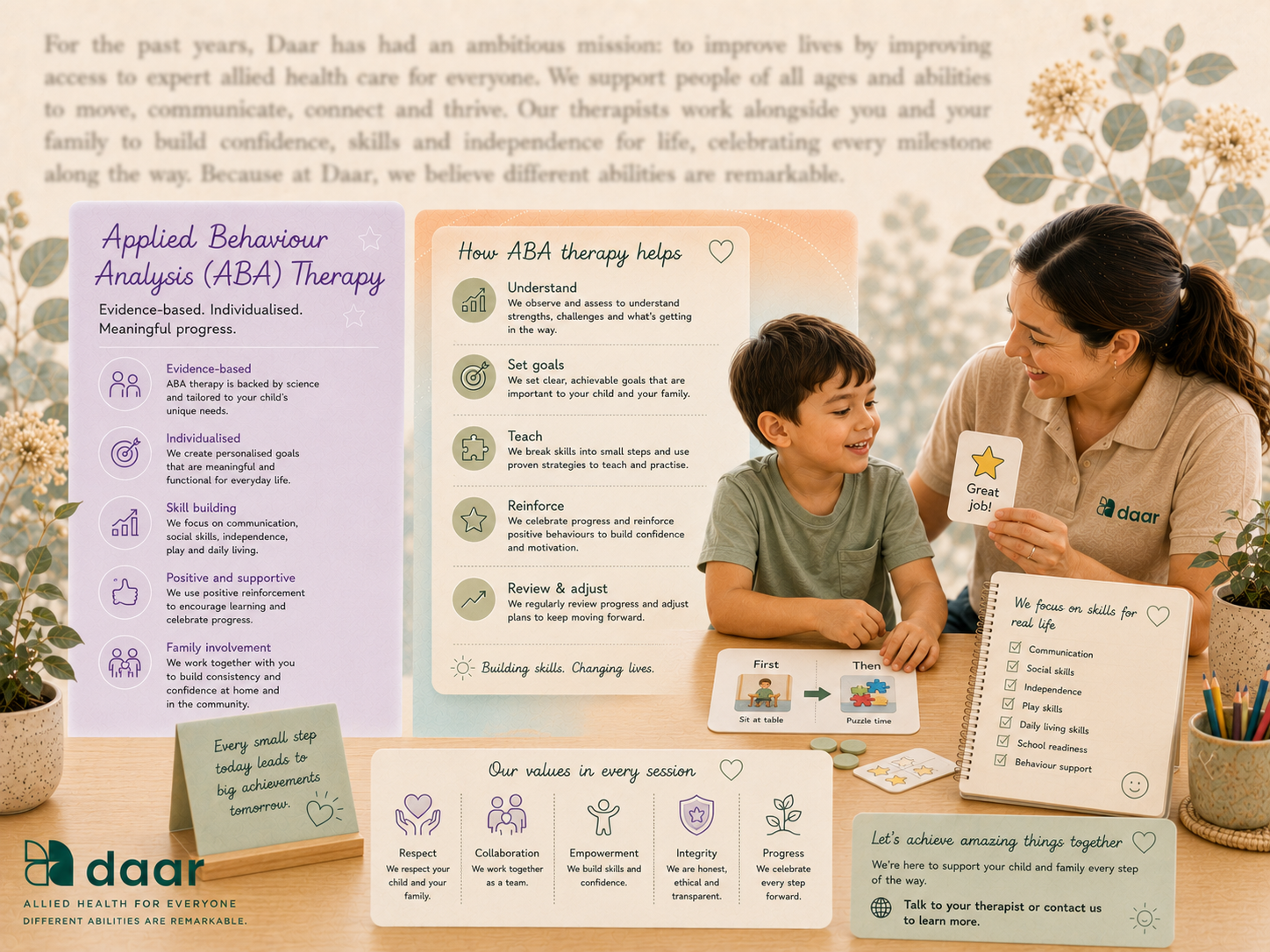
- ABA therapy uses positive reinforcement to encourage helpful actions and build new skills over time.
- It can support communication, routines, safety, and daily tasks through clear, repeated teaching.
- Good ABA is individualized, strengths-based, and respectful of neurodiversity.
- A behaviour analyst tracks progress and adjusts support using observation and data.
- Families play an important role in choosing goals and monitoring therapy quality.
Introduction
Applied behaviour analysis is a practical approach that helps children learn useful skills and support positive behaviour change. For many families, it becomes one part of a wider plan for development, learning, and mental health. The goal is not to change who a child is. It is to understand behaviour, respond in helpful ways, and teach skills that matter in daily life. If you are exploring support options, ABA can be easier to understand when you break it into clear parts.
Understanding Applied Behaviour Analysis (ABA)
Applied behaviour analysis is a form of behaviour therapy that looks at what happens before and after behaviour. This behaviour analysis helps adults understand why a child may repeat certain actions and how learning takes place.
In practice, ABA principles focus on teaching skills, encouraging helpful responses, and reducing harmful patterns when needed. A behaviour analyst studies triggers, consequences, and progress, then builds a plan that fits the child. That is how applied behaviour analysis works: by using structured teaching and consistent support.
Definition and Principles of ABA Therapy
At its core, applied behaviour analysis is a method for understanding behaviour and teaching meaningful skills. ABA therapy is based on the idea that behaviour is influenced by what happens around a child. When adults notice patterns, they can shape better learning opportunities.
A behaviour analyst looks at triggers, actions, and outcomes. From there, ABA principles are used to support behaviour change in a clear, measurable way. Helpful behaviours are encouraged so they happen more often. Harmful or disruptive patterns are approached by teaching safer, more useful alternatives.
Just as important, strong ABA therapy should be individualized. Goals should reflect the child’s strengths, interests, and needs, not a one-size-fits-all plan. Safe practice focuses on useful skills, family involvement, and respect for neurodiversity rather than pushing children to appear non-autistic.
How ABA Works for Children
ABA therapy works by breaking learning into manageable steps. For young children, this often means short activities, repetition, and clear feedback. The focus stays on specific behaviours that can be taught, practiced, and used in real situations.
Through behaviour analysis, adults look at what a child does, what may trigger it, and what happens next. That information guides ABA techniques such as reinforcement, prompting, and task breakdown. These methods can help children learn requests, routines, and safety skills.
Over time, the child practices skills until they become easier and more independent. ABA therapy is often most helpful when the goals are meaningful, the sessions are engaging, and the support matches the child’s pace. Families should also be involved, because learning works best when it carries into everyday life.
Role of the Applied Behaviour Analyst
A behaviour analyst helps design, guide, and review a child’s program. This professional begins with behaviour assessment, looking at skills, support needs, and the reasons certain actions may happen. The goal is to create a plan that is useful and realistic for the child and family.
During therapy, ABA therapists and supervisors rely on data collection to track what is improving and what needs adjustment. That may include how often a behaviour happens, how well a child completes a routine, or how much support is still needed.
When families ask about qualifications, they often look for a certified behaviour analyst or someone working under proper supervision. Training, experience, and ethical practice matter. Parents should feel comfortable asking how goals are chosen, how progress is measured, and whether they can be involved in sessions.
Key Techniques Used in ABA Therapy
ABA therapy uses several teaching methods to support behaviour change and skill acquisition. These tools are chosen based on the child’s goals, learning style, and daily needs. Some methods are highly structured, while others fit naturally into routines and play.
Common ABA techniques include positive reinforcement, prompting, fading, shaping, behaviour chaining, and discrete trial training. Each one helps teach a response, strengthen a new habit, or build independence step by step. The next sections explain how these strategies work in practice.
Positive Reinforcement and Motivation
Positive reinforcement is one of the best-known ABA strategies. It works by following a desired behaviour with something the child values, which makes that action more likely to happen again. This supports positive behaviour clearly and encouragingly.
For example, a child might receive praise, a favorite activity, or access to a preferred item after completing a task or asking for help. Used well, positive reinforcement supports behaviour change without punishment. It helps the child connect effort with success.
Common reinforcers may include:
- verbal praise for a desired behaviour
- a short preferred activity after finishing a step
- access to a favorite toy or item
Motivation matters here. Rewards should match the child’s interests and feel meaningful, not forced.
Prompting and Fading Strategies
Prompting helps a child begin or complete a task by giving a cue. In ABA therapy, that cue might be verbal, physical, or visual. It gives the child a clear first step when a skill is still new or uncertain.
Once the child starts responding more consistently, fading begins. This means reducing the help little by little so the child can act more independently. In behaviour analysis, prompting and fading are often paired because they support learning without creating long-term reliance on adult cues.
These strategies are useful for specific behaviours such as following a routine, using a communication card, or completing a self-care task. The aim is not endless support. The aim is steady progress toward independence, with help only when it is truly needed.
Shaping and Behaviour Chaining
Some tasks are too big to teach all at once. That is where shaping and behaviour chaining help. In ABA therapy, shaping means rewarding progress toward a skill, even before the full behaviour is mastered. Small wins matter because they lead to bigger gains.
Behaviour chaining is used when a task has several parts. The adult breaks the activity into small steps and teaches them in order. This works well for routines such as packing a school bag, getting dressed, or completing morning tasks.
Together, shaping and behaviour chaining help children build new skills in a manageable way. Instead of expecting instant success, the child learns one part at a time. That steady approach can reduce frustration and make practice feel more achievable in everyday settings.
Common Goals of ABA Therapy for Kids
ABA therapy goals should be based on the child’s needs, strengths, and family priorities. Good behaviour therapy does not follow a standard list for every child. Instead, it focuses on what will be most helpful and meaningful in daily life.
Many plans aim to increase positive behaviours, improve communication, build routines, and reduce harmful actions. The best goals are practical, measurable, and relevant to real situations. From there, therapists can target skills that support connection, safety, and independence.
Improving Communication Skills
Communication is often a major focus in ABA therapy. Some children need help asking for what they want, making choices, or expressing discomfort. ABA intervention can support communication skills by teaching clear, repeatable ways to send and receive messages.
For young children, that may begin with very simple requests. A child might learn to ask for a snack, point to a preferred toy, or use a picture system. These early language skills can reduce frustration and create more successful interactions during the day.
As skills grow, goals may expand to following directions, answering simple questions, or using more words and symbols. The purpose is not to force one communication style. It is to help the child communicate in ways that are useful, understood, and meaningful in real life.
Enhancing Social Interaction
Social interaction can be hard for some children on the autism spectrum, especially when situations move quickly or expectations are unclear. ABA techniques can break social skills into teachable parts so practice feels less overwhelming.
That might include taking turns, responding to a greeting, joining a shared activity, or noticing another person’s cues. Some programs may also work on skills related to eye contact, but goals should stay respectful and meaningful rather than forcing children to act in a neurotypical way.
The best support helps children connect in ways that work for them. Social growth is not about masking identity. It is about building comfortable, useful interaction skills that can support friendships, learning, and participation at home, school, and in the community.
Reducing Challenging Behaviours
When a child shows challenging behaviour, the first question should be why it is happening. Behaviour may serve a purpose, such as escaping a task, getting attention, or communicating a need. Good behavioural intervention starts by understanding that purpose.
In ABA therapy, the focus should not be on stopping every unusual action. The real target is harmful or disruptive behaviour that affects safety, learning, or daily life. Once the reason is clearer, adults can teach a safer replacement skill and reasonably support behaviour change.
This matters because simply reacting to negative behaviours is rarely enough. If a child screams to communicate, the answer is not just silence. It is helping the child learn a more effective way to express the same need while keeping support positive and respectful.
How ABA Therapy Supports Autistic Children
ABA therapy can help autistic children learn practical skills through structure, repetition, and clear teaching. It is also used with children who have developmental disabilities. Through behavioural analysis, therapists look at what supports learning and what may be making daily tasks harder.
For children with autism spectrum disorder, support often centers on communication, routines, safety, and independence. ABA is not right for every child, but it may fit well when a child benefits from predictability, step-by-step learning, and focused help with meaningful goals.
Addressing Core Symptoms of Autism
Children with autism spectrum disorder may need support with communication, flexibility, routines, or responding to everyday demands. Behaviour analysis helps identify where the child is struggling and what kind of teaching may improve participation.
An ABA intervention can target skills linked to daily functioning, such as asking for help, following a routine, or managing transitions. For some families, early intervention is especially appealing because it introduces support during early childhood, when routines and learning habits are still developing.
At the same time, therapy should protect a child’s wellbeing. Mental health and emotional safety matter just as much as progress data. Support should build useful skills without punishing harmless autistic traits or pushing children to hide who they are.
Tailoring Interventions to Individual Needs
One of the most important parts of good ABA is personalization. ABA treatment should be based on individual needs, not a fixed program used with every child. What works for one family may not work for another.
That process usually starts with behaviour assessment. ABA therapists look at the child’s current abilities, support needs, interests, and environment. They should also consider family priorities, because the most useful goals are the ones that make life easier and more meaningful at home and in the community.
This is one way ABA can differ from broader autism treatment approaches. It focuses closely on observable behaviour, measurable goals, and step-by-step teaching. Even so, the child’s needs should remain at the center, with room for choice, strengths, and neurodiversity-respecting practice.
Fostering Independence and Daily Living Skills
Many families look to ABA therapy for help with daily living skills. These are the practical tasks that support independence in everyday life, such as dressing, packing a bag, or getting ready for school. Small improvements here can make a big difference.
A common strategy is task analysis. This means breaking a routine into clear, teachable parts so the child can learn one step at a time. That structure is useful when a task feels too large or confusing at first.
Examples of goals may include:
- getting dressed using a simple sequence
- packing a school bag independently
- following a morning routine with fewer reminders
As these routines improve, children often gain more confidence and freedom in everyday life.
Benefits of ABA Therapy for Children
The benefits of ABA therapy depend on the child, the goals, and how well the approach is delivered. When support is individualized and respectful, it can promote useful behaviour change and make everyday routines easier for children and families.
For some children, early intervention helps build foundational skills sooner. Benefits may include better communication, safer behaviour, stronger routines, and more independence. Over time, those gains can support participation, reduce stress, and improve quality of life at home, school, and in the community.
Evidence-Based Outcomes
ABA therapy is widely described as evidence-based, and research has shown positive effects in some areas. At the same time, summaries of the evidence note that more high-quality research with larger groups is still needed. So, the picture is promising, but not simple.
Current findings suggest behaviour analysis may help some children with outcomes related to communication, adaptive functioning, and skill acquisition. It can be especially useful when goals are specific and measurable, such as requesting items or learning a routine.
Here is a simple overview:
|
Area of focus |
Reported outcomes |
|---|---|
|
Communication |
Some children improve basic requesting and other functional communication skills |
|
Daily routines |
Progress may be seen in dressing, packing, and similar adaptive tasks |
|
Structured learning |
Clear gains are more likely with specific, step-based goals |
|
Overall evidence |
Positive effects are reported, but stronger research is still needed |
Long-Term Improvements in Behaviour
Long-term progress in ABA therapy usually depends on whether the child is learning skills that remain useful outside sessions. Lasting behaviour change is more likely when goals fit real life and are practiced across settings, not only in a therapy room.
A desired behaviour may start small, like asking for help or following one step in a routine. With repetition and support, that response can become part of daily life. Early intervention may help some children build these patterns sooner, especially when families are involved from the start.
The aim is not short-term compliance. It is growth that supports children now and into later stages of life, including the transition toward adolescence and young adults' needs. When therapy is meaningful, children can carry those skills into school, home, and community routines.
Empowering Families and Caregivers
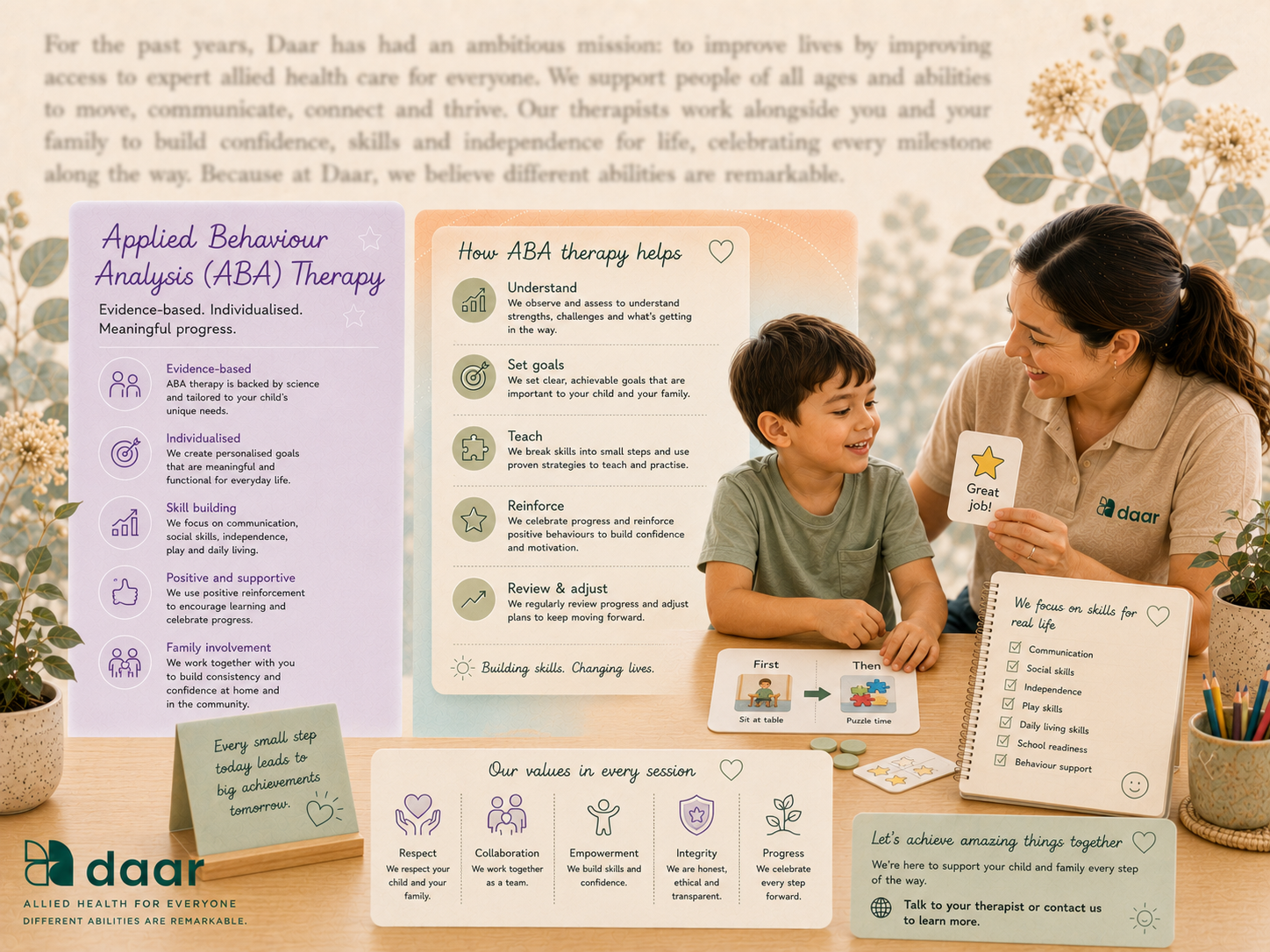
Families and caregivers are a key part of successful ABA therapy. They often know the child’s needs, triggers, and strengths better than anyone else. Their input helps shape goals that are practical and relevant, not just clinically neat.
In good behavioural intervention, parents should be encouraged to attend sessions, ask questions, and take part in planning and review. They should understand what strategies are being used and how progress is measured. That makes it easier to support learning during normal routines at home.
If you are looking for ABA services near you, start by meeting providers in person when possible. Ask how they choose goals, how they measure progress, whether families can be present, and what qualifications the team has. A provider should listen, explain clearly, and welcome your involvement.
Conclusion
In summary, Applied Behaviour Analysis (ABA) offers a wealth of benefits for children, especially those on the autism spectrum. By focusing on evidence-based techniques and individualized interventions, ABA empowers kids to develop crucial skills such as communication, social interactions, and independence. The positive reinforcement strategies not only help reduce challenging behaviours but also foster a supportive environment for families and caregivers. Understanding the principles of ABA and its application can lead to long-term improvements in a child's behaviour and overall quality of life.
If you’re interested in learning more about how ABA can benefit your child, don’t hesitate to reach out for a consultation or call daar at 02 9133 2500.
Frequently Asked Questions (FAQ)
Understanding applied behaviour analysis (ABA) can lead to numerous benefits for children with autism spectrum disorder. One common question is how ABA techniques differ. Traditional ABA focuses on structured interventions, while modern ABA incorporates a range of flexible methods tailored to individual needs. Another frequent inquiry involves the duration of therapy sessions. Typically, early intensive behavioural intervention can span several hours per week, depending on the child’s specific behaviours and goals. Finally, parents often ask about the role of certified behaviour analysts, who play a critical part in developing effective personalized plans.
Is ABA Therapy Effective for Children and Youth with Autism?
ABA therapy is considered an evidence-based approach, and research shows positive effects for some children on the autism spectrum. It may support behaviour change, communication, and routines. Still, outcomes vary, and stronger research is needed. Early intervention can be helpful when goals are meaningful and individualized.
What Qualifications Are Required to Become an Applied Behaviour Analyst?
Families often look for a certified behaviour analyst or supervised ABA therapists with solid training and ethical standards. Some professionals complete a master of applied behaviour analysis before pursuing certification. Board-certified behaviour analysts are a common credential. Training routes vary by location and university, including programs such as those at University of California campuses.
Are There Any Controversies or Criticisms Surrounding ABA Therapy?
Yes. ABA therapy has faced controversies, especially around traditional aba approaches that used punishment or pushed children to appear neurotypical. Modern aba should avoid that. Safe practice protects mental health, respects neurodiversity, and focuses on meaningful skills, strengths, and positive support rather than forcing conformity.
.svg)




.svg)