
.png?width=48&height=48&name=Group%201%20(3).png)























25 August, 2026

Improving Lives: Positive Behaviour Support for Autism (ASD)
Key Highlights
- Positive behaviour support helps children across the autism spectrum by understanding why challenging behaviour happens.
- The focus is not just stopping behaviour, but improving mental health, communication, and quality of life.
- Early intervention gives children the right support while skill development is still growing.
- Families and schools can use practical strategies like routines, visual tools, and positive reinforcement.
- Therapy services and behaviour support plans should match each child’s strengths, triggers, and individual needs.
- In Australia, support can include therapists, specialist services, and NDIS-funded behaviour support services.
Introduction
Supporting a child with autism spectrum disorder can feel hard when daily routines are affected by distress, frustration, or unsafe actions. Still, with the right approach, real progress is possible. Positive behaviour support looks beyond the surface and helps you understand what your child may be trying to communicate. For families of children with developmental disabilities, this approach builds positive behaviour by teaching useful skills, adjusting the environment, and creating support that helps children participate more confidently in everyday life.
Common Behaviours of Concern in Children with Autism (ASD)
Children with autism spectrum disorder may show challenging behaviour when they feel overwhelmed, misunderstood, or unable to express what they need. Common concerns can include emotional outbursts, physical acting out, repetitive behaviour, trouble with transitions, and difficulty joining social activities.
These behaviours often reflect unique challenges with communication, sensory input, or coping skills rather than intent to misbehave. They can also affect mental health, family routines, and learning. That is why early intervention matters. The next sections explain how to identify triggers and respond in ways that are supportive and practical.
Identifying Challenging Behaviours and Triggers
The first step is to observe what happens before, during, and after challenging behaviour. Functional and behaviour analysis help shift the question from “How do I stop this?” to “What is my child telling me?” This approach leads to more effective and respectful support.
Common factors include communication difficulties, sensory discomfort, or social stress. Some children need extra time to process language, move at their own pace, or adjust to change. Recognising patterns makes support clearer and more consistent.
Watch for signs such as:
- Struggles with transitions or changes in routine
- Distress in noisy, bright, or crowded places
- Frustration when not understood
- Repetitive actions linked to anxiety or overload
Social, Emotional, and Sensory Difficulties in Autism
Many autistic children have sensory sensitivities, making sounds, lights, textures, or crowded spaces overwhelming. What seems like refusal or agitation is often their way of coping with discomfort. For children with developmental disabilities, these reactions are part of a broader context.
Social situations can be challenging. A child may miss cues, struggle with turn-taking, or feel unsure about others’ expectations, leading to withdrawal, repetitive behaviours, or outbursts when overwhelmed.
Emotional well-being is equally important. When children feel safe and supported, behaviour strategies are more effective. That’s why approaches should address sensory, social, and emotional needs together—not separately.
Effective Positive Behaviour Support Strategies for Autism
Effective positive behaviour support starts with understanding the purpose behind behaviour. A functional analysis helps identify triggers, unmet needs, and patterns so support is based on evidence rather than guesswork. This leads to a behaviour support plan that is practical, strengths-based, and easier for families and schools to use.
The goal is not simple control. It is better communication, safer responses, and improved quality of life. When children learn new ways to cope, ask for help, and manage change, daily life becomes more predictable. Next, we will look at tools that work well at home and at school.
Evidence-Based Techniques for Home and School Settings
At home and school, children often respond best when strategies are clear and consistent. Approaches drawn from applied behaviour analysis can support communication, routines, and adaptive skills without losing sight of the child’s individual needs. The most useful tools are usually simple, repeatable, and easy for adults to carry over across settings.
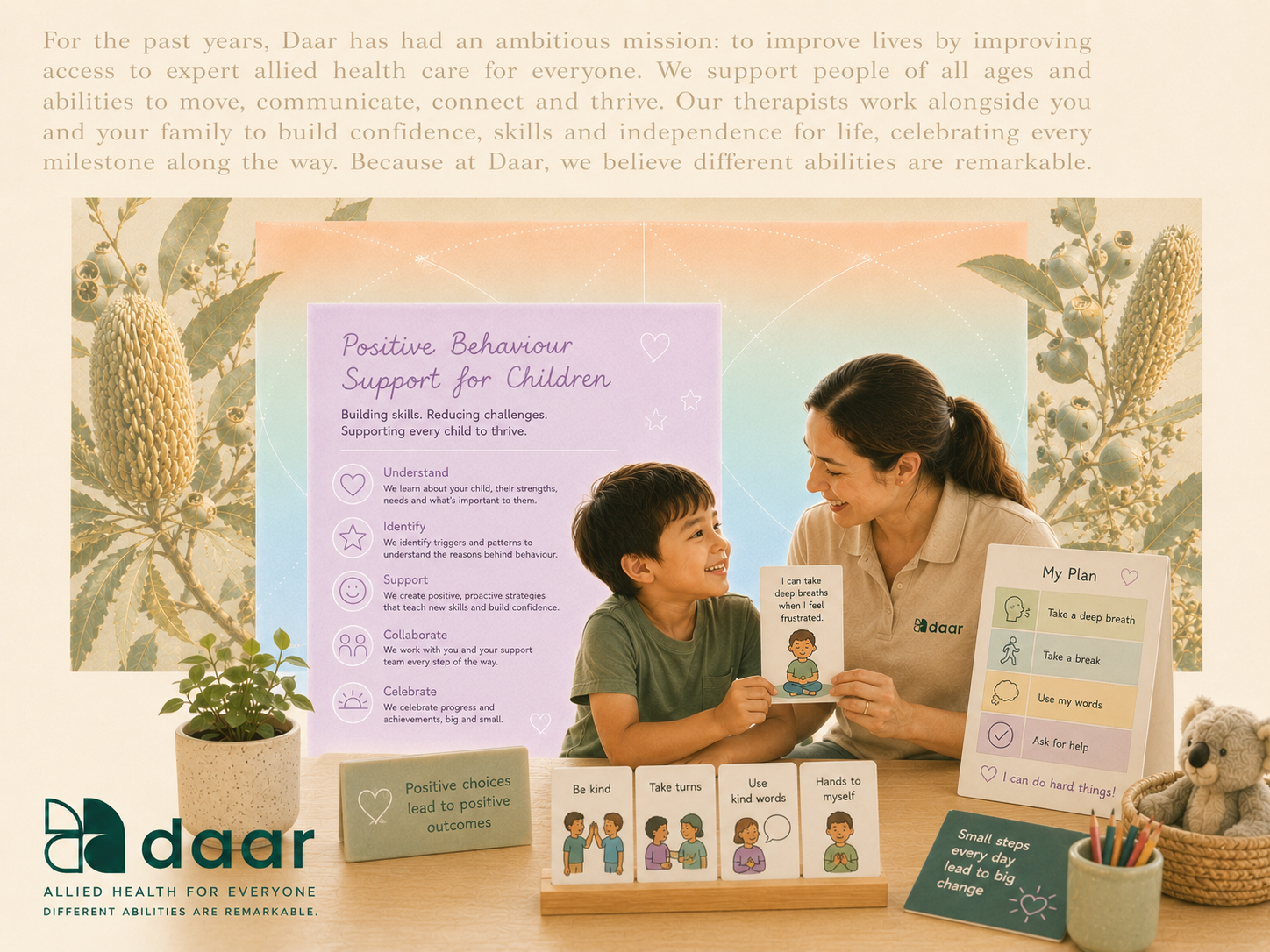
A visual schedule can make the day more predictable. Social stories can explain what happens in a new or confusing situation. Positive reinforcement helps children repeat skills that work well, especially when praise is specific and immediate. These forms of behaviour support can reduce stress around learning, play, and transitions.
|
Strategy |
How it helps |
|---|---|
|
Visual schedule |
Shows daily steps clearly and reduces anxiety around transitions |
|
Social stories |
Prepares a child for a social situation and expected responses |
|
Positive reinforcement |
Encourages desired actions through praise, rewards, or preferred activities |
|
First/Then support |
Builds follow-through by linking a task with a preferred activity |
Tailoring Behaviour Support Plans to Individual Needs
No two children need the same behaviour support plan. What works in one setting may not work in another. Effective support starts with individual needs, including communication style, sensory profile, routines, and strengths—making early intervention especially valuable.
Therapists and families set realistic goals together and build practical communication into daily life. Some children need alternative ways to communicate; others benefit from shorter instructions, more structure, or extra time to learn. Strong plans are simple and practical.
A tailored plan may include:
- clear goals for home, school, and community
- supports for transitions and routines
- teaching safe alternatives to disruptive behaviours
- consistent caregiver strategies
- regular review as the child grows
Role of Therapists and Support Services in Australia
In Australia, families can access help from a range of health professionals, including psychologists, speech therapists, occupational therapists, and behaviour practitioners. These therapy services often work together to understand behaviour, support communication, and improve participation in home and school routines.
Good outcomes usually depend on a strong support network. Behaviour support services are most effective when parents, teachers, therapists, and support workers share the same goals and strategies. The next two sections explain how plans are developed and how families may access help through the NDIS.
How Therapists Create and Implement PBS Plans
PBS practitioners start by gathering insights from those who know the child well. They identify patterns, settings, strengths, and triggers to guide behaviour support, aiming to understand—not judge—the child’s actions.
Therapists then develop practical strategies for daily life, focusing on communication, routines, emotional regulation, and skill-building. Plans also address adaptive behaviours so the child can handle more tasks confidently and with less frustration.
Success depends on a consistent approach. Families, teachers, and support staff receive clear guidance on what to do and how to respond calmly. This unified method improves quality of life and reduces the need for reactive measures.
Accessing Behaviour Support Services and NDIS Guidelines
Families in Australia may be able to access behaviour support services through the NDIS. For young children with developmental delay, early supports may be available without a formal diagnosis through the Early Childhood Approach. This can help you begin therapy services sooner, which is often important when behaviour concerns are growing.
Funding may cover assessments, therapeutic supports, and help with an individualised behaviour support plan. It can also support work with psychologists, speech therapists, occupational therapists, and support workers. These professionals help families build skills, adjust routines, and respond more effectively across settings.
NDIS guidelines also address restrictive practices. These should only be considered as a last resort to prevent harm, must be clearly justified, and must follow authorisation and review requirements. Plans should always aim to reduce and phase out restrictions while building safer, more supportive alternatives.
Conclusion
In conclusion, Positive Behaviour Support (PBS) is a powerful approach that can greatly improve the lives of children with Autism Spectrum Disorder. By using individualised strategies, PBS addresses challenging behaviours and creates a supportive environment for emotional and social growth. Working with qualified therapists ensures families get the guidance they need at home and in school. Embracing PBS can lead to real improvements in autistic children’s daily lives.
If you’re interested in learning more, consider reaching out for a consultation or call daar at 02 9133 2500 for support.
Frequently Asked Questions
What are restrictive practices and when are they used in behaviour support?
Restrictive practices are actions that limit a person’s rights or freedom of movement. In behaviour support, they are only considered in a broader context as a last resort to prevent harm. Behavioural supports should focus on reducing them over time. Aversive procedures, including practices like cold water sprays, are not the goal of PBS.
Which behavioural interventions are most effective for autism?
Effective behavioural interventions for autism often include applied behaviour analysis strategies, positive reinforcement, social stories, and a visual schedule. These approaches work best when they are consistent and tied to skill development. The goal is to teach useful communication, daily living, and coping skills that help in real situations.
How does positive behaviour support improve wellbeing for autistic children?
Positive behaviour support improves wellbeing by teaching adaptive skills, reducing distress, and helping adults respond in a calm, consistent way. It also supports caring relationships and creates a supportive environment where children feel understood. Over time, that can improve participation, confidence, and overall quality of life.
.svg)




.svg)