
.png?width=48&height=48&name=Group%201%20(3).png)























17 August, 2026

A Beginner's Guide to Applied Behaviour Analysis (ABA) Therapy
Key Highlights
- Applied behaviour analysis is a therapy approach based on the science of learning and behaviour.
- ABA therapy helps children with autism spectrum disorder build useful skills and reduce problem behaviours.
- Strong therapy programs are individualised, not one-size-fits-all, and reflect your child’s strengths and needs.
- Positive reinforcement is a core ABA strategy that encourages repeated success.
- A behaviour analyst sets goals, tracks progress and adjusts teaching plans over time.
- ABA can support communication, social, academic, and daily living growth.
Introduction
If you are new to applied behaviour analysis, think of it as a child’s therapy approach that uses simple teaching steps to help learning happen more clearly. It is based on behaviour analysis, which looks at how actions are shaped by what happens before and after them. For children on the autism spectrum, this approach can support communication, learning, and everyday routines. The key idea is practical: teach helpful skills, reduce barriers, and build progress in real-life settings.
How ABA Therapy Works for Children with Autism
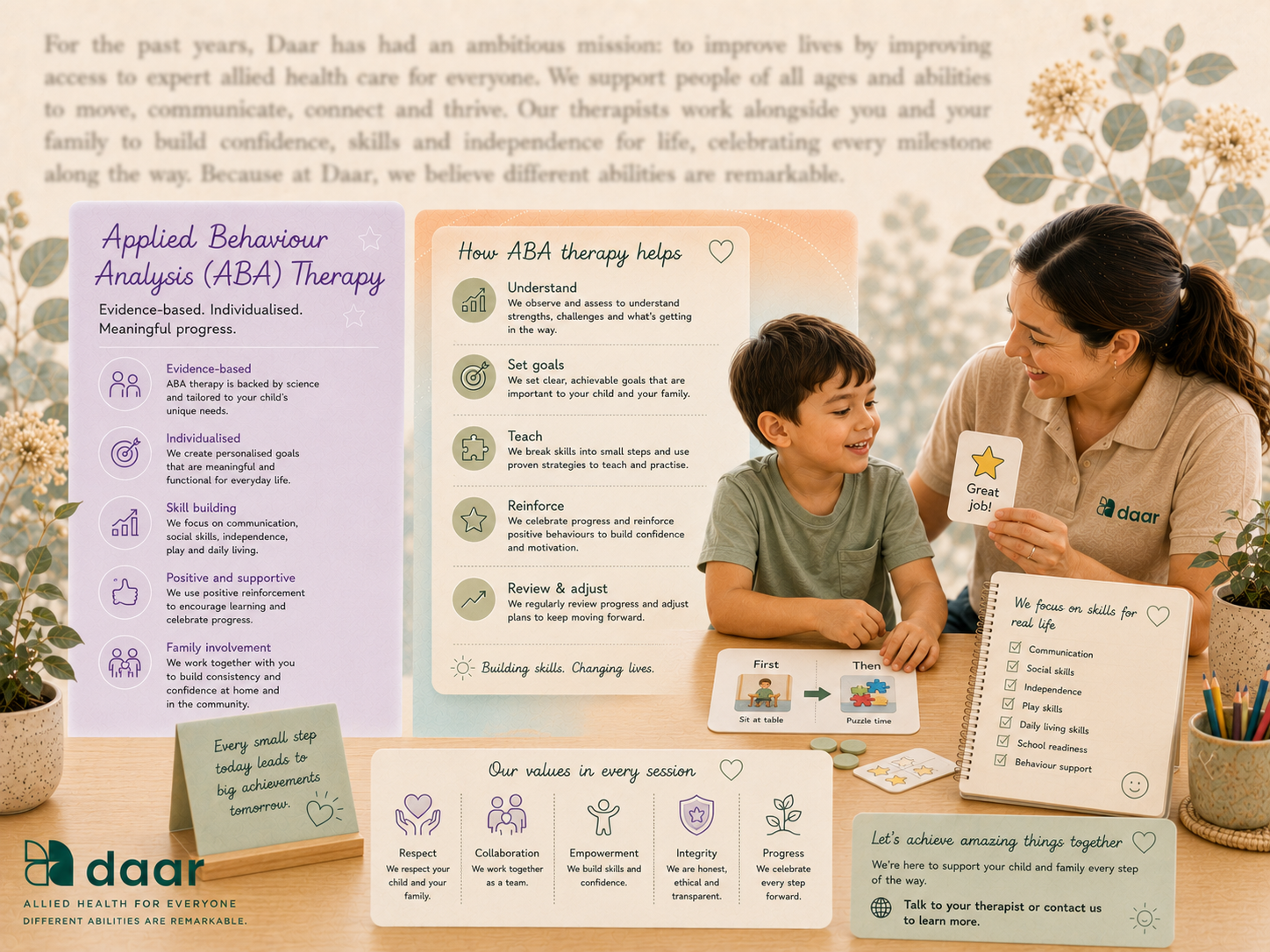
Applied Behaviour Analysis (ABA) therapy is designed to help autistic children develop essential skills through structured methods. By focusing on positive reinforcement, ABA emphasises rewarding desired behaviours, which promotes learning and improves communication skills. With tailored interventions, therapists address specific needs, helping children progress in social skills, daily living functions, and even academic abilities. Techniques like discrete trial training and the Early Start Denver Model are often utilised to create engaging and effective learning environments, fostering better outcomes for children on the autism spectrum.
Typical ABA Therapy Session Structure
A typical ABA therapy session starts with a plan based on your child’s goals. A certified behaviour analyst designs the program, while trained therapists carry out direct teaching. Sessions may take place in a clinic, at home, at school, or in the community.
Next, the therapist works on small targets in a clear order. This may include discrete trial training, where a skill is taught in short, repeated steps. In early childhood, that might mean practicing sounds, following simple directions, or greeting others.
Just as important, learning is not limited to drills. Children also practice skills during play, daily routines, and natural social moments. The therapist collects data during each therapy session, and the supervising analyst reviews progress often. That helps keep teaching useful, enjoyable, and matched to your child’s pace.
Skills Developed Through ABA Therapy
ABA can target many areas that matter in daily life. A behaviour analyst chooses goals based on age, ability, and family input. For autistic children, early teaching often focuses on useful skills that improve independence and support better participation at home, school, and in the community.
Common areas include:
- communication skills, such as using words, sounds, or requests
- social skills, including greeting, turn-taking, and shared play
- motor skills used in play, movement, and routine tasks
- daily living skills like toileting, dressing, or self-care
Over time, therapy may also reduce problem behaviours that block learning. The aim is not to force sameness. It is to help your child gain practical tools, build confidence, and use those tools in real settings. When started early, this structured support can lead to meaningful growth.
Common ABA Techniques Used in Therapy
ABA uses several teaching methods, but they are all grounded in behaviour analysis. Good therapy programs do not rely on one fixed routine. Instead, they combine ABA techniques based on your child’s goals, learning style, and everyday environment.
Two of the best-known forms of ABA are positive reinforcement and the ABC framework. These approaches focus on what happens before behaviour, what the child does, and what follows next. That practical structure is one reason ABA stands apart from broader behavioural interventions. The next sections explain both techniques more clearly.
Positive Reinforcement in ABA
Positive reinforcement is a clear ABA principle for parents. When a child displays a desired skill and immediately receives a meaningful reward—like praise, a favorite toy, a short video, or access to an activity—they’re more likely to repeat the behaviour.
In practice, the therapist identifies a target skill and rewards each successful attempt with something the child values. This connects effort with success, making learning motivating and predictable.
For your child, this means new skills develop through repeated positive experiences. As practice continues, helpful behaviours become stronger and more natural. Used effectively, positive reinforcement can improve communication, learning, and daily routines.
Antecedent-Behaviour-Consequence (ABC) Approach
Understanding the antecedent-behaviour-consequence (ABC) approach is essential in applied behaviour analysis. This technique helps behaviour analysts identify what happens before a behaviour (antecedent) and what follows it (consequence). By examining these components, practitioners can implement effective strategies to promote positive behaviours and enhance social skills among autistic children. The ABC model focuses on reinforcing desired actions, guiding children toward developing useful skills while addressing challenging behaviours in a supportive, constructive manner, fostering their overall growth and quality of life.
Comparing ABA Therapy With Positive Behaviour Support (PBS)
Applied Behaviour Analysis (ABA) therapy and Positive Behaviour Support (PBS) share a common goal of enhancing the quality of life for individuals, especially those on the autism spectrum. While ABA employs structured techniques, such as discrete trial training, to teach specific skills, PBS focuses on understanding the context of challenging behaviours and promoting positive alternatives. Each approach tailors interventions to fit the unique needs of the child, making it crucial to find an effective balance for individual growth and happiness.
Key Differences and Overlaps
Understanding how applied behaviour analysis (ABA) therapy and positive behaviour support (PBS) intersect can enhance therapeutic effectiveness. Both approaches prioritise the child’s needs and focus on improving communication skills and social interactions. While ABA often emphasises discrete trial training and structured interventions, PBS tends to favor a more holistic perspective, addressing the broader context of behaviour. Overlaps include attention to positive reinforcement, aiming to reduce problem behaviours while fostering skills development. These methodologies can work together to create a comprehensive therapy program tailored for each autistic child’s unique strengths.
Which Approach Is Right for Your Child?
Choosing the right therapy starts with your child’s unique needs—there’s no one-size-fits-all solution. A good provider considers your child’s skills, preferences, age, and daily routine before recommending services. This ensures both progress and comfort.
Questions to ask:
- How are goals selected, and do they align with your goals for your child?
- How often is progress reviewed and plans adjusted?
- How are family members involved in practice and planning?
Pay attention to your child’s relationship with the team; therapy is most effective when children trust and enjoy their therapists. Whether you’re considering ABA or another approach, look for clear planning, parent involvement, and a program that fits your family’s routine.
Evidence and Effectiveness of ABA Therapy
Applied behaviour analysis is widely described as an evidence-based treatment. That means it has been tested for usefulness, quality, and effectiveness. Its methods come from the science of learning, and the approach has been used for decades with children who have autism and related developmental conditions. Major professional recognition has also helped establish ABA as a best practice in many settings.
Research findings in the compiled material show that intensive, long-term ABA therapy programs improve outcomes for many, though not all, children. Reported gains include language, intellectual functioning, social functioning, and daily living. These results suggest that well-designed, individualised programs can lead to better outcomes, especially when progress is measured and teaching is adjusted over time.
Research Findings on ABA Therapy Outcomes
Research shows that intensive, long-term ABA therapy improves outcomes for many children with autism. Over 20 studies found that programs lasting one to three years, with frequent weekly sessions, led to gains in intellectual functioning, language, daily living skills, and social abilities. These improvements can shape later learning and independence, which is why early intervention is often recommended.
However, benefits were seen for many—not all—children. Parents should focus on individual progress rather than guarantees. Effective programs track real improvements in quality of life and daily functioning.
ABA Therapy as Early Intervention for Autism
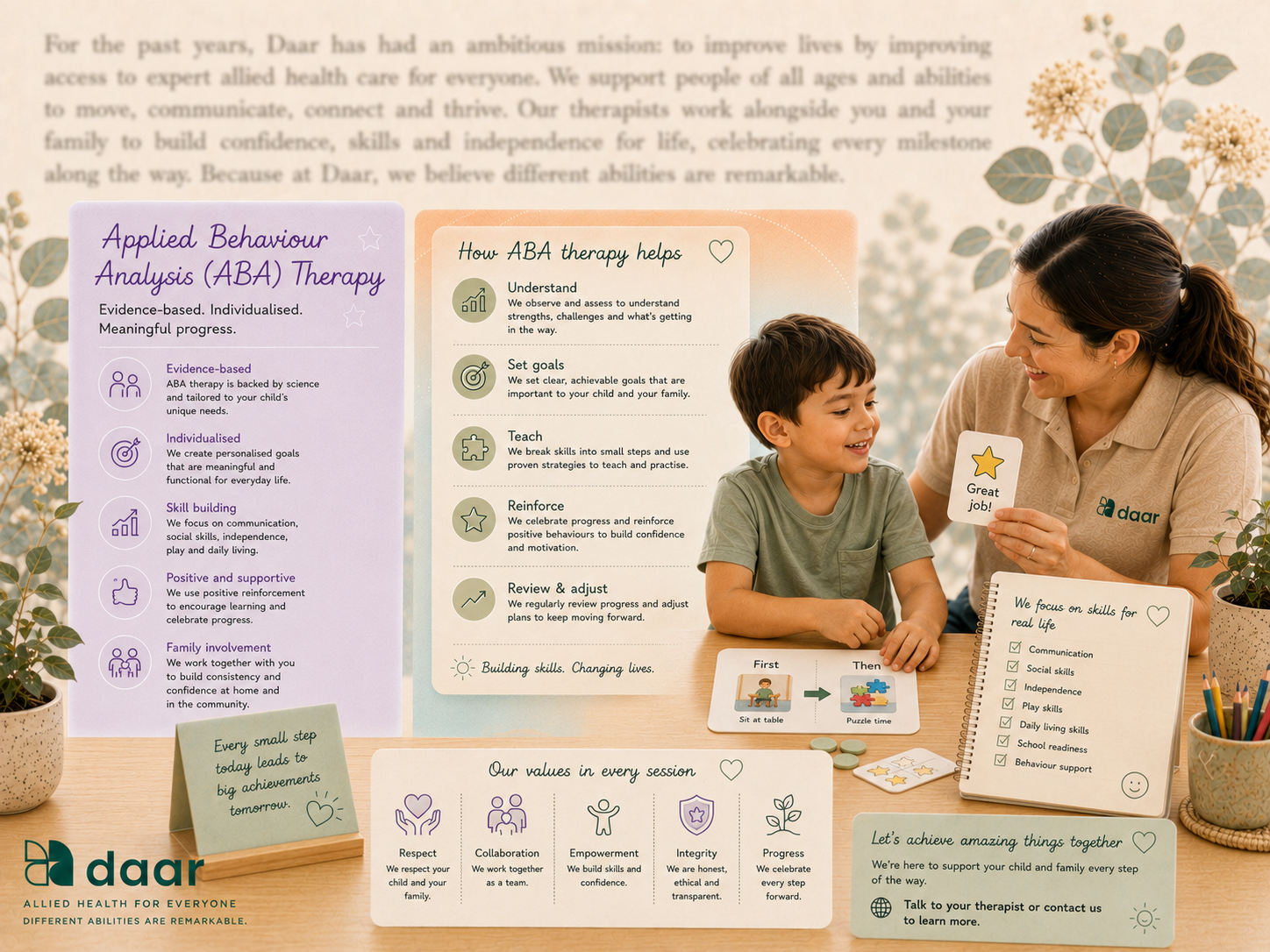
ABA is described as useful from early childhood through adulthood, and many families first encounter it as early intervention. For a young child with autism spectrum disorder, that often means starting with communication, play, attention, and simple daily routines. Skills are broken into small steps so learning feels manageable.
The strongest evidence in the source refers to intensive therapy programs delivered over time. Those findings suggest that early support can help many children make gains in language, learning, and daily functioning. For developmental disorders, starting earlier may create more chances to practice useful behaviours across the day.
The compiled material does not explain the Early Start Denver Model in detail, so it is best not to compare methods too closely. What it does show is that early intervention through ABA can be flexible, individualised, and focused on practical growth in natural settings as well as planned teaching moments.
Conclusion
In conclusion, Applied Behaviour Analysis (ABA) therapy is a powerful tool for supporting children with autism in developing essential skills and behaviours. By utilising evidence-based techniques such as positive reinforcement and the ABC approach, ABA therapy can lead to significant improvements in social interaction, communication, and daily living skills. Understanding how ABA compares to other methods ensures that parents can make informed choices about their child's therapy journey. As you explore the options available, remember that early intervention can have lasting benefits.
If you have any questions or need personalised guidance, feel free to reach out for a consultation or call daar at 02 9133 2500. Your child's well-being is just a conversation away!
Frequently Asked Questions
Is ABA Therapy Covered by NDIS in Australia?
The compiled information does not cover NDIS policy or explain why the NDIA may decline aba therapy funding. It only notes that coverage rules can vary by system and insurer. If you are comparing autism services, check directly with NDIS and providers offering therapy programs or other behavioural interventions.
Why is ABA Therapy Sometimes Considered Controversial?
The source material does not discuss the controversy around aba therapy in detail. It focuses on evidence, structure, and outcomes rather than debate. Because views from autistic people, mental health advocates, and families can differ, it is wise to ask providers how their therapy programs protect dignity, choice, and comfort.
How Does ABA Therapy Address Neurodiversity?
The provided material does not directly explain neurodiversity. It does say ABA therapy should be individualised around a child’s strengths, preferences, and family goals. In practice, that means support should build useful skills and positive behaviour without losing sight of the child’s identity, comfort, and everyday needs across the autism spectrum.
.svg)




.svg)