
.png?width=48&height=48&name=Group%201%20(3).png)























2 December, 2025

Introduction
Every child thrives when they feel connected, understood, and included. For children who find social situations challenging, building these connections can be difficult. This is where NDIS social skills groups can make a significant difference. They offer a structured and supportive environment where your child can learn and practice new skills through play-based activities. These groups are designed to build confidence, foster friendships, and help children navigate the social world with greater ease and success.
Key Highlights
- NDIS social skills groups offer structured, play-based settings for children to develop key communication skills.
- These groups help children practice turn-taking, emotional regulation, and making friends in a safe environment.
- NDIS funding for these programs is often available under Capacity Building if linked to functional goals.
- Group activities are designed to build practical skills that apply to real-life situations at school and home.
- They are especially beneficial for children with autism spectrum disorders and other developmental needs.
- Choosing a quality provider involves checking clinician qualifications and ensuring small group sizes.
Understanding NDIS Social Skills Groups in NSW
NDIS social skills groups in NSW are designed to help children and young people build essential social skills in a guided setting. These social groups use fun and engaging group activities to teach participants how to interact positively with their peers.
With NDIS funding, these programs become accessible to many families, providing a pathway for children to practice their skills in various social settings. The following sections will explain what these groups involve, who they are for, and how they cater to different ages.
What Are NDIS Social Skills Groups?
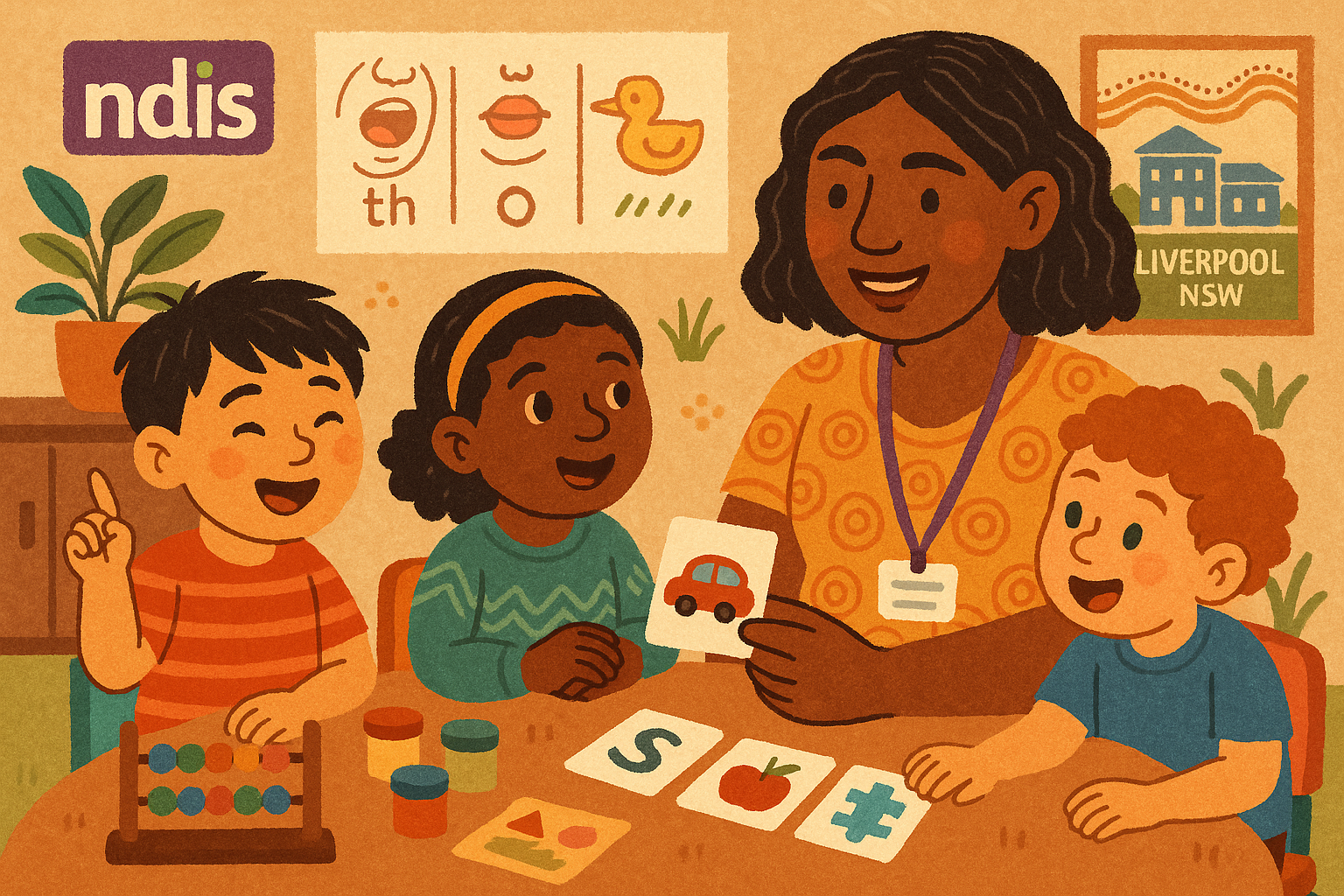
NDIS social skills groups are structured, play-based sessions that give children opportunities to practice vital social skills. They are designed to complement one-on-one therapy, helping children apply what they’ve learned in a real-world group setting. The goal isn't to make every child behave the same way but to foster authentic connection and confidence.
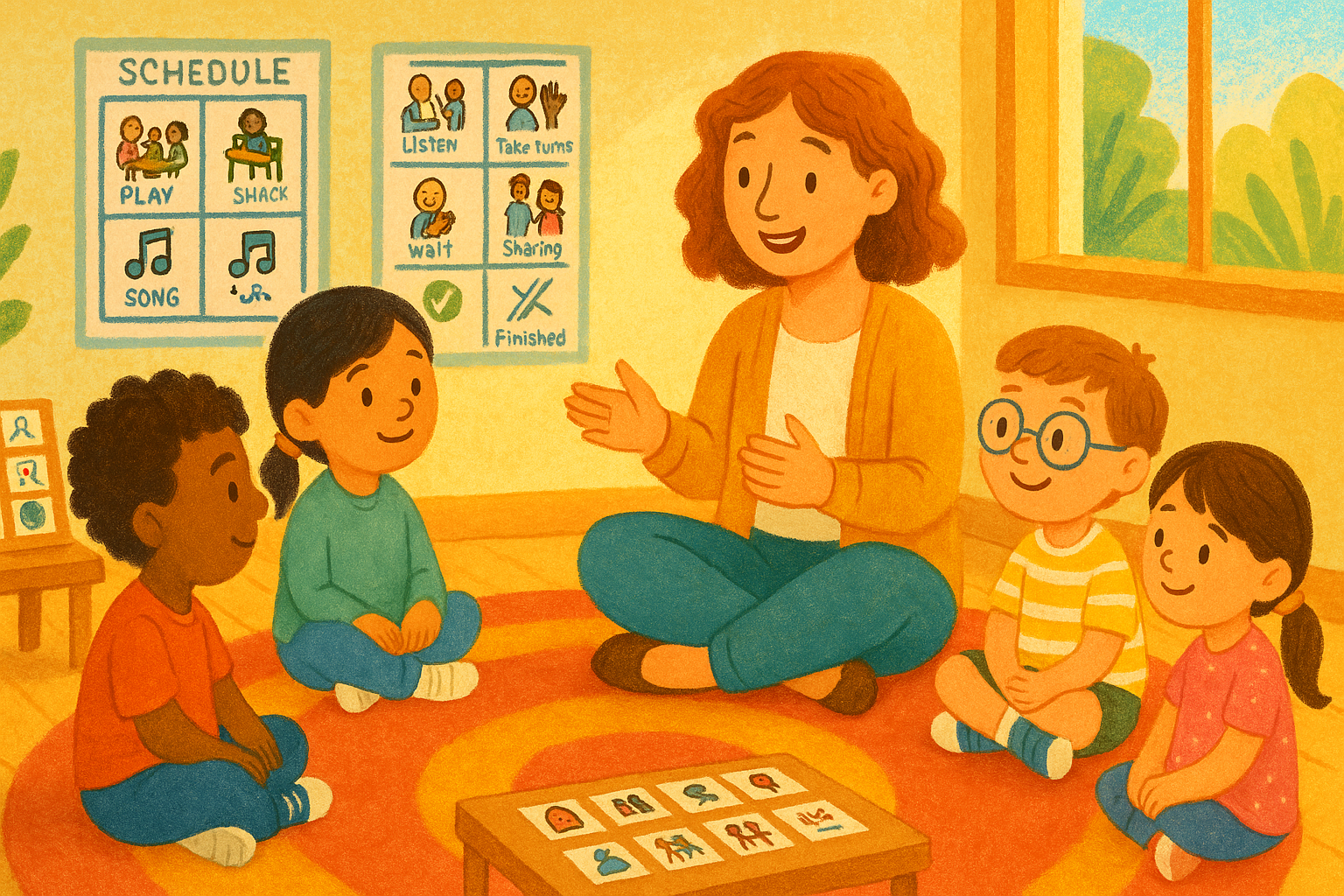
In a supportive environment, clinicians use group activities to teach communication, turn-taking, and friendship skills. Sessions often start with warm-ups to build joint attention, followed by cooperative games that encourage waiting and sharing. Guided problem-solving activities help children learn to navigate misunderstandings with their peers.
To ensure every child can succeed, these programs use visual supports, modeling, and positive reinforcement. This approach creates a safe space for participants to grow their abilities in various social settings, helping them generalize skills from the therapy room to their daily lives at school and in the community.
Who Can Benefit From Social Skills Groups?
Many children can benefit from the targeted support services offered in social skills groups. These programs are particularly helpful for those who struggle with making friends, reading social cues, or managing frustration in group settings. If you’ve noticed your child feeling overwhelmed in conversations or avoiding interactions, these groups can provide the tools they need.
Children with developmental differences that impact social communication often find these groups transformative. The structured environment helps reduce anxiety and provides a predictable space to practice new behaviours. Participants learn to express their emotions appropriately, engage in cooperative play, and build empathy for their peers.
Ultimately, these groups cater to a child's individual needs. The aim is to build confidence and reduce feelings of isolation by showing children that others face similar challenges. By strengthening social skills, participants can form meaningful friendships, gain independence, and feel more included at school and in the community.
Age Ranges and Inclusion for Kids, Teens, and Adults
Social skills groups are not just for young children; they are available for various age groups, including teens and young people. Quality programs understand that social challenges evolve with age, so they tailor their content and activities to be developmentally appropriate. This ensures that the skills being taught are relevant to the participants' lives, whether they are navigating the playground or high school social dynamics.
Inclusion is a core component of these groups. Providers typically match participants based on their age, communication profile, and support needs. This creates a balanced group setting where everyone feels understood and can participate effectively. This careful grouping helps foster a sense of belonging and encourages peer-to-peer learning.
For all age groups, from young children to young adults, the focus is on creating a culturally responsive and inclusive environment. The aim is to help each individual build confidence and connect authentically with others. Whether it's learning to join a game or navigating complex social situations, these groups provide a supportive space for growth.
Key Benefits of Social Skills Groups for NDIS Participants
Joining a social skills group offers NDIS participants a wealth of benefits that extend far beyond the sessions themselves. These programs focus on skill development in a fun and interactive way, helping children build essential social skills for everyday life. Through guided group activities, participants improve their communication skills and learn to navigate social interaction with confidence.
The supportive environment helps reduce anxiety and encourages children to try new things without fear of judgment. Here are some of the key benefits your child can gain.
Building Communication and Friendship Skills
One of the greatest benefits of social skills group programs is the focus on building practical communication skills. Children learn how to initiate conversations, listen to others, and express their thoughts and feelings clearly. These abilities are the foundation for forming and maintaining friendships.
Through structured activities, participants get to practice these skills in a safe space. This can lead to significant breakthroughs, such as a shy child feeling confident enough to start a conversation or make new friends. The group setting shows children they are not alone in their struggles, which reduces feelings of isolation. Key skills often targeted include:
- Greeting peers and joining in games
- Taking turns in conversations and activities
- Using verbal and non-verbal cues to understand others
If you're interested in a program, many providers have an expression of interest form on their website. By participating, your child can develop the confidence needed to build meaningful connections that last a lifetime.
Encouraging Emotional Regulation and Teamwork
Emotional regulation is a crucial skill that social skills groups help children develop. Learning to manage feelings like frustration, excitement, or disappointment is essential for positive social interactions. Group activities are specifically designed to provide opportunities to practice these skills in a controlled environment.
For instance, cooperative games teach teamwork and require children to work together toward a common goal. During these activities, they learn how to handle disagreements, cope with losing a game, and celebrate successes as a team. Clinicians guide them through these moments, helping them understand social cues and respond appropriately.
This focus on teamwork and emotional control helps children build resilience. They learn to understand different perspectives and empathize with their peers, which are vital components of successful relationships. These skills not only improve their interactions within the group but also at home and in the classroom.
Supporting Autism and Other Developmental Needs
Social skills groups are highly effective for children with autism spectrum disorders and other developmental needs. These programs are often a key part of early intervention, as they address the specific social challenges that participants may face, such as understanding unspoken social rules or managing sensory sensitivities in social settings.
The structured nature of these groups provides the predictability that many children with developmental needs thrive on. Support workers and clinicians use clear, explicit instructions to break down complex social concepts into manageable steps. This approach helps participants build their skills at a comfortable pace.
By creating an autism-friendly environment, these groups foster a sense of acceptance and understanding. This allows children to practice communication strategies and build relationships with peers who may have similar experiences. The focused support helps participants develop the confidence and skills needed for greater community participation and inclusion.
Typical Activities in NDIS-Funded Social Skills Group Sessions
NDIS-funded social skills group sessions are filled with a variety of fun and purposeful social activities. The focus is on learning through doing, so children get to practice practical skills in a hands-on way. These sessions are designed to be engaging, encouraging participants to try new things and interact with their peers.
From play-based games to role-playing, each activity has a specific goal tied to social development. Many providers also offer programs during the school holidays. Below are some examples of what you might expect in a typical session.
Play-Based Games and Cooperative Tasks
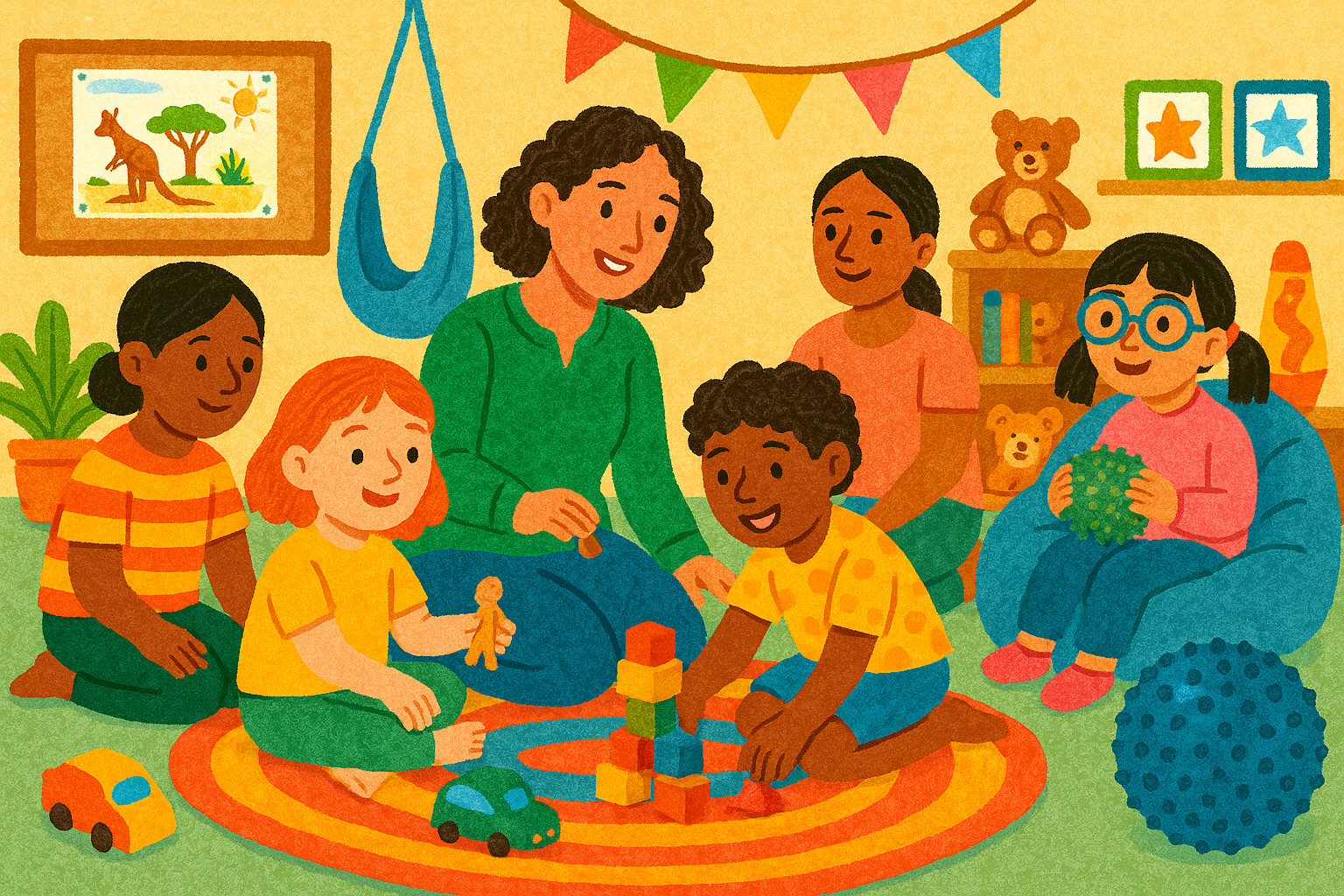
Play is a child’s natural language, which is why play-based games are a cornerstone of social skills groups. These group activities are designed to be fun while teaching important social rules, like sharing and waiting for a turn. Board games, for example, are excellent for practicing how to win and lose gracefully.
Cooperative tasks encourage children to work together to achieve a shared objective. This builds teamwork and communication skills. These recreational activities might involve building something together with blocks, completing a group art project, or participating in a team sport. These tasks help children learn to negotiate roles and share responsibilities.
The goal of these activities is to create natural opportunities for social learning. Some examples include:
- Board games to practice turn-taking and patience.
- Cooking together to learn about sharing tasks and following instructions.
- Team-based challenges that promote communication and collaboration.
Visual Supports and Role-Play Activities
Visual supports are powerful tools used in social skills groups to make abstract social rules more concrete. These can include social stories that walk a child through a specific social situation, visual schedules that outline the session's activities, or cue cards that remind them how to ask for a turn. These aids reduce anxiety by making expectations clear.
Role-play activities offer a safe and structured way for children to practice navigating different social situations. Participants can act out scenarios like joining a conversation, asking a friend to play, or handling a disagreement. This allows them to experiment with different responses and receive immediate, constructive feedback from clinicians.
Through role-playing, children can also learn to better understand and use non-verbal cues, such as facial expressions and body language. Practicing these skills in a controlled environment builds confidence, making it easier for them to apply what they’ve learned in real-life interactions.
Problem-Solving and Turn-Taking Exercises
Learning how to navigate social challenges is a key focus, and problem-solving exercises are designed to help with just that. Clinicians guide children through hypothetical or real-life conflicts, helping them brainstorm solutions and understand the consequences of different actions. This teaches them to think flexibly and resolve misunderstandings with peers constructively.
Turn-taking is a fundamental skill for conversation and play, and it's practiced extensively in social skills groups. Activities are structured to encourage waiting and sharing, whether it's taking turns in a game or during a group discussion. Timers can be used to help manage this, providing a clear visual cue for when it's time to switch.
While many activities focus on social skills, some also incorporate tasks that build fine motor skills, such as drawing or crafting together. Throughout all exercises, facilitators help children recognize and respond to social cues, ensuring they are building a well-rounded set of skills for successful interaction.
Getting Started With NDIS Funding for Social Skills Groups
Accessing NDIS funding for social skills groups is a straightforward process once you know the steps. These valuable support services can be included in your child’s plan if they align with their goals. Understanding the eligibility requirements is the first step toward securing the necessary funding.
If you don't have the right funding in your current plan, you may need to request additional funding at your next plan review. A plan manager can also help you navigate your budget and payments. Here’s how you can get started.
Setting Functional Goals With Your Therapist
The first step in accessing NDIS funding is to set clear functional goals with your therapist. This means identifying what you want to be easier for your child in their everyday life. Goals should be specific and linked to participation, such as "making a friend in class" or "joining in group games at recess."
Work with your child’s occupational therapists or speech therapy provider to define these goals. They can help you articulate how social challenges affect your child's ability to participate at school or in the community. For example, a goal could be for your child to "learn to communicate better to reduce meltdowns and make friends."
Having well-defined goals makes it easier to demonstrate to the NDIS why a social skills group is "reasonable and necessary." Providers will use these goals to personalize the program for your child and measure their progress, ensuring the focus remains on individual social skills development.
Using Capacity Building Funding and Eligibility Requirements
Social skills groups are commonly funded under the Capacity Building category in an NDIS plan. Specifically, they fall under budget areas like "Improved Daily Living" or "Improved Relationships." This type of NDIS funding is designed to help participants build skills and independence over the long term.
To meet eligibility requirements, you need to provide evidence that links your child’s social skill challenges to their functional outcomes. This could include reports from therapists, observations from teachers, or behaviour logs that show how social difficulties impact their daily life. This documentation demonstrates that the program is a reasonable and necessary support.
When you have your NDIS planning meeting, be prepared to explain how these groups will help your child achieve their plan goals. Clearly stating the connection between the support and improved community participation will strengthen your case for funding. Some plans may also use Core funding to pay for support workers to assist with participation.
Integrating Group Therapy Into Your NDIS Plan
Yes, group therapy can absolutely be included in your NDIS plan. The key is to ensure it aligns with the goals you've set. During your plan review meeting, discuss with your NDIS representative how social skills group therapy will help your child build their capacity for social and community participation.
If group therapy isn't in your current plan, you can request a plan review to have it added. You will need to explain why this support is required, perhaps due to a change in circumstances or as a logical next step in your child's therapy journey. Having supporting reports from clinicians will be crucial.
A good provider will work with you to integrate the group goals with any one-on-one therapy your child receives, ensuring a consistent approach. A plan manager can also be a great asset, as they handle invoices and help you track your budget, allowing you to focus on your child's progress.
How to Choose a Quality NDIS Social Skills Group Provider in NSW
Choosing the right provider is key to ensuring your child has a positive and effective experience. A quality program is more than just a place to play; it's a therapeutic group setting run by skilled staff who understand your child’s needs. These support services should ultimately improve your child's quality of life.
When researching providers in NSW, look for specific qualities that indicate a well-run and effective program. Here are some of the most important factors to consider.
Important Qualities: Qualified Clinicians and Group Size
The expertise of the staff is one of the most critical factors. Look for programs run by qualified clinicians, such as speech pathologists, psychologists, or behaviour support practitioners. These professionals have the training to create a supportive environment and effectively guide children through social learning.
Group size also matters. A small group allows for more individualized attention and ensures that no child gets lost in the crowd. It creates a safer, less overwhelming atmosphere where children feel more comfortable participating. Ask providers about their staff-to-child ratio to get a sense of the level of support provided.
Before committing, check for these key indicators of a quality program:
| Quality to Look For | Why It's Important |
| Qualified Clinicians | Ensures the program is led by experts in child development and behaviour. |
| Small Group Size | Allows for personalized attention and a less overwhelming environment. |
| Use of Visuals & Modeling | Helps make abstract social concepts clear and understandable. |
| Structured Parent Feedback | Keeps you informed of your child's progress and helps you reinforce skills at home. |
AAC Support and Coordination With Schools
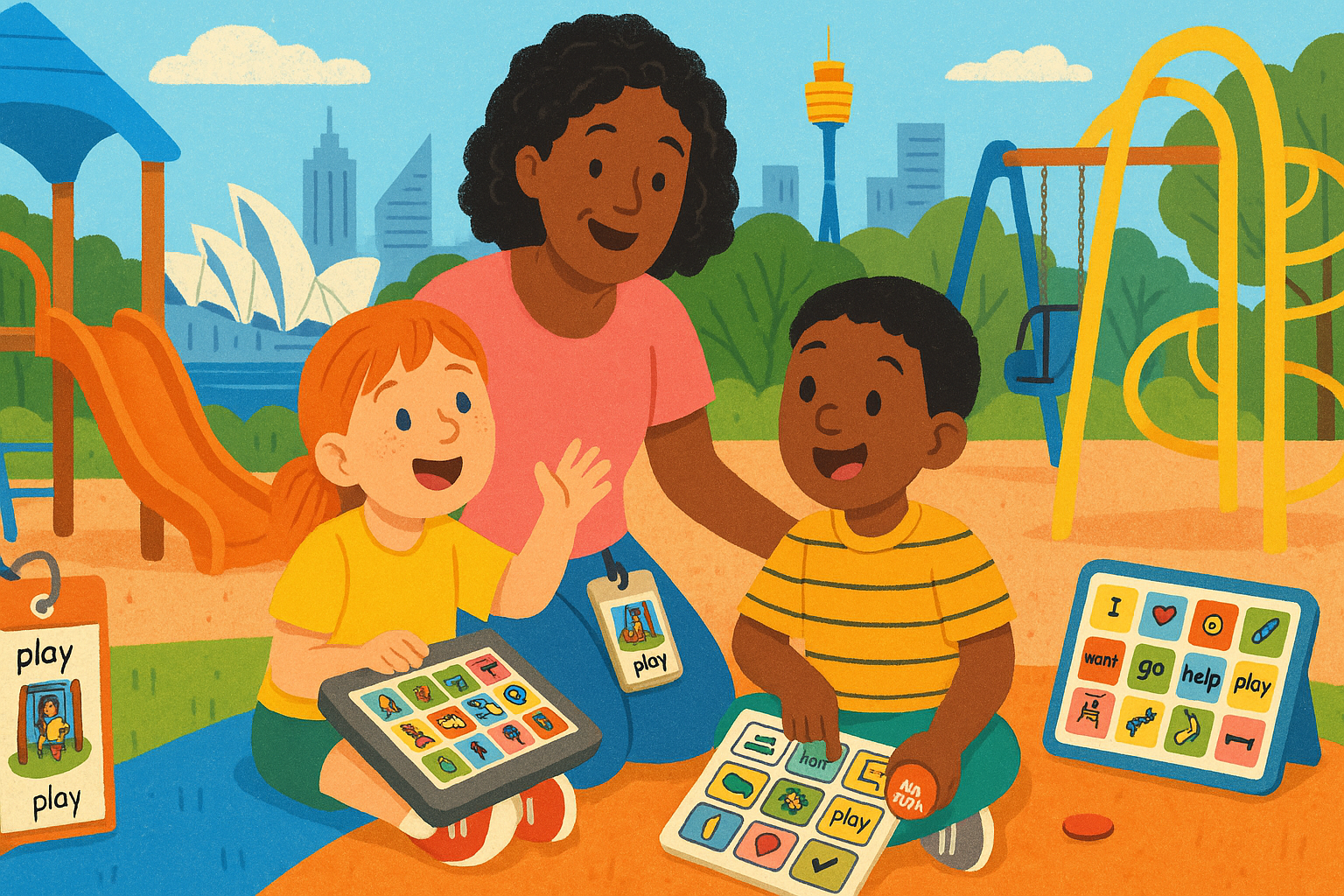
If your child uses an Augmentative and Alternative Communication (AAC) device, it is essential to find a provider that offers AAC support. A quality program will know how to incorporate your child’s device into activities, ensuring they can fully participate and practice their communication skills. Ask potential providers how they include and support AAC users.
Coordination with schools is another sign of a great provider. When the social skills group and the school are on the same page, your child benefits from a consistent approach. The strategies and language used in the group can be reinforced in the classroom, helping your child generalize their skills more effectively.
Ask the provider how they will coordinate with your child's teacher and what that process looks like. This collaboration is vital for supporting your child's social communication development across all settings, ensuring that progress made in the group translates to their everyday school life.
Strategies to Boost Social Skills at Home and School
The learning doesn't stop when the social skills group session ends. Reinforcing what your child learns at home and school is crucial for their social skills development. Integrating practice into daily living helps solidify new skills and builds your child’s social confidence.
By creating opportunities to practice these new life skills, you can accelerate your child's progress and help them apply their abilities in real-world situations. Here are some effective strategies you can use to support your child.
Role-Playing, Visual Aids, and Micro-Moments in Everyday Life
You can create powerful learning opportunities at home by using some of the same techniques as the therapy group. Role-play activities are a great way to practice for upcoming social events, like a birthday party or a playdate. You can also use visual aids, such as social stories, to preview activities and reduce anxiety.
Look for "micro-moments" to practice skills during your daily routines. These are small, natural opportunities for social engagement. For example, playing a board game together is a chance to practice winning and losing gracefully, while cooking a meal together teaches task-sharing. Simple ways to embed practice include:
- Using a timer to practice taking turns with a favorite toy.
- Praising specific efforts, like "I loved how you waited for your turn!"
- Using cue cards to prompt skills like asking to join in play.
These small, consistent efforts make a big difference in helping skills stick.
Communicating With Teachers and Tracking Progress
Open communication with your child's teachers is essential for reinforcing skills at school. Share weekly highlights or specific strategies from the social skills group so the teacher can use the same language and visuals in the classroom. This creates consistency and supports your child's school engagement.
Tracking progress doesn't have to be complicated. Simple methods like a sticker chart for successful peer interactions or quick notes on what went well can be very effective. You can even take short videos (with consent) to review with your clinician and celebrate successes with your child.
This ongoing loop of communication and tracking ensures that everyone on your child's support team is aligned. It helps tailor strategies to your child’s needs and provides a clear picture of the progress they are making, which is motivating for both you and your child.
Conclusion
In conclusion, understanding how to navigate NDIS social skills groups is essential for fostering meaningful connections and enhancing participation in everyday activities. By setting clear goals with your therapist, you can tailor these programs to your child’s specific needs, ensuring that they gain valuable communication, emotional regulation, and teamwork skills. Remember that the journey doesn't end with group sessions; integrating strategies at home and in school will help solidify these skills.
If you're interested in learning more about how to get started, we invite you to book a free consultation with our experts today. They can guide you through the process, helping your child thrive socially and emotionally.
Frequently Asked Questions
How Do I Find Local NDIS Registered Providers for Social Skills Groups?
You can find NDIS registered providers for social skills groups by using the Provider Finder tool on the NDIS website. Your support coordinator or Local Area Coordinator can also help you connect with trusted support services in your area that offer suitable group activities and promote community engagement.
Can My Child’s Social Skills Group Be Customised to Their Needs?
Yes, absolutely. Quality social skills groups are designed to cater to your child's individual needs. This is achieved by setting personalized functional goals, matching them with peers of a similar age and support profile, and tailoring group activities to focus on their specific individual social skills development and build their social confidence.
Are Community-Based NDIS Social Groups Available for Adults in NSW?
Yes, there are community-based social groups for adults available in NSW. The NDIS funds a wide range of group activities aimed at increasing community participation and building social interaction skills for adults. These programs focus on fostering independence, building relationships, and promoting a sense of belonging in the community.
.svg)




.svg)