
.png?width=48&height=48&name=Group%201%20(3).png)























Noah (name changed for privacy) is a brilliantly creative, energetic, and warm-hearted seven-year-old boy. He possesses a remarkably fast-paced mind, constantly inventing new games, building elaborate engineering structures with his blocks, and enthusiastically sharing his encyclopedic knowledge of ocean life. However, Noah’s boundless energy and rapid-fire thought process were severely clashing with the structural expectations of his daily environments.
Noah was presenting with intense hyperactivity, impulsivity, and significant task avoidance. Sitting still at a desk for more than five minutes was nearly impossible for him. His presenting behaviour issues included constantly calling out in the classroom without raising his hand, rushing through his work with careless errors, and abandoning tasks halfway through. At home, being asked to transition away from his preferred activities (like building forts) or sit down for homework resulted in explosive emotional meltdowns. Feeling like he was constantly in trouble, Noah’s self-esteem was plummeting. Seeking a neuro-affirming way to help their son succeed without breaking his joyful spirit, Noah’s parents reached out to the allied health experts at daar.
The Challenge
Noah’s untamed ADHD symptoms were creating significant friction, leaving both his parents and educators feeling overwhelmed and stuck in a cycle of reprimands:
- At Home: The daily routines were exhausting for the whole family. Dinner time was chaotic because Noah physically could not stay seated in his chair. Homework, which should have taken 20 minutes, stretched into a grueling two-hour battle of tears, refusal, and constant redirection. His parents felt like they were acting as wardens rather than caregivers, constantly issuing warnings and consequences that ultimately failed to change his behaviour.
- At School: The mainstream primary school environment was a massive landmine for Noah. Because his impulse control was underdeveloped, he constantly interrupted the teacher and blurted out answers. He would frequently leave his seat during quiet reading time to wander the room, distracting his peers. Socially, his high-intensity energy and inability to wait his turn during Playground games left his classmates feeling overwhelmed, leading to social exclusion. Noah started stating that he was the "bad kid" in class.
Noah urgently needed a structured intervention that leveraged his strengths while explicitly teaching him the executive functioning skills he lacked.
Therapy Approach
The clinicians at daar understand that traditional, punitive discipline is highly ineffective for neurodivergent children. Effective behaviour therapy for children must focus on building skills and modifying the environment. We designed a holistic, highly individualised intervention plan to support Noah’s ADHD.
Our comprehensive treatment strategy included:
- Functional Behaviour Assessment (FBA): We conducted an FBA to understand the exact purpose of Noah's behaviours. We identified that his out-of-seat behaviour was purely sensory-seeking (his body needed physical input to maintain focus), and his homework refusal was driven by executive dysfunction and task overwhelm.
- Targeted Positive Behaviour Support (PBS): We implemented a robust positive behaviour support plan that shifted the focus from catching him being "bad" to heavily reinforcing him for being "good." We introduced a highly engaging Token Economy at home and school. Noah earned tokens (adding up to earning new block-building sets) for specific, achievable goals, such as raising his hand once during a lesson or remaining at the dinner table for ten consecutive minutes. This provided his ADHD brain with the frequent, immediate dopamine hits it required to stay on task.
- Environmental Accommodations: To address his physical hyperactivity, we modified his classroom and home environments. Through collaborative behaviour therapy for children, we worked with his school to provide a "wobble cushion" for his chair, allowing him to subtly move without leaving his desk. We also integrated scheduled "heavy work" movement breaks into his day, like being the assigned student to carry the heavy library books, which safely satiated his physical energy needs.
- Task Chunking and Visual Timers: To combat homework meltdowns and task avoidance, we taught his parents how to "chunk" demands. Instead of presenting a whole worksheet, they presented one math problem at a time, paired with a visual sand-timer. When the 5-minute timer ended, Noah earned a 2-minute movement break. This bypassed his executive function overwhelm and made learning feel achievable.
Results & Progress
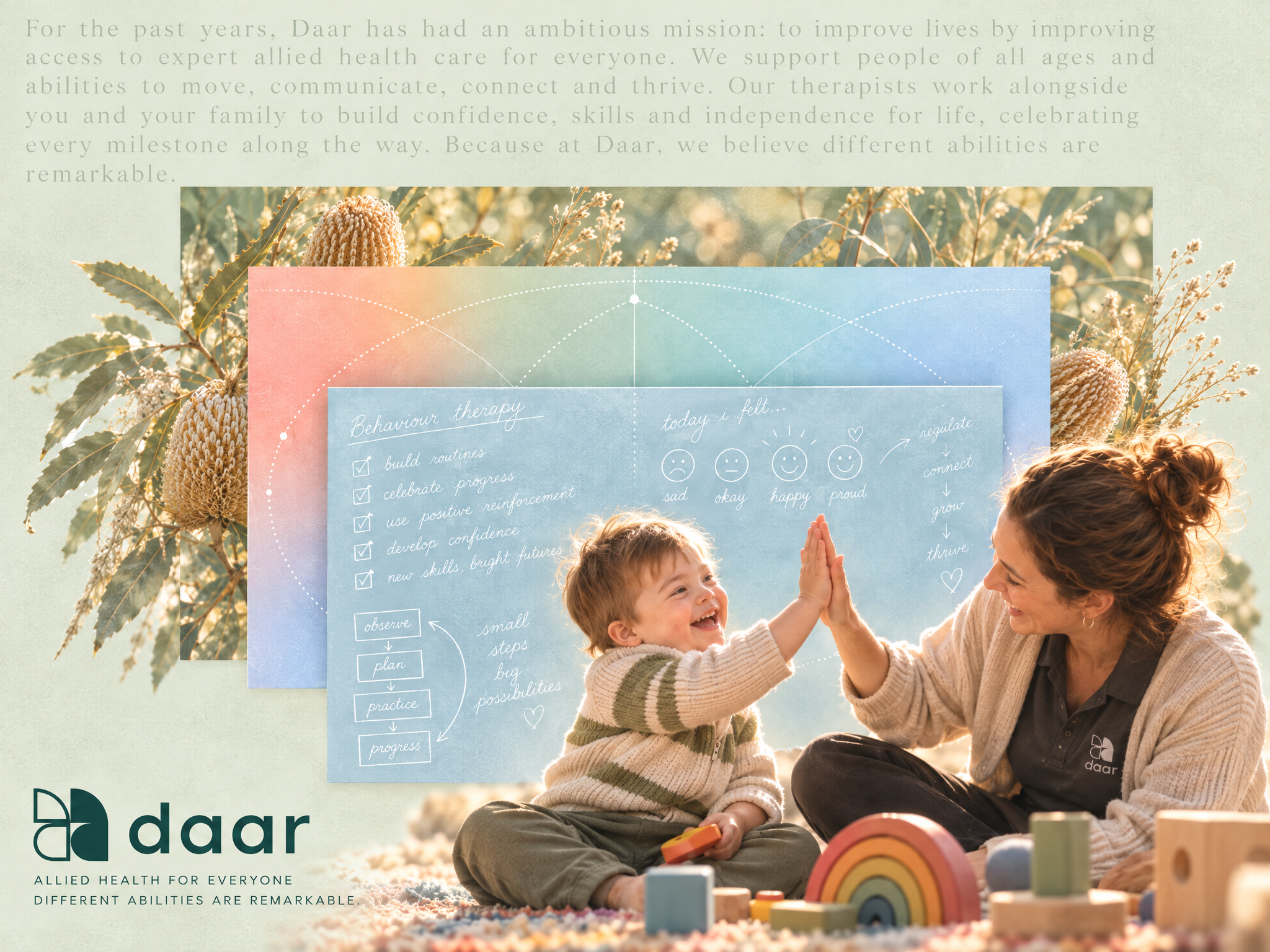
Implementing these thoughtful, proactive strategies transformed Noah’s daily experience. By accommodating his neurobiology rather than fighting it, his challenging behaviours rapidly declined, making room for his intelligence and creativity to shine.
Within just two months, the atmosphere at home was remarkably peaceful. Because dinner time and homework were now structured with visual timers and immediate rewards, Noah completed his routines without screaming or hiding. The two-hour homework battles were reduced to a calm, manageable 30 minutes.
At school, the environmental modifications were a game-changer. The wobble cushion and scheduled movement breaks fed his sensory needs, eliminating his need to wander the classroom during lessons. Empowered by his token economy, his impulse control improved drastically; he began proudly raising his hand instead of blurting out answers.
By continuously evaluating Noah’s child behaviour and progress, the clinical team at daar was able to document a profound, data-backed developmental shift.
reduction via environmental accommodations (wobble cushion).
Raises hand for interactions
Mealtime Seating Stamina

Key Outcomes
Unlocking the potential of a child with ADHD requires a fundamental shift in perspective by the adults in their life. By utilising evidence-based behaviour therapy for children, Noah’s intervention yielded several pivotal outcomes:
- Rebuilt Executive Functioning: By breaking tasks down into smaller, visually manageable pieces ("chunking"), Noah learned how to initiate and complete non-preferred tasks without experiencing cognitive gridlock and panic.
- Channeled Hyperactivity Safely: Instead of demanding perfect stillness—an impossible task for his neurobiology—providing ergonomic seating and scheduled movement breaks allowed Noah to maintain his focus while moving safely.
- Restored Self-Esteem: Moving away from a punitive discipline system meant Noah was no longer characterised as the "bad kid." He began to view himself as a capable, smart student who just needed a few specific tools to succeed.
- Empowered Caregivers and Educators: By training his parents and his teacher in the mechanics of the ADHD brain, the adults moved from a state of constant frustration to a state of confident, proactive collaboration.
Conclusion & Call to Action
Attention-Deficit/Hyperactivity Disorder presents unique challenges in structured environments, but it also comes with incredible gifts of creativity, energy, and out-of-the-box thinking. When we force a child with ADHD into a rigid mold without accommodations, we invite behavioural chaos and deep emotional distress. However, when we unlock their world using positive behaviour support, environmental modifications, and highly structured routines, these children can achieve spectacular success. By carefully monitoring child behaviour and progress, allied health professionals can map out a customised pathway that builds essential life skills while preserving the child’s natural vibrance.
As Noah’s mother beautifully articulated during a review session:
We were so exhausted and so heartbroken for Noah. It felt like from the moment he woke up to the moment he finally fell asleep, we were just telling him 'No,' 'Stop,' and 'Sit down.' He was starting to hate school, and his confidence was just gone. Bringing him to daar was the turning point for our entire family. They taught us that his brain just works differently and needs different fuel. Giving him a wobble cushion at school and using the visual timers for homework completely changed our lives. We aren't fighting anymore. He is doing so well in class, his teacher is thrilled, and we finally get to just enjoy our incredibly smart, funny little boy again.
Is your child struggling with the intense challenges of ADHD, including impulsivity, task avoidance, or severe emotional meltdowns? You do not have to navigate this overwhelming journey alone.
Unlock your child’s potential with expert, evidence-based ADHD support.
Contact the dedicated multidisciplinary allied health team and behaviour practitioners at daar today. Let us help you implement an empowering, highly customised intervention plan designed for your child's success. Call us at 02 9133 2500 or visit our website to secure your family's consultation!


.svg)

Get access to quality, Efficient, and professional care.
Request a call to find out how daar can help you achieve your health goals.

Leading source of information for allied health news, studies and resources.

We support you to be self-determined and independent, giving you the control and freedom to achieve your individual goals.

We provide superior quality, client-centric and innovative treatment to support you to realise your full potential.
.svg)




.svg)