
.png?width=48&height=48&name=Group%201%20(3).png)
























Mia (name changed for privacy) is a playful, creative five-year-old girl who loves animals, drawing, and helping in the garden. Living with her family in a regional Australian town, Mia’s access to specialised paediatric care was significantly limited. Around age three, her parents noticed early signs of developmental delays, primarily involving a speech delay and difficulties with emotional regulation.
By her fifth birthday, Mia was highly articulate in her own way but lacked functional communication to safely express her frustration. When routines changed abruptly or she could not make herself understood, Mia exhibited severe emotional outbursts, often throwing items or crying inconsolably. Faced with a complete lack of local specialists and a looming primary school enrollment, her parents reached out to daar. They needed an accessible, consistent, and evidence-based intervention that would comfortably fit into their remote lifestyle.
The Challenge
The primary challenge for Mia’s family was twofold: navigating severe behavioural meltdowns without a local support system, and closing the gap in Mia’s expressive communication skills before she began formal schooling. Without access to local clinics, the family felt isolated and overwhelmed.
The impact of Mia's challenges was evident across her daily environments:
- At Home: Mia’s emotional meltdowns were unpredictable. A simple routine change, like raining on a day she planned to go outside, could trigger a 45-minute crying episode. Because her parents couldn't access immediate professional guidance, they were left attempting to de-escalate these situations through trial and error, resulting in immense caregiver burnout and a stressful home environment.
- At Preschool: In her small local preschool, the educators struggled to manage Mia’s reactions during group transitions. When Mia couldn't clearly communicate her needs to peers during playtime, she would resort to snatching toys or withdrawing entirely. The school staff were deeply concerned that her lack of emotional regulation would hinder her transition to primary school.
Mia needed immediate professional support to bridge her communication gap and manage her emotions, and her family needed a service delivery model that didn't require a four-hour round trip to the nearest city.
daar Therapy Approach
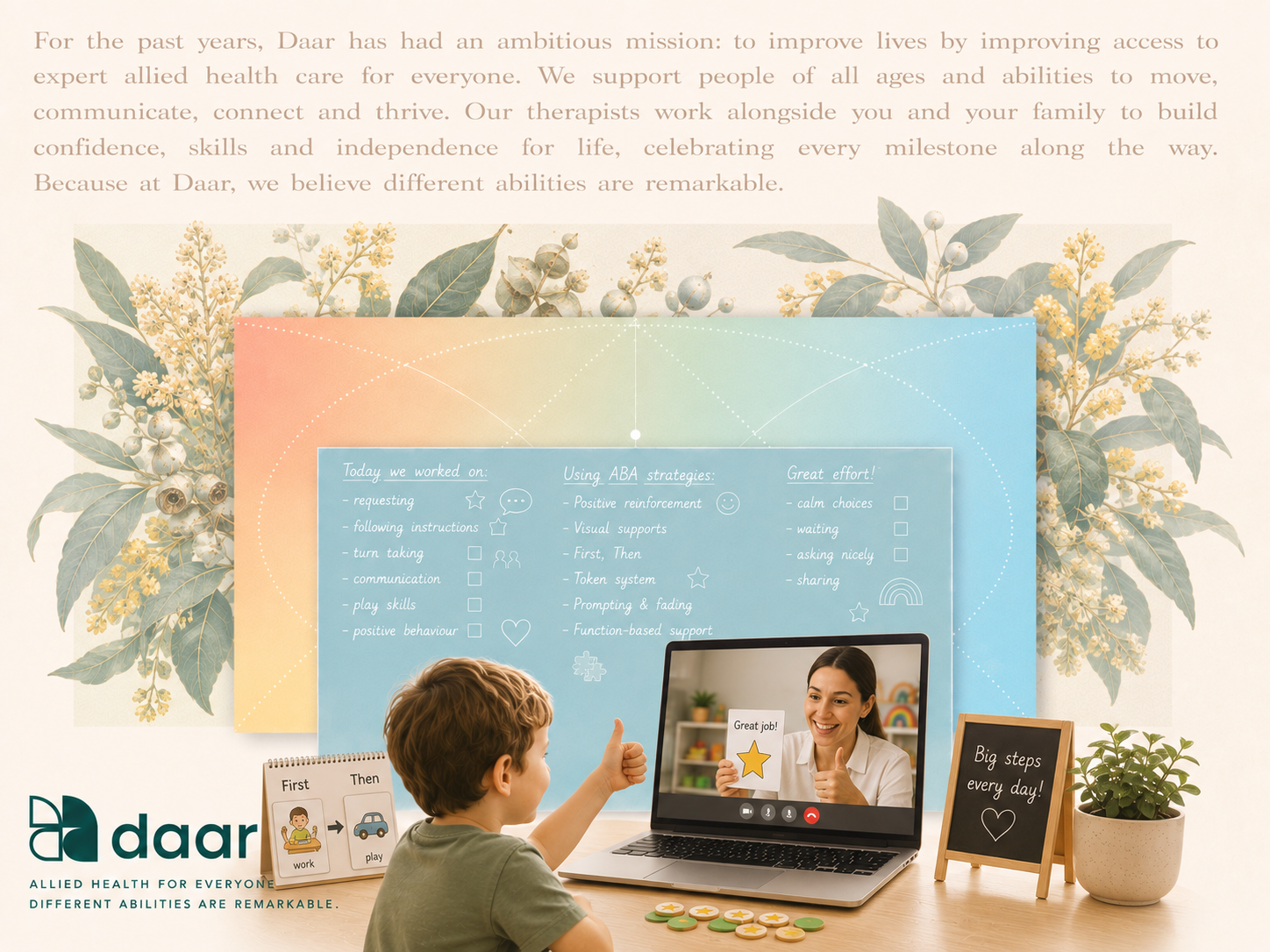
The clinicians at daar recognized that a lack of geographic proximity should not equate to a lack of quality care. We initiated a comprehensive, multi-disciplinary plan delivered entirely through our secure telehealth platform. This approach seamlessly integrated behaviour therapy for children with targeted speech therapy.
Our telehealth strategy prioritized remote accessibility, caregiver empowerment, and consistent environmental support:
- Positive Behaviour Support (PBS) via Telehealth: Using secure video calls, our behaviour analysts conducted virtual home observations. By watching Mia in her natural environment, the therapist identified her specific triggers. We developed a tailored PBS plan focused on building predictable routines, introducing visual schedules, and teaching Mia's parents how to use a "calming corner" in their living room.
- Targeted Speech Therapy: Concurrently, our speech pathology team delivered weekly online sessions. Through interactive, screen-based games and parent-led activities, the therapist helped Mia develop functional communication scripts (e.g., "I need help" or "I am frustrated"), reducing her reliance on meltdowns to express dissatisfaction.
- Socialised Behaviour Therapy with Educators: We didn’t just support the home. The daar clinician set up tele-consultation meetings with Mia’s local preschool educators. Through this remote socialised behaviour therapy, we guided the teachers on implementing the exact same visual schedules and communication replacement skills used at home. We observed classroom transitions via a secure tablet link, providing the educators with real-time feedback on how to prompt Mia successfully.
- Parent Coaching and Empowerment: Because the therapy took place in the home, the primary focus was on skilling up the parents. Telehealth allowed for frequent, shorter check-ins. If a new behavioural challenge arose on a Tuesday, the parents could book a brief telehealth consult on Wednesday, ensuring they never felt alone in implementing the strategies.
.svg)

Results & Progress
Following six months of consistent engagement through our telehealth services, Mia's developmental trajectory shifted remarkably. The virtual model proved that effective intervention relies on consistency and strategy, not necessarily physical proximity.
Mia’s parents noted that because the therapy took place in their home, Mia felt safe and comfortable from session one. She learned to point to a visual emotion chart on the family fridge rather than throwing items when she felt angry. At preschool, the educators successfully implemented the digital visual timers provided by our team, which significantly reduced her resistance to transitions.
Key Outcomes
Mia’s progress highlights the incredible effectiveness of modern, remote mental health and developmental support. The key outcomes of this intervention transformed everyday life:
- Continuity of Care: Geography was no longer a barrier. The family received consistent, weekly care without the massive disruption of traveling, which kept Mia in a stable routine and sped up her skill acquisition.
- Harmonized Support Systems: By bridging the gap between the parents and the regional preschool educators via video link, Mia experienced the same expectations and supports whether she was at her kitchen table or on the classroom mat.
- Enhanced Communication and Safety: Through integrated speech therapy, Mia finally found her voice. She replaced throwing and screaming with safe, functional communication acts, ensuring she is ready to form safe relationships in primary school.
- Empowered Families in Remote Areas: The parents transitioned from feeling isolated and overwhelmed to feeling deeply empowered. They became active facilitators of their child’s therapy, utilizing the tools built during telehealth sessions to handle everyday hurdles.
Reduction in distress episodes at home.
Reduction in time taken to emotionally regulate.
Successful preschool transitions.

Conclusion
Accessing quality developmental and mental health support should not depend on your postcode. Telehealth behavioural therapy removes the traditional barriers to entry, delivering vital early intervention, positive behaviour support, and speech therapy directly into your living room. For children like Mia, consistent online support builds a bridge over developmental delays, equipping them—and their families—with the skills required to navigate a complex world.
As Mia’s mother wonderfully expressed:
"Living out here, we felt completely forgotten by the system. We knew Mia needed help, but driving four hours a week simply wasn't possible for our family. Starting telehealth with daar changed everything. We didn't just 'watch a screen'—the therapists were essentially right here in our lounge room, teaching us how to help our daughter. Seeing Mia finally tell me she was frustrated instead of throwing a tantrum was a moment I will never forget."
Are geographic barriers, busy schedules, or long travel times keeping your family from accessing the behavioural or speech support your child needs? Evidence-based care is just a click away.
Take the first step toward better wellness and communication today.
Contact the expert team at daar to discover how our telehealth therapy programs can support your child's behaviour and progress from the comfort of your home. Call us at 02 9133 2500 or visit our website to book your initial virtual consultation.


Get access to quality, Efficient, and professional care.
Request a call to find out how daar can help you achieve your health goals.

Leading source of information for allied health news, studies and resources.

We support you to be self-determined and independent, giving you the control and freedom to achieve your individual goals.

We provide superior quality, client-centric and innovative treatment to support you to realise your full potential.
.svg)




.svg)