
.png?width=48&height=48&name=Group%201%20(3).png)
























Charlie (name changed to protect privacy) is a deeply affectionate, highly active, and exceptionally curious eight-year-old boy. He possesses a boundless love for the outdoors, thrives during deep-pressure sensory activities like swinging or jumping on trampolines, and enjoys building elaborate towers out of wooden blocks. However, communicating his needs and managing his sensory environment was a daily, overwhelming struggle.
Charlie was presenting with severe and highly complex behavioural challenges that were endangering his safety and isolating his family. When his physical environment became too loud, or if a preferred item (like his iPad) was removed, Charlie’s distress would peak instantaneously. His presenting behaviour issues included severe property destruction (throwing chairs and breaking windows) and intense physical aggression, specifically scratching, pinching, and biting adults who attempted to intervene. Due to the severity of these physical outbursts, multiple NDIS support agencies had withdrawn their services, deeming Charlie "too unsafe" to work with. Facing extreme caregiver burnout and unable to utilise their NDIS funding, Charlie’s parents reached out to the allied health specialists at daar for urgent, specialised support.
The Challenge
Charlie’s intense physical aggression was fracturing his home environment, placing his education in jeopardy, and causing a complete systemic failure of his NDIS plan:
- At Home and within the NDIS Framework: Charlie’s family was living in a constant state of crisis management. His NDIS plan included substantial funding for community access and in-home support, but this funding was entirely useless without properly trained staff. Standard support workers lacked the clinical training to safely de-escalate him. After a worker was severely bitten during a transition to the car, the agency canceled all future shifts. The family was left entirely alone, isolated in their home, and watching their NDIS funding sit idle while caregiver depression and exhaustion skyrocketed.
- At School: The primary Special Education unit was struggling to maintain safety. When Charlie became dysregulated in the classroom, he would sweep heavy objects off tables and attempt to scratch his educators. To protect the other students, Charlie was frequently removed from the classroom and placed in an isolated sensory room alone. The school was issuing repeated short-term suspensions and warned the family that they might not be able to accommodate him long-term.
Charlie desperately required an intervention that moved beyond basic caregiving. He needed the targeted expertise of specialised Positive Behaviour Support to train his ecosystem and build functional coping skills.
Therapy Approach
The clinical practitioners at daar (Different Abilities Are Remarkable) know that when a child's NDIS plan breaks down due to aggressive behaviours, the solution is never to punish the child. The solution is to elevate the skill level of the support network. We deployed a highly integrated, intensive intervention strategy combining deep clinical analysis with rigorous environmental restructuring.
Our customised therapy approach included:
- Clinical Functional Behaviour Assessment (FBA): The process began with a senior behaviour therapist conducting a complex FBA across his home and school environments. We identified that Charlie’s aggression was triggered primarily by sudden transitions away from preferred sensory activities and an immense build-up of unexpended physical energy.
- Implementing Positive behaviour therapy: Armed with the FBA data, we crafted a robust, proactive Positive behaviour therapy plan. We shifted the focus entirely away from restrictive practices and onto environmental support. We introduced a "Heavy Work Sensory Diet" into his daily routine. Before any major transition (like putting away the iPad or getting into the car), caregivers were trained to engage Charlie in high-resistance sensory activities—like pushing a heavy weighted cart or jumping on a crash mat for five minutes. This proactively regulated his nervous system, giving him the sensory input his body craved in a safe manner.
- Direct Skill-Building via Behaviour therapy: To address the scratching and biting, a daar practitioner facilitated intensive, play-based Behaviour therapy sessions. We integrated an Augmentative and Alternative Communication (AAC) device. We explicitly taught Charlie how to hit a large, red "More Time Please" button on his device instead of biting when he was frustrated. We heavily reinforced this newly acquired skill, ensuring his communication was instantly rewarded.
- NDIS Support Worker & School Capacity Training: The cornerstone of NDIS success is consistent care. Our clinical team recruited and rigorously trained a dedicated team of specialised NDIS support workers. We conducted hands-on training sessions with his support workers and his school educators, teaching them non-aversive, low-arousal de-escalation techniques. We ensured everyone in Charlie’s life was responding to his distress with the exact same therapeutic, calming approach.
Results & Progress
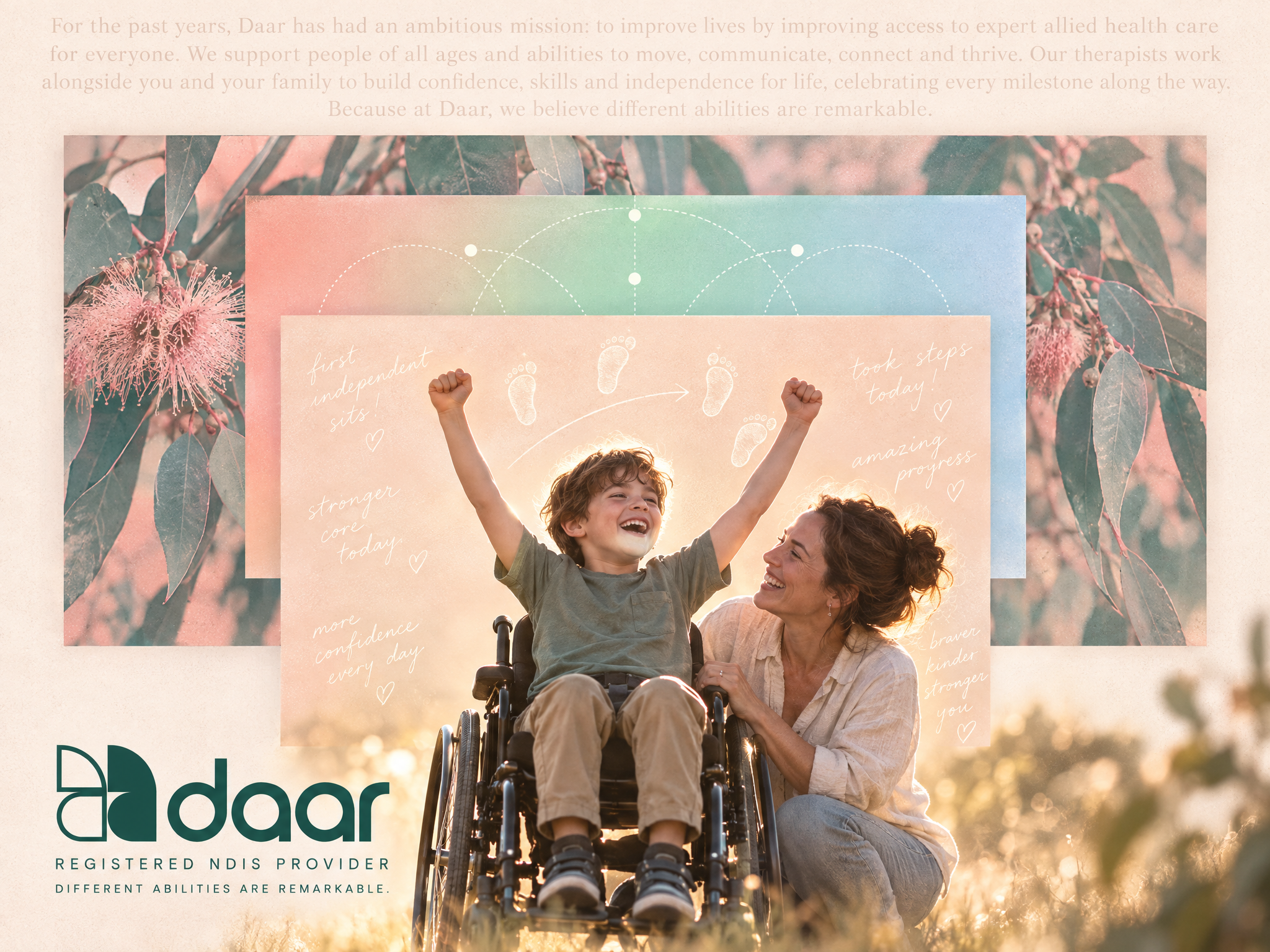
By restructuring his environment, validating his massive sensory needs, and training his entire support network to follow a specialised clinical roadmap, Charlie’s world stabilised. When the adults around him learned how to support his neurobiology safely, his need to use physical aggression plummeted.
Within four months, the breakdown of his NDIS plan was completely reversed. Because his new support workers were thoroughly trained by our specialised behaviour therapist, they felt safe, confident, and empowered. Staff turnover dropped to zero. For the first time in two years, Charlie’s parents were able to utilise their NDIS funding for vital in-home respite. Armed with his sensory diet and communication device, Charlie successfully began taking weekend trips to the local fenced Playground with his workers, absolutely thriving in the community.
At school, the changes achieved through careful environmental design were profound. Because his educators were now utilising his proactive heavy-work breaks, the massive desk-clearing meltdowns vanished. Charlie was successfully integrated back into the main learning group, spending less than 10% of his day in the isolated sensory room, drastically improving his quality of life and educational access.
By strictly monitoring his specific behavioural incidents and adaptive skill acquisition, the clinical team at daar captured concrete data proving the undeniable importance of specialised support in driving measurable progress.
NDIS success restored through specialised worker training.
elimination of physical strikes using Positive behaviour therapy.
Safely completes park visits with workers

Key Outcomes
For children with complex, Level 3 diagnostic profiles exhibiting severe physical aggression, standard allied health support is rarely sufficient. Specialised behaviour support is the critical bridge that translates a child’s complex needs into actionable, safe strategies for their caregivers. Charlie’s customised intervention yielded several life-changing outcomes:
- Rescued a Failing NDIS Plan: By providing clinical oversight and hands-on training to his support workers, the intervention stopped the cycle of staff turnover, allowing the family to finally access the NDIS funding they were entitled to.
- Replaced Aggression with Core Regulation: Implementing a proactive sensory diet addressed Charlie's physiological needs before he escalated, entirely neutralising the neurological tension that caused his physical outbursts.
- Restored Educational Placement: Equipping his special education teachers with a clear, functional behavioural roadmap allowed the school to maintain safety dynamically, ending his isolation and restoring his access to learning.
- Empowered Caregivers and Healed the Family: Providing the parents with the respite they desperately needed pulled them out of survival mode. They transitioned from feeling trapped and fearful to feeling deeply supported and confident in their son’s future.
Conclusion & Call to Action
When an autistic child presents with severe property destruction, biting, and an inability to be safely managed by NDIS support workers, the entire family suffers. Traditional discipline and basic caregiving models will continually fail because they do not address the clinical function of the distress. To unlock true NDIS success and community safety, families must have access to a specialised, rigorous clinical framework. By combining explicit environmental training via a dedicated behaviour therapist, neuro-affirming Positive Behaviour Therapy, and consistent Behaviour therapy, allied health professionals can break down the most severe barriers safely. Tracking this robust progress provides concrete proof that with the right level of specialised support, every child’s potential can be beautifully realised.
As Charlie’s mother tearfully shared during their latest NDIS plan review:
A year ago, we were completely broken. We had NDIS funding on paper, but no agency would send workers to our house because Charlie’s scratching was so severe during meltdowns. We couldn't leave the house, and we were drowning in exhaustion. Bringing the team from daar into our lives saved us. Our behaviour therapist didn't just write a report; she got on the floor with Charlie, figured out exactly what his body needed, and then personally trained our new support workers on how to keep him calm. The heavy-work cart and the communication button were absolute game-changers. He hasn't bitten anyone in months. Last week, his support worker took him to the park while my husband and I had our first quiet dinner in years. daar didn't just help Charlie; they gave our family our lives back.
Are severe physical aggression, constant provider turnover, or complex behavioural challenges rendering your child's NDIS plan unusable and isolating your family? You do not have to try and navigate this overwhelming journey alone.
Ensure your NDIS plan delivers real, safe outcomes with specialised clinical behaviour support.
Contact the expert multidisciplinary allied health team and specialised practitioners at daar today. Let us help you design and implement a highly customised, empowering support plan explicitly tailored to your child’s complex needs. Call us at 02 9133 2500 or visit our website to secure your specialised family consultation!


.svg)

Get access to quality, Efficient, and professional care.
Request a call to find out how daar can help you achieve your health goals.

Leading source of information for allied health news, studies and resources.

We support you to be self-determined and independent, giving you the control and freedom to achieve your individual goals.

We provide superior quality, client-centric and innovative treatment to support you to realise your full potential.
.svg)




.svg)