
.png?width=48&height=48&name=Group%201%20(3).png)























10 September, 2026

Telehealth: Empowering Regional Communities for Better Care
Key Highlights
- Telehealth eliminates expensive provider travel fees, allowing rural participants to stretch their NDIS budgets further and receive more actual therapy hours.
- Our clinicians can easily hold virtual meetings with regional school teachers, remote support workers, and local GPs to ensure your care is entirely cohesive.
- Small towns no longer have to miss out on highly specialised services like niche autism support or complex behaviour management.
- Virtual platforms allow transient families, such as seasonal agricultural workers, to maintain absolute continuity of care even if they move between regions.
- daar provides a culturally aware and community-focused approach, bringing specialist expertise to your town without you having to leave it.
Introduction
Living in regional or remote Australia offers an incredible lifestyle, but the tyranny of distance often takes a toll on healthcare logistics. When a clinical specialist has to drive hundreds of kilometres to visit a small community, the logistics become complicated, and the costs skyrocket. For families relying on NDIS funding, this often means sacrificing hours of actual therapy just to cover the practitioner's travel expenses.
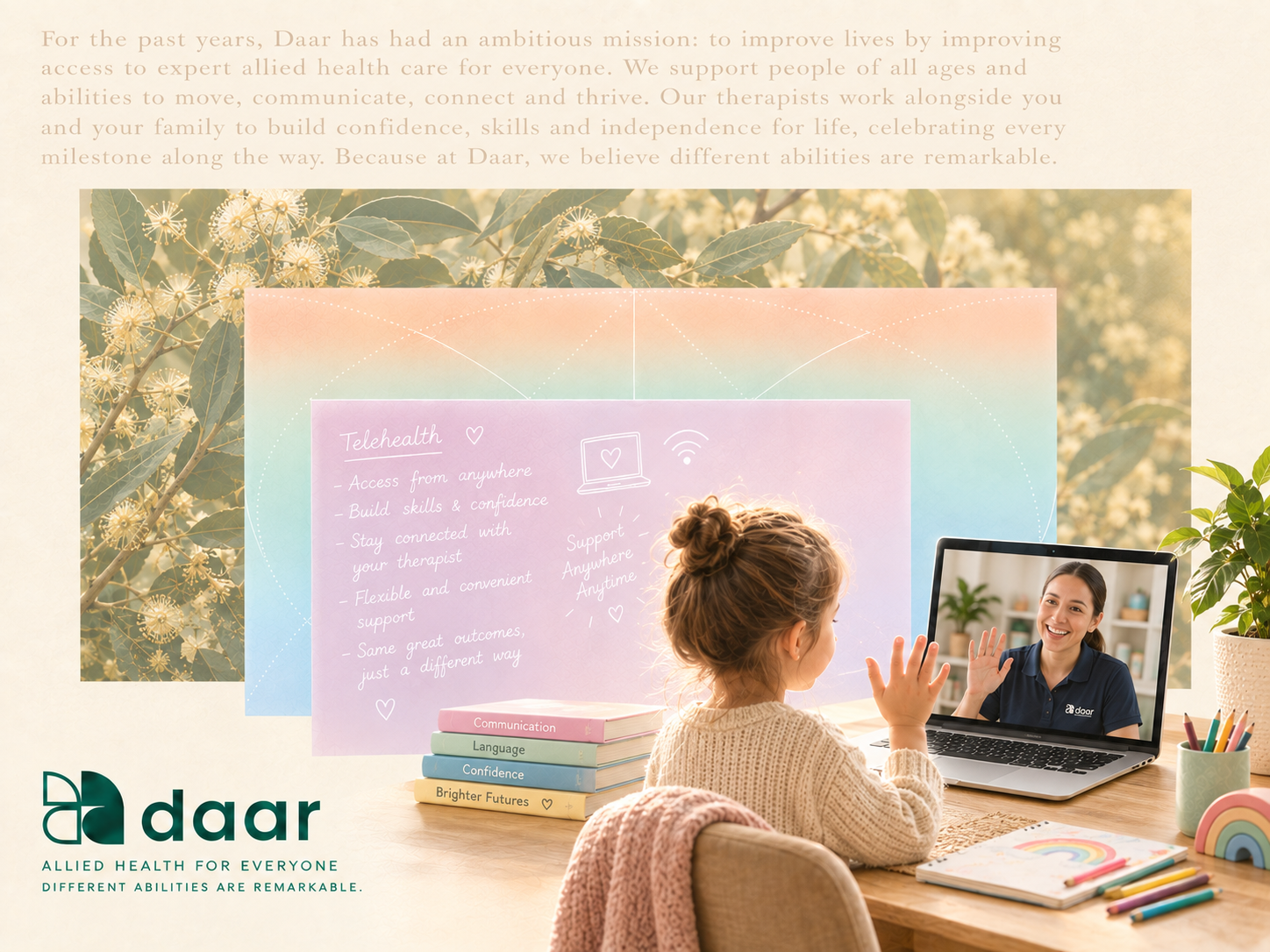
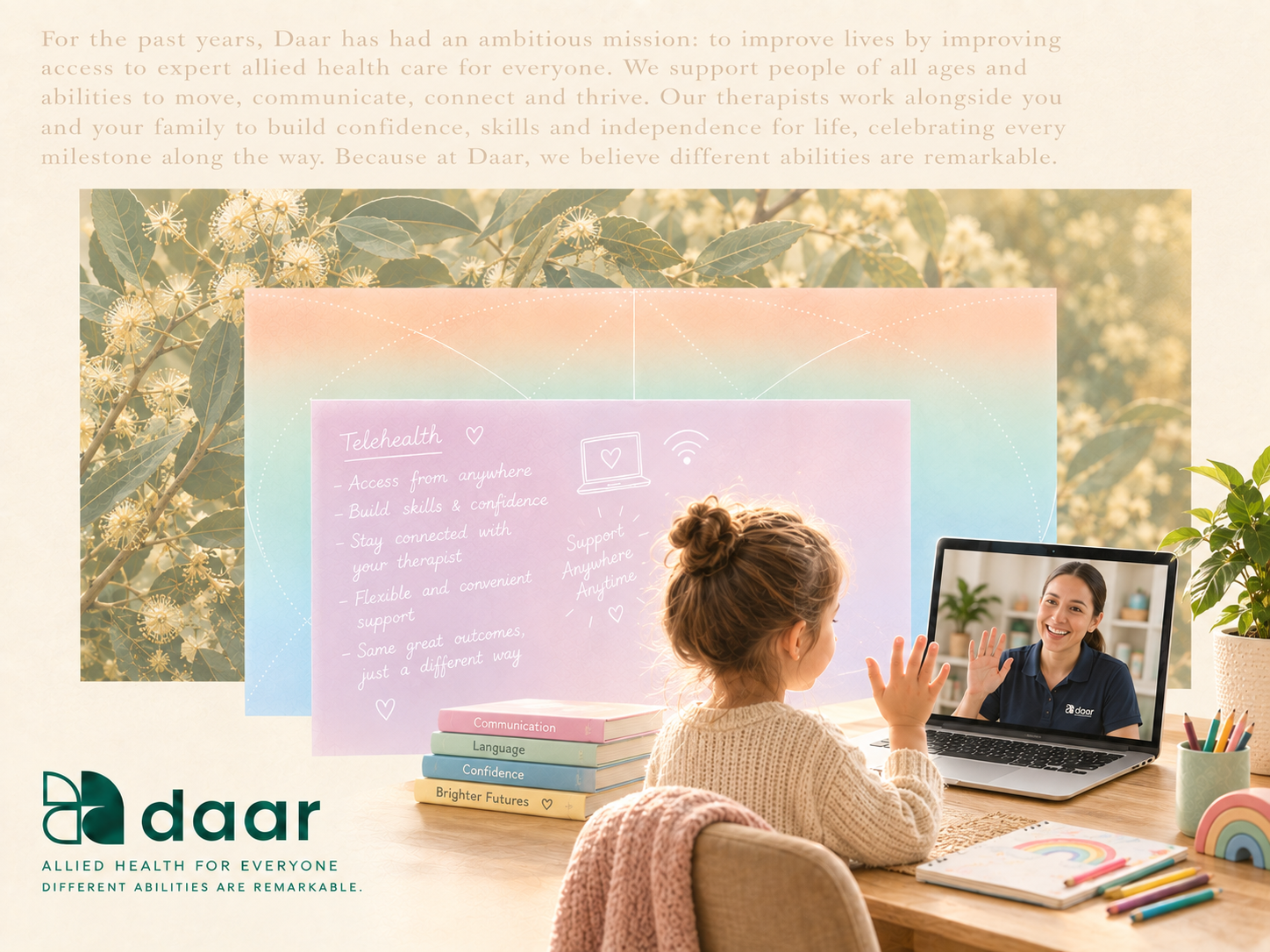
At daar, we are passionate about levelling the playing field. We believe that your postcode should not determine how far your funding goes or what level of expertise you can access. By delivering our comprehensive allied health services via telehealth, we are not just bypassing the commute—we are helping regional communities orchestrate better, more integrated, and far more cost-effective care. In Australia, telehealth is covered by Medicare for a range of allied health services, making it easier for patients—especially those in regional and remote areas—to access quality care from home.
Stretching Your NDIS Budget Further
One of the most practical advantages of telehealth for regional Australians is the financial impact. Under the NDIS, providers are permitted to charge for their travel time when visiting remote clients. In rural areas, this travel fee can quickly consume a massive portion of your capacity-building budget.
By switching to telehealth health care services, travel costs are completely eliminated. This means every dollar of your funding goes directly toward what actually matters: your therapy, skill-building, and caregiver coaching. Over the course of a year, the savings from skipped travel fees can equate to weeks or even months of additional therapy sessions for you or your child.
Wrap-Around Care: Connecting with Local Schools and Workers
True allied health support does not happen in isolation. For therapy to be successful, everyone involved in a client's life needs to be on the same page. In rural areas, coordinating a meeting between an out-of-town specialist, a local school teacher, and a regional support worker used to be a logistical nightmare.
Telehealth makes this seamless. With your permission, our clinicians at daar can invite your child's local teacher, your rural support worker, or your primary care provider community GP to join a secure video call. We can share screens, review Positive Behaviour Support (PBS) plans together, and provide remote coaching to local educators. This creates a powerful "wrap-around" support network right in your community, ensuring that the strategies we develop are consistently applied in the classroom and the community.
Accessing Niche Specialities in the Outback
General health services can often be found in larger regional hubs, but highly specialised allied health—such as specific early intervention for autism or complex behaviour management consultation—is notoriously scarce outside major cities.
Through our virtual clinic, daar brings this niche expertise directly to the outback. If your family requires a practitioner with highly specific experience in emotional regulation or a targeted toileting training program, we can connect you with that exact specialist from our nationwide team. You no longer have to settle for the only available practitioner simply because they are the closest. Before a telehealth appointment, it is helpful to prepare by ensuring you have a stable internet connection, a quiet and private space for your session, and any relevant medical records or notes on your child's recent behaviors or progress. Having a list of questions or concerns ready can also help make the most of your time with your specialist, ensuring you understand your telehealth coverage options.
Continuity for Transient and Agricultural Families
For farming families, contract workers, or those who travel between regions for seasonal work, committing to a local physical clinic for medical care is nearly impossible. Telehealth provides the ultimate continuity of care. Because our clinic lives on your laptop or smartphone, your therapy moves with you. You can continue seeing the exact same psychologist or speech therapist no matter where in Australia your work or lifestyle takes you, ensuring uninterrupted progress.
Conclusion
Regional and rural Australians deserve a healthcare model that respects their location, values their funding, and connects their local community. Telehealth and virtual care are breaking down geographical barriers, ensuring that you can access premium, highly specialised care while keeping your NDIS budget focused on actual outcomes.
If you live in regional Australia and want to maximise your allied health support through a connected, cost-effective virtual approach, we are here for you. In Australia, the use of telehealth services is generally available to individuals living in regional, rural, and remote areas, and eligibility may depend on specific healthcare needs and provider requirements.
Reach out to explore a consultation or call daar at 02 9133 2500 to find your perfect match.
Frequently Asked Questions
Does telehealth save me money on NDIS provider travel fees?
Yes, absolutely. Because the therapy is delivered online in the comfort of your own home, there are zero provider travel costs deducted from your NDIS plan. This means a significantly larger portion of your budget stays dedicated to your actual therapy sessions.
Can my child's rural school teacher join the telehealth session?
Yes! We highly encourage collaboration. With your consent, we can easily send a secure video consultation link to your child's teacher or integration aide. We can observe the child in the classroom setting via a laptop camera or simply consult with the teaching staff to ensure everyone is using the same supportive strategies.
What are your thoughts on telehealth? What are the pros and cons?
Telehealth offers significant advantages, including increased access to care, convenience, and reduced travel costs for patients. However, it also presents challenges such as technological barriers, potential privacy concerns, and the lack of physical examinations. Balancing these pros and cons is essential for effective implementation in regional communities.

.svg)




.svg)