
.png?width=48&height=48&name=Group%201%20(3).png)
























10 April, 2026

Strategies to Reduce Screen Time Without Tantrums: Behaviour Therapy Tips for Australian Families
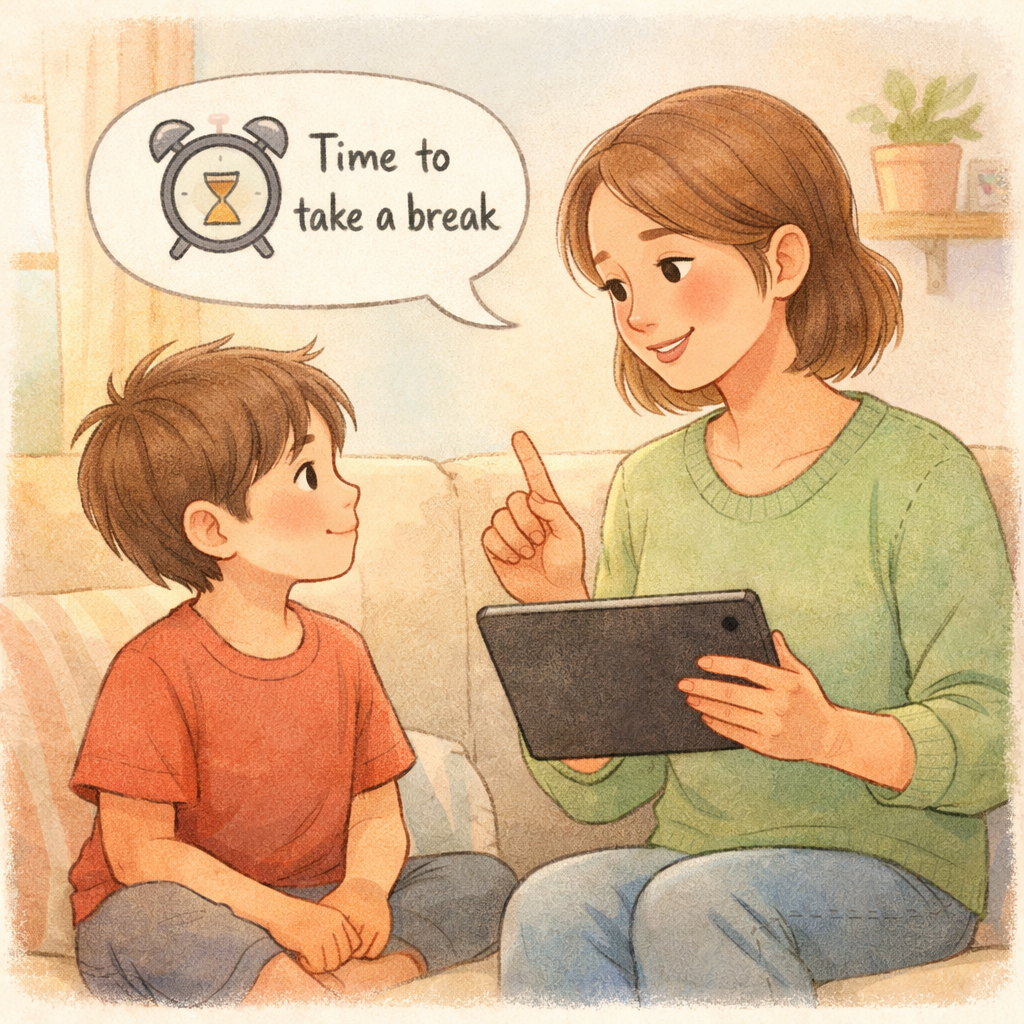
Managing children’s screen time has become one of the most common challenges for parents today. Whether it’s tablets, smartphones, gaming consoles, or TV, screens are deeply embedded in daily life. For many Australian families, attempts to cut back often lead to resistance, emotional outbursts, and full-blown tantrums.
The good news is that reducing screen time doesn’t have to be a daily battle. By applying behaviour therapy principles, parents can guide children toward healthier habits in a calm, structured, and effective way.
This guide explores practical, research-backed strategies to reduce screen time without triggering tantrums—while building long-term self-regulation skills in your child.
Why Screen Time Triggers Tantrums
Before diving into solutions, it’s important to understand why reducing screen time often leads to emotional reactions.
Screens are highly stimulating. Games, videos, and apps are designed to provide instant rewards, making it difficult for children to disengage. When screen time is suddenly removed, children may experience:
- Frustration from interrupted enjoyment
- Difficulty transitioning to less stimulating activities
- Lack of emotional regulation skills
- Dependence on screens for comfort or routine
From a behaviour therapy perspective, tantrums are often a learned response—if a child has previously gained extra screen time by protesting, they may repeat the behaviour.
Behaviour Therapy Principles That Help
Behaviour therapy focuses on reinforcing positive behaviours while reducing unwanted ones. Here are key principles that apply to screen time:
- Consistency: Clear and predictable rules reduce anxiety and resistance
- Positive reinforcement: Reward desired behaviours instead of punishing unwanted ones
- Gradual change: Sudden restrictions often backfire
- Modelling: Children imitate adult behaviour
- Routine building: Structure reduces conflict
Applying these principles makes transitions smoother and reduces emotional escalation.
1. Set Clear Expectations Early
Children respond better when they know what to expect.
Instead of abruptly saying, “Turn it off now,” establish rules ahead of time:
- Define daily screen time limits
- Specify when screens are allowed (e.g., after homework)
- Explain consequences calmly
Example:
“You can play for 30 minutes after school. When the timer ends, it’s time to stop.”
Clarity removes uncertainty, which is a major trigger for tantrums.
2. Use Visual Timers and Warnings
Transitions are easier when children are prepared.
Give advance notice before screen time ends:
- 10-minute warning
- 5-minute warning
- 1-minute warning
Using visual timers or countdown apps helps younger children understand time limits better.
This reduces the shock of sudden transitions and allows the child to mentally prepare.
3. Gradually Reduce Screen Time
If your child is used to long hours of screen use, cutting it drastically can lead to resistance.
Instead:
- Reduce screen time in small increments (e.g., 15 minutes per week)
- Replace screen time with engaging alternatives
Gradual change aligns with behaviour therapy’s principle of shaping behaviour over time.
4. Offer Attractive Alternatives
One of the biggest mistakes parents make is removing screens without providing alternatives.
Children need something equally engaging to transition into.
Try:
- Outdoor play (bike riding, sports, park visits)
- Creative activities (drawing, building, crafts)
- Family interaction (board games, cooking together)
The goal is not just to remove screens, but to replace them with meaningful activities.
5. Use Positive Reinforcement
Reward systems are highly effective in shaping behaviour.
Instead of focusing on what your child shouldn’t do, reward what they do well.
Examples:
- Sticker charts for following screen rules
- Extra playtime for turning off devices without fuss
- Praise for cooperation
Example:
“I really liked how you turned off the tablet when the timer ended—great job!”
Positive reinforcement increases the likelihood of repeated good behaviour.
6. Stay Calm During Resistance
Tantrums often escalate when parents react emotionally.
If your child protests:
- Stay calm and neutral
- Acknowledge feelings (“I know it’s hard to stop”)
- Stick to the rule
Avoid negotiating during a tantrum, as this can reinforce the behaviour.
Consistency teaches children that emotional outbursts won’t change boundaries.
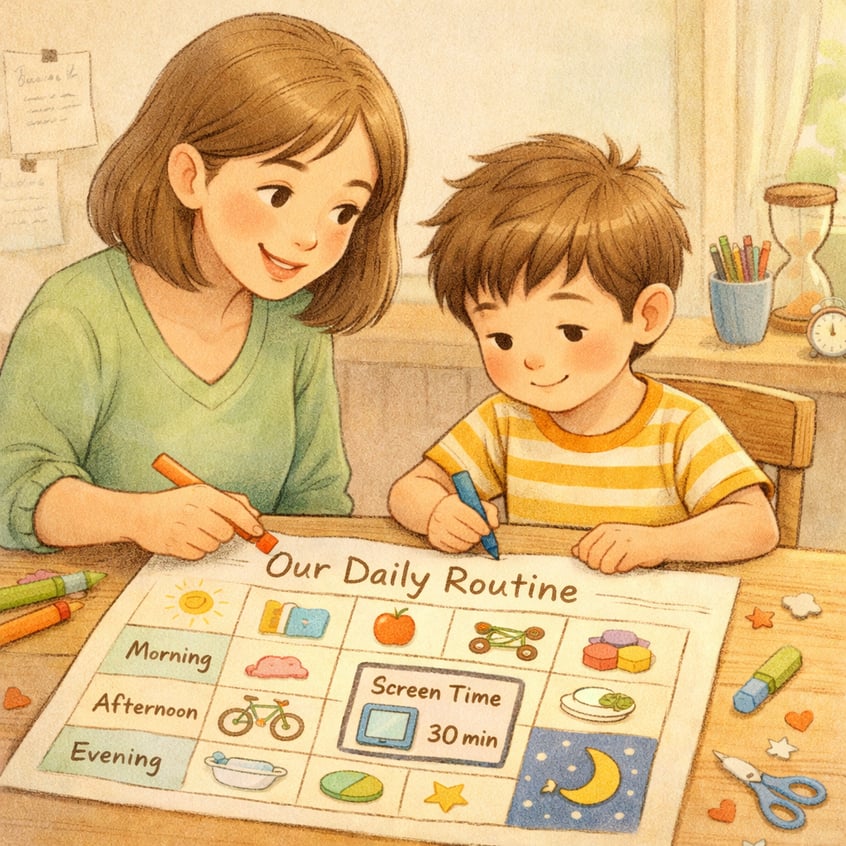
7. Create Screen-Free Routines
Structure reduces conflict.
Establish consistent screen-free times, such as:
- During meals
- Before bedtime
- In the morning before school
When these rules become routine, children are less likely to resist because the expectation is predictable.
8. Model Healthy Screen Habits
Children learn by observing.
If parents frequently use phones or watch TV, children are more likely to mimic that behaviour.
Try:
- Limiting your own screen use around children
- Engaging in offline activities together
- Demonstrating balanced habits
Behaviour therapy emphasises modelling as a powerful teaching tool.
9. Use “When–Then” Statements
This technique connects responsibility with reward.
Example:
“When you finish your homework, then you can use the tablet.”
This approach:
- Encourages responsibility
- Reduces power struggles
- Creates clear cause-and-effect relationships
10. Avoid Using Screens as a Reward or Punishment
While it may be tempting, using screens as a behavioural tool can increase their perceived value.
Instead:
- Treat screen time as a normal, limited activity
- Use non-screen rewards (e.g., outings, privileges, experiences)
This prevents screens from becoming the “ultimate prize.”
11. Build Emotional Regulation Skills
Tantrums often occur because children lack the skills to manage frustration.
Teach:
- Deep breathing
- Naming emotions
- Problem-solving skills
Example:
“I can see you’re upset. Let’s take a few deep breaths together.”
Over time, children learn to handle transitions more calmly.
12. Be Consistent Across Caregivers
Consistency is critical.
If one parent enforces rules while another relaxes them, children may test boundaries more often.
Ensure that:
- All caregivers follow the same rules
- Expectations are clearly communicated
This reduces confusion and behavioural challenges.
Common Mistakes to Avoid
Even well-intentioned parents can unintentionally reinforce tantrums.
Watch out for:
- Giving in during a tantrum
- Setting unclear or inconsistent rules
- Removing screens without alternatives
- Using screens to calm every emotional situation
Awareness of these pitfalls helps maintain progress.
Adapting Strategies for Australian Families
In Australia, lifestyle factors can support reduced screen time:
- Access to outdoor spaces and parks
- Active community sports culture
- Emphasis on work-life balance
Take advantage of:
- Local playgrounds
- Beach outings
- After-school sports programs
These natural alternatives make it easier to shift away from screens.
Conclusion: Building Healthy Habits Without Conflict
Reducing screen time doesn’t have to involve daily battles or emotional stress. By applying behaviour therapy principles—such as consistency, positive reinforcement, and gradual change—you can guide your child toward healthier habits in a calm and supportive way.
The goal isn’t perfection, but progress. Small, consistent steps lead to long-term success.
If you’re ready to create a calmer home and healthier digital habits for your child, start by implementing just one or two strategies today. Consistency is more powerful than perfection.
For more parenting strategies grounded in behaviour therapy, consider speaking with a child behaviour specialist or exploring local Australian parenting resources. Taking action now can set your child up for lifelong emotional and behavioural success.
Reach out for a consultation or call daar at 02 9133 2500 for expert guidance.
Frequently Asked Questions
1. How much screen time is appropriate for children?
Guidelines vary by age, but generally:
- Preschoolers: Up to 1 hour per day
- School-aged children: 1–2 hours of recreational screen time
Balance is key rather than strict elimination.
2. What if my child has a meltdown every time?
Stay consistent and calm. Tantrums may temporarily increase when new rules are introduced, but they usually decrease as children adapt.
3. Should I remove screens completely?
Not necessarily. Teaching moderation is more sustainable than total restriction.
.svg)




.svg)