
.png?width=48&height=48&name=Group%201%20(3).png)























25 August, 2026

How to Create an Effective Positive Behaviour Support Plan
Key Highlights
- A behaviour support plan should focus on safety, skill development, and quality of life.
- Under ndis funding, support often sits in Improved Relationships within capacity building.
- A functional behaviour assessment helps explain why behaviours happen in the first place.
- Registered providers and approved practitioners must deliver specialist behaviour support services.
- Training for carers and staff can be funded to support consistent use of strategies.
- Restrictive practices are regulated and should reduce over time through proactive support.
Introduction
Positive behaviour support helps you understand what a behaviour may be communicating and what support needs sit behind it. In NDIS behaviour support, the goal is not punishment. The focus is improving safety, building skills, and making daily life easier and more meaningful. If you are creating a plan for yourself, your child, or someone you support, a clear approach matters. The right plan can guide everyone toward consistent action, stronger relationships, and better long-term outcomes.
Essential Elements of a Positive Behaviour Support Plan
A positive behaviour support plan is most effective when it incorporates key components tailored to individual needs. A thorough functional behaviour assessment helps understand behaviours of concern, while proactive strategies promote emotional regulation and skill development. Ongoing collaboration with support practitioners, family members, and health professionals ensures the plan remains relevant and impactful. Regular plan reviews and community participation further enhance quality of life. Ultimately, these essential elements foster improved relationships and empower individuals to thrive within their daily living environments.
Person-Centered Planning and Collaboration
Person-centered planning means the plan starts with the individual, not the behaviour alone. Your strengths, preferences, goals, culture, and daily routines should shape every decision. A useful plan feels relevant to real life, which makes it easier to follow and more likely to help.
In practice, support practitioners work with you directly and, with consent, involve family members, carers, teachers, doctors, and other providers. This teamwork supports improved relationships because everyone understands the same goals, language, and strategies. It also helps reduce mixed messages across home, school, and community settings.
Who is eligible for funding? Based on NDIS rules, people may receive support when the need is disability-related, linked to significant functional impact, and meets reasonable and necessary criteria. A registered support provider can help gather evidence and guide planning conversations.
Defining Target Behaviours and Desired Outcomes
To identify the right focus areas, start with what is happening in daily life. Look at patterns, safety concerns, communication barriers, and situations where support breaks down. For NDIS participants, the aim is to describe behaviours clearly and objectively, without blame or vague labels.
Good goal setting links behaviours of concern to meaningful desired outcomes. Ask: What would make life safer, calmer, or more independent? You are not only reducing a behaviour. You are building skills and improving participation.
- Describe what the behaviour looks like.
- Note when and where it happens most often.
- Record what happens before and after it.
- Connect change to desired outcomes in daily life.
This approach makes the plan more specific and easier for others to use.
Steps to Create an Effective PBS Plan
Creating a behaviour support plan usually begins with checking whether support is already included in your NDIS plan. If it is not, you may need a plan review or an initial assessment to show why specialist help is needed under NDIS requirements.
From there, you choose a registered provider, complete consent and service agreement steps, and begin a functional behaviour assessment. This process builds the evidence behind the plan. The next two sections explain what information to collect and how to spot common triggers.
Gathering Background Information and Assessments
Start by collecting a full picture of the person’s life. Good behaviour assessments look beyond one incident. They include routines, communication, medical information already available, support history, and what matters most to the person. This gives the plan a stronger base.
An initial assessment may be funded to determine how much support is needed. A functional behaviour assessment then looks at what happens before, during, and after a behaviour. Input from support networks and health professionals such as occupational therapists or speech pathologists can help show patterns and unmet needs.
|
Information Area |
Why It Matters |
|---|---|
|
Daily routines |
Shows when stress or success is more likely |
|
Incident and safety data |
Helps identify risk and urgency |
|
Family and staff input |
Adds practical detail across settings |
|
Allied health reports |
Supports recommendations and funding requests |
These are valuable resources when creating a plan.
Identifying Environmental Triggers and Setting Events
Many behaviours are shaped by the environment. That is why a behaviour support plan should look closely at noise, change, demands, communication barriers, pain, fatigue, and other factors that affect daily living. For NDIS participants, this can reveal support needs that were not obvious at first.
Setting events are background factors that increase the chance of distress later. They may not cause the behaviour by themselves, but they lower a person’s ability to cope. Spotting these patterns helps teams act earlier with proactive changes.
- Busy or loud spaces
- Sudden routine changes
- Limited communication support
- Poor sleep, illness, or discomfort
Funding guidelines also recognise regulated restrictive practices when required for safety, but quality plans aim to reduce their use over time through better environments, skills, and support.
Implementing and Monitoring Your Behaviour Support Plan
A behaviour support plan only works when people use it consistently. Your behaviour support practitioner should explain each strategy clearly, assign responsibilities, and make sure your ndis provider team knows what to do in real situations.
Monitoring matters just as much as writing the plan. Behaviour support funding often covers training, observation, and updates over time. It also supports reports for a plan review when outcomes need to be measured. Next, let’s look at staff training and how to track whether the plan is working.
Training Support Staff and Carers in PBS Strategies
Even the best plan can fail if support staff do not understand it. Training helps carers, family members, and each support worker respond the same way across settings. That consistency reduces confusion and helps the person feel safer.
Behaviour support practitioners can train teams in strategies that match the plan and the person’s communication style. Yes, PBS funding can cover specialist training services when they are part of implementing funded behaviour support. This sits within capacity building because it improves the ability of others to provide safe, effective support.
Training often covers:
- How to use proactive strategies
- How to respond during escalation
- How to record incidents and progress
- How to support communication and skill building
When teams practice together, the plan becomes easier to follow in everyday moments.
Measuring Outcomes and Making Adjustments
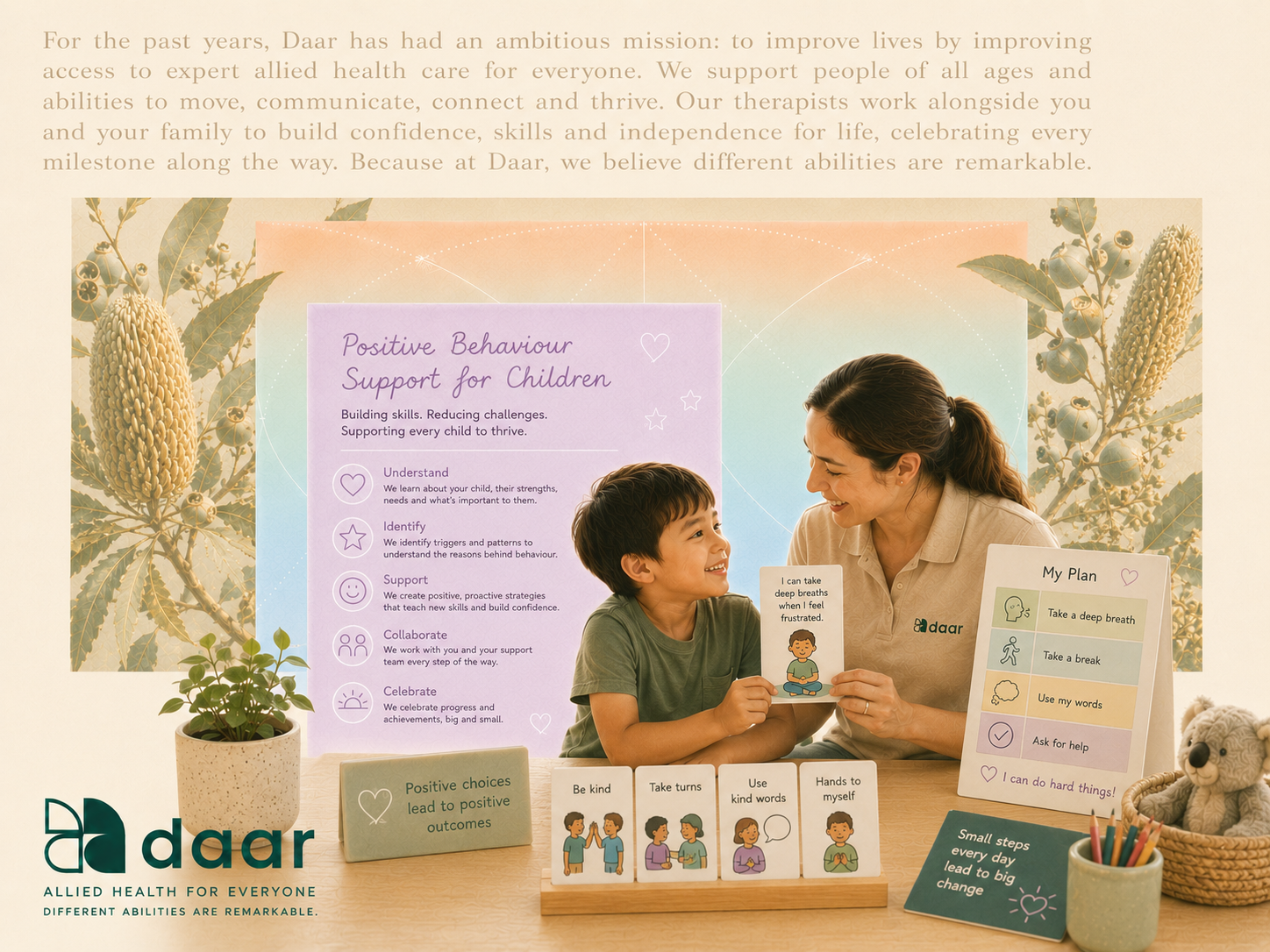
Measuring outcomes means checking whether the plan is actually helping. Look at changes in frequency, intensity, safety, participation, and communication. You should also ask whether the person feels more supported and whether daily routines are working better.
A plan review should use clear information from home, school, work, or community settings. Ongoing positive behaviour support depends on honest feedback, incident trends, and progress toward goals. If something is not working, adjust the environment, strategies, or training rather than blaming the person.
What NDIS funds are available? Based on current guidance, support usually sits in Capacity Building under Improved Relationships, and in PACE plans it appears under Behaviour Support. These funds can cover assessments, plans, training, monitoring, and some required reports that help maintain support services and improved relationships.
Conclusion
In conclusion, creating an effective Positive Behaviour Support Plan can significantly enhance the quality of life for individuals needing support. By prioritising person-centered planning and collaboration, you ensure that the needs and preferences of the individual are at the forefront. From defining target behaviours to identifying environmental triggers, each step is crucial for crafting a successful plan. Remember, the implementation phase is just as important as the planning stage—training staff and continuously monitoring outcomes will lead to meaningful adjustments that benefit everyone involved.
If you're ready to take the next step in developing a Positive Behaviour Support Plan that truly makes a difference, don't hesitate to reach out for a consultation or call daar at 02 9133 2500!
Frequently Asked Questions
Is positive behaviour support funding available for students in schools?
Positive behaviour support funding may be available when the support needs are disability-related and meet NDIS criteria. For children in schools, ndis behaviour support funding does not replace education system responsibilities. In early childhood, support may also be accessed through the Early Childhood Approach when daily functioning is affected.
How can I identify the specific behaviours that need to be addressed in a PBSP?
Focus on behaviours of concern that affect safety, participation, or relationships. A functional behaviour assessment completed by a support practitioner helps identify patterns, triggers, and likely purpose. Use that information during each plan review to refine priorities and make practical recommendations for home and community settings.
What are the key components of a Positive Behaviour Support Plan (PBSP)?
A strong behaviour support plan includes assessment findings, clear goals, proactive strategies, skill-building steps, and guidance for the people providing support. It should involve support networks, outline capacity building supports, and include a plan review process so strategies can be updated as the person’s needs and progress change.
.svg)




.svg)