
.png?width=48&height=48&name=Group%201%20(3).png)























16 September, 2026

Autism Intervention: Tips for an Autism-Friendly Home
Key Highlights
- Modern autism intervention has fundamentally shifted; it is no longer about trying to force a neurodivergent child to act neurotypical, but about giving them the tools, including occupational therapy, to thrive as their authentic selves into adulthood.
- High-quality autism support for children embraces "autistic joy" by actively utilising a child’s special interests and passions as the ultimate bridge for learning and connection with autistic people.
- When implemented correctly, positive behaviour support autism frameworks proactively redesign the individual's environment to remove sensory and communication barriers before distress occurs.
- Telehealth delivery is ideal for autistic children, as it allows them to receive expert clinical support while remaining safely in their highly regulated, familiar home environment.
- daar provides Australian families with direct access to NDIS-aligned allied health professionals, focusing heavily on upskilling parents through our proven "mediator model."
Introduction
The moment your child receives an autism diagnosis, the term "behavioural interventions" is suddenly everywhere. For many parents, it can sound incredibly intimidating. In the past, the word often carried a negative connotation, implying that the child was "broken" and needed to be fixed or moulded to fit seamlessly into a loud, chaotic, neurotypical world, but effective interventions, particularly those based on evidence-based practices (EBP), can greatly benefit their development.
Today, the landscape of allied health has evolved beautifully. At daar, our approach to care is rooted in deep respect for neurodivergence, including autism spectrum disorder (ASD). We believe that your child’s unique way of viewing the world is a strength to be celebrated. Let’s explore what modern, neuro-affirming autism intervention actually looks like, how positive behaviour frameworks create household harmony, and how our telehealth clinic supports your family and carers in designing a world where your child can truly flourish.
Redefining Autism Intervention
If the goal of autism intervention isn't to "cure" autism, what exactly is the therapist doing?
The core objective is to build functional capacity and alleviate distress. The neurotypical world is full of invisible hurdles for an autistic brain—fluorescent lighting in supermarkets, complex unwritten social rules, and highly unpredictable schedules. Effective intervention acts as a scaffold. We focus on teaching the child robust self-advocacy skills (such as how to safely ask for a break) and alternative communication methods, while simultaneously teaching the family how to accommodate the child's unique sensory profile. We are building a bridge between the child's inner world and their external environment.
Leveraging Autistic Joy: Real Autism Support for Children
One of the most powerful and often overlooked elements of autism support for children is the integration of "autistic joy."
Autistic children frequently develop deep, intense passions for specific topics—whether it’s dinosaurs, a specific animated series, or the mechanics of washing machines. Outdated practices sometimes tried to restrict these "special interests" to force the child to engage more broadly. At daar, we do the exact opposite. We use these passions as our primary therapeutic tool. If a child loves trains, our clinicians will coach you on how to use trains to teach emotional regulation, turn-taking, and expressive language. Leaning into their joy builds immediate trust and makes skill acquisition a highly positive experience.
The Proactive Power of Positive Behaviour Support Autism
When an autistic child experiences a massive meltdown, it is almost always the result of a system overload. They have hit a sensory, communication, or executive functioning wall.
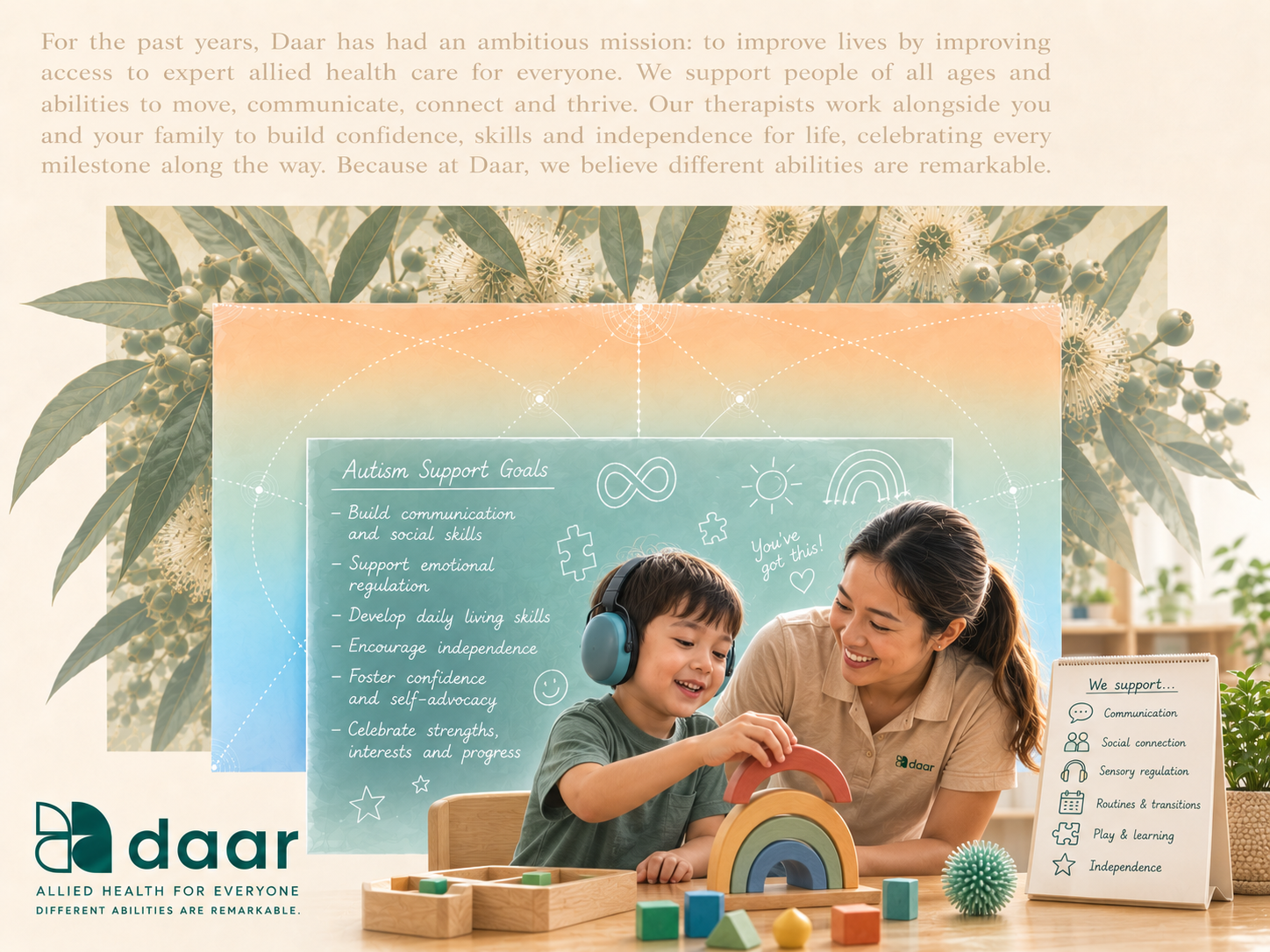
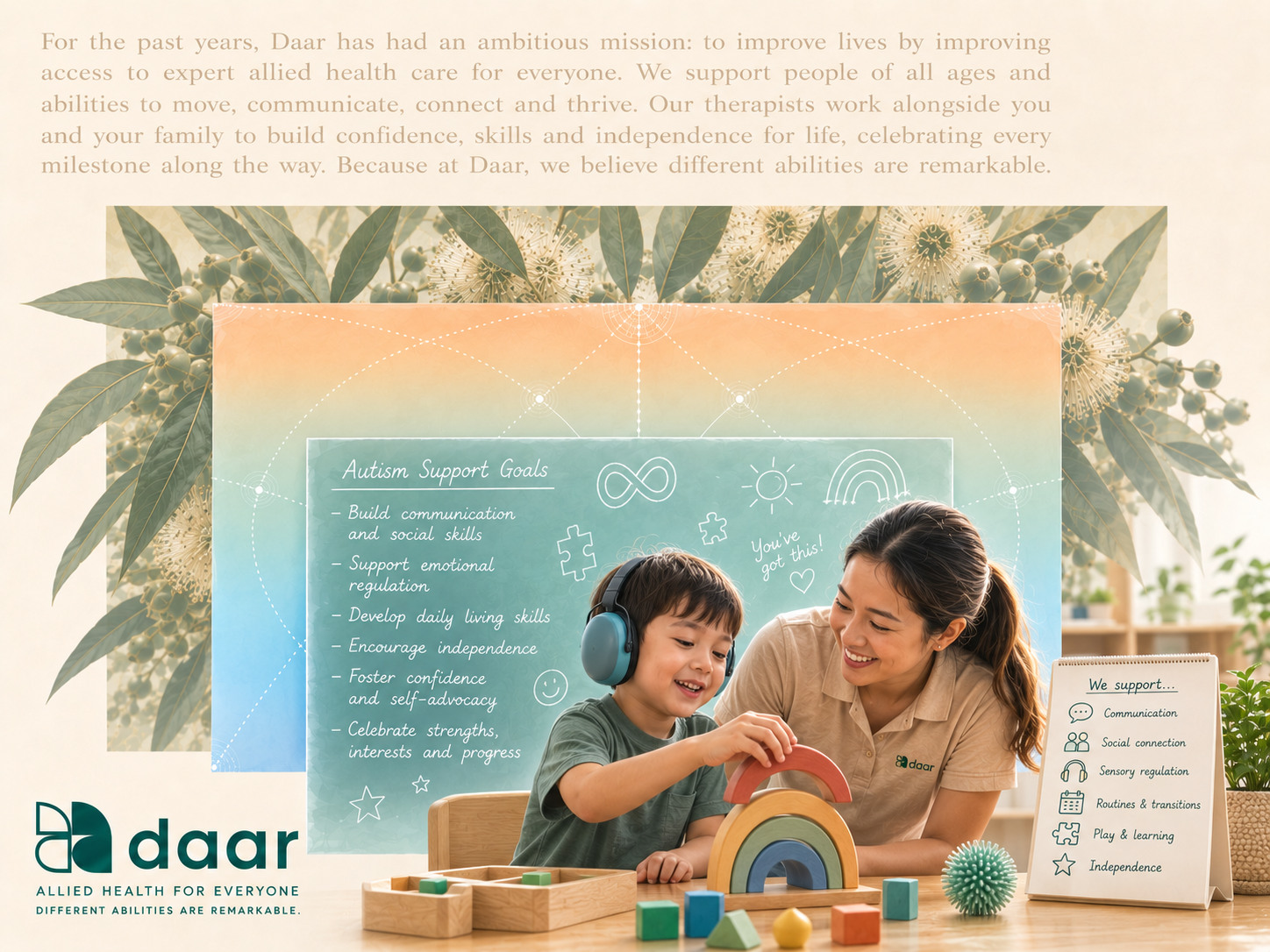
This is where positive behaviour support (PBS) becomes essential. PBS does not wait for the meltdown to happen so it can hand out a punishment. Instead, our practitioners conduct a thorough assessment to identify the precise triggers causing the overload. If we discover that the transition to dinnertime is causing daily distress due to auditory overwhelm, the intervention might involve providing noise-reducing earplugs 15 minutes before the meal and using a visual schedule. By proactively changing the environment, we drastically reduce the friction in the child’s day.
The Mediator Model: Therapy in Your Living Room
Taking an autistic child into a bright, echoey clinic with a stranger can often trigger the exact anxieties you are trying to alleviate.
Our telehealth services solve this problem entirely. By utilising a "mediator model," our allied health professionals securely log in to your home via video. Your child can remain in their safe space, surrounded by their favourite items, while we coach you. We empower parents and caregivers with the exact neuro-affirming strategies, scripts, and environmental setups needed to become the therapeutic anchor in your child's life.
Conclusion
Your child's neurodivergence is a vital part of who they are. By embracing modern, compassionate support frameworks and utilising sound professional judgment from PBS practitioners, you can help them navigate life’s challenges without asking them to compromise their identity.
Geographic location should never prevent your child from receiving the best possible care. Remote, NDIS-compliant support, including PRT (Pivotal Response Training) and applied behaviour analysis, is available everywhere in Australia.
Reach out to explore a consultation or call daar directly at 02 9133 2500 to find your perfect match today.
Frequently Asked Questions
What is neuro-affirming autism intervention?
A neuro-affirming approach explicitly rejects the idea that autism is a disease to be cured. It acknowledges that autistic brains simply function differently. The therapy focuses on validating the individual's experiences, accommodating their sensory needs, and teaching them skills to navigate the world safely, while also incorporating scientific evidence on effective practices, along with input from family members, rather than forcing them to "mask" or hide their autistic traits for the comfort of others.
At what age can we start accessing autism support for children and young adults with daar?
Our telehealth clinicians work with individuals across the lifespan, starting from early childhood. Because our model focuses heavily on parent coaching (the mediator model), which is highly effective for toddlers and young children, webinars are available even if the child themselves does not actively participate directly in the video call.
Is a formal diagnosis required to access positive behaviour support autism services for young people?
No. While many of our families utilise NDIS funding (which often requires formal diagnoses for long-term planning under certain categories), you do not need a piece of paper to begin supporting your child's behavioural, sensory needs, or seizures. Private, self-funded families are completely welcome to access our clinical expertise at any time to begin building a more supportive home environment.
.svg)




.svg)