
.png?width=48&height=48&name=Group%201%20(3).png)























6 October, 2026

Telehealth for Children: What the 4 Pillars of Virtual Care Mean for Your Family
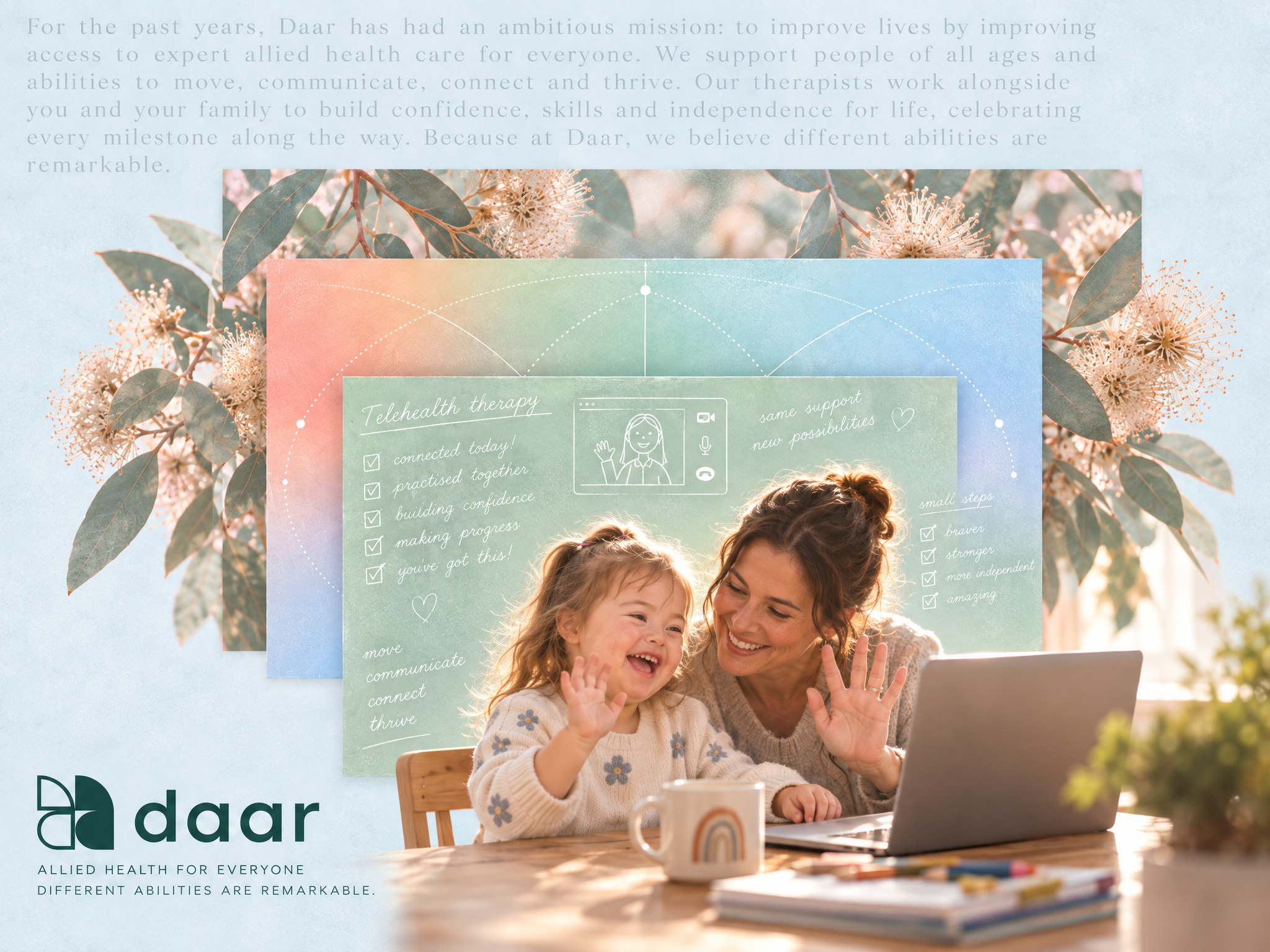
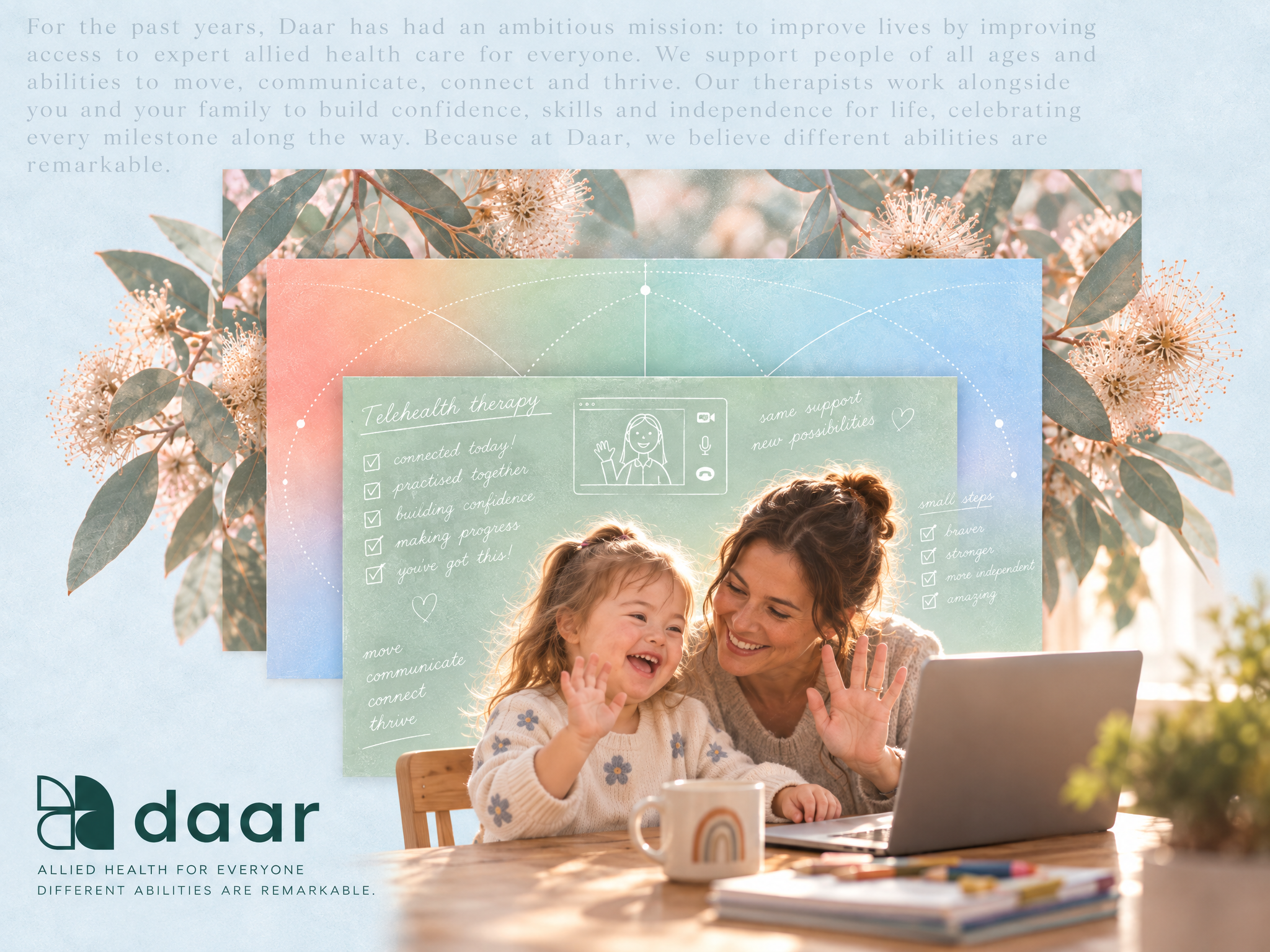
Juggling school drop-offs, work commitments, and family routines while managing multiple therapy appointments can leave parents feeling stretched to the limit. For families caring for children with developmental delays or autism, simply getting to a clinic can sometimes be the most stressful part of the day.
To help families enhance healthcare access without the added burnout, daar offers comprehensive allied health services via virtual care. To help you understand how online therapy delivers real, evidence-based results, we have broken down our approach to Telehealth into four core pillars.
Here is what our structured, virtual-care model means for your child’s development and your everyday family life.
Pillar 1: Unmatched Accessibility (Breaking Down Barriers)
Geography and travel time should never be a barrier to high-quality healthcare. Whether you live in a regional area without local specialists, or simply in a busy suburb where peak-hour traffic makes travel impossible, telehealth brings the clinic directly to your living room.
- What it means for you: You significantly reduce the mental and physical load of travel. Instead of spending an hour in the car and navigating waiting rooms, you simply log in. This allows your child to access expert speech pathologists, behaviour support practitioners, and psychologists, regardless of your postcode.
Pillar 2: Comfort and Safety (Therapy in the Natural Environment)
Many children—especially those with sensory processing differences or anxiety—can find clinical environments overwhelming. A child who is highly guarded in a new clinic room may struggle to engage, limiting the effectiveness of the session.
- What it means for you: Telehealth allows therapy to take place where your child feels the safest and most relaxed: at home. When a child is comfortable with their own toys and sensory tools, they are far more likely to engage naturally. This gives our clinicians a highly accurate picture of how your child communicates and behaves in their everyday environment.
Pillar 3: Consistency and Continuity (Keeping Progress on Track)
We know that children thrive on routine and consistency. Extended gaps in therapy due to minor illnesses, sibling schedules, or extreme weather can disrupt a child's momentum and delay their progress.
- What it means for you: Telehealth provides a flexible backup plan. If your child has the sniffles but is still energetic enough to play, or if you cannot leave the house because another sibling is sick, you do not have to cancel. This continuity of care ensures that skill-building stays on track year-round.
Pillar 4: Empowering Caregivers (The Parent-Coaching Model)
Therapy is most effective when the strategies are used consistently between sessions. In a traditional clinic, a therapist often works 1-on-1 with the child while the parent watches from the sidelines. Telehealth completely shifts this dynamic.
- What it means for you: Because the therapist is on a screen, you become the primary facilitator in the room. This is known as the parent-coaching model. Our clinicians guide you in real-time on how to prompt your child, redirect behaviour, or encourage speech using the items in your own home. You finish the session feeling upskilled, confident, and ready to use those exact strategies during everyday routines.
Start Your Child's Virtual Journey with Confidence
Telehealth is not just a temporary substitute for face-to-face therapy; it is a highly effective, family-centred mode of delivering care. Whether used exclusively or combined with in-clinic visits, virtual care empowers your family to access the right support at the right time.
If you are navigating your child’s NDIS plan and looking for flexible, high-quality interventions, our team at daar is ready to connect with you online.
Official References:
.svg)




.svg)