
.png?width=48&height=48&name=Group%201%20(3).png)























2 July, 2026

Understanding Positive Behaviour Support in NDIS Programs
Key Highlights
- Positive behaviour support helps NDIS participants understand behaviours of concern and respond with safer, practical strategies. The national disability insurance scheme funds disability support based on a person’s goals, daily needs, and approved supports. If you are searching for a registered NDIS behaviour support practitioner in your area, you can visit the official national disability insurance scheme provider search tool online or contact your local disability support coordinator. They can help you find approved providers specializing in positive behaviour support tailored to your needs.
- The national disability insurance scheme funds disability support based on a person’s goals, daily needs, and approved supports.
- To use positive behaviour support, your NDIS funding usually needs Improved Relationships or Behaviour Support included. Behaviour support practitioners work with families, carers, and support services to build skills and reduce triggers. In order to provide positive behaviour support as part of the NDIS, practitioners are required to have relevant qualifications and training in behavior analysis, disability services, or psychology. They must also meet NDIS requirements, which include ongoing professional development and compliance with quality and safeguarding standards.
- Behaviour support practitioners work with families, carers, and support services to build skills and reduce triggers.
- Good plans aim to improve quality of life, participation, independence, and safety while reducing restrictive practices.
Introduction
If you are trying to understand positive behaviour support in the national disability insurance scheme, it helps to start with the basics. This approach looks at behaviour as communication, often linked to support needs, routines, or unmet needs. Within disability support, positive behaviour support is used to reduce behaviours of concern, strengthen everyday skills, and help people live with more safety, confidence, and choice. For many participants and families, it can become an important part of a more stable support system. To access NDIS-funded Positive Behaviour Support services for yourself or a loved one, you generally start by discussing your needs with your NDIS planner or local area coordinator. If your plan includes funding for Positive Behaviour Support, you can choose a registered provider to deliver these services. Your provider will work closely with you to develop personalized strategies and support as part of your NDIS plan.
Overview of the National Disability Insurance Scheme (NDIS) in Australia
The national disability insurance scheme is an Australia-wide disability insurance program for people with permanent disability and significant disability. Its purpose is to fund necessary supports that help with everyday tasks, community activities, and personal goals.
For many people, NDIS funding creates access to disability support that is matched to individual needs. It also gives participants more choice and control over how support services are delivered. To understand where positive behaviour support fits, it helps to look at the scheme more closely.
What is the NDIS and its role in disability support
The National Disability Insurance Scheme (NDIS) funds support for Australians with permanent disabilities. Unlike a one-size-fits-all approach, the NDIS tailors support to each person's goals and needs.
Once approved, participants receive an NDIS plan detailing reasonable and necessary supports, such as help with daily tasks, therapy, community participation, or other services to boost independence and wellbeing. The NDIS also gives people more choice over how and when they receive support.
In short, the NDIS funds personalized support for people with disabilities, helping them live more independently and supporting families with a structured, goal-focused approach.
Main reforms and recent changes affecting NDIS programs
If you are keeping up with NDIS programs, the key areas to watch are plan management, funding categories, and stronger oversight around restrictive practices. The national disability insurance agency continues to use person-centered planning, while providers must work within clear reporting and monitoring requirements when behaviour support is involved.
Another important shift is the stronger focus on reducing restrictive practices and making support services safer. Where a restrictive practice is used, providers may need an Interim Behaviour Support Plan within 30 days and a more detailed plan within six months. These measures support accountability in an NDIS plan.
|
Area |
What you should know |
|---|---|
|
NDIS funding |
Funding is tied to approved goals and reasonable supports. |
|
Plan options |
Plans can be agency-managed, self-managed, or plan-managed. |
|
Behaviour support oversight |
Restrictive practices are monitored by the NDIS Commission. |
|
State authorization |
Some restrictive practices must be authorized in each state or territory. |
Introduction to Positive Behaviour Support (PBS)
Positive behaviour support is a practical approach used when a person shows behaviours of concern. Instead of only reacting to the behaviour, a behaviour support practitioner looks at why it is happening and what the person may be trying to communicate.
This work often involves the person, family, carers, and support workers. Together, they build strategies that fit real life at home, school, work, or in the community. The next sections explain what positive behaviour support means and why it matters in NDIS services.
Defining Positive Behaviour Support and its principles
Positive behaviour support is a form of behaviour support that starts with a simple idea: every behaviour has a reason. It looks at unmet needs, communication difficulties, routines, relationships, and the environment to understand what is driving behaviours of concern. The goal is not punishment. The goal is support that leads to a more meaningful life.
A positive behaviour support approach is person-centered. It focuses on strengths, preferences, and support needs, while involving the individual and their support networks in decisions. It also aims to build skills, improve communication, and make everyday settings more supportive and predictable.
In practice, this can include assessment, planning, environmental changes, and teaching safer alternatives. It may also involve support services that help with emotional regulation, habits, social interaction, and daily routines. Over time, these changes can improve safety, participation, and wellbeing.
The value of PBS within NDIS initiatives
Positive behavior support (PBS) within NDIS programs connects individual goals to practical daily strategies. A qualified provider assesses needs and collaborates with the person and their support team to create a clear, actionable plan.
Access to PBS depends on your NDIS plan. Specialist behavior support typically requires Improved Relationships or Behavior Support funding, although some people with Improved Daily Living funding may also access skill-building programs.
PBS is valuable because it focuses on improving quality of life—not just reducing incidents. It aims to make home, school, work, and community environments more supportive while helping individuals build confidence, routines, and independence.
How Positive Behaviour Support Helps People with Disabilities
For many NDIS participants, positive behaviour support creates a safer and more stable way to handle behaviours of concern. It helps identify triggers, understand communication, and build responses that are respectful and consistent.
Just as important, it strengthens support networks. Families, carers, and workers learn how to respond in ways that reduce stress and support long-term progress. When everyone understands the plan, daily life often becomes easier. The following sections show the benefits and the kinds of outcomes PBS can support.
Key benefits for participants and families
Behaviour support benefits everyone around the individual—not just the person receiving it. Support workers, families, and carers gain practical guidance for daily use, creating consistency that reduces confusion and stress while improving outcomes.
Positive behavior support also enhances daily quality of life. It helps people feel safer, better understood, and more able to participate in routines, relationships, and community activities—a step toward a more meaningful life.
Key benefits include:
- Clearer guidance for support workers and families
- Improved communication and predictable support
- Greater participation in daily life
- Skill-building for confidence and independence
Examples of positive outcomes through PBS
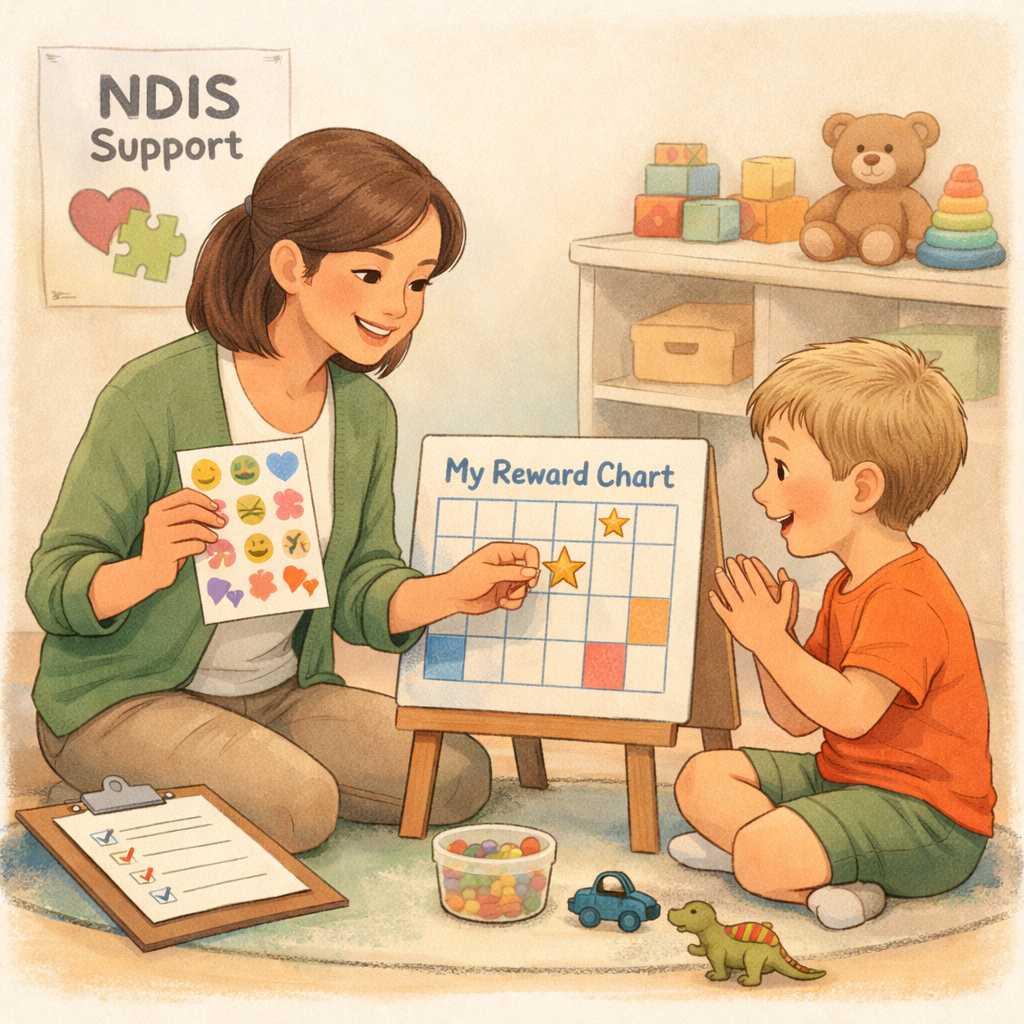
In real-life settings, positive behavior support creates both practical and personal changes. For example, a child struggling at school may benefit from adjusted routines, while someone with difficulty expressing distress can learn safer communication and emotional regulation skills. These supports reduce stress and make daily situations easier to manage.
Over time, people often develop new skills that build independence—such as better routines, improved communication, and safer responses to stress. Plans may also address personal care, relationships, and confidence in community settings.
Positive outcomes include:
- stronger community participation and social connections
- greater independence in routines and choices
- improved communication, coping, and safety across environments
Conclusion
In conclusion, Positive Behaviour Support (PBS) plays a crucial role within NDIS programs, emphasizing the importance of dignity, respect, and empowerment for individuals with disabilities. By focusing on understanding the underlying causes of behavior and implementing proactive strategies, PBS fosters a positive environment that leads to meaningful improvements in the lives of participants and their families. As you navigate through the complexities of NDIS and support options, embracing PBS can open doors to enhanced quality of life and greater independence.
If you’re interested in learning more about how PBS can benefit you or your loved ones, don't hesitate to reach out for a consultation or call daar at 02 9133 2500.
Frequently Asked Questions
What are the key differences between PBS and traditional behaviour therapy?
Positive behaviour support looks at the reasons behind behaviour, the person’s environment, and long-term quality of life. It uses a behaviour support plan built with the participant and their support services. Traditional behaviour support approaches may focus more narrowly on changing behavior rather than building wider daily supports.
Who can become an NDIS Positive Behaviour Support Practitioner?
Based on the provided information, a behaviour support practitioner may come from fields such as social work, occupational therapy, mental health nursing, psychology, developmental education, speech pathology, or similar areas. An NDIS provider may employ occupational therapists, speech pathologists, and other trained professionals with relevant experience.
Where can I find up-to-date information on NDIS rules for behaviour support?
For current rules, look to the NDIS Commission and the national disability insurance scheme website. These sources help explain behaviour support requirements, provider responsibilities, and the monitoring of restrictive practices. If you already work with an NDIS provider, they can also guide you through the support system and current standards.
.svg)




.svg)