
.png?width=48&height=48&name=Group%201%20(3).png)























26 August, 2026

Strengthen Resilience with Early Childhood Behaviour Support

Key Highlights
- In early childhood, resilience grows when children learn safer, clearer ways to communicate their needs.
- Positive behavioural support looks at why behaviour happens before choosing supportive approaches.
- A good behaviour support plan reduces triggers and teaches new skills in daily settings.
- Families, carers, teachers, and behaviour support practitioners all have a central role.
- Consistency across the support network helps children practice appropriate behaviour with confidence.
- Early intervention can improve wellbeing, participation, and overall quality of life.
Introduction
In early childhood, children are still learning how to cope, communicate, and manage big feelings. That is why positive behavioural support can make such a difference. Instead of only reacting to challenging behaviour, this approach looks at what a child is trying to express and teaches new ways to respond. With the right support, families and carers can help children build confidence, feel safer, and develop skills that support everyday life at home, school, and in the community.
Why Resilience Matters in Early Childhood Development
Resilience matters in early childhood because it helps children handle change, frustration, and social challenges in healthier ways. When a child learns new skills for communication, daily routines, and emotional expression, they are better able to join in, learn, and stay connected with others. This can lift wellbeing and improve quality of life over time.
Positive behaviour support for children works by understanding the reason behind behaviour, then building a plan around that knowledge. The first step is assessment, including looking at triggers and what the child may be trying to get or communicate. From there, families and professionals create a support plan that reduces triggers, teaches replacement skills, and guides responses. Early intervention and a strong support network help children benefit most.
The Link Between Resilience and Emotional Wellbeing
Emotional wellbeing and resilience are closely connected. When children feel understood and supported, they are more likely to cope with stress without becoming overwhelmed. This matters in the early years, when habits around emotions and behaviour are still forming.
Just as important, communication skills play a big part. A child who can ask for help, express discomfort, or share information has more options than acting out. Positive behavioural support helps children learn these new ways of communicating, which can reduce distress and build confidence.
Over time, these early gains can support young people as they grow. Better wellbeing often leads to stronger relationships, more success in learning settings, and fewer situations where children feel stuck or unheard. Small daily support can create lasting emotional strength.
Long-Term Benefits of Building Resilience in Children
The long-term benefits of resilience begin in the early years. Children who learn flexible thinking and safer responses are often better prepared for new routines, social demands, and learning tasks. They are also more likely to recover after setbacks instead of staying distressed for long periods.
Another benefit is improved quality of life. When children develop communication, social, and daily living skills, they can participate more fully at home, school, and in the community. This makes appropriate behaviour more achievable because the child has practical tools to meet needs in other ways.
None of this happens through guesswork. Collaboration between families, carers, teachers, and practitioners helps children receive clear, steady support across settings. That shared approach gives children repeated chances to practice and succeed, which strengthens resilience over time.
Positive Behaviour Strategies for Young Children
Positive behaviour strategies in early childhood focus on understanding behaviour before trying to change it. Instead of seeing a child as difficult, the approach asks what the behaviour of concern is communicating. This helps adults respond with more kindness and clearer support.
Behaviour support practitioners often begin with assessment, then help families create simple strategies that fit real life. These strategies aim to reduce challenging behaviour by removing triggers, teaching replacement skills, and making daily environments more supportive. The next sections show what that can look like in practice.
Everyday Examples of Positive Behaviour Interventions
Positive behavioural support offers effective ways to respond to a child’s behaviour without relying on punishment alone. The goal is to make challenging behaviour unnecessary by meeting needs differently. This approach grew from applied behaviour analysis, but it is more person-centred and family-centred in how plans are built and used.
In daily life, a support plan might include practical changes such as:
- adjusting routines to reduce stress or uncertainty
- teaching words, signs, or other communication skills
- using praise or meaningful rewards for appropriate behaviour
- changing parts of the environment that trigger distress
These examples work best when everyone uses them consistently. If a child learns that asking for help works better than hitting, that new habit can replace the old one. Over time, steady support helps the child build safer, more useful ways to communicate and cope.
Addressing Challenging Behaviours with Supportive Approaches
Yes, positive behaviour support does include interventions for challenging behaviour, but the focus is supportive, not harsh. It starts by understanding why the behaviour happens. A child may be trying to escape stress, gain connection, or communicate pain, fear, or another unmet need.
From there, specialist behaviour support uses a holistic approach. Plans can include teaching communication, changing routines, improving the environment, and showing carers how to respond safely. This helps reduce behaviours of concern while protecting the child’s dignity and rights.
An important aim is reducing and eliminating restrictive practices wherever possible. That is why a strong support network matters so much. When family members, teachers, and professionals all respond in similar ways, the child gets a clearer message and more chances to succeed in everyday settings.
Implementing Child Behaviour Support at Home
To implement positive behaviour support at home, start with the support plan and use it in the situations where your child’s behaviour usually happens. Home strategies should be practical, clear, and easy for carers and family members to follow each day.
Consistency is what makes the biggest difference. When the support network responds in similar ways, children get more chances to learn replacement skills. Parents have a central role here, and the next two sections look at routines, tools, and simple techniques that can make home support more effective.
Parental Roles and Consistent Routines
Parents have a central role in a behaviour support plan. In the early years, children learn best when adults around them respond in steady, predictable ways. That means using the same routines, prompts, and responses across common daily moments like meals, play, dressing, and bedtime.
Consistent routines can lower stress and make expectations easier to understand. They also help the support network notice what triggers difficulty and what helps the child stay calm. When parents share feedback with practitioners, the plan can be reviewed and improved over time.
|
Daily situation |
How parental roles support the behaviour support plan |
|---|---|
|
Morning routine |
Keep steps simple and predictable to reduce stress. |
|
Playtime |
Model communication and praise appropriate behaviour. |
|
Transitions |
Give clear cues before changes in activity. |
|
Bedtime |
Use the same calm sequence each night for stability. |
Tools and Techniques for Supporting Child Self-Regulation
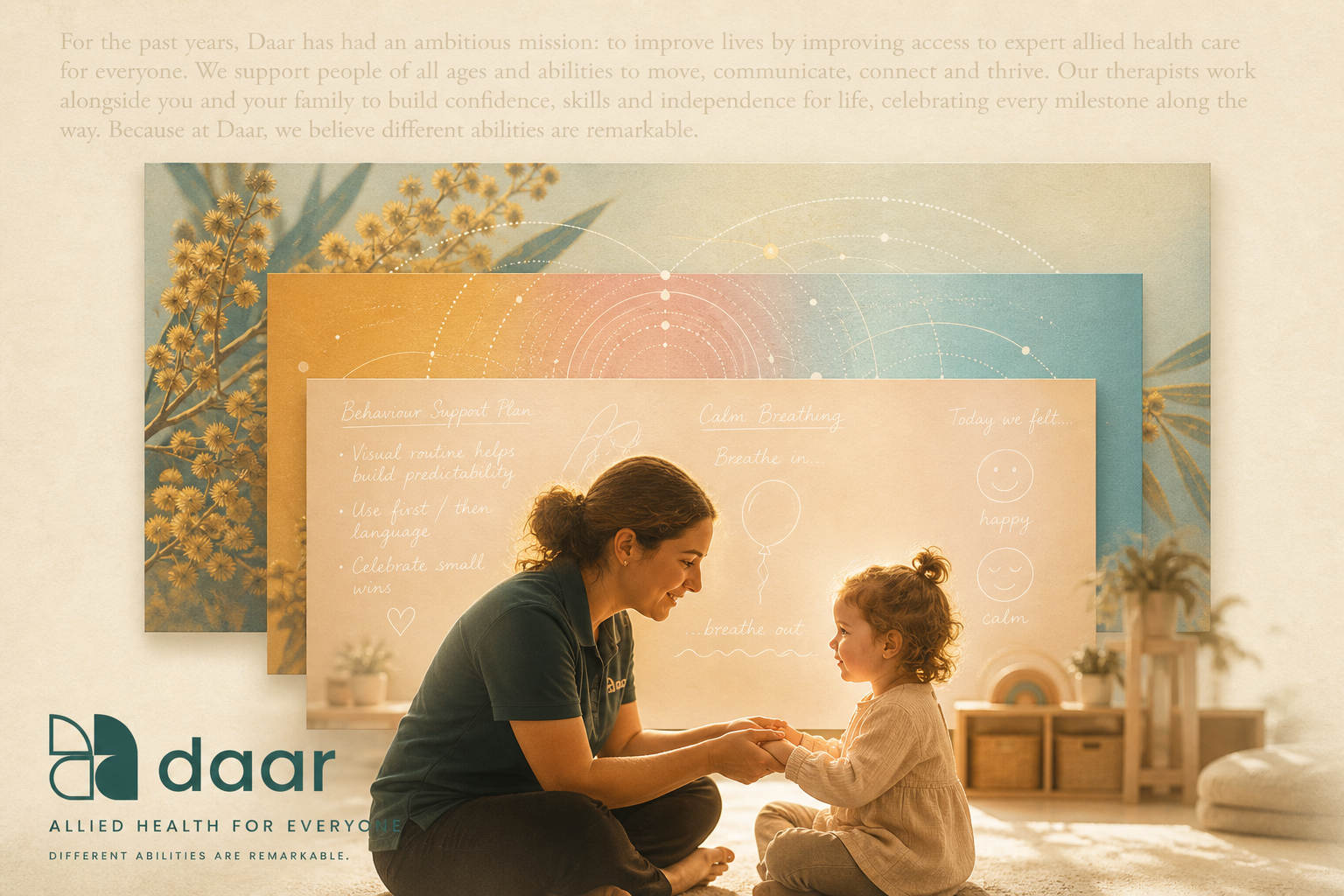
Supporting self-regulation starts with teaching children what to do instead of only telling them what not to do. In positive behaviour support, that means building simple skills that fit the child’s age, needs, and daily routines. For toddlers, short practice in calm moments often works better than long explanations during distress.
Useful tools can be included in a support plan, such as:
- simple words, signs, or prompts to ask for help
- visual cues or routine reminders during transitions
- praise for small steps toward calm, appropriate behaviour
These strategies support wellbeing because they give children a sense of success. They also help adults respond with more confidence. Over time, children begin to use those supports to manage frustration, wait, communicate, and recover more easily after difficult moments.
Conclusion
In conclusion, building resilience in early childhood is essential for fostering emotional wellbeing and equipping children with the tools they need to navigate life's challenges. By implementing positive behaviour strategies at home and focusing on consistent routines, parents and caregivers can create supportive environments that encourage self-regulation and adaptive coping skills. Remember, every small effort counts in nurturing resilient individuals, setting the foundation for lifelong benefits.
If you’re interested in learning more about effective behaviour support techniques, don’t hesitate to reach out for a consultation or call daar at 02 9133 2500 to discuss how you can best support your child’s development.
Frequently Asked Questions
Can positive behaviour support help children with autism?
Yes. Positive behaviour support can help children with autism by understanding what behaviour is communicating and teaching safer alternatives. In early childhood, behaviour support practitioners work with the child’s support network to build practical strategies that improve communication, participation, and daily routines in natural settings.
How can I encourage my child to regulate their own behaviour?
You can encourage self-regulation by following a clear support plan, teaching simple replacement skills, and praising small steps toward appropriate behaviour. Early intervention helps because children practice these responses sooner. Over time, this supports wellbeing and helps your child manage feelings and actions more independently.
Are there positive behaviour support services available in Australian schools?
Yes. In Australia, positive behaviour support can also be used in school settings when teachers and other professionals work from a shared support plan. Behaviour support practitioners can guide the wider support network, so children receive consistent help across home and school.
.svg)




.svg)